
• Advertise
  • About us
  • Terms and Conditions
  • Contact us
Monday, September 28, 2026
Australian Times News
  • News
    • Weather
    • Sport
    • Technology
    • Business & Finance
      • Currency Zone
    • Lotto Results
      • The Lott
  • Lifestyle
    • Entertainment
    • Horoscopes
    • Health & Wellness
    • Recipes
  • Travel
  • Expat Life
  • Move to Australia
No Result
View All Result
  • News
    • Weather
    • Sport
    • Technology
    • Business & Finance
      • Currency Zone
    • Lotto Results
      • The Lott
  • Lifestyle
    • Entertainment
    • Horoscopes
    • Health & Wellness
    • Recipes
  • Travel
  • Expat Life
  • Move to Australia
No Result
View All Result
Australian Times News
No Result
View All Result
Home News

Why regional universities and communities need targeted help to ride out the coronavirus storm

Australian universities are expected to lose billions of dollars in revenue due to the impacts of COVID-19. The estimated lost revenue from international students alone is A$18 billion by 2024.

The Conversation by The Conversation
10-08-2020 22:27
in News
Why regional universities and communities need targeted help

Why regional universities and communities need targeted help Photo by Changbok Ko on Unsplash

Why regional universities and communities need targeted help to ride out the coronavirus storm

Mehmet Aslan, University of Wollongong

Australian universities are expected to lose billions of dollars in revenue due to the impacts of COVID-19. The estimated lost revenue from international students alone is A$18 billion by 2024. While all universities are affected, regional universities and communities are the most vulnerable.

USQ/Facebook

Regional communities have limited resources, so their universities play a pivotal role in their economies. These universities must adjust to the rapidly changing circumstances and government policy changes, or risk jeopardising regional economic growth and jobs. Without targeted government support for these smaller universities, the long-term impacts on regional communities could be devastating.

The Regional Universities Network (RUN) includes CQUniversity, Southern Cross University, Federation University Australia, University of New England, University of Southern Queensland, University of the Sunshine Coast and Charles Sturt University. CQUniversity, where 39% of students are international students, has a revenue shortfall of A$116 million for 2020. Charles Sturt University (32% international students) faces a loss of about A$80 million.

Charles Sturt University campus at Bathurst, NSW
Charles Sturt University has announced cuts to courses and jobs because of its deficit. Geoff Whalan/Flickr, CC BY-NC-ND

What are the regional economic impacts?

All universities face job losses as a result of COVID-19. But the impacts of these job losses are greatest for regional economies.

RUN chair Helen Bartlett told a federal parliamentary committee hearing in May:

Job losses from regional universities have a significant impact on regional communities when there are few alternatives for professional employment locally.

RUN chair Helen Bartlett
The RUN chair, Professor Helen Bartlett, notes that when regional universities shed jobs their local communities have few professional employment alternatives. USC News

She called on the government to double the annual regional loading funding of A$74 million.

AlsoRead...

How supporting Australia’s Care Workforce could strengthen care in the community

How supporting Australia’s Care Workforce could strengthen care in the community

10 September 2026
What HR Must Champion Next, According to Energy Collective Co

The Future of Work Is Changing: What HR must champion next, according to Energy Collective Co

28 August 2026

Regional universities educate around 115,000 students each year. That’s about 9% of enrolments at Australian public universities.

A 2018 study found regional universities inject A$1.7 billion a year into their local economies. And seven out of ten graduates go on to work in regional areas.

Regional universities also contribute over A$2.1 billion and more than 14,000 full-time jobs to the national economy.

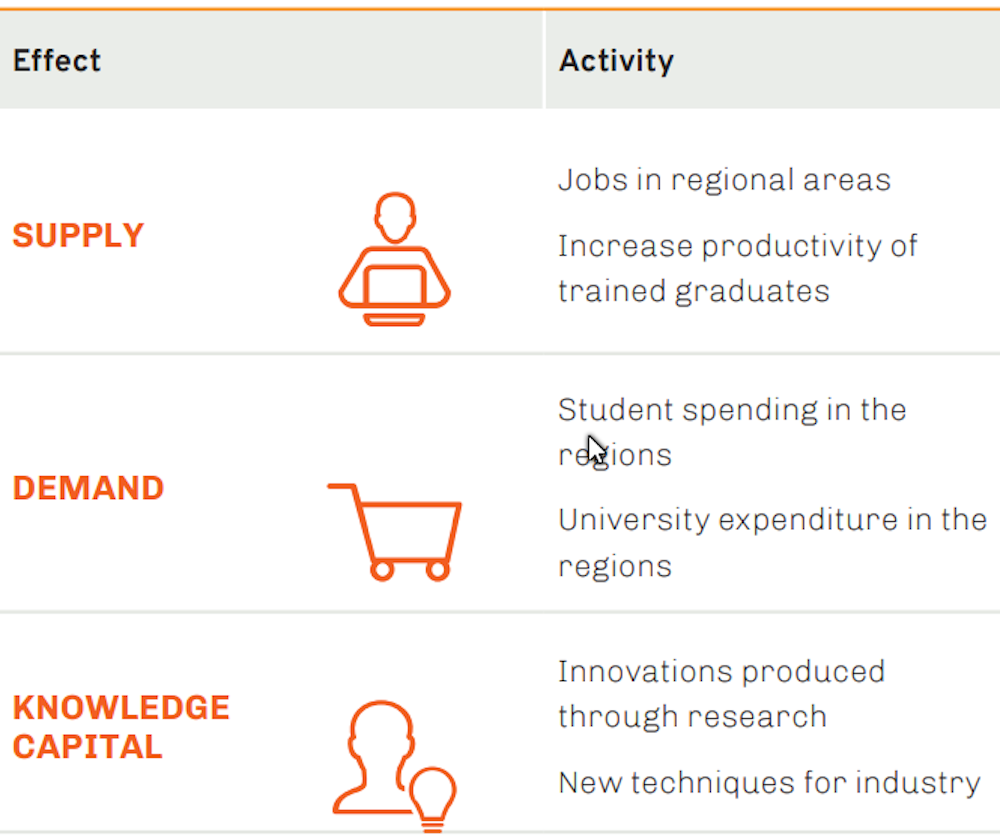
Table showing the three main effects of regional universities on their regions
‘The economic impact of the Regional Universities Network’/RUN

What is the government doing?

In April the federal government guaranteed A$18 billion in university funding this year to help the sector through the coronavirus crisis. It also provided A$100 million in regulatory fee relief.

The chair of Universities Australia, Deborah Terry, welcomed this as a “first step”. However, she warned an estimated 21,000 jobs would still be lost.

In June, the government announced the Job-ready Graduates Package. It plans to lower student fees for selected courses (and raise others) to encourage study for what the government deems to be jobs of the future.

Extra support announced for regional universities includes:

  • 3.5% growth in Commonwealth Grant Scheme funding to regional and remote campuses
  • A$5,000 payments for students from outer regional, remote and very remote areas who transfer to Certificate IV study or higher, for at least one year
  • a new A$500 million-a-year fund for programs that help Indigenous, regional and low socioeconomic status students get into university and graduate
  • A$48.4 million in research grants for regional universities to partner with industry and other universities to boost their research capacity
  • A$21 million to set up new regional university centres
  • guaranteed bachelor-level Commonwealth-supported places to support more Indigenous students from regional and remote areas to go to any public university.

The government has also promised a A$900 million industry linkage fund. The aim is to help universities build stronger relationships with STEM industries and provide work-integrated learning opportunities.

What does this mean for regional universities?

The Regional Universities Network welcomed the package. Bartlett said:

Lowering the cost of the student contribution for courses such as nursing, allied health, teaching, agriculture, engineering, IT and maths should encourage greater uptake by regional students in these areas. It is estimated that there should be more places in the regions. More graduates from our universities will produce more graduates to work in regional Australia in areas of skills need.

As the COVID-19 economic battle is ever evolving, the tertiary education sector must be vigilant. Spending should be prioritised to make it equitable for all universities and their communities. Decision-makers need to be aware of the key issues affecting the success of tertiary education in the regions and their dependent communities.

Regional engagement activities and programs, backed by increased funding, improve the prospects of successfully weathering the COVID-19 storm. Regional universities can deliver national benefits, by overcoming skill shortages and meeting local workforce needs, while contributing to public and private community services such as schools and health services.

The government package is important for all universities, but this support is the only means of regional universities surviving. If they are not supported and are forced to close, regional education and economies will suffer for many years.

Mehmet Aslan, Honorary Fellow, School of Humanities and Social Inquiry, University of Wollongong

This article is republished from The Conversation under a Creative Commons license. Read the original article.


Tags: SB001
DMCA.com Protection Status

SUBSCRIBE to our NEWSLETTER

[mc4wp_form id=”2384248″]

Don't Miss

How supporting Australia’s Care Workforce could strengthen care in the community

by Pauline Torongo
10 September 2026
How supporting Australia’s Care Workforce could strengthen care in the community
News

Australian care funding faces growing scrutiny after a 2025 ANAO report found NDIS losses from fraud, non-compliance, and payment errors...

Read moreDetails

The Future of Work Is Changing: What HR must champion next, according to Energy Collective Co

by Pauline Torongo
28 August 2026
What HR Must Champion Next, According to Energy Collective Co
Business & Finance

Energy Collective Co examines the root causes of performance by considering how work is designed, how leadership is enacted and...

Read moreDetails

From Empathy Burnout to Body-Led Recovery: What Heidi Jane of Intuition Co. learned by living through what she teaches

by Pauline Torongo
25 August 2026
What Heidi Jane of Intuition Co. learned by living through what she teaches
Lifestyle

Recognising emotional exhaustion is only the first step. While supportive habits such as rest, time in nature, hydration, and reduced...

Read moreDetails

Why Smarter Fleet Management Is For All Modern Business Options

by Fazila Olla-Logday
29 July 2026
Smarter Fleet Management
Motoring

Operating a business that relies on vehicles is harder than ever.

Read moreDetails

Animal Communication Goes Beyond What Science Can Currently Measure: Zoologist and Spiritual teacher Artemis, the heart whisperer on what the textbooks don’t teach

by Australian Times
7 July 2026
Animal Communication Goes Beyond What Science Can Currently Measure
Lifestyle

Animal communication classes and formal training can be valuable, providing tools, structure, and guidance.

Read moreDetails

Managing Aussie Share Portfolios Abroad: Tips for Growth

by Fazila Olla-Logday
2 July 2026
Managing Aussie Share Portfolios Abroad: Tips for Growth
at

Unlock the secrets to optimizing your Aussie share portfolios abroad. Discover essential tips for growth and navigate the global market...

Read moreDetails

The New Meaning of Luxury: Lessons from Entrepreneur Chloe Hardy

by Pauline Torongo
2 July 2026
The New Meaning of Luxury: Lessons from Entrepreneur Chloe Hardy
Business & Finance

Chloe Hardy, the founder and CEO of Dupes & Co established an Australian-made beauty brand focused on affordability and product...

Read moreDetails
Load More

Copyright © Blue Sky Publications Ltd. All Rights Reserved.
australiantimes.co.uk is a division of Blue Sky Publications Ltd. Reproduction without permission prohibited. DMCA.com Protection Status

  • About us
  • Write for Us
  • Advertise
  • Contact us
  • T&Cs, Privacy and GDPR
No Result
View All Result
  • News
    • Weather
    • Sport
    • Technology
    • Business & Finance
      • Currency Zone
    • Lotto Results
      • The Lott
  • Lifestyle
    • Entertainment
    • Horoscopes
    • Health & Wellness
    • Recipes
  • Travel
  • Expat Life
  • Move to Australia

Copyright © Blue Sky Publications Ltd. All Rights Reserved.
australiantimes.co.uk is a division of Blue Sky Publications Ltd. Reproduction without permission prohibited. DMCA.com Protection Status

No Result
View All Result
  • News
    • Weather
    • Sport
    • Technology
    • Business & Finance
      • Currency Zone
    • Lotto Results
      • The Lott
  • Lifestyle
    • Entertainment
    • Horoscopes
    • Health & Wellness
    • Recipes
  • Travel
  • Expat Life
  • Move to Australia

Copyright © Blue Sky Publications Ltd. All Rights Reserved.
australiantimes.co.uk is a division of Blue Sky Publications Ltd. Reproduction without permission prohibited. DMCA.com Protection Status