

• Advertise
  • About us
  • Terms and Conditions
  • Contact us
Wednesday, November 11, 2026
Australian Times News
  • News
    • Weather
    • Sport
    • Technology
    • Business & Finance
      • Currency Zone
    • Lotto Results
      • The Lott
  • Lifestyle
    • Entertainment
    • Horoscopes
    • Health & Wellness
    • Recipes
  • Travel
  • Expat Life
  • Move to Australia
No Result
View All Result
  • News
    • Weather
    • Sport
    • Technology
    • Business & Finance
      • Currency Zone
    • Lotto Results
      • The Lott
  • Lifestyle
    • Entertainment
    • Horoscopes
    • Health & Wellness
    • Recipes
  • Travel
  • Expat Life
  • Move to Australia
No Result
View All Result
Australian Times News
No Result
View All Result
Home News

Strange but true: a plant that cuts down on traffic pollution

UK scientists say a common shrub has been found to be very effective at soaking up air pollution caused by heavy traffic.

Mike Simpson by Mike Simpson
19-02-2021 03:00
in News
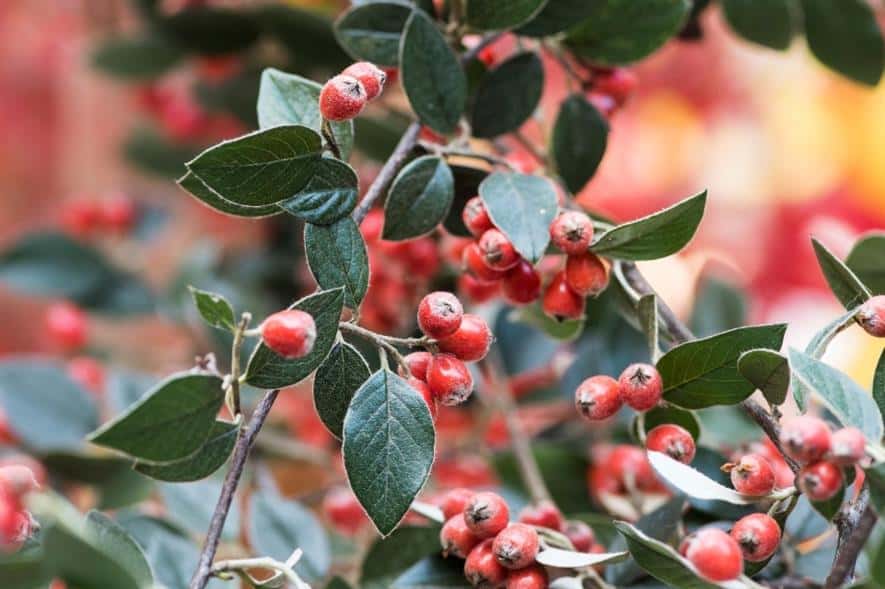
Cotoneaster franchetii. Photo credit: Royal Horticultural Society

Cotoneaster franchetii. Photo credit: Royal Horticultural Society

It almost sounds too good to be true; but environmentalists will be thrilled. Scientists in the UK say they have discovered a common plant that helps to soak up the air pollution created by traffic on busy roads.

The plant, named Cotoneaster franchetii, is said to be at least 20% more effective at soaking up pollution, versus other shrubs in the study.

According to the sustainable horticulture charity, Plants For A Future, cotoneaster it is an evergreen shrub growing to 3m x 3m. It is common in Britain.

Study examined how hedges can soak up pollution

A study, published this week in a scientific journal by researchers from the Royal Horticultural Society (RHS), examined the effectiveness of hedges for soaking up air pollution and compared different types of shrubs such as cotoneaster, hawthorn and western red cedar.

Among other things, the RHS is working to use gardens and green spaces to help reduce environmental problems such as air pollution, flooding and heatwaves.

Perhaps surprisingly, the hairy-leaved Cotoneaster franchetii was very effective at reducing pollution on busy roads, but it had little impact on pollution levels on quieter thoroughfares.

Most effective plants have rough and hairy leaves

“On major city roads with heavy traffic, we’ve found that the species with more complex, denser canopies and rough and hairy leaves such as cotoneaster were the most effective,” explained Dr Tijana Blanusa, the lead researcher for the project.


AlsoRead...

How She Sells with Brooke helps thousands of women build new careers through high-ticket sales

How She Sells with Brooke helps thousands of women build new careers through high-ticket sales

6 October 2026
Mark Levin and Yael Eckstein: Celebrating 250 Years - The Bond Between America and Israel

Mark Levin and Yael Eckstein: Celebrating 250 Years – The Bond Between America and Israel

30 September 2026

“We know that in just seven days a one-metre length of well-managed dense hedge will mop up the same amount of pollution that a car emits over a 500-mile (805km) drive.”

The research indicated that cotoneaster is ideal to plant along busy roads in pollution hot spots, while in other areas – where encouraging nature is more important – a mix of species would be more appropriate.

Identifying new ‘super plants’ with unique qualities

Plants For A Futuresays Cotoneaster franchetii is in leaf all year, in flower in May, and the seeds ripen in October. The species is hermaphrodite (has both male and female organs) and is pollinated by flies and midges. It is noted for attracting wildlife.

Prof Alistair Griffiths, Director of Science and Collections at the RHS, said the organisation is continually identifying new ‘super plants’ with unique qualities which, when combined with other vegetation, provide enhanced benefits while providing much-needed habitats for wildlife.

“We’ve found, for example, that ivy wall cover excels at cooling buildings, and hawthorn and privet help ease intense summer rainfalls and reduce localised flooding. If planted in gardens and green spaces where these environmental issues are most prevalent, we could make a big difference in the fight against climate change.”


Tags: Air pollutionenvironmentenvironmentalismHorticulturePlantsPollutionscienceScientific researchUnited Kingdom
DMCA.com Protection Status

SUBSCRIBE to our NEWSLETTER

[mc4wp_form id=”2384248″]

Don't Miss

NRMA welcomes dogs at four NSW South Coast Holiday Parks

by Pauline Torongo
22 October 2026
NRMA welcomes dogs at four NSW South Coast Holiday Parks
Lifestyle

Pet-friendly stays and nearby beaches give families more coastal holiday options as Australian caravan and camping trips reach record levels.

Read moreDetails

How She Sells with Brooke helps thousands of women build new careers through high-ticket sales

by Pauline Torongo
6 October 2026
How She Sells with Brooke helps thousands of women build new careers through high-ticket sales
Business & Finance

More than 3,000 women have joined She Sells with Brooke Triplett to build careers in high-ticket sales. For many, the...

Read moreDetails

Qualities to look for in a Caribbean Luxury Cruise Experience

by Pauline Torongo
6 October 2026
Qualities to look for in a Caribbean Luxury Cruise Experience. Image: Supplied
Travel

Luxury Caribbean cruises are often associated with beaches, sunshine, and tropical ease, but they can be more than that with...

Read moreDetails

Mark Levin and Yael Eckstein: Celebrating 250 Years – The Bond Between America and Israel

by Pauline Torongo
30 September 2026
Mark Levin and Yael Eckstein: Celebrating 250 Years - The Bond Between America and Israel
News

As America marks 250 years since the Declaration of Independence, Yael Eckstein and Mark Levin explore the biblical values and...

Read moreDetails

How supporting Australia’s Care Workforce could strengthen care in the community

by Pauline Torongo
10 September 2026
How supporting Australia’s Care Workforce could strengthen care in the community
News

Australian care funding faces growing scrutiny after a 2025 ANAO report found NDIS losses from fraud, non-compliance, and payment errors...

Read moreDetails

The Future of Work Is Changing: What HR must champion next, according to Energy Collective Co

by Pauline Torongo
28 August 2026
What HR Must Champion Next, According to Energy Collective Co
Business & Finance

Energy Collective Co examines the root causes of performance by considering how work is designed, how leadership is enacted and...

Read moreDetails

From Empathy Burnout to Body-Led Recovery: What Heidi Jane of Intuition Co. learned by living through what she teaches

by Pauline Torongo
25 August 2026
What Heidi Jane of Intuition Co. learned by living through what she teaches
Lifestyle

Recognising emotional exhaustion is only the first step. While supportive habits such as rest, time in nature, hydration, and reduced...

Read moreDetails
Load More

Copyright © Blue Sky Publications Ltd. All Rights Reserved.
australiantimes.co.uk is a division of Blue Sky Publications Ltd. Reproduction without permission prohibited. DMCA.com Protection Status

  • About us
  • Write for Us
  • Advertise
  • Contact us
  • T&Cs, Privacy and GDPR
No Result
View All Result
  • News
    • Weather
    • Sport
    • Technology
    • Business & Finance
      • Currency Zone
    • Lotto Results
      • The Lott
  • Lifestyle
    • Entertainment
    • Horoscopes
    • Health & Wellness
    • Recipes
  • Travel
  • Expat Life
  • Move to Australia

Copyright © Blue Sky Publications Ltd. All Rights Reserved.
australiantimes.co.uk is a division of Blue Sky Publications Ltd. Reproduction without permission prohibited. DMCA.com Protection Status