

• Advertise
  • About us
  • Terms and Conditions
  • Contact us
Saturday, December 6, 2025
Australian Times News
  • News
    • Weather
    • Sport
    • Technology
    • Business & Finance
      • Currency Zone
    • Lotto Results
      • The Lott
  • Lifestyle
    • Entertainment
    • Horoscopes
    • Health & Wellness
    • Recipes
  • Travel
  • Expat Life
  • Move to Australia
No Result
View All Result
  • News
    • Weather
    • Sport
    • Technology
    • Business & Finance
      • Currency Zone
    • Lotto Results
      • The Lott
  • Lifestyle
    • Entertainment
    • Horoscopes
    • Health & Wellness
    • Recipes
  • Travel
  • Expat Life
  • Move to Australia
No Result
View All Result
Australian Times News
No Result
View All Result
Home News

We analysed 100 million bike trips to reveal where in the world cyclists are most likely to brave rain and cold

Hopping on your bike when it’s raining, or snowing, might seem unappealing. But our research has found inclement weather conditions deter some cyclists more than others.

The Conversation by The Conversation
10-10-2021 05:14
in News
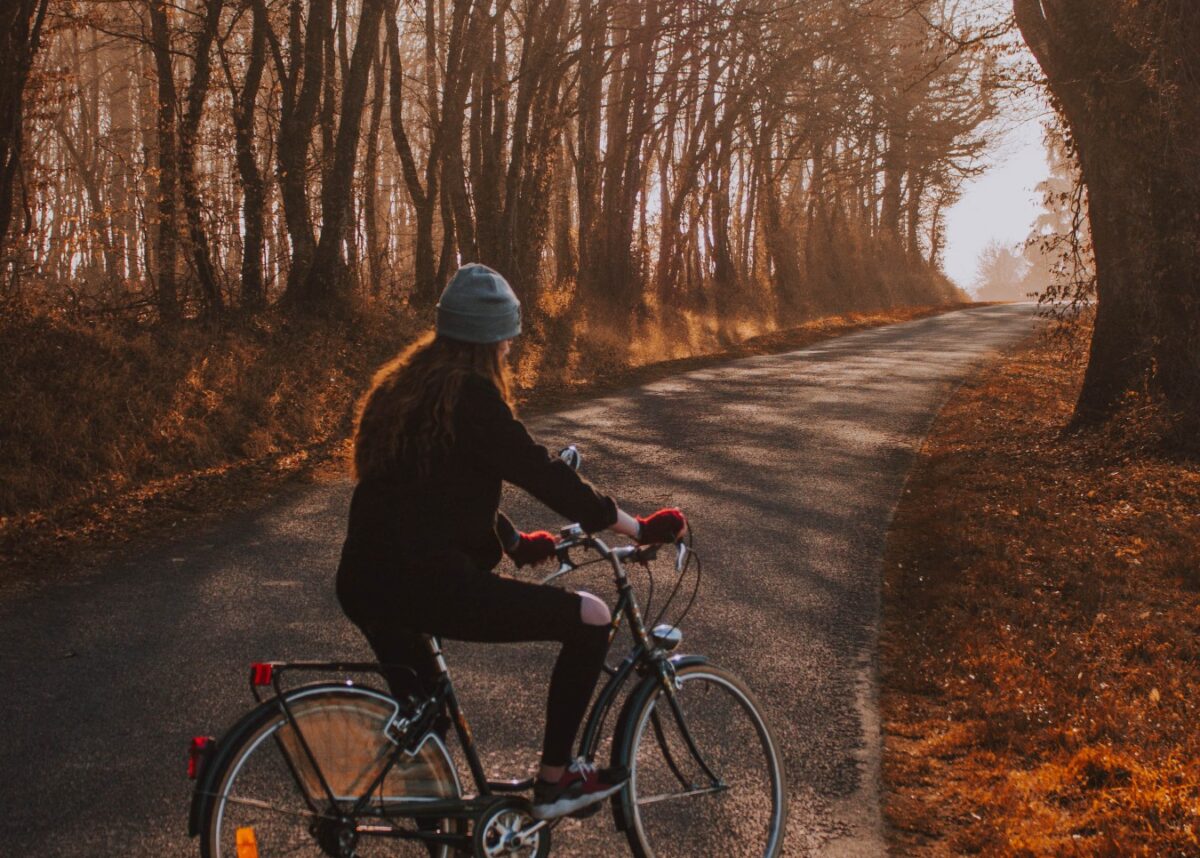
Photo by Mathias P.R. Reding on Unsplash

Photo by Mathias P.R. Reding on Unsplash

Richard Bean, The University of Queensland; Dorina Pojani, The University of Queensland, and Jonathan Corcoran, The University of Queensland

Hopping on your bike when it’s raining, or snowing, might seem unappealing. But our research has found inclement weather conditions deter some cyclists more than others.

In the first analysis of its kind, we captured eight years of data from 40 bike-sharing schemes around the world, across a range of climate zones, totalling 100 million trips. We then linked this data to fine-grained historical weather information.

We found weather patterns affect people’s willingness to cycle in different ways. For example, people in Melbourne are more likely to avoid cycling in the rain or snow than people in Dublin. And female cyclists are more put off by rain and snow than male cyclists.

These differences are important. Personal decisions on how and when to travel can affect overall traffic congestion, environmental pollution and travel experience. So understanding how outdoor conditions affect cycling is crucial to effective transport planning and more sustainable cities.
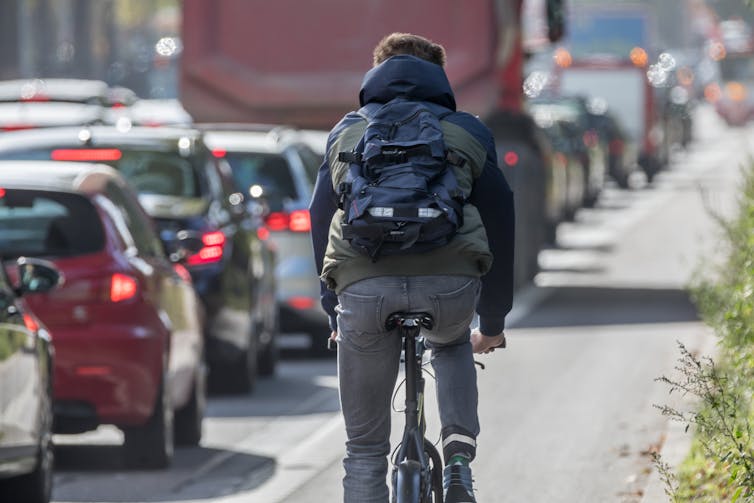
cyclist rides past row of cars
Cycling can ease traffic congestion. Shutterstock

Insights from ‘big data’

Obviously, cycling behaviour is more affected by bad weather than most other forms of transport. Previous research has confirmed this; however, the data has been patchy and limited. Bike-share schemes, which digitally record every trip taken, mean excellent “big data” is now available.

We used data from 40 public bike sharing programs in 40 cities across 16 countries. The programs spanned five climate zones, ranging from hot to frosty.


AlsoRead...

Ryan: Building real freedom through e-commerce

Ryan: Building real freedom through e-commerce

27 November 2025
Design Australia Group: Redefining Drafting as the engine of housing growth

Design Australia Group: Redefining Drafting as the engine of housing growth

26 November 2025

The cycling habits of people who own their bike may differ from those who use bike-sharing schemes. But bad weather can cause all cyclists to delay trips or change transport modes, so most of our findings are likely to apply broadly.
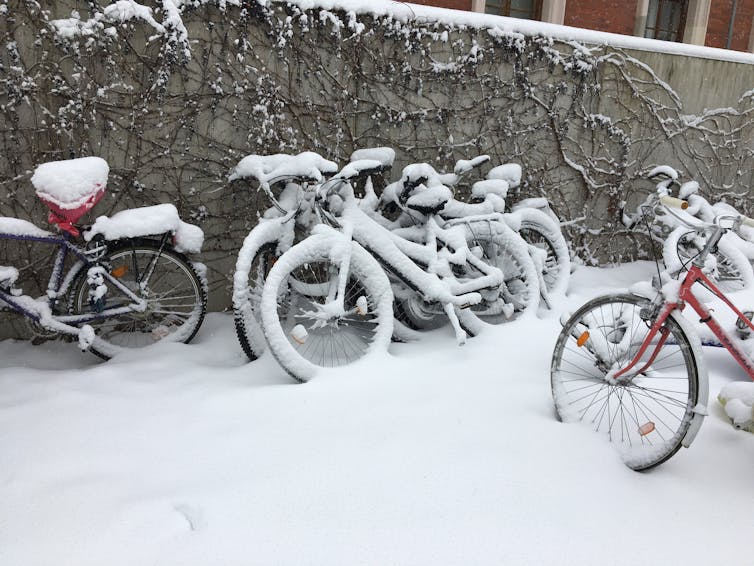


Bad weather can cause all cyclists to delay trips. Flickr

What we found

Prior studies have shown rain and snow are among the worst deterrents for cycling. But our analysis reveals a more nuanced picture.

In cities such as Melbourne (Australia), Chicago (the United States) and Vancouver (Canada), people are more likely to avoid cycling when it rains or snows.

In the top 5% rainiest hours of the year in Dublin (Ireland), people use bike share at 81% of the average usage rate. In Seville and Valencia these figures are 79% and 74%, respectively.

In Brisbane this figure drops to 68%, while in Melbourne it’s 46%.

Past research has assumed this trend is due to people in cooler cities being more accustomed to rain and snow, while people in hot climes are accustomed to the sun. But while Dublin is notoriously rainy, Seville and Valencia are rather dry.

Various factors may affect willingness to cycle in the rain. For example, high-quality cycling infrastructure may spur people to get on their bikes even in inclement weather. Seville and Valencia have large bike-share systems and safe cycling networks, whereas Melbourne’s was small and not particularly useful for commuting.

Other factors can push bike-share use up or down. They include lengthening opening hours, increasing prices or changing public transport arrangements – for example, Melbourne’s free tram zone.

We found female cyclists are put off by rain and snow more than male cyclists. Not all bike-share systems record the gender of subscribers, and so this effect could only be studied in New York City and Chicago.

This may suggest a greater risk aversion among women, often the product of socialisation in patriarchal cultures where women are taught from childhood to take fewer risks.
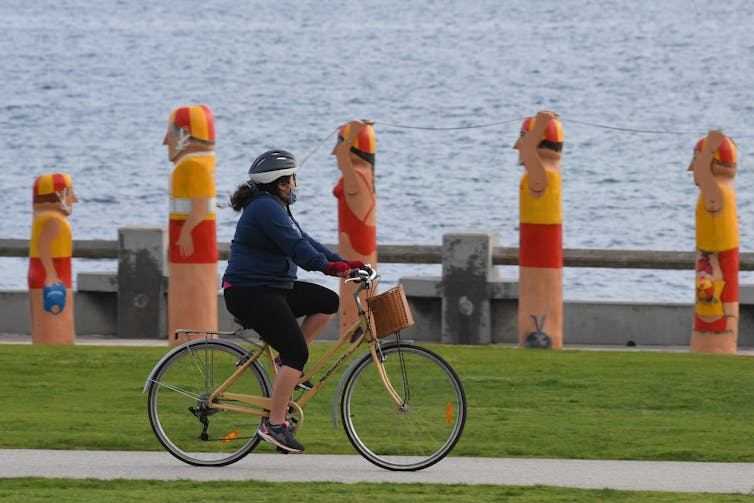


woman rides bike near water
The research found female cyclists were more deterred by inclement weather than male cyclists. James Ross/AAP

Goldilocks temperatures

Unsurprisingly, people cycle when it’s not too hot or too cold. We found the sweet spot is around 27-28℃, and bike usage declines when it gets hotter or colder.

But what’s considered too hot or too cold to cycle is not closely connected to the climate zone.

For example, cyclists in Trondheim (Norway) and Ljubljana (Slovenia) are sensitive to lower temperatures even though the first is a cold city and the second is less so. And cyclists in chilly Dublin (Ireland) and tropical Kaohsiung (Taiwan) are less sensitive to lower temperatures, even though these two cities also have vastly different climates.

This finding is surprising because, as with rain and snow, it was previously assumed people in the tropics could tolerate more heat while people in temperate climates were more tolerant of cooler temperatures.
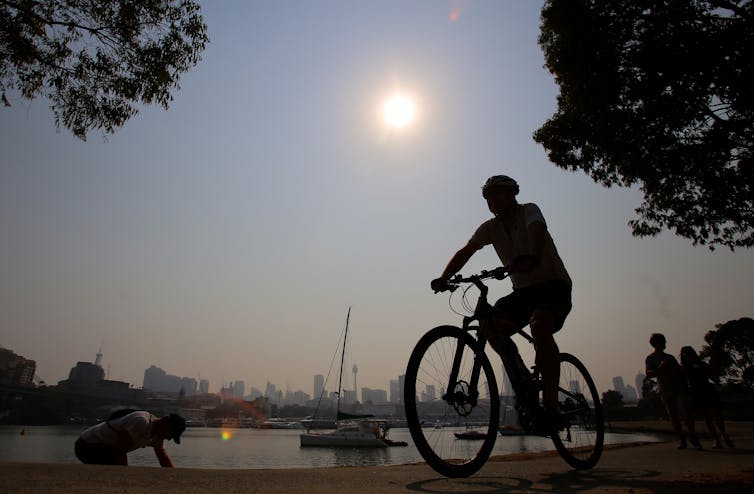


Silhouette of cyclists against sun and water
What’s considered too hot or cold to cycle is not closely connected to the climate zone. Steen Saphore/AAP

On your bike

In Australia, bicycle travel accounts for only about 1% of journeys. Obviously, we can’t control the weather – but we can transform our institutional and political environments to remove barriers to cycling.

This includes creating safe, weatherproof infrastructure separated from high-speed motor vehicles. And cycling should become an integral part of transport planning and receive a fair share of funding.

Such changes will require public support to implement. Planning officials and cycling advocates must do better at motivating people to cycle. This might include positioning cycling as a “normal” pursuit, or framing it as a source of pleasure and well-being.

Improving cycling rates offers huge potential benefits. It would lower health-care costs, ease traffic congestion, lower greenhouse gas emissions and, importantly, make our cities more liveable places.

Richard Bean, Research Fellow, The University of Queensland; Dorina Pojani, Senior Lecturer in Urban Planning, The University of Queensland, and Jonathan Corcoran, Professor, School of Earth and Environmental Sciences, The University of Queensland

This article is republished from The Conversation under a Creative Commons license. Read the original article.


Tags: SB001
DMCA.com Protection Status

SUBSCRIBE to our NEWSLETTER

[mc4wp_form id=”2384248″]

Don't Miss

The evolution of Aesthetic Surgery through the lens of Dr Kourosh Tavakoli

by Pauline Torongo
4 December 2025
The evolution of Aesthetic Surgery through the lens of Dr. Kourosh Tavakoli
Health & Wellness

As global interest in Australian cosmetic surgery continues to grow, the combination of regulation, research and emerging digital tools is...

Read moreDetails

Ryan: Building real freedom through e-commerce

by Pauline Torongo
27 November 2025
Ryan: Building real freedom through e-commerce
Business & Finance

Ryan’s greatest achievement isn’t any single business or revenue milestone — it’s the ecosystem he’s built through the Change community.

Read moreDetails

Design Australia Group: Redefining Drafting as the engine of housing growth

by Pauline Torongo
26 November 2025
Design Australia Group: Redefining Drafting as the engine of housing growth
Business & Finance

Australia is under pressure to build homes faster, but design bottlenecks slow progress. Design Australia Group is fixing this by...

Read moreDetails

Louis Guy Detata builds Global Trading Empires through autonomous systems and disciplined leadership

by Pauline Torongo
25 November 2025
Louis Guy Detata builds Global Trading Empires through autonomous systems and disciplined leadership
Business & Finance

The path from investment banking to leading a global trading platform has taught Louis Detata that sustainable success requires more...

Read moreDetails

Burning Eucalyptus Wood: Tips, Advantages, Disadvantages & Alternatives

by Fazila Olla-Logday
20 November 2025
Image Supplied
Enviroment

Learn about burning eucalyptus wood for stoves and fireplaces. Discover benefits, drawbacks, harvesting tips, and better alternative firewood options for...

Read moreDetails

Everything Parents Need to Know About Baby Soft Play and Why It’s a Game Changer

by Fazila Olla-Logday
11 November 2025
Everything Parents Need to Know About Baby Soft Play
Health & Wellness

Baby soft play is a fun, safe, and educational way for little ones to explore and grow. Discover the benefits...

Read moreDetails

WOMAD Sets Up a New Camp in Wiltshire – Australian festival fans take note!

by Kris Griffiths
11 November 2025
Kumbia Boruka brought their reggae and dancehall flavour to the Taste the World Stage at WOMAD 2024 - Credit - Mike Massaro
Entertainment

With its 2026 edition moving to Neston Park in England, WOMAD offers Aussie music lovers a chance to reconnect with global...

Read moreDetails
Load More

Copyright © Blue Sky Publications Ltd. All Rights Reserved.
australiantimes.co.uk is a division of Blue Sky Publications Ltd. Reproduction without permission prohibited. DMCA.com Protection Status

  • About us
  • Write for Us
  • Advertise
  • Contact us
  • T&Cs, Privacy and GDPR
No Result
View All Result
  • News
    • Weather
    • Sport
    • Technology
    • Business & Finance
      • Currency Zone
    • Lotto Results
      • The Lott
  • Lifestyle
    • Entertainment
    • Horoscopes
    • Health & Wellness
    • Recipes
  • Travel
  • Expat Life
  • Move to Australia

Copyright © Blue Sky Publications Ltd. All Rights Reserved.
australiantimes.co.uk is a division of Blue Sky Publications Ltd. Reproduction without permission prohibited. DMCA.com Protection Status

No Result
View All Result
  • News
    • Weather
    • Sport
    • Technology
    • Business & Finance
      • Currency Zone
    • Lotto Results
      • The Lott
  • Lifestyle
    • Entertainment
    • Horoscopes
    • Health & Wellness
    • Recipes
  • Travel
  • Expat Life
  • Move to Australia

Copyright © Blue Sky Publications Ltd. All Rights Reserved.
australiantimes.co.uk is a division of Blue Sky Publications Ltd. Reproduction without permission prohibited. DMCA.com Protection Status





