

• Advertise
  • About us
  • Terms and Conditions
  • Contact us
Saturday, August 15, 2026
Australian Times News
  • News
    • Weather
    • Sport
    • Technology
    • Business & Finance
      • Currency Zone
    • Lotto Results
      • The Lott
  • Lifestyle
    • Entertainment
    • Horoscopes
    • Health & Wellness
    • Recipes
  • Travel
  • Expat Life
  • Move to Australia
No Result
View All Result
  • News
    • Weather
    • Sport
    • Technology
    • Business & Finance
      • Currency Zone
    • Lotto Results
      • The Lott
  • Lifestyle
    • Entertainment
    • Horoscopes
    • Health & Wellness
    • Recipes
  • Travel
  • Expat Life
  • Move to Australia
No Result
View All Result
Australian Times News
No Result
View All Result
Home News

They’re everywhere: New study finds polyester fibres throughout the Arctic Ocean

The Arctic has long proven to be a barometer of the health of our planet. This remote part of the world faces unprecedented environmental assaults, as climate change and industrial chemicals threaten a way of life for Inuit and other Indigenous and northern communities that rely heavily on seafood and marine mammals for food.
The Conversation by The Conversation
14-01-2021 01:53
in News
Microplastics are found throughout the Arctic Ocean

Microplastics are found throughout the Arctic Ocean Photo by ?? Claudio Schwarz | @purzlbaum on Unsplash

Peter S. Ross, University of British Columbia

The Arctic has long proven to be a barometer of the health of our planet. This remote part of the world faces unprecedented environmental assaults, as climate change and industrial chemicals threaten a way of life for Inuit and other Indigenous and northern communities that rely heavily on seafood and marine mammals for food.

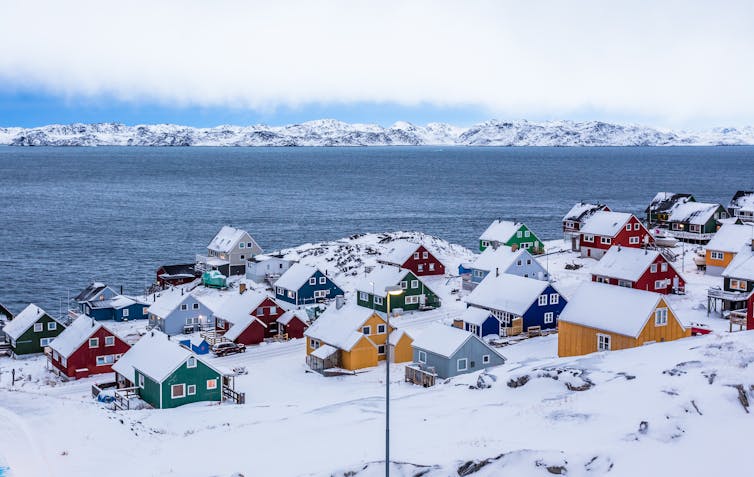
Scientists have found widespread evidence of microplastics in the Arctic Ocean. This could further stress the fragile Arctic ecosystem and the food it provides to people living there. (Shutterstock)

But who would have imagined that the clothes we wear might add to this onslaught? Evidence increasingly shows that tiny synthetic fibres are permeating the Arctic Ocean and finding their way into zooplankton, fish, seabirds and marine mammals.

In a new study published in Nature Communications, my colleagues and I find a stark confirmation that microplastics are found throughout the Arctic Ocean from Europe to the North Pole and the North American Arctic. Their presence raises concerns that textiles, laundry and municipal wastewater may be an important source of these emerging pollutants.

Extensive Arctic sampling and in-depth analysis

Our research was led by a a team at Ocean Wise Conservation Association in Vancouver, and supported by field teams from Fisheries and Oceans Canada. We collected seawater samples were collected from just below the surface of the Arctic Ocean as part of four scientific expeditions stretching from Tromsø, Norway, to the Beaufort Sea in North America.

An icebreaker cuts a path through the ice floe in the Arctic Ocean.
The Canadian Coast Guard Ship Louis S. St. Laurent transiting the Arctic Ocean. This expedition between Norway and Canada collected seawater samples for microplastics analysis. (Arthi Ramachandra/Fisheries and Oceans Canada), Author provided

A total of 71 near-surface samples were collected across the Arctic. We also collected 26 samples from the Beaufort Sea from just below the surface down to a depth of 1,015 metres. We then filtered and analyzed the samples back at the Ocean Wise Plastics Lab using microscopes and spectroscopy to identify plastic polymers.


Microplastics are particles less than five millimetres long. We found an average of 49 microplastic particles per cubic meter of seawater throughout the Arctic, illustrating just how widespread synthetic plastic pollution has become in this remote region. This is lower than concentrations found in more urbanized regions in the South, but approaching levels found in the open Pacific and Atlantic Oceans.


AlsoRead...

Managing Aussie Share Portfolios Abroad: Tips for Growth

Managing Aussie Share Portfolios Abroad: Tips for Growth

2 July 2026
The New Meaning of Luxury: Lessons from Entrepreneur Chloe Hardy

The New Meaning of Luxury: Lessons from Entrepreneur Chloe Hardy

2 July 2026

Of these, 92 per cent were fibres, averaging 14 microns (0.014 mm) thick and 1,100 microns (1.1 mm) long. We documented every colour imaginable: red, blue, yellow, green…. But perhaps the most striking finding in the lab was that 73 per cent of these fibres were polyester.

Tracking the source of mystery fibres

Our research expedition covered more than 20,000 kilometres and provided clues as to the origins of these fibres. Their widespread distribution points to sources outside the Arctic, rather than local ones.

We found that fibres in the eastern Arctic were three times more abundant in the eastern Arctic than the west. They were also 50 per cent longer in the east, and their infrared signature more closely resembled commercial polyester.

All this evidence suggests most of these fibres entered the Arctic Ocean from the Atlantic Ocean. Oceanographic features provide a supporting explanation for these observations, with approximately nine times more water entering the Arctic Ocean from the Atlantic than the Pacific.


The size, shape, colours and polymer identity of the majority of these particles provide additional indications of their origins. These physical characteristics closely resembled what we encountered in our 2018 study of microplastics in the largest domestic wastewater treatment plant in Vancouver.
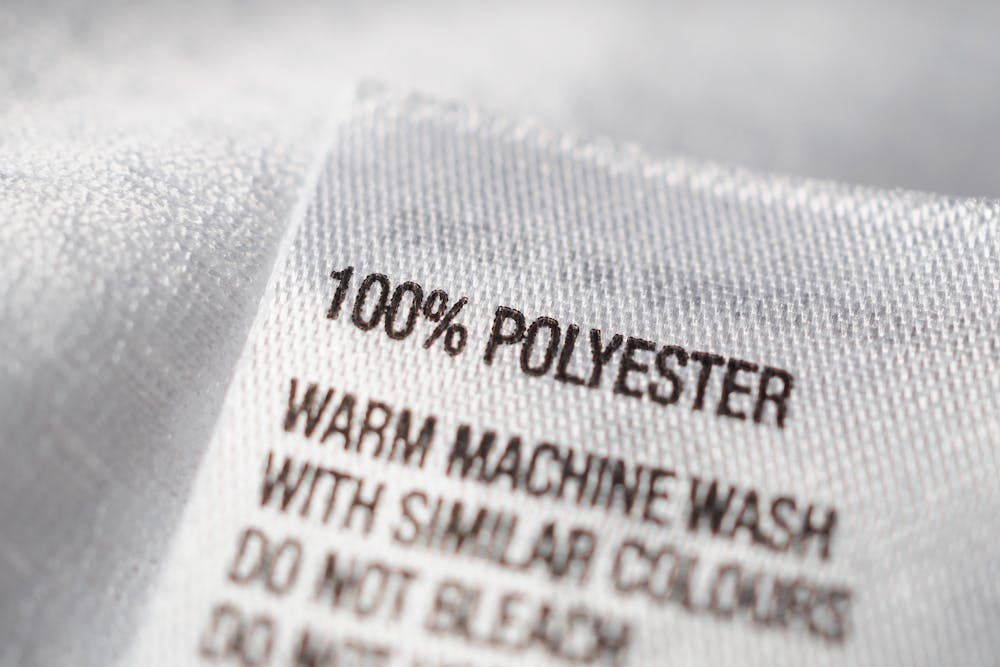
A clothing tag saying 100 per cent polyester
A study of microfibres in the Arctic Ocean found most of them were polyester, likely shed from clothing during washing. (Shutterstock)

The size and shape of these fibres also closely mirrored those observed in laundry effluent, and builds on a series of studies showcasing the vulnerability of textiles to shedding during home laundry. In fact, we recently estimated that the average Canadian or U.S. household releases over 500 million fibres per year from laundry. This adds up to 3.5 quadrillion fibres weighing 878 tonnes from these two countries alone.

Not all textiles shed equally

The weight of evidence points to something most of us could not even imagine: that washing our clothes is contributing to the widespread contamination of the world’s oceans with microfibers — both synthetic and natural. There is a glimmer of hope, though, as we see many textile design, manufacture and retail firms steeping onto the sustainability path.

In launching our Microfibre Partnership — now supported by organizations in Canada, the United States and Europe, including MEC, Patagonia, REI, Arc’teryx, the Outdoor Industry Association, Joe Fresh, Aritzia, Cotton Inc., McLean Foundation, Laudes Foundation, MetroVancouver and Environment and Climate Change Canada, we have discovered that not all textiles shed equally. In fact, an 800-fold difference between low and high fibre shedding material points to a significant opportunity for more sustainable clothing design.
A washing machine
Polyester, nylon, acrylic and other synthetic materials make up more than half the materials that go into clothing globally. With each round of washing, tiny fibres less than five millimetres long are shed and released into wastewater, where they can end up in the ocean. (Shutterstock)

And there is much more opportunity for positive momentum, with governments working around the world on a legislative agenda for plastics. Canada launched the Ocean Plastics Charter at the G7 in 2018.

Consumers and homeowners are stepping up, too, as the world increasingly embraces a closed-loop economy for plastics, where items are reused or recycled instead of thrown away. In the case of laundry, one can install a lint trap that reduces fibre release from washing machines by up to 95 per cent.

There is much bad news about the environment these days, but our report about microplastics in the Arctic can help us chart a clear set of solution-oriented opportunities for the public, for governments and for the private sector.

Peter S. Ross, Adjunct professor, Earth, Ocean and Atmospheric Sciences, University of British Columbia

This article is republished from The Conversation under a Creative Commons license. Read the original article.


Tags: SB001
DMCA.com Protection Status

SUBSCRIBE to our NEWSLETTER

[mc4wp_form id=”2384248″]

Don't Miss

Why Smarter Fleet Management Is For All Modern Business Options

by Fazila Olla-Logday
29 July 2026
Smarter Fleet Management
Motoring

Operating a business that relies on vehicles is harder than ever.

Read moreDetails

Animal Communication Goes Beyond What Science Can Currently Measure: Zoologist and Spiritual teacher Artemis, the heart whisperer on what the textbooks don’t teach

by Australian Times
7 July 2026
Animal Communication Goes Beyond What Science Can Currently Measure
Lifestyle

Animal communication classes and formal training can be valuable, providing tools, structure, and guidance.

Read moreDetails

Managing Aussie Share Portfolios Abroad: Tips for Growth

by Fazila Olla-Logday
2 July 2026
Managing Aussie Share Portfolios Abroad: Tips for Growth
at

Unlock the secrets to optimizing your Aussie share portfolios abroad. Discover essential tips for growth and navigate the global market...

Read moreDetails

The New Meaning of Luxury: Lessons from Entrepreneur Chloe Hardy

by Pauline Torongo
2 July 2026
The New Meaning of Luxury: Lessons from Entrepreneur Chloe Hardy
Business & Finance

Chloe Hardy, the founder and CEO of Dupes & Co established an Australian-made beauty brand focused on affordability and product...

Read moreDetails

Excel Funding Group emerges as Specialist in SMSF Property Lending amid growing demand

by Pauline Torongo
26 June 2026
Excel Funding Group emerges as Specialist in SMSF Property Lending amid growing demand
Business & Finance

Excel Funding Group has hit a new milestone, tripling its SMSF loan settlement volumes compared to Q1 2025.

Read moreDetails

Svitla Systems acquires Australia’s Kiandra IT to expand Global Engineering Footprint and Accelerate AI-Driven delivery

by Pauline Torongo
11 May 2026
Svitla Systems
Business & Finance

Acquisition marks Svitla’s entry into the Australian market and strengthens capabilities in low-code, Microsoft technologies, and enterprise software engineering.

Read moreDetails

Residential Healthcare Practices: Revolution or Evolution?

by Pauline Torongo
11 May 2026
Residential Healthcare Practices: Revolution or Evolution?
Lifestyle

President Bill Lutz’s "revolution" was born from his background in fine dining, which instilled a disciplined, customer-focused approach.

Read moreDetails
Load More

Copyright © Blue Sky Publications Ltd. All Rights Reserved.
australiantimes.co.uk is a division of Blue Sky Publications Ltd. Reproduction without permission prohibited. DMCA.com Protection Status

  • About us
  • Write for Us
  • Advertise
  • Contact us
  • T&Cs, Privacy and GDPR
No Result
View All Result
  • News
    • Weather
    • Sport
    • Technology
    • Business & Finance
      • Currency Zone
    • Lotto Results
      • The Lott
  • Lifestyle
    • Entertainment
    • Horoscopes
    • Health & Wellness
    • Recipes
  • Travel
  • Expat Life
  • Move to Australia

Copyright © Blue Sky Publications Ltd. All Rights Reserved.
australiantimes.co.uk is a division of Blue Sky Publications Ltd. Reproduction without permission prohibited. DMCA.com Protection Status

No Result
View All Result
  • News
    • Weather
    • Sport
    • Technology
    • Business & Finance
      • Currency Zone
    • Lotto Results
      • The Lott
  • Lifestyle
    • Entertainment
    • Horoscopes
    • Health & Wellness
    • Recipes
  • Travel
  • Expat Life
  • Move to Australia

Copyright © Blue Sky Publications Ltd. All Rights Reserved.
australiantimes.co.uk is a division of Blue Sky Publications Ltd. Reproduction without permission prohibited. DMCA.com Protection Status





