


Natascha Radclyffe-Thomas, Glasgow Caledonian University
With six weeks to go until COP26, the delayed 2020 UN climate change conference in Glasgow, many people are considering how their personal and professional behaviour can help tackle the climate crisis. This includes rethinking the extent to which we are defined by our consumption or our citizenship.
Academics recognise the widespread consensus, demonstrated through a global commitment to the UN’s Sustainable Development Goals (SDGs), that universal action is needed to end poverty, protect the planet and ensure that all people enjoy peace and prosperity by 2030.
But if in universities we continue to teach within a commodified model of education, how will we deliver education for sustainable development? England, for example, has the highest tuition fees in the developed world and the narrative of value for money has created a culture of students as consumers.
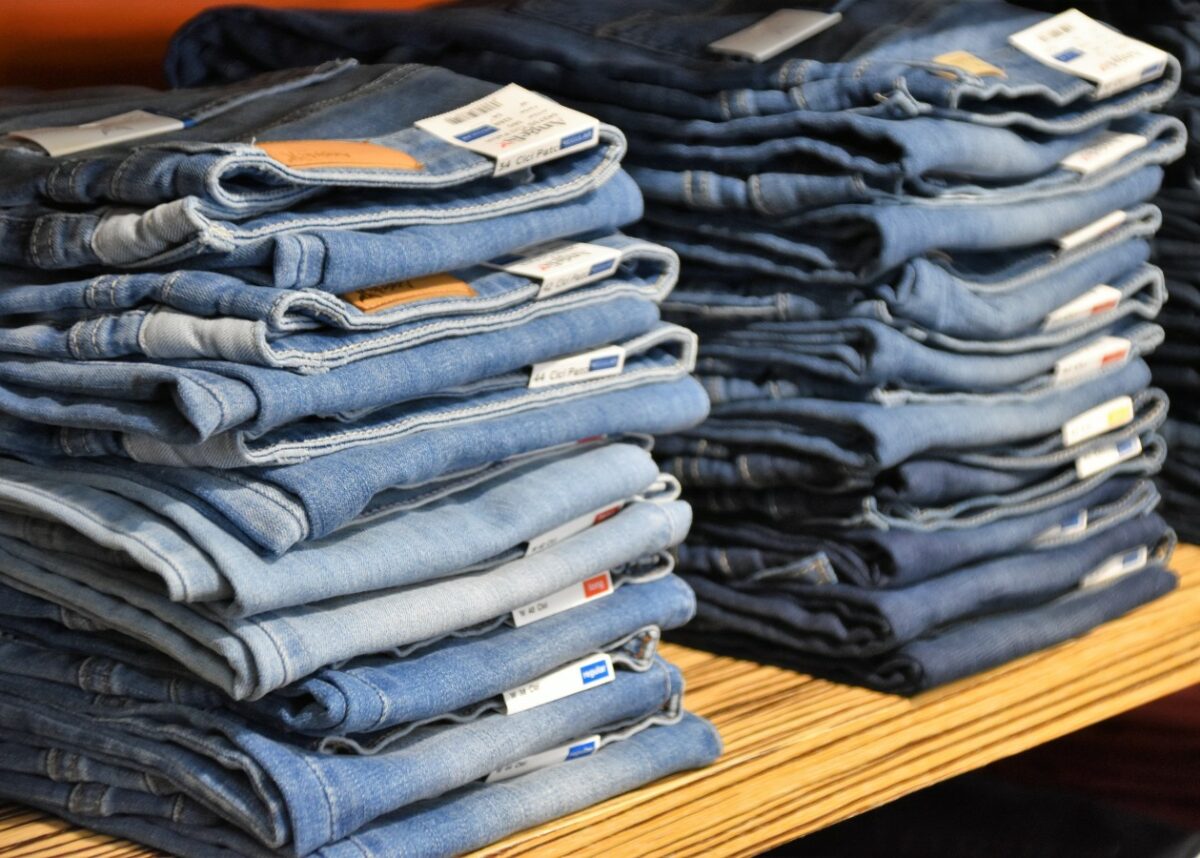
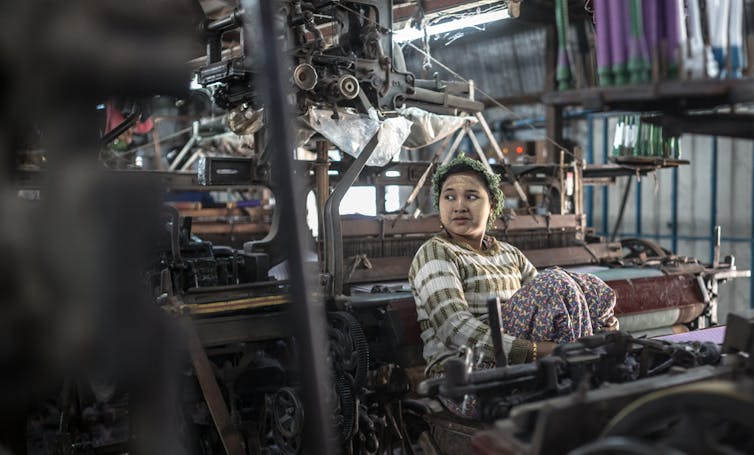
And where better to start than looking at how fashion students are taught to think about sustainability. The fashion industry has a well-documented history of unsustainable practices including intensive and excessive production, textile waste, lack of transparency and poor labour conditions. Attending an international conference on how to create a more sustainable fashion system I recall a delegate saying: “We need to talk to industry,” to which I responded: “Our students are the industry.”
Demanding a sustainable curriculum
Educating future leaders is critical to achieving sustainability targets – and those working in fashion are no different. Graduates increasingly want to work with purpose, but are we equipping them with sustainability literacies – the information, skills and aptitudes – to challenge existing systems and structures, including the universities in which they study?
A 2021 Deloitte survey confirms my own experience that younger people are increasingly concerned with issues such as income inequality and climate change. Many are looking for purpose over pay cheques when weighing up job opportunities. The survey reported that 44% of millennials and 49% of Gen Z base their choices on personal ethics when it comes to the type of work or the organisations they would consider joining.


But it’s not just employers that need to change attitudes towards creating workplaces that are more responsible when it comes to climate change. Another recent survey of prospective international students found that a university’s reputation and commitment to sustainability ranked higher than its location. According to Students Organising for Sustainability UK (SOS UK), 60% of students want to learn more about sustainability, and 80% of students want their institutions to do more about it. https://www.youtube.com/embed/ZoiU8sprXpQ?wmode=transparent&start=0
A focus on students
It is only by taking a deep dive into sustainability that we can help fashion students understand how all the elements of the fashion business model and supply chain affect people and planet. This is greatly aided by new guidance on Education for Sustainable Development published earlier in 2021.
The annual Green Gown Awards give a snapshot of the exceptional sustainability initiatives being undertaken by universities and colleges in the UK. In 2020, UCL’s Positive Climate Campaign won the 2030 Climate Action category. The University of Plymouth was highly commended for its collaborative Net Zero pathway. And Glasgow Caledonian University (GCU) student Emma Kidd was highly commended for her Fashion Detox Challenge.
GCU was also recently commended by the UN as an example of SDG best practice for its commitment to fully integrating the sustainability goals into all its activities. This includes developing research, teaching materials and assessment tasks and collaborating with outside organisations at the forefront of sustainability including the Ellen MacArthur Foundation and its work promoting a circular fashion industry.
GCU’s British School of Fashion also produced a collection of teaching case studies, as part of Bloomsbury’s digital resource, on sustainable clothing pioneers such as Patagonia and Stella McCartney. Both businesses have an environmental mission and use creative ways to educate consumers about the climate crisis.
Patagonia published a reversible poem on Black Friday 2020 and Stella McCartney released her Spring 2021 collection A-Z Manifesto to “start a conversation about values”. By studying these businesses, students are encouraged to think about the negative social and environmental impacts of fashion, to debate the pros and cons of fabric and production choices and to actively promote more sustainable alternatives in line with their own values.
Are we there yet?
The UN’s Sustainable Development Goal 4.7 target states that by 2030:
All learners acquire knowledge and skills needed to promote sustainable development, including among others through education for sustainable development and sustainable lifestyles, human rights, gender equality, promotion of a culture of peace and non-violence, global citizenship, and appreciation of cultural diversity and of culture’s contribution to sustainable development.
The more we learn about sustainability, the clearer it is that many of our social and environmental challenges, including poverty, gender equality, climate change and quality education are interconnected – as exemplified by the UN’s framework of 17 SDGs. And despite the growth in commitment to sustainability from educational institutions, student bodies and individual academics, there is a widespread attitude-behaviour gap when it comes to the sector as a whole.
So as well as research and teaching for climate solutions we should ask universities how they are leading on measures of environmental and social sustainability.
In highlighting the lack of women’s representation at COP26, author and co-founder of the All We Can Save Project, Katharine Wilkinson, argues that the climate crisis should be considered a leadership crisis. This theme is developed by Caledonian student Luna Sanchez in her short film Manifesto for Women as Sustainability Leaders.
Coronavirus has led to the greatest disruption in higher education in a generation. As London Fashion Week resumes after the pandemic this week, now is a good time for reflection and planning. As we look forward to a new academic year, we should stop regarding students as consumers but as fellow citizens in pursuit of solutions to the world’s urgent climate crisis.
Natascha Radclyffe-Thomas, Professor of Marketing and Sustainable Business at the British School of Fashion (GCU London), Glasgow Caledonian University
This article is republished from The Conversation under a Creative Commons license. Read the original article.







