

• Advertise
  • About us
  • Terms and Conditions
  • Contact us
Friday, October 9, 2026
Australian Times News
  • News
    • Weather
    • Sport
    • Technology
    • Business & Finance
      • Currency Zone
    • Lotto Results
      • The Lott
  • Lifestyle
    • Entertainment
    • Horoscopes
    • Health & Wellness
    • Recipes
  • Travel
  • Expat Life
  • Move to Australia
No Result
View All Result
  • News
    • Weather
    • Sport
    • Technology
    • Business & Finance
      • Currency Zone
    • Lotto Results
      • The Lott
  • Lifestyle
    • Entertainment
    • Horoscopes
    • Health & Wellness
    • Recipes
  • Travel
  • Expat Life
  • Move to Australia
No Result
View All Result
Australian Times News
No Result
View All Result
Home News

Ocean’s deep-sea ‘time machines’ throw light on last ice age

Corals that grew at the end of the ice age around 15,000 years ago are helping scientists to understand why the ice age ended so suddenly.

Mike Simpson by Mike Simpson
19-10-2020 07:00
in News
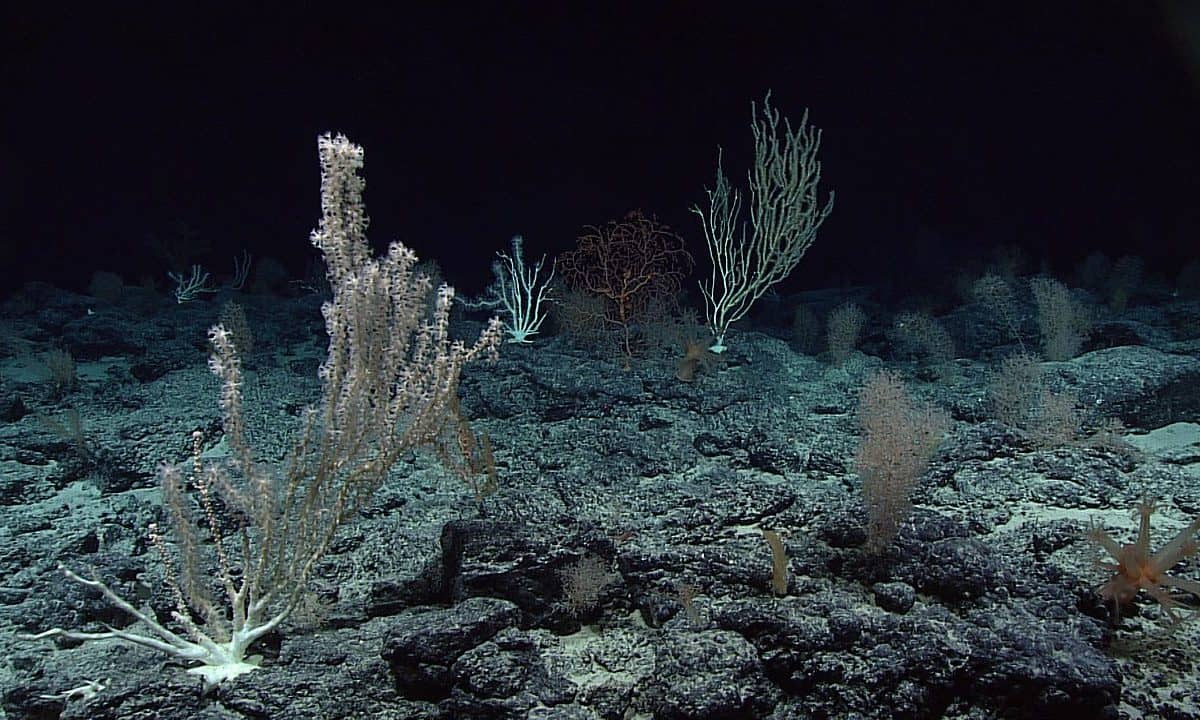
Deep-sea coral. Photo credit: Wikimedia Commons

Deep-sea coral. Photo credit: Wikimedia Commons

The fossilised remains of ancient deep-sea corals may act as time machines providing new insights into the effect the ocean has on rising CO2 levels, according to research carried out by the Universities of St Andrews in Scotland, Bristol in England and Nanjing in China.

Rising CO2 levels helped end the last ice age, but the cause of this CO2 rise has puzzled scientists for decades.

Using geochemical fingerprinting of fossil corals, an international team of scientists has found new evidence, published in Science Advances this week, that this CO2 rise was linked to extremely rapid changes in ocean circulation around Antarctica.

Coral that grew 15,000 years ago

The team collected fossil remains of deep-sea corals that lived thousands of metres beneath the waves. By studying the radioactive decay of the tiny amounts of uranium found in these skeletons, they identified corals that grew at the end of the ice age around 15,000 years ago.

Further geochemical fingerprinting of these specimens – including measurements of radiocarbon – allowed the team to reconstruct changes in ocean circulation and compare them to changes in global climate at an unprecedented time resolution.

Professor Laura Robinson of the University of Bristol, who led the research team, said: “The data show that deep ocean circulation can change surprisingly rapidly and that this can rapidly release CO2 to the atmosphere.”

Dr James Rae, of the School of Earth and Environmental Sciences at the University of St Andrews, added: “The corals act as a time machine, allowing us to see changes in ocean circulation that happened thousands of years ago.


AlsoRead...

How She Sells with Brooke helps thousands of women build new careers through high-ticket sales

How She Sells with Brooke helps thousands of women build new careers through high-ticket sales

6 October 2026
Mark Levin and Yael Eckstein: Celebrating 250 Years - The Bond Between America and Israel

Mark Levin and Yael Eckstein: Celebrating 250 Years – The Bond Between America and Israel

30 September 2026

Southern Ocean spewed carbon dioxide

“They show that the ocean round Antarctica can suddenly switch its circulation to deliver burps of CO2 to the atmosphere.”

Scientists have suspected that the Southern Ocean played an important role in ending the last ice age and the team’s findings add weight to this idea.

Dr Tao Li of Nanjing University, lead author of the new study, said: “There is no doubt that Southern Ocean processes must have played a critical role in these rapid climate shifts and the fossil corals provide the only possible way to examine Southern Ocean processes on these timescales.”

Release of geological carbon from sea

In another study published in Nature Geoscience this week, the same team ruled out recent speculation that the global increase in CO2 the end of the ice age may have been related to release of geological carbon from deep sea sediments.

Andrea Burke, of the School of Earth and Environmental Sciences at the University of St Andrews, said: “There have been some suggestions that reservoirs of carbon deep in marine mud might bubble up and add CO2 to the ocean and the atmosphere, but we found no evidence of this in our coral samples”.

Dr James Rae added: “Although the rise in CO2 at the end of the ice age was dramatic in geological terms, the recent rise in CO2 due to human activity is much bigger and faster. What the climate system will do in response is pretty scary.”


Tags: global warmingIce agenatureOceansscience
DMCA.com Protection Status

SUBSCRIBE to our NEWSLETTER

[mc4wp_form id=”2384248″]

Don't Miss

How She Sells with Brooke helps thousands of women build new careers through high-ticket sales

by Pauline Torongo
6 October 2026
How She Sells with Brooke helps thousands of women build new careers through high-ticket sales
Business & Finance

More than 3,000 women have joined She Sells with Brooke Triplett to build careers in high-ticket sales. For many, the...

Read moreDetails

Qualities to look for in a Caribbean Luxury Cruise Experience

by Pauline Torongo
6 October 2026
Qualities to look for in a Caribbean Luxury Cruise Experience. Image: Supplied
Travel

Luxury Caribbean cruises are often associated with beaches, sunshine, and tropical ease, but they can be more than that with...

Read moreDetails

Mark Levin and Yael Eckstein: Celebrating 250 Years – The Bond Between America and Israel

by Pauline Torongo
30 September 2026
Mark Levin and Yael Eckstein: Celebrating 250 Years - The Bond Between America and Israel
News

As America marks 250 years since the Declaration of Independence, Yael Eckstein and Mark Levin explore the biblical values and...

Read moreDetails

How supporting Australia’s Care Workforce could strengthen care in the community

by Pauline Torongo
10 September 2026
How supporting Australia’s Care Workforce could strengthen care in the community
News

Australian care funding faces growing scrutiny after a 2025 ANAO report found NDIS losses from fraud, non-compliance, and payment errors...

Read moreDetails

The Future of Work Is Changing: What HR must champion next, according to Energy Collective Co

by Pauline Torongo
28 August 2026
What HR Must Champion Next, According to Energy Collective Co
Business & Finance

Energy Collective Co examines the root causes of performance by considering how work is designed, how leadership is enacted and...

Read moreDetails

From Empathy Burnout to Body-Led Recovery: What Heidi Jane of Intuition Co. learned by living through what she teaches

by Pauline Torongo
25 August 2026
What Heidi Jane of Intuition Co. learned by living through what she teaches
Lifestyle

Recognising emotional exhaustion is only the first step. While supportive habits such as rest, time in nature, hydration, and reduced...

Read moreDetails

Why Smarter Fleet Management Is For All Modern Business Options

by Fazila Olla-Logday
29 July 2026
Smarter Fleet Management
Motoring

Operating a business that relies on vehicles is harder than ever.

Read moreDetails
Load More

Copyright © Blue Sky Publications Ltd. All Rights Reserved.
australiantimes.co.uk is a division of Blue Sky Publications Ltd. Reproduction without permission prohibited. DMCA.com Protection Status

  • About us
  • Write for Us
  • Advertise
  • Contact us
  • T&Cs, Privacy and GDPR
No Result
View All Result
  • News
    • Weather
    • Sport
    • Technology
    • Business & Finance
      • Currency Zone
    • Lotto Results
      • The Lott
  • Lifestyle
    • Entertainment
    • Horoscopes
    • Health & Wellness
    • Recipes
  • Travel
  • Expat Life
  • Move to Australia

Copyright © Blue Sky Publications Ltd. All Rights Reserved.
australiantimes.co.uk is a division of Blue Sky Publications Ltd. Reproduction without permission prohibited. DMCA.com Protection Status