• Advertise
  • About us
  • Terms and Conditions
  • Contact us
Wednesday, May 13, 2026
Australian Times News
  • News
    • Weather
    • Sport
    • Technology
    • Business & Finance
      • Currency Zone
    • Lotto Results
      • The Lott
  • Lifestyle
    • Entertainment
    • Horoscopes
    • Health & Wellness
    • Recipes
  • Travel
  • Expat Life
  • Move to Australia
No Result
View All Result
  • News
    • Weather
    • Sport
    • Technology
    • Business & Finance
      • Currency Zone
    • Lotto Results
      • The Lott
  • Lifestyle
    • Entertainment
    • Horoscopes
    • Health & Wellness
    • Recipes
  • Travel
  • Expat Life
  • Move to Australia
No Result
View All Result
Australian Times News
No Result
View All Result
Home Lifestyle

COVID-19 shutdowns will give wildlife only short-term relief from climate change and other threats

Wildlife sightings are increasing, air quality is improving and carbon emissions are dropping.

The Conversation by The Conversation
22-06-2020 01:55
in Lifestyle
COVID-19 shutdowns will give wildlife only short-term relief

COVID-19 shutdowns will give wildlife only short-term relief Photo by Olesya Grichina on Unsplash

Peter Soroye, L’Université d’Ottawa/University of Ottawa; Jeremy Kerr, L’Université d’Ottawa/University of Ottawa, and Tim Newbold, UCL

There had to be a silver lining to the nearly universal lockdown of the COVID-19 pandemic. One of the small benefits has been a temporarily lighter human footprint in many ecosystems.

Wildlife sightings are increasing, air quality is improving and carbon emissions are dropping. While these glimmers of positivity cannot come close to eclipsing the tragic human cost of the coronavirus, many are now asking what the pandemic will mean for wildlife around the globe.
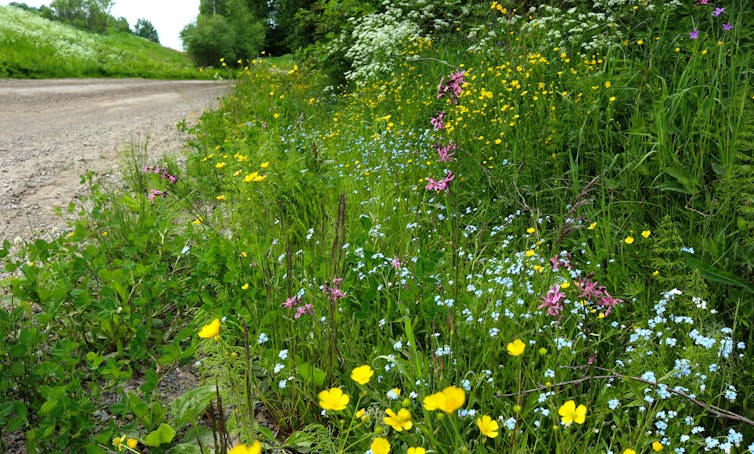
Wildflowers proliferating in overgrown roadsides during the coronavirus pandemic are providing habitat for pollinators. (Shutterstock)

Global carbon dioxide emissions for 2020 are expected to fall by up to eight per cent due to shutdowns, although the resumption of global activity could increase emissions and offset some of these gains. While this is a significant reduction in our expected emissions, it’s far from enough to turn the tide on climate change’s impacts on biodiversity.

Climate change can’t be stopped by COVID-19. This past April and May were both tied for the warmest on record, and if this trend continues then June will be the 426th month in a row where global average temperatures are above the 20th-century average. This serves as a strong reminder that even if we stop all carbon emissions today, we will still be fighting to reduce emissions and sequester carbon for a long time. The stakes are dangerously high.

Lessons from the bees

We’ve known for a while that bumblebees and many other species have been declining over recent decades. Finding the driver of these declines is especially important for a group of pollinators that performs irreplaceable ecosystem and agriculture services.

Recently, we showed that there is strong evidence that climate change has played a role in the declines of bumblebees across North America and Europe. In this new work, we found a mechanism that links climate change to these pollinator declines: climate chaos.


AlsoRead...

Residential Healthcare Practices: Revolution or Evolution?

Residential Healthcare Practices: Revolution or Evolution?

11 May 2026
Medicana Health Group launches HPV vaccination campaign to support cervical cancer prevention

Medicana Health Group launches HPV vaccination campaign to support cervical cancer prevention

28 April 2026
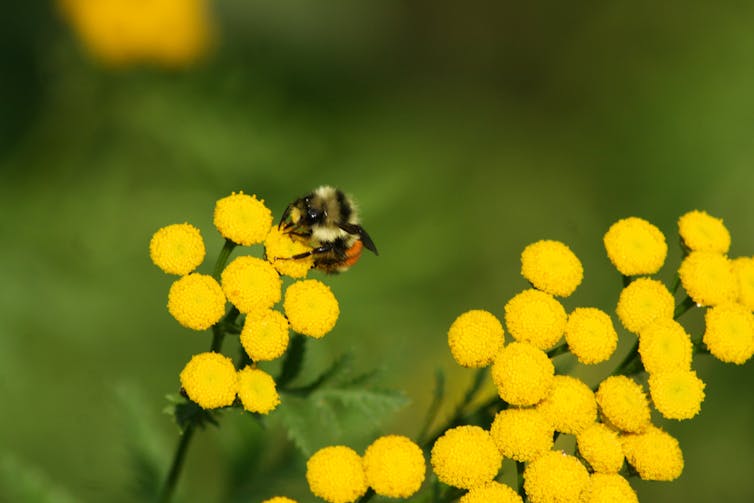
Bombus ternarius, the tricoloured bumblebee, seen on Manitoulin Island, Ont. (Peter Soroye)

The most common way to describe climate change is as the progressive rise in temperature, observed over decades, following the growth in atmospheric carbon concentrations, mostly due to human activities. Although gradual temperature changes can pose deadly threats, the frequency and intensity of extreme weather events seems to be rising sharply as the greenhouse effect grows. Heatwaves, for example, are both longer and hotter.

As Hamlet noted, “ay, there’s the rub.”

Wildlife can tolerate some degree of warming, either by finding ways to move away from risky weather or evolutionary adaptation. But it’s much more difficult for species to tolerate increasingly chaotic extremes in weather such as prolonged drought and heat waves, or tropical storms.

100 years of bumblebee data

For bumblebee species, we could predict local extinction and colonization of new areas by estimating whether recent climate change had subjected species to temperatures beyond any they are known to have tolerated in the past.

Through a series of tests with a dataset including over 100 years of bumblebee observations, we found that species have disappeared in places where temperature spiked above what they could tolerate. Species across North America and Europe are consistently being pushed to the edges of these limits during the year, much more often than they ever were for most of the 20th century. Increasing intensity of land use — including increased pesticide use — also harms bees, but these effects are distinct from the dangerous signal of climate chaos.

Average annual temperatures (map) and monthly extremes (shown in the right-hand inset with year in red compared to a baseline period in grey) have been increasing across North America and Europe from 1975-2015, resulting in declines for the bumblebees (estimated average annual decline for a species shown in left-hand inset)

While our recent study focused on bees, increasing extremes from climate change should, in principle, affect other species in the same way. If this is the case, then the increasing temperature or precipitation extremes above (or below) the limits of what species can tolerate could rapidly and abruptly begin reshaping ecosystems around the globe by as early as 2030.

Necessary responses

Although we’ll feel the effect of climate change for decades, it’s necessary to address its causes now while we still have reasonable prospects of mitigating its worst impacts. Strategies like maintaining sheltered micro-habitats to provide shade or cover, and keeping a diversity of habitats in a landscape can help reduce exposure of species to extreme weather.

Perhaps, humanity’s lighter touch during the pandemic of 2020 will mean more species can traverse landscapes or make it through another hot year in landscapes that are a little less disturbed. For instance, the profusion of wildflowers in unmaintained roadside verges could create a large amount of nesting and foraging habitat for pollinators if left for the whole year.

The growing number of gardens that are appearing as people spend more time at home could provide a similar benefit. As with reductions in emissions, continuing these practices long after lockdowns end will be the deciding factor in whether they make a difference for pollinators and other wildlife.

In some places, species and ecosystems are bouncing back, although this is not true everywhere: as economies suffer, poachers are killing protected wildlife.

The glimmers of hope will never make the incalculable human toll of a global pandemic worthwhile, nor its economic costs. Yet, hope remains a vital tool to motivate action to address climate change.

Climate change isn’t locked down and it isn’t practising social distancing. It is accelerating the erosion of the planet’s life support systems and the decline of species that humanity would be hard pressed to do without. Concerted global action can make dangerous situations better, whether it’s a pandemic or the climate crisis.

Peter Soroye, PhD Student in Conservation Biology, L’Université d’Ottawa/University of Ottawa; Jeremy Kerr, Research Chair in Macroecology and Conservation, Professor of Biology, Chair of Department of Biology, L’Université d’Ottawa/University of Ottawa, and Tim Newbold, Senior research fellow, Centre for Biodiversity and Environment, UCL

This article is republished from The Conversation under a Creative Commons license. Read the original article.


Tags: SB001
DMCA.com Protection Status

SUBSCRIBE to our NEWSLETTER

[mc4wp_form id=”2384248″]

Don't Miss

Svitla Systems acquires Australia’s Kiandra IT to expand Global Engineering Footprint and Accelerate AI-Driven delivery

by Pauline Torongo
11 May 2026
Svitla Systems
Business & Finance

Acquisition marks Svitla’s entry into the Australian market and strengthens capabilities in low-code, Microsoft technologies, and enterprise software engineering.

Read moreDetails

Residential Healthcare Practices: Revolution or Evolution?

by Pauline Torongo
11 May 2026
Residential Healthcare Practices: Revolution or Evolution?
Lifestyle

President Bill Lutz’s "revolution" was born from his background in fine dining, which instilled a disciplined, customer-focused approach.

Read moreDetails

Medicana Health Group launches HPV vaccination campaign to support cervical cancer prevention

by Pauline Torongo
28 April 2026
Medicana Health Group launches HPV vaccination campaign to support cervical cancer prevention
Health & Wellness

The Türkiye-based healthcare group has introduced a new awareness campaign focused on HPV vaccination, regular check-ups and early detection, with...

Read moreDetails

How Clevero is helping Australian Service Businesses compete with Enterprises on a Fraction of the Budget

by Pauline Torongo
28 April 2026
How Clevero is helping Australian Service Businesses compete with Enterprises on a Fraction of the Budget
Business & Finance

By consolidating CRM, scheduling, workflow automation, invoicing, reporting, and client communications into a single platform, Clevero gives smaller operators the...

Read moreDetails

How CJAM Group is building 1,100 homes across Southeast Queensland

by Pauline Torongo
24 March 2026
How CJAM Group is building 1,100 homes across Southeast Queensland
Lifestyle

The CJAM Group founder is quietly building a 1,100+ home pipeline, with projects in Hervey Bay and Toowoomba, using a...

Read moreDetails

Design Without Compromise: Where Gutter Protection Meets Modern Architecture

by Fazila Olla-Logday
20 March 2026
Design Without Compromise: Where Gutter Protection Meets Modern Architecture
Business & Finance

Design without compromise by integrating gutter protection seamlessly into modern architecture. Discover how innovative gutter systems enhance your home’s aesthetics...

Read moreDetails

How WageSafe Secured Australia’s Most Reputable Retail Business Among Its Premium Clients

by Fazila Olla-Logday
12 March 2026
How WageSafe Secured Australia’s Most Reputable Retail Business Among Its Premium Clients
at

Learn how WageSafe helps businesses stay compliant with payroll and wage regulations through reliable monitoring, risk management, and expert support—protecting...

Read moreDetails
Load More

Copyright © Blue Sky Publications Ltd. All Rights Reserved.
australiantimes.co.uk is a division of Blue Sky Publications Ltd. Reproduction without permission prohibited. DMCA.com Protection Status

  • About us
  • Write for Us
  • Advertise
  • Contact us
  • T&Cs, Privacy and GDPR
No Result
View All Result
  • News
    • Weather
    • Sport
    • Technology
    • Business & Finance
      • Currency Zone
    • Lotto Results
      • The Lott
  • Lifestyle
    • Entertainment
    • Horoscopes
    • Health & Wellness
    • Recipes
  • Travel
  • Expat Life
  • Move to Australia

Copyright © Blue Sky Publications Ltd. All Rights Reserved.
australiantimes.co.uk is a division of Blue Sky Publications Ltd. Reproduction without permission prohibited. DMCA.com Protection Status

No Result
View All Result
  • News
    • Weather
    • Sport
    • Technology
    • Business & Finance
      • Currency Zone
    • Lotto Results
      • The Lott
  • Lifestyle
    • Entertainment
    • Horoscopes
    • Health & Wellness
    • Recipes
  • Travel
  • Expat Life
  • Move to Australia

Copyright © Blue Sky Publications Ltd. All Rights Reserved.
australiantimes.co.uk is a division of Blue Sky Publications Ltd. Reproduction without permission prohibited. DMCA.com Protection Status