



Garth Heutel, Georgia State University; Givi Melkadze, Georgia State University, and Stefano Carattini, Georgia State University
In 2008, as big banks began failing across Wall Street and the housing and stock markets crashed, the nation saw how crucial financial regulation is for economic stability – and how quickly the consequences can cascade through the economy when regulators are asleep at the wheel.
Today, there’s another looming economic risk: climate change. Once again, how much it harms economies will depend a lot on how financial regulators and central banks react.
Climate change’s impact on economies isn’t always obvious. Mark Carney, the former governor of the Bank of England, identified a series of climate change-related risks in 2015 that could shake the financial system. The rising costs of extreme weather, lawsuits against companies that have contributed to climate change and the falling value of fossil fuel assets could all have an impact.
Nobel Prize-winning U.S. economist Joseph Stiglitz agrees. In a recent interview, he argued that the impact of a sharp rise in carbon prices – which governments charge companies for emitting climate-warming greenhouse gases – could trigger another financial crisis, this time starting with the fossil fuel industry, its suppliers and the banks that finance them, which could spill over into the broader economy.
Our research as environmental economists and macroeconomists confirms that both the effects of climate change and some of the policies necessary to stop it could have important implications for financial stability, if preemptive measures are not undertaken. Public policies addressing, after years of delay, the fossil fuel emissions that are driving climate change could devalue energy companies and cause investments held by banks and pension funds to tank, as would abrupt changes in consumer habits.
The good news is that regulators have the ability to address these risks and clear the way to safely implement ambitious climate policy.


Climate-stress-testing banks
First, regulators can require banks to publicly disclose their risks from climate change and stress-test their ability to manage change.
The Biden administration recently introduced an executive order on climate-related financial risk, with the goal of encouraging U.S. companies to evaluate and publicly disclose their exposure to climate change and to future climate policies.
In the United Kingdom, large companies already have to disclose their carbon footprints, and the U.K. is pushing to have all major economies follow its lead.
The European Commission also proposed new rules for companies to report on climate and sustainability in their investment decisions across a broad swath of industries in its new Sustainable Finance Strategy released on July 6, 2021. This strategy builds on a previous plan for sustainable growth from 2018.
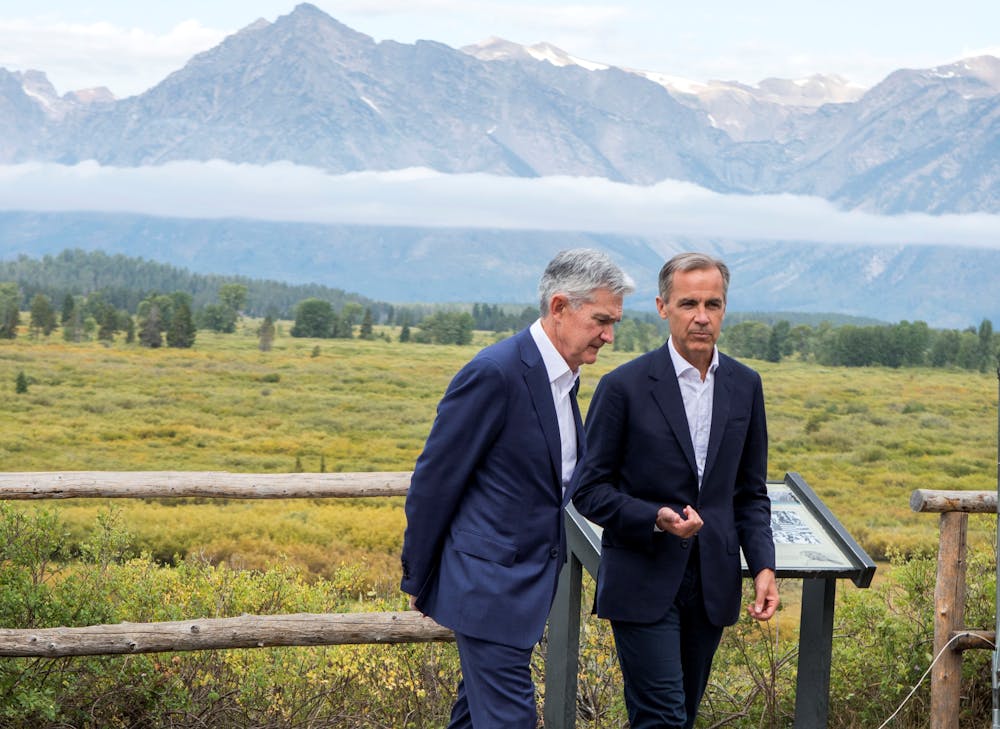
Carbon disclosure represents a crucial ingredient for “climate stress tests,” evaluations that gauge how well-prepared banks are for potential shocks from climate change or from climate policy. For example, a recent study by the Bank of England determined that banks were unprepared for a carbon price of US$150 per ton, which it determined would be necessary by the end of the decade to meet the international Paris climate agreement’s goals.
The European Central Bank is conducting stress tests to assess the resilience of its economy to climate risks. In the United States, the Federal Reserve recently established the Financial Stability Climate Committee with similar objectives in mind.
Monetary and financial policy solutions
Central banks and academics have also proposed several ways to address climate change through monetary policy and financial regulation.
One of these methods is “green quantitative easing,” which, like quantitative easing used during the recovery from the 2008 recession, involves the central bank buying financial assets to inject money into the economy. In this case, it would buy only assets that are “green,” or environmentally responsible. Green quantitative easing could potentially encourage investment in climate-friendly projects and technologies such as renewable energy, though researchers have suggested that the effects might be short-lived.
A second policy proposal is to modify existing regulations to recognize the risks that climate change poses to banks. Banks are usually subject to minimum capital requirements to ensure banking sector stability and mitigate the risk of financial crises. This means that banks must hold some minimum amount of liquid capital in order to lend.
Incorporating environmental factors in these requirements could improve banks’ resilience to climate-related financial risks. For instance, a “brown-penalizing factor” would require higher capital requirements on loans extended to carbon-intensive industries, discouraging banks from lending to such industries.
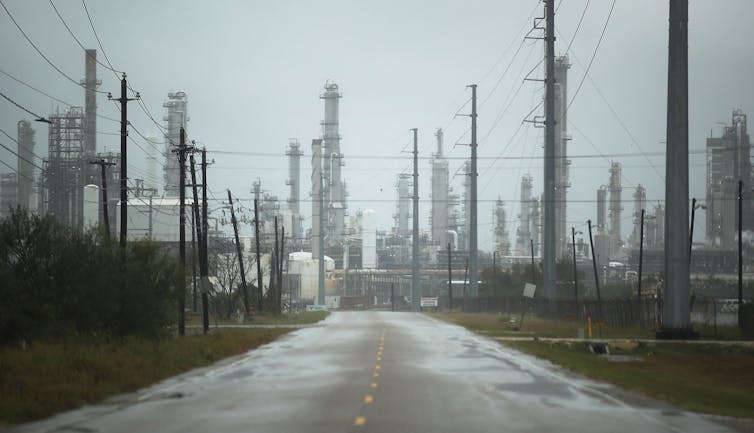
Broadly, these existing proposals have in common the goal of reducing economy-wide carbon emissions and simultaneously reducing the financial system’s exposure to carbon-intensive sectors.
The Bank of Japan announced a new climate strategy on July 16, 2021, that includes offering no-interest loans to banks lending to environmentally friendly projects, supporting green bonds and encouraging banks to disclosure their climate risk.
The Federal Reserve has begun to study these policies, and it has created a panel focused on developing a climate stress test.
Lessons from economists
Often, policymaking trails scientific and economic debates and advancements. With financial regulation of climate risks, however, it is arguably the other way around. Central banks and governments are proposing new policy tools that have not been studied for very long.
A few research papers released within the last year provide a number of important insights that can help guide central banks and regulators.
They do not all reach the same conclusions, but a general consensus seems to be that financial regulation can help address large-scale economic risks that abruptly introducing a climate policy might create. One paper found that if the climate policy is implemented gradually, the economic risks can be small and financial regulation can manage them.
Financial regulation can also help accelerate the transition to a cleaner economy, research shows. One example is subsidizing lending to climate-friendly industries while taxing lending to polluting industries. But financial regulation alone will not be enough to effectively address climate change.
Central banks will have roles to play as countries try to manage climate change going forward. In particular, prudent financial regulation can help prevent barriers to the kind of aggressive policies that will be necessary to slow climate change and protect the environments our economies were built for.
Garth Heutel, Associate Professor of Economics, Georgia State University; Givi Melkadze, Assistant Professor of Economics, Georgia State University, and Stefano Carattini, Assistant Professor in Economics, Georgia State University
This article is republished from The Conversation under a Creative Commons license. Read the original article.







