James Chin, University of Tasmania
Unity is a common theme every year on Malaysia Day, the holiday celebrated last week that marks the day Malaysia became a federation in 1963.
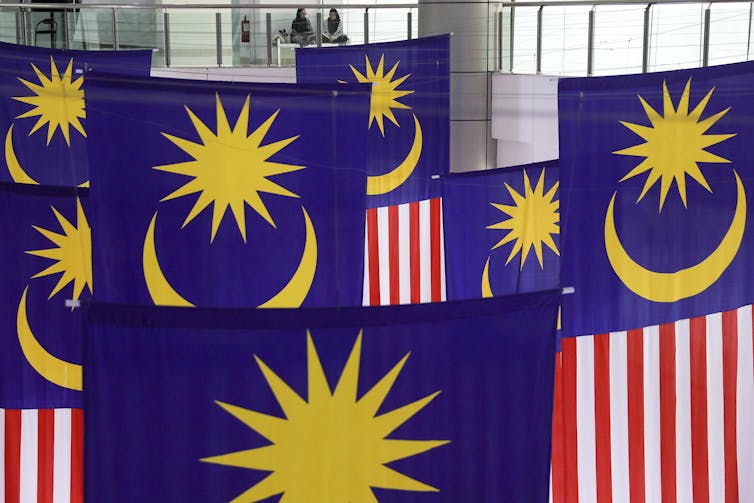
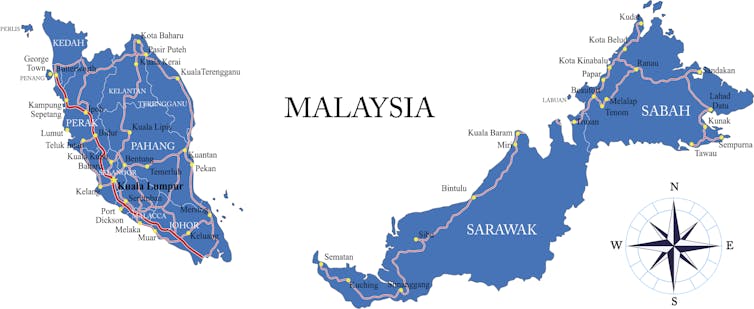
That year, Britain agreed to relinquish control of most of its remaining colonies in Southeast Asia — Singapore, North Borneo (now called Sabah) and Sarawak. They then joined with Malaya, which had gained independence from Britain in 1957, to form a new nation called Federation of Malaysia.
The legal instrument to form the federation is called the Malaysia Agreement (MA63).
Yet, for the people of Sabah and Sarawak, located on the island of Borneo, the agreement left many with mixed emotions. Some people in these states have long desired secession and, in recent years, the drumbeat of separation has only grown louder.
This issue is now a key political issue in the Sabah state election this weekend and upcoming the Sarawak elections, which must be held before the end of 2021.
Source of historical grievances
In a nutshell, most people in Sabah and Sarawak (also known as East Malaysia) are unhappy with federation because they think it has not delivered on two main promises made in 1962 — high levels of autonomy and economic development.


In the first area, the federal government has stripped away a lot of local powers in Sabah and Sarawak in the last 57 years. On top of that, the federal authorities have tried to impose the same toxic racial and religious politics found in Malaya (also known as West Malaysia) to the eastern states.
East Malaysia is much more ethnically and religiously diverse compared to the west. For example, the Malay population is a minority in both Sabah and Sarawak; in fact, no ethnic group constitutes more than 40% in either state. As a result, political Islam has not taken root here.
In fact, one of the defining features of East Malaysia is intermarriage among the different ethnic and religious groups. The divide between Muslims and non-Muslims is reasonably insignificant — a marked difference from the often suspicious attitude Islamic leaders have toward non-Muslims in Kuala Lumpur.
In terms of economic development, Sabah remains one of the poorest states in Malaysia. And the infrastructure in both Sabah and Sarawak is vastly underdeveloped compared to the west of Malaysia.
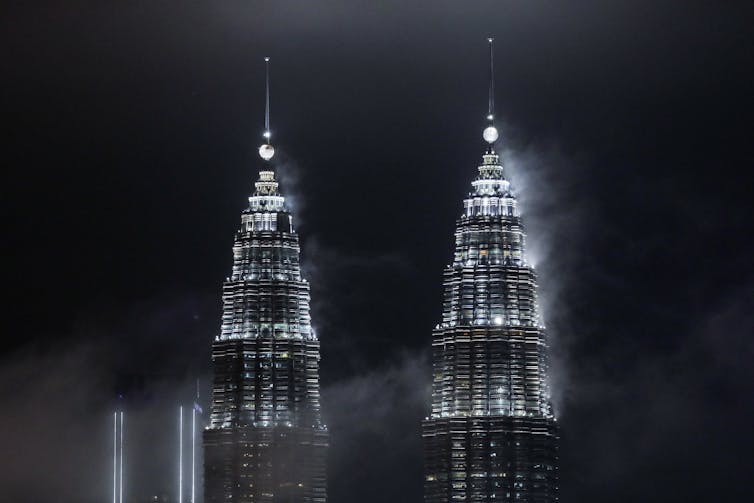
To add insult to injury, more than half of Malaysia’s oil and gas production comes from Sabah and Sarawak. The common joke is that all the iconic infrastructure in peninsular Malaysia, such as the Petronas Towers, Penang Bridge and Kuala Lumpur international airport, was built with money from East Malaysia.
Britain’s hand in the federation
In recent times, one of the biggest grievances in East Malaysia comes from the process of decolonisation administered by the British after the second world war.
There is clear, documented evidence that back in 1962, the colonial office in London used its powers and influence to get the local leaders in Sabah and Sarawak to agree to the formation of Malaysia.
The British wanted a clean exit from Southeast Asia and to ensure its former colonies did not turn to communism. So the British conceived the idea of a “Federation of Malaysia”, where its former territories would come under a single political entity.
Activists in East Malaysia say if the British had not supported the formation of the federation, it was highly unlikely local leaders would have agreed to it. Many would have instead preferred independence or a federation consisting of Sabah, Sarawak and Brunei (which gained independence from Britain much later, in 1984).

What Sabah and Sarawak want
All these historical grievances have led to a growing movement in Sabah and Sarawak advocating for secession from the federation.
With elections upcoming in both states, all local politicians — including those serving in the federal government — are now claiming to be MA63 nationalists trying to keep “Malaya out” of Sabah and Sarawak.
Social media is one key reason the secessionist movement has taken off in East Malaysia. It is now much easier for advocates to organise and magnify their grievances.
What the Sabah and Sarawak people want, at the very least, is a constitutional amendment to recognise the special autonomy of both states. But a significant minority argues the whole federation has failed, and thus secession is the only way forward.
Currently, the secessionist groups pose no real threat to the federation. But if enough people buy the secession argument in the future, public sentiment may be too strong for the national leaders to ignore.
How should the federal government respond?
There are basically two options available to the federal government.
The first is the ostensibly easy option — the political route. This would require the federal government to recognise the historical grievances and try to resolve them.
However, this is not as simple as it seems. The government is reluctant to grant real autonomy to the two states, worried this will end up weakening federal powers in the other 11 states of the federation.
There was an attempt to reword the Constitution last year to symbolically recognise the special status of both states, but it failed.
This is the only way to keep the federation together, however. The federal leaders need to agree to recognise the special status of Sabah and Sarawak and grant them wide autonomy in the Constitution, as envisaged in the 1963 Malaysia Agreement.
The second option for the government is to play a wait-and-see game. Politically, this is dangerous, as the final outcome could very well be secession.
By way of comparison, the push for independence in Catalonia was similarly based on historical grievances that mushroomed into a mainstream political movement and eventually an independence referendum — declared illegal by Spain’s constitutional court.
At the very least, what is happening on the ground in East Malaysia suggests the decolonisation process in Southeast Asia is not yet complete. This colonial legacy is not merely history, but is clearly reflected in the present reality.
James Chin, Professor of Asian Studies, University of Tasmania
This article is republished from The Conversation under a Creative Commons license. Read the original article.