



Niccolò Pisani, International Institute for Management Development (IMD)
The sudden stop of the global economy in 2020 has brought to everyone’s attention the interconnectedness of supply chains across countries and continents. Add to this the mounting tensions between the US and China, with President Trump now pushing for a decoupling from the Chinese economy as a key part of his re-election campaign.
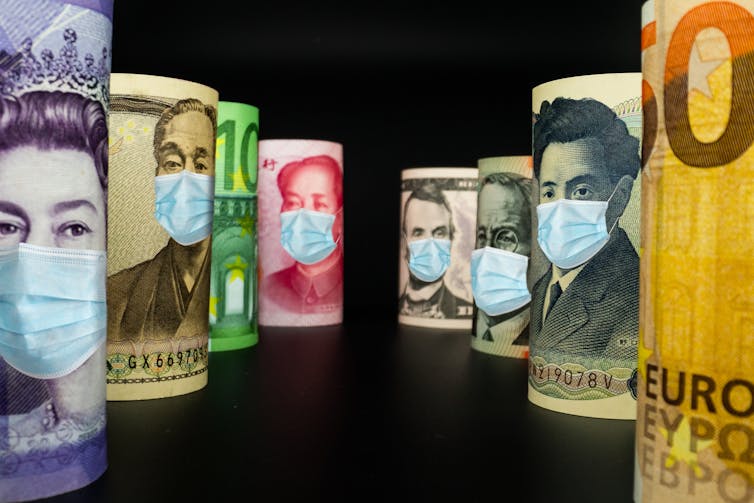
Many question whether the events of 2020 will leave us with a less globalised world. Some even wonder whether COVID-19 has killed globalisation.
But globalisation has not run its course. People were questioning its future long before 2020, citing pressure from protectionism and nationalism. In response, Frans Appel, CEO of Deutsche Post, made a compelling case in December 2019, backed by extensive data analysis, that globalisation was holding up remarkably well.
Since then, the pandemic has severely reduced cross-border flows like global trade. But wherever infection rates have come under control and lockdowns have eased, there have been signs of recovery.
The pandemic has also shown the economic importance of global connections. Take the race to produce a vaccine. A German bio-tech company, BioNTech, run by a scientist born in Turkey, listed on the US NASDAQ, is working in partnership with US medical giant Pfizer and the Chinese group Shanghai Fosun Pharmaceutical. It’s a vivid example of today’s globally interconnected business world.
Living with uncertainty
Certainly, businesses are having to live with great uncertainty. We don’t know when a vaccine will become available and whether new waves of infection will occur. The economic fallout is still unknown, given the restrictions most countries are still imposing.


Then there is the political climate. As Tata Sons chairman Natarajan Chandrasekaran put it, “geopolitical conflicts have become a new normal for every business”.
It is clear to me that these uncertainties have knock-on effects. US companies may come under more pressure from Trump over their China connections.
India is actively seeking to lure over 1,000 US manufacturing companies out of China. In Japan, outgoing premier Shinzo Abe recently proposed building an economy less dependent on China, suggesting Japanese companies diversify to other countries, especially the ASEAN nations of south-east Asia.
Besides the US/China conflict, there are other political uncertainties such as how Brexit will affect the UK and its relations with the EU. But greater uncertainty does not necessarily imply a retreat of globalisation. It means bigger challenges, but also greater opportunities. To make the best strategic decisions, business leaders need a clear-eyed view of the global dynamics at play and how globalisation is evolving.
Future-proofing
Many industries have been affected dramatically by the pandemic. The world’s largest travel operator, TUI, has seen a 98% drop in turnover in the last quarter. The harsher the economic impact, the more a company and its suppliers have had to focus on short-term survival.
But companies also need to plan for the future with all the other uncertainties from COVID-19 in mind, as well as everything from climate change to cyber attacks. According to a recent McKinsey Global Institute report, companies now expect month-long disruptions to their supply chains every 3.7 years – the equivalent of 40% of one year’s profits within the next decade, and that’s only an average.
To minimise these effects, companies need to reflect on their overall geographic footprints, supply chains and organisational structures. Companies relying on a single country for a specific part found themselves overly exposed as soon as lockdown got underway. A more diversified supply network may be less efficient, but it can make companies more flexible and resilient in such turbulent times.
Given the geopolitical climate, making supply chains more regionally concentrated and closer to consumer demand is another way for companies to reduce their exposure to future upheaval while still taking advantage of local expertise and other benefits such as tax differences. For example, Apple is now investing in two separate supply chains for the iPhone – one for China and one for everywhere else.
Digital transformation
Finally, digital technologies will drive the next globalisation phase. They were already key drivers, enabling global innovation and productivity, connecting consumers and suppliers, and moving information quickly. Digital advances are the primary reason why international internet bandwidth is more than 500 times that of 2001, for instance.
The pandemic has further accelerated this trend. Take the car industry. Conventional wisdom previously considered car sales very unlikely to move online, but that is exactly what happened as showrooms were forced to close. Carlos Tavares, CEO of Peugeot owner PSA, recently called this a “Darwinian reality”, with PSA aiming to deliver more than 100,000 cars straight to clients’ homes without them ever visiting a showroom.
Many companies have rushed to boost online sales to take advantage of consumers being at home, and offset the effect of the pandemic on their revenues. Adidas nearly doubled its e-commerce business in the second quarter, and is expecting more growth from consumers who are no longer resistant to online shopping.

Besides e-commerce, companies must rethink how to make best use of digital technologies across the board. Multinationals ranging from Google to Twitter, from PwC to Schroders are set to continue to allow the majority of their staff to work from home after the pandemic. So the shift to remote working could be permanent. Companies will need a solid digital infrastructure to be able to interact with customers, suppliers and business partners in this world.
Equally, the World Trade Organization has observed that international trade costs declined by 15% between 1996 and 2014 and expects that new digital technologies such as artificial intelligence, the internet of things, 3D printing and blockchains will help further reduce costs in future.
No wonder cross-border data flows are expected to grow even faster in the coming years. To remain competitive after COVID-19 and reap the potential benefits, as well as being ready for new forms of globalisation to emerge, the ability of a company to seize the opportunities offered by digital technologies will be more important than ever.
Niccolò Pisani, Professor of Strategy and International Business, International Institute for Management Development (IMD)
This article is republished from The Conversation under a Creative Commons license. Read the original article.







