


Tammy Hoffmann, Bond University and Paul Glasziou, Bond University
We are being saved by non-drug interventions such as quarantine, social distancing, handwashing, and – for health-care workers – masks and other protective equipment.
We are all hoping for a vaccine in 2021. But what do we do in the meantime? And more importantly, what if no vaccine emerges?
The world has bet most of its research funding on finding a vaccine and effective drugs. That effort is vital, but it must be accompanied by research on how to target and improve the non-drug interventions that are the only things that work so far.
Debates still rage over basic questions such as whether the public should use face masks; whether we should stand 1, 2 or 4 metres apart; and whether we should wash our hands with soap or sanitiser. We need the answers now.
What about non-drug intervention research?
Across all health research, non-drug interventions are the subject of about 40% of clinical trials. Yet they receive far less attention than drug development and testing.
In the COVID-19 pandemic, millions of dollars have already been given to research groups around the world to develop vaccines and trial potential drug cures. Hundreds of clinical trials on drugs and vaccines are under way, but we could find only a handful of trials of non-drug interventions, and no trials on how to improve the adherence to them.


While holding our breath for the vaccine …
We all hope the massive global effort to develop a vaccine or drug treatment for COVID-19 is successful. But many experts, including Ian Frazer, who developed Australia’s HPV vaccine, think it will not be easy or quick.
If an effective vaccine or drug doesn’t materialise, we will need a Plan B that uses only non-drug interventions. That’s why we need high-quality research to find out which ones work and how to do them as effectively as possible.
Aren’t non-drug interventions straightforward?
You might think hand washing, masks and social distancing are simple things and don’t need research. In fact, non-drug interventions are often very complex.
It takes research to understand not only the “active components” of the intervention (washing your hands, for example), but also how much is needed, how to help people start and keep doing it, and how to communicate these messages to people. Developing and implementing an effective non-drug intervention is very different from developing a vaccine or a drug, but it can be just as complex.
To take one example, there has been a #Masks4All campaign to encourage everyone to wear face masks. But what type of mask, and what should it be made of? Who should wear masks – people who are ill, people who are caring for people who are ill, or everyone? And when and where? There is little agreement on these detailed questions.
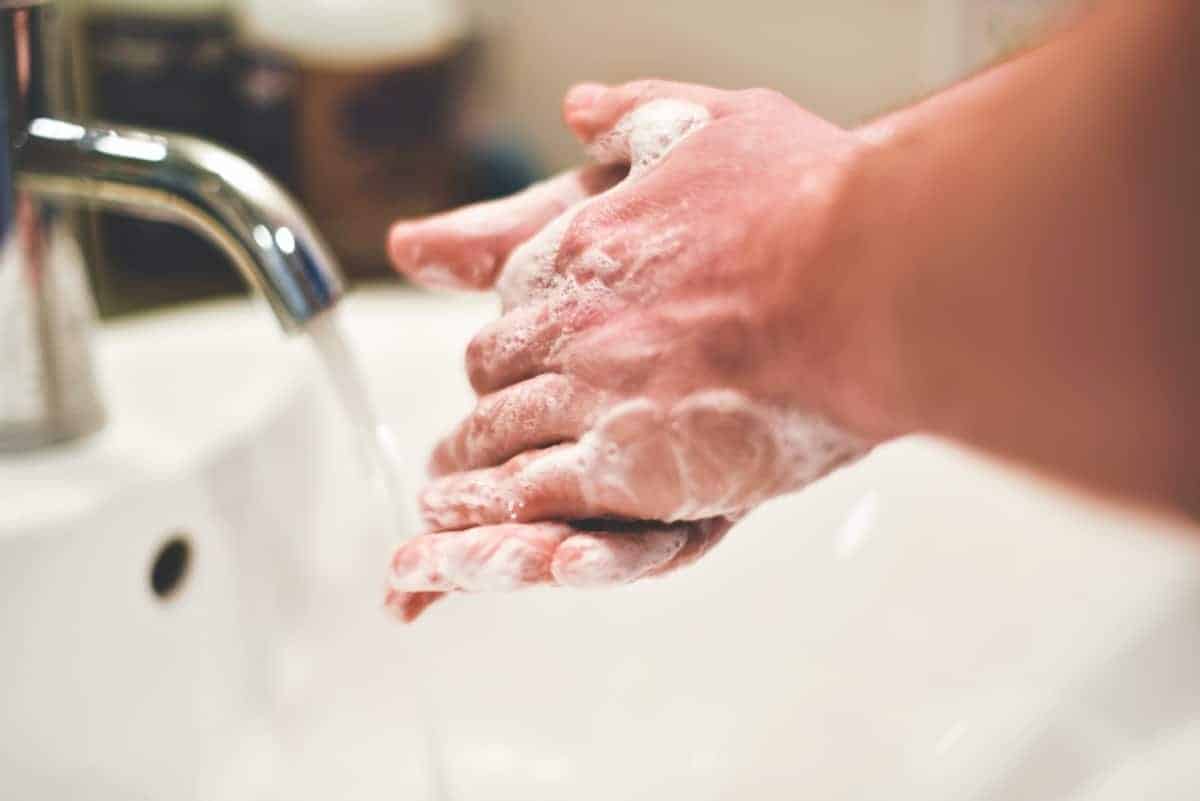
Washing your hands also sounds simple. But how often? Twice a day, 10 times a day, or at specific trigger times? What’s the best way to teach people to wash their hands correctly? If people don’t have perfect technique, is hand sanitiser be better than soap and water? Is wearing masks and doing hand hygiene more effective than doing just either of them?
These are just are some of the things that we don’t know about non-drug interventions.
Existing research is lacking
We recently reviewed all the randomised controlled trials for physical interventions to interrupt the spread of respiratory viruses, including interventions such as masks, hand hygiene, eye protection, social distancing, quarantining, and any combination of these. We found a messy and varied bunch of trials, many of low quality or small sample size, and for some types of interventions, no randomised trials.
Other non-drug options to research include the built environment, such as heating, ventilation, air conditioning circulation, and surfaces (for example, the SARS-CoV-2 virus “dies” much more rapidly on copper than other hard surfaces).
Are some of the things we are doing now ineffective? Probably. The problem is we don’t know which ones. We need to know this urgently so we’re not wasting time, effort, and resources on things that don’t work.
At a time when we need to achieve rapid behaviour change on a massive scale, inconsistent and conflicting messages only creates confusion and makes achieving behaviour change much harder.
What about the next pandemic?
If a successful COVID-19 vaccine is developed, we’re out of the woods for now. But what happens when the next pandemic or epidemic arrives? Vaccines are virus-specific, so next time a new virus threatens us, we will again be in the same situation. However, what we learn now about non-drug interventions can be used to protect us against other viruses, while we wait again for another new vaccine or drug.
We have had opportunities to study non-drug interventions for respiratory viruses in the recent past, particularly during the Severe Acute Respiratory Syndrome (SARS) epidemic in 2003 and the H1N1 influenza pandemic in 2009. However, the chances for rigorous studies were largely wasted and we now find ourselves desperately scrambling for answers.
What about research for Plan B?
To prepare for the future and Plan B, the case where a vaccine doesn’t arrive, we need to conduct randomised trials into non-drug interventions to prevent the spread of respiratory viruses. The current pandemic is presenting us with a rare opportunity to rapidly conduct trials to answer many of the unknowns about this set of non-drug interventions.
Concentrating all our funding, efforts, and resources into vaccine and drug research may turn out to be a devastating and costly mistake in both healthcare and economic terms. The results will be felt not only in this pandemic, but also in future ones.
Tammy Hoffmann, Professor of Clinical Epidemiology, Bond University and Paul Glasziou, Professor of Medicine, Bond University
This article is republished from The Conversation under a Creative Commons license. Read the original article.







