


Volodymyr Bilotkach, Singapore Institute of Technology
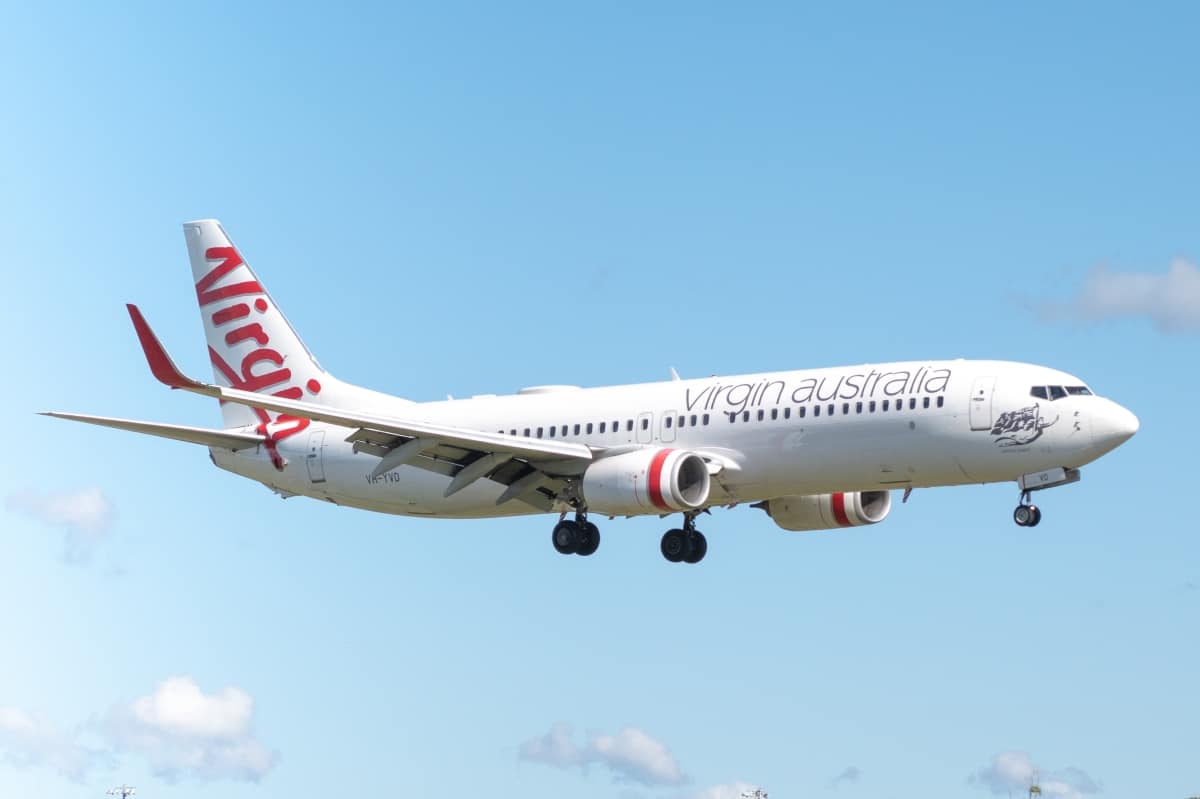
Virgin Australia’s chief executive, Paul Scurrah, said the decision to appoint external administrators (from Deloitte) “was about securing the future of the Virgin Australia Group and emerging on the other side of the COVID-19 crisis”.
Voluntary administration means the board of an insolvent company – one that can’t pay its bills – hands full control to independent administrators. They then work out if it can be saved by being restructured or sold to other investors. This is similar to what is called Chapter 11 bankruptcy protection in the United States.
If the administrators can’t save the company, their job is to wind up operations and sell off assets to pay creditors (including staff owed entitlements).
For now, with almost all of Virgin Australia’s fleet grounded and the federal government subsidising it flying a few critical routes, voluntary administration won’t make much difference to customers. The company says it will continue to operate its scheduled international and domestic flights.
Administration is not a death sentence
Virgin Australia isn’t the first airline victim of the COVID-19 pandemic.


Norway’s largest airline, Norwegian Air, announced on Monday it had “no choice but to apply for bankruptcy” for three subsidiaries in Denmark and one in Sweden.
Like Virgin, it too entered this crisis in far from tip-top shape, as it struggled over several years to make its long-haul low-cost airline model work.
Virgin Australia has long been financially fragile. Last financial year it posted a A$349 million loss, its seventh consecutive annual loss. In response the airline announced a “rightsizing” program that included cutting about 750 jobs (about 7.5% of its workforce).
The question now is whether the Deloitte administrators can do better.
It is possible.
Three of the world’s biggest airlines – Delta, United, and American Airlines – have survived near-death experiences.
Delta filed for Chapter 11 bankruptcy in 2005, United in 2002, and American Airlines in 2011. All were restructured over several years and all emerged from the process as more efficient operations. They are now the world’s first, second and fourth-biggest airlines (by passenger capacity).
Reports suggest, however, that Virgin Australia’s administrators are looking for a much shorter timeline – about eight weeks – to find new owners for the airline.
This would make the process far different to that of Ansett Australia, the last major Australian airline to go into voluntary administration. Ansett entered administration on September 12 2001. Its last flight landed in Sydney on March 5 2002. Liquidating its assets and paying money owed to creditors and staff took almost a decade.
If the administrators can work out a deal that injects new investments and wipes Virgin’s debts of about A$5 billion – a major obstacle to the federal government lending it A$1.4 billion – Australia’s airline industry will arguably be more competitive than it is now.
Consequences for customers
If new owners cannot be found, Virgin Australia’s collapse would leave the Australian market dominated by Qantas (and its budget subsidiary Jetstar) – at least in the short to medium term.
Less competition almost always means reduced services and higher prices for customers.
But the airline market is complicated. As I’ve noted previously of the US market, there can be many competitors yet still effective monopolies on some “thin” routes. What economists call “multi-market contact” can lead to “tacit collusion”, in which competition is tempered without any explicit agreement among the market participants.
Research shows, for example, that airfares are about 5% higher in markets with two legacy airline competitors than on the monopoly routes. But when a legacy carrier faces new competition from a low-cost airline, the prices can go down by as much as a third.
Demand factors
Tempering the likelihood that market dominance by one company will lead to higher prices is that demand will take time to return to pre-pandemic levels after restrictions are lifted.
In China, for example, domestic passenger numbers for 2020 are expected to be 20% lower than 2019, and international passenger numbers 50% lower.
Fuel costs, which accounted for about 24% of the global airline industry’s operating costs in 2019, are also likely to be lower. The oil price is at its lowest level in history – so low, in fact, oil producers are now paying customers to take it.
Both these factors suggest ticket prices won’t rise in the short term.
In the medium term, once demand recovers, lack of competition could well lead to higher airfares.
But in the long run there is better news.
As any economics textbook will tell you, profitable markets attract new competitors.
With more airline bankruptcies around the world quite likely, conditions will be ripe for new airlines to be established. There will be no shortage of aircraft and skilled workers. If oil prices stay low, new entrants could even be competitive using older, less fuel-efficient aircraft.
For the sake of Virgin Australia’s 10,000 employers, and the jobs of thousands more that depend on it indirectly, I hope the airline survives administration and emerges better for it, as US carriers have done with Chapter 11 bankruptcies.
But if it doesn’t, the pain for customers through higher prices is likely to be temporary. The laws of economics tell us that, so long as governments ensure markets remain open to new entrants, monopolies do not last.
Volodymyr Bilotkach, Associate Professor, Singapore Institute of Technology
This article is republished from The Conversation under a Creative Commons license. Read the original article.







