



Arthur der Weduwen, University of St Andrews and Andrew Pettegree, University of St Andrews
Margriete, a 19-year-old jailer’s maid with a rosy blush, had taken pity on him and fallen for his charms – despite the fact Hoyel’s hair had been shorn and he was wearing a wig. In the middle of the night Magriete unlocked his cell door, and next thing they were on the run, heading for the border.
This sensational dramatic tale of two young lovers evading the grip of the law was not written by Alexandre Dumas, nor is it from a Mills & Boon romance. Along with young Margriete, Johan Hoyel escaped from prison in Vlissingen in the Netherlands three and a half centuries ago, on December 3 1668. Their description, together with a massive reward for their capture, was advertised in a Dutch newspaper a week after their flight. This is one of the oldest known advertisements for an escaped fugitive, and certainly the first with a romantic twist.
Historic advertisements like this are a goldmine of information for historians. They reveal an element of the past that is often forgotten and usually impossible to study. Most people leave scarcely a trace in the historical record – their achievements, anxieties and everyday struggles go unrecorded. But for Johan Hoyel and his swooning accomplice at least, no longer.
Over the past six years we have been systematically recording all the information from the oldest 6,000 newspaper advertisements published in the Netherlands between 1620 and 1675. These notices have presented us with a unique window into past lives and societies: of goods stolen, lost and found, of lives shattered by heartbreak, crime and war, of business deals struck and new carriage routes opened, along with innumerable sales and auctions that furnished homes with books, paintings and luxury goods. Studying these extraordinary notices from the 17th century reveals the beginnings of marketing strategies that would eventually power the advertising world into the modern era.
The birth of the newspaper
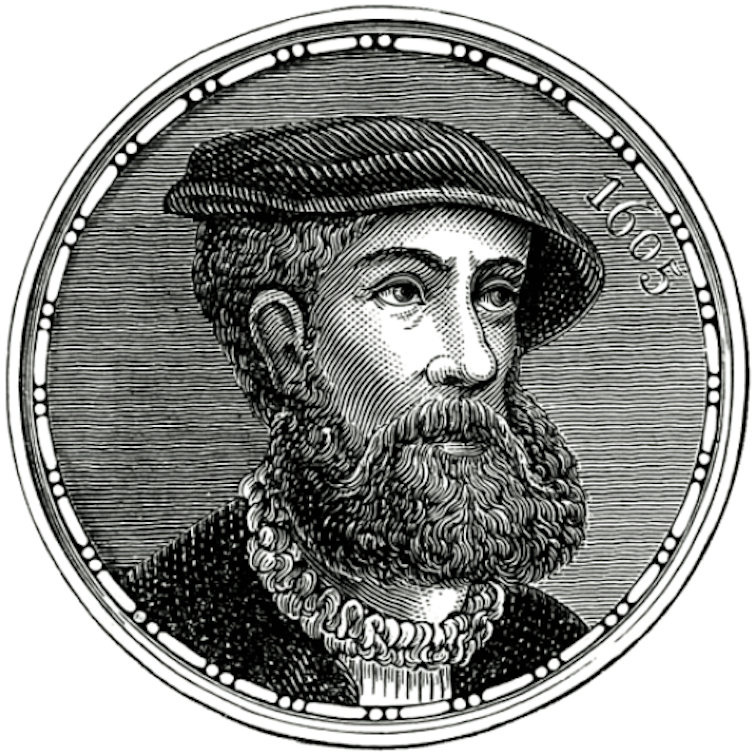
Printed newspapers and serial and periodical news sheets were only half a century old when the announcement about the fugitive Johan Hoyel was published. The first newspaper appeared in Strasbourg in 1605, quickly followed by a range of titles in towns throughout Germany and the Low Countries, as well as in Paris and London. These newspapers were very unlike newspapers today: most were no longer than 2,000 or 3,000 words, some as short as two narrow pages of A4 paper.
They contained no headlines or illustrations, and their content was made up almost exclusively of foreign news and short clipped reports concerning diplomatic or military events. This was a style they had inherited from handwritten newsletters called avvisi, an elite resource for statesmen and merchants.


This often incomprehensible array of news reports was not entirely practical for these newspapers, which sought to entice a broader reading public than the avvisi. Many newspapers folded shortly after their appearance, as the new medium struggled to take hold. However, in the Netherlands, the birthplace of a competitive news press, newspapers were remarkably successful. One of the key reasons for this success was the invention of newspaper advertising.
Advertising and communication
Exactly 400 years ago, the first newspaper advertisements begin to appear in Dutch newspapers, decades before publishers in England, France and Germany recognised the commercial possibilities of advertising. At first this was geared to the book trade to advise collectors, booksellers and other publishers of new titles being published. This worked so well that within a decade most Dutch newspapers included at least one advertisement per issue – and some issues carried many more.
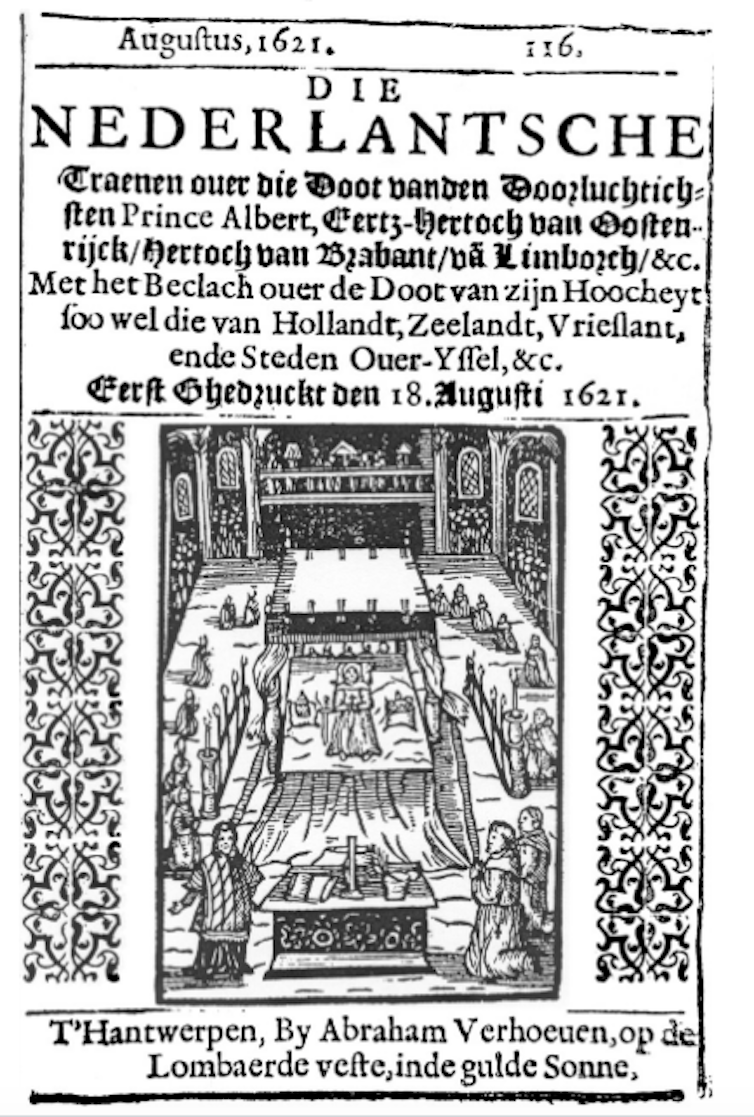
The very first notices emerged from advancing the principles of self-promotion. Abraham Verhoeven, a prolific writer and publisher in Antwerp, ran a flourishing early newspaper. He was a true pioneer in his trade and the first person to publish an illustrated newspaper.
One of his unique marketing ploys was to insert short advertisements at the end of his newspaper issues to announce that he would soon be publishing other items of interest to his subscribers, such as maps or pamphlets. Verhoeven’s partisan political reporting – as well as a failing marriage and a drink problem – would cause the demise of his newspaper at the end of the 1620s. Yet where he had shown the way – as a kind of 17th-century example of New York’s 1950s Mad Men – many others were ready to follow.
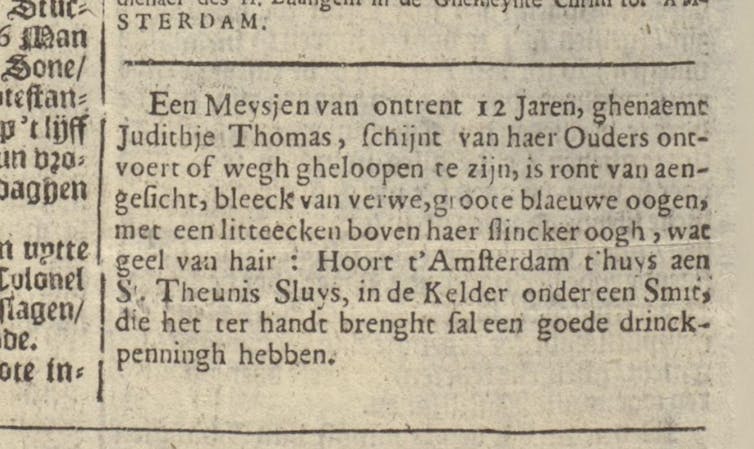
Once the book trade had embraced the powers of advertising, other tradesmen and government bodies were encouraged to use the papers as a means of communication. By the middle of the 17th century newspapers carried a range of notices in each issue, as schoolmasters advertised their services, anxious citizens sought to recover lost watches or jewellery and parents appealed for the return of a child who had run away from home. These are some of the most affecting notices in the newspapers, the heartbreak of families all too evident.
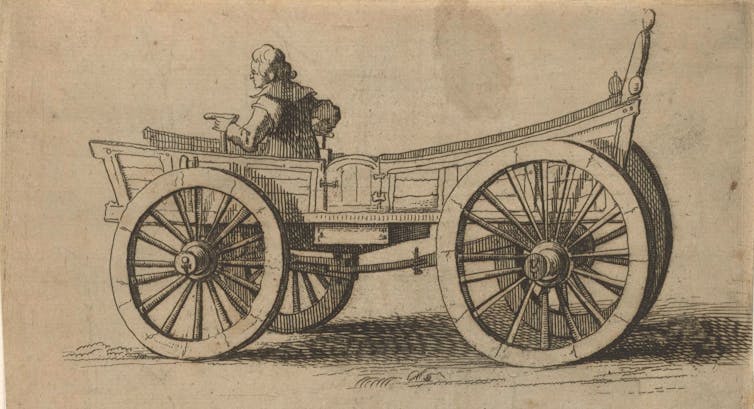
These personal notices jostled for space with notifications of auctions selling everything from canaries to Virginia tobacco and fine wool and, of course, books and paintings. As the number of advertisements increased, so did the popularity of newspapers. By the 18th century some newspapers devoted half their space to advertisements; in London, some enterprising printers sold special advertising sheets, containing nothing but commercial notices.
Within a century, newspaper advertising had become an essential part of the media environment in many European countries. This was all to the benefit of the newspaper trade. The advertisements were welcome financially even though most news publishers earned much more from sales than from advertising revenue. Perhaps the most important impact of the advertisements was to give potential readers another reason to subscribe.
The invention of advertising helped transform newspapers from sober and frankly rather dreary political news sheets to useful sources of domestic and local news. Ultimately, advertisements paved the way for an open and participatory society, one in which the latest desirable thing – as well as the successes and tribulations of fellow citizens – were on show, every week, in the columns of the local paper. What followed centuries later was a billion-dollar industry that is now facing a different revolution of its own.
Arthur der Weduwen, Research assistant School of History, University of St Andrews and Andrew Pettegree, Professor of History, University of St Andrews
This article is republished from The Conversation under a Creative Commons license. Read the original article.







