

• Advertise
  • About us
  • Terms and Conditions
  • Contact us
Thursday, May 14, 2026
Australian Times News
  • News
    • Weather
    • Sport
    • Technology
    • Business & Finance
      • Currency Zone
    • Lotto Results
      • The Lott
  • Lifestyle
    • Entertainment
    • Horoscopes
    • Health & Wellness
    • Recipes
  • Travel
  • Expat Life
  • Move to Australia
No Result
View All Result
  • News
    • Weather
    • Sport
    • Technology
    • Business & Finance
      • Currency Zone
    • Lotto Results
      • The Lott
  • Lifestyle
    • Entertainment
    • Horoscopes
    • Health & Wellness
    • Recipes
  • Travel
  • Expat Life
  • Move to Australia
No Result
View All Result
Australian Times News
No Result
View All Result
Home News

When Naomi Osaka talks, we should listen. Athletes are not commodities, nor are they super human

Japanese tennis star Naomi Osaka took a stand this week that called attention to the mental health of professional athletes. She refused to conduct interviews with the media after her matches at the French Open, citing concerns over her own mental well-being.

The Conversation by The Conversation
02-06-2021 01:33
in News
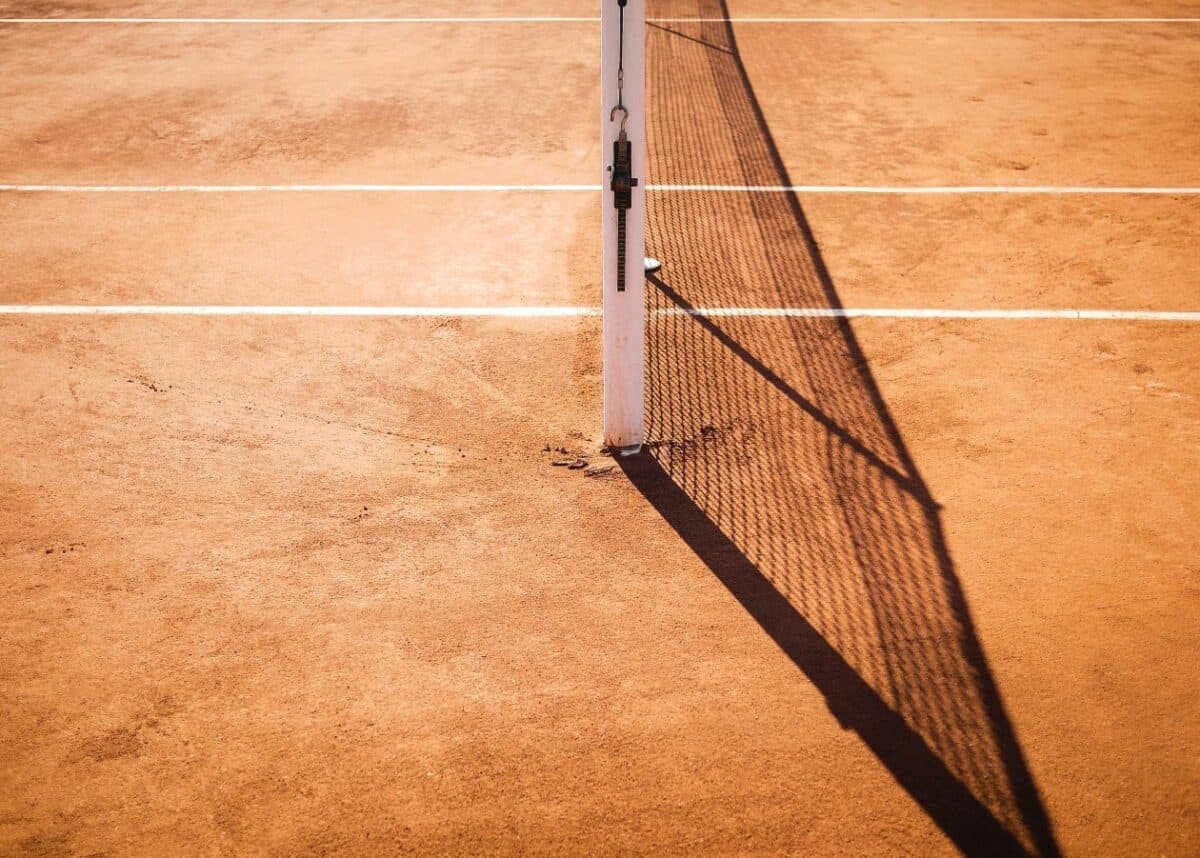
Photo by Aaina Sharma on Unsplash

Photo by Aaina Sharma on Unsplash

Peter Terry, University of Southern Queensland

Japanese tennis star Naomi Osaka took a stand this week that called attention to the mental health of professional athletes. She refused to conduct interviews with the media after her matches at the French Open, citing concerns over her own mental well-being. And, in return, the tennis authorities fined her and threatened her with further action.
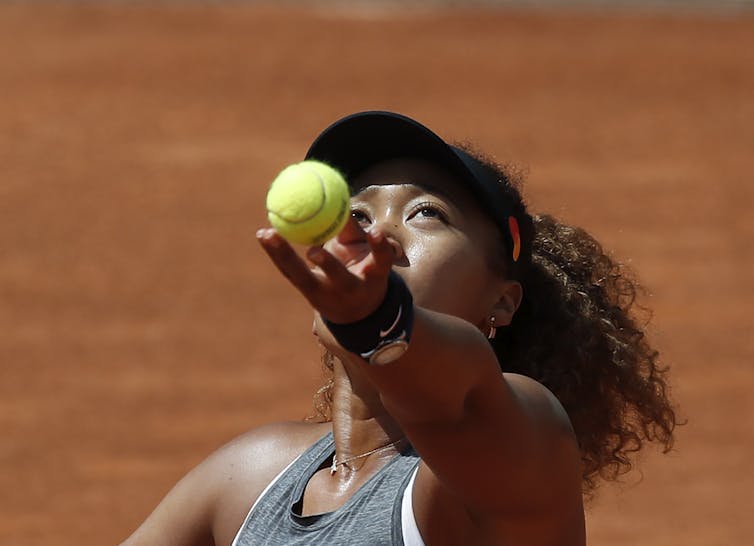
Alessandra Tarantino/AP

There are two sides to this story. On the one hand, this is part of the contract, it’s part of the deal. Tennis players get paid millions of dollars and in return they have to do media interviews whether they win or lose.

The issue is when you have somebody like Osaka, who is by her own admission an introverted person with high social anxiety. She essentially hates doing this stuff but knows she has to.

If there was ever a public cry for help, this is it. She’s talked about suffering bouts of depression since she won the US Open in 2018, how she wears headphones to try to cope with her social anxiety to stay in her own little bubble.

She knew that if she lost at the French Open again, there would be a forensic examination of her inability to win on clay that would just reinforce her own self-doubt. So, she decided not put herself through that.

I find it disappointing that the sport has adopted the stance it has. The authorities have basically taken a hard line with her — you’re contracted to do this, and you have to do it or risk further fines and possible disqualification.


AlsoRead...

Svitla Systems

Svitla Systems acquires Australia’s Kiandra IT to expand Global Engineering Footprint and Accelerate AI-Driven delivery

11 May 2026
How Clevero is helping Australian Service Businesses compete with Enterprises on a Fraction of the Budget

How Clevero is helping Australian Service Businesses compete with Enterprises on a Fraction of the Budget

28 April 2026

Tennis has been here before

During the 11 years in which I worked in professional tennis, I was asked to be on a commission that looked at the potential threat to the well-being and mental health of players from turning professional at too young an age.

This was in the era when 13 and 14 years olds like Jennifer Capriati and Tracey Austin were playing in Grand Slams and struggling to cope with the pressures.

And the tennis authorities took the mental health of these players so seriously, they established the age eligibility commission with experts from all around the world to meet at Wimbledon for four days to discuss what could be done.


They made very fundamental changes to the rules — dictating how many tournaments a player can enter at a certain age — and it proved to be to the enduring benefit of the players.

Osaka is asking for a very simple thing in comparison: can we just review the rules around the interviews that players are contracted to do?

Players who have just come off the court after often crushing and demoralising defeats are required within 30 minutes to front up to the media. There’s a sense of voyeurism around how it presently works; perhaps some want to see athletes crumble and break down into tears, having put them on a pedestal.

Some athletes are viewed by the public as spoiled and overpaid, but this is an unfair assessment of Osaka. She is a young, introverted, anxious person. We should by now understand that sports stars are not super human, that they have the same doubts and mental health issues as everyone else.

But given the reaction Osaka has received from some quarters, this appears not to be the case.

Dealing with depression in the spotlight

As Serena Williams has expressed today, not everyone relishes the attention of being famous:
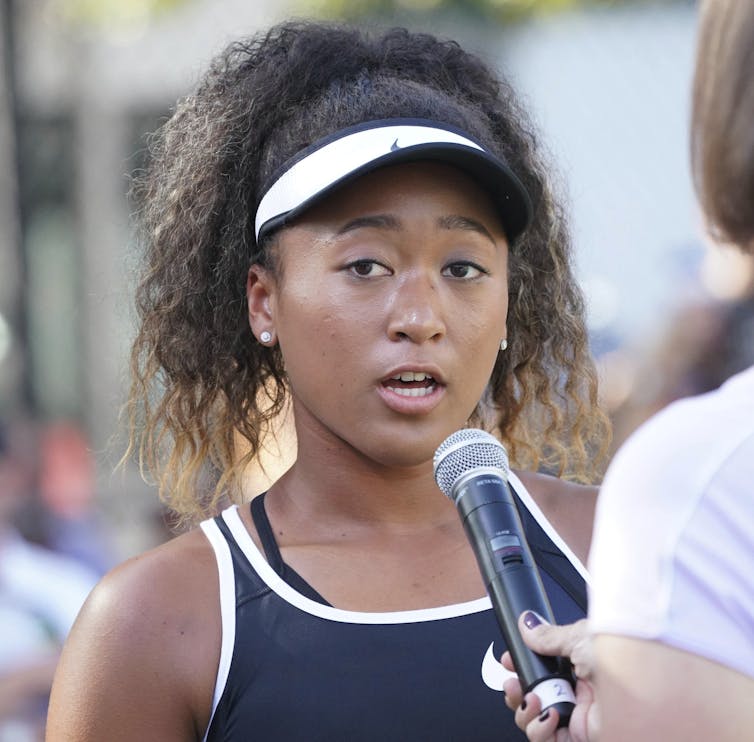
Osaka has admitted to feeling very anxious before addressing the media. zz/John Nacion/STAR MAX/IPx/AP

Not everyone is the same. I’m thick. Other people are thin […] You just have to let her handle it the way she wants to.

When it comes to the media, some players just don’t think so well on their feet. They’re used to hitting a ball very well, they’re not necessarily great wordsmiths.

Some players get very frustrated being asked the same question they’ve already answered many times before. Or questions that are sufficiently intrusive about their own mental approach to the game to challenge their self-confidence.

When your natural personality type is such that you’re an introvert and prone to anxiety, it’s an additional challenge when you reach a high point very early in your career. It involves a massive learning curve.

For Osaka, there is also the greater issue of struggling with depression, which she alluded to in her statement.

The last thing you want when you’re dealing with depression is to be in the spotlight. You want to be with the people who love you unconditionally and with whom you can share your feelings and not be judged. You may need professional support.

The media don’t meet those criteria. So trying to deal with serious mental health issues in the glare of publicity is next to impossible.

All of this is heaping more and more demands on Osaka. There are considerable forces pushing her toward even greater levels of anxiety. Could you imagine the level of expectations on her at the Tokyo Olympics?

We are talking about the mental health of young athletes more now than we used to. It’s true, sports stars are privileged elites, but the prevalence of mental health issues in sports, especially anxiety, is approximately the same as it is in society. And across their careers, between a quarter and a third will have some mental health issue, whether it becomes public or not.

We should understand that we can’t treat young vulnerable people as commodities, telling them to just follow the rules and not to express their concerns.

What Osaka wants is a dialogue around a small change to how tennis players interact with the media. The tennis authorities will likely agree to that now she has taken a stand, but sadly, it may have come at an enormous cost to her.


Peter Terry, Professor of Psychology, University of Southern Queensland

This article is republished from The Conversation under a Creative Commons license. Read the original article.


Tags: SB001
DMCA.com Protection Status

SUBSCRIBE to our NEWSLETTER

[mc4wp_form id=”2384248″]

Don't Miss

Svitla Systems acquires Australia’s Kiandra IT to expand Global Engineering Footprint and Accelerate AI-Driven delivery

by Pauline Torongo
11 May 2026
Svitla Systems
Business & Finance

Acquisition marks Svitla’s entry into the Australian market and strengthens capabilities in low-code, Microsoft technologies, and enterprise software engineering.

Read moreDetails

Residential Healthcare Practices: Revolution or Evolution?

by Pauline Torongo
11 May 2026
Residential Healthcare Practices: Revolution or Evolution?
Lifestyle

President Bill Lutz’s "revolution" was born from his background in fine dining, which instilled a disciplined, customer-focused approach.

Read moreDetails

Medicana Health Group launches HPV vaccination campaign to support cervical cancer prevention

by Pauline Torongo
28 April 2026
Medicana Health Group launches HPV vaccination campaign to support cervical cancer prevention
Health & Wellness

The Türkiye-based healthcare group has introduced a new awareness campaign focused on HPV vaccination, regular check-ups and early detection, with...

Read moreDetails

How Clevero is helping Australian Service Businesses compete with Enterprises on a Fraction of the Budget

by Pauline Torongo
28 April 2026
How Clevero is helping Australian Service Businesses compete with Enterprises on a Fraction of the Budget
Business & Finance

By consolidating CRM, scheduling, workflow automation, invoicing, reporting, and client communications into a single platform, Clevero gives smaller operators the...

Read moreDetails

How CJAM Group is building 1,100 homes across Southeast Queensland

by Pauline Torongo
24 March 2026
How CJAM Group is building 1,100 homes across Southeast Queensland
Lifestyle

The CJAM Group founder is quietly building a 1,100+ home pipeline, with projects in Hervey Bay and Toowoomba, using a...

Read moreDetails

Design Without Compromise: Where Gutter Protection Meets Modern Architecture

by Fazila Olla-Logday
20 March 2026
Design Without Compromise: Where Gutter Protection Meets Modern Architecture
Business & Finance

Design without compromise by integrating gutter protection seamlessly into modern architecture. Discover how innovative gutter systems enhance your home’s aesthetics...

Read moreDetails

How WageSafe Secured Australia’s Most Reputable Retail Business Among Its Premium Clients

by Fazila Olla-Logday
12 March 2026
How WageSafe Secured Australia’s Most Reputable Retail Business Among Its Premium Clients
at

Learn how WageSafe helps businesses stay compliant with payroll and wage regulations through reliable monitoring, risk management, and expert support—protecting...

Read moreDetails
Load More

Copyright © Blue Sky Publications Ltd. All Rights Reserved.
australiantimes.co.uk is a division of Blue Sky Publications Ltd. Reproduction without permission prohibited. DMCA.com Protection Status

  • About us
  • Write for Us
  • Advertise
  • Contact us
  • T&Cs, Privacy and GDPR
No Result
View All Result
  • News
    • Weather
    • Sport
    • Technology
    • Business & Finance
      • Currency Zone
    • Lotto Results
      • The Lott
  • Lifestyle
    • Entertainment
    • Horoscopes
    • Health & Wellness
    • Recipes
  • Travel
  • Expat Life
  • Move to Australia

Copyright © Blue Sky Publications Ltd. All Rights Reserved.
australiantimes.co.uk is a division of Blue Sky Publications Ltd. Reproduction without permission prohibited. DMCA.com Protection Status

No Result
View All Result
  • News
    • Weather
    • Sport
    • Technology
    • Business & Finance
      • Currency Zone
    • Lotto Results
      • The Lott
  • Lifestyle
    • Entertainment
    • Horoscopes
    • Health & Wellness
    • Recipes
  • Travel
  • Expat Life
  • Move to Australia

Copyright © Blue Sky Publications Ltd. All Rights Reserved.
australiantimes.co.uk is a division of Blue Sky Publications Ltd. Reproduction without permission prohibited. DMCA.com Protection Status





