


Texans who made it through February’s extreme cold weather without losing power or natural gas must have felt lucky.
But for some, keeping their electricity through the blackout may turn out to be more traumatic than losing it. An undetermined number of homeowners have been shocked to receive bills running into the thousands of dollars – in some cases, over US$15,000 for a month’s worth of power.
As someone who has spent the past two decades studying electricity deregulation, I know that extreme power bills in Texas result partly from the state’s market-driven approach to running the power grid. But decisions by state regulators also had a hand. Measures that were originally intended to give logical signals to the electricity market and encourage conservation during very hot spells were not up to the task of managing this cold-weather crisis.
Shopping for power
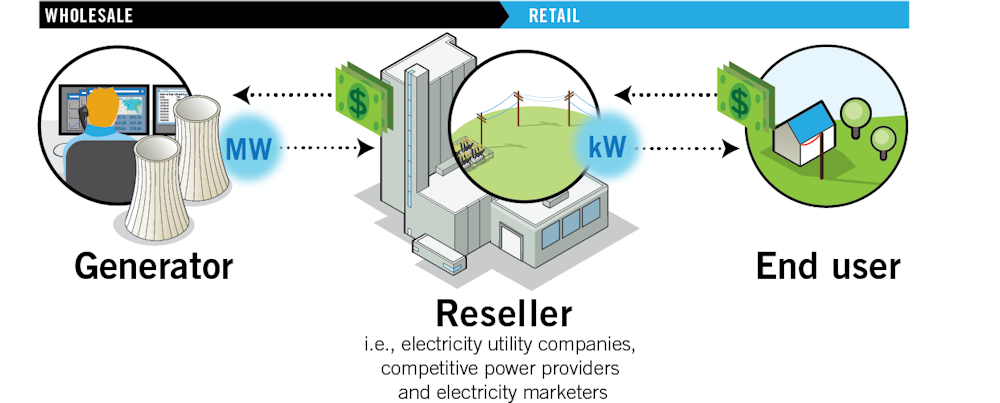
Along with 16 other states, Texas has deregulated its power generation market. The Texas market has a wholesale and a retail component, like the markets for many other goods.
In the wholesale power market, companies that generate electricity compete with one another to provide power on a market run by the Electric Reliability Council of Texas, or ERCOT. In the retail market, other companies buy power wholesale from ERCOT, add transmission and distribution charges to the wholesale generation cost and resell that electricity to households and businesses.
These resellers include Texas’ five electric utilities, which offer fixed and regulated prices in the areas of the state that they serve. Hundreds of others, known as retail providers in the Texas system, are unregulated and can offer electricity to consumers at any terms and at any price.


About 85% of Texans live in areas with retail competition. They can choose to get electric service from a retail provider rather than staying with the local utility if they believe the retailer offers a better deal.
But when homeowners choose a provider online, they may not understand what they are signing up for. In particular, some plans bill customers at fixed rates, while others charge varying rates that reflect wholesale market conditions. Even with the best communications from retailers, the prospect of lower electric rates may lead some consumers to discount the possibility of high or volatile bills.
ERCOT’s wholesale prices will occasionally spike to very high levels, and customers who get their power through market-based contracts have to pay those high prices. But price spikes don’t normally last for very long – typically for a few hours and mostly during the summer. And they can have some benefit, since they give electric retailers opportunities to inform customers about the value of energy conservation.
That was how the Texas electricity market was supposed to work. It was not designed for the severe and sustained shortages that arrived with the cold wave.
Sticker shock
When cold weather arrived in Texas over Valentine’s weekend, prices on the ERCOT market rose to $9,000 per megawatt-hour – the maximum price allowable by the Public Utility Commission of Texas – for a few hours before falling. One megawatt-hour is roughly equivalent to the amount of electricity used by 330 homes for one hour.
By Feb. 15, however, the commission triggered an emergency provision, ordering ERCOT to maintain its $9,000-per-megawatt-hour maximum all week. This mechanism is meant to send a price signal when demand is high, giving customers an incentive to conserve energy. If it works, demand will fall, along with prices, and the grid will stay in balance. But scarcity is not the same thing as the near-complete collapse of the Texas grid resulting from freezing weather and fuel shortages.
A large household in Texas with a lot of electric heating might have used 500 kilowatt-hours of electricity – that is, 0.5 megawatt-hours – during this very cold week. Under normal ERCOT winter prices, that household would have paid around $30 for electricity. But because the ERCOT price was kept at $9,000 per megawatt-hour for so long, this household would have paid $4,500 in electric bills for that week alone if it had signed up for a market-based contract with an unregulated retail supplier.
In sum, the sky-high electric bills in Texas are partly due to a deregulated electricity system that allowed volatile wholesale costs to be passed directly to some consumers. If prices in the Texas retail market had remained regulated, utilities and their regulators would likely have figured out some way to spread those high electric costs out over time instead of hitting customers all at once. But the state public utility commission also contributed by setting the ERCOT price at $9,000 per megawatt-hour and keeping it there for a week, ensuring that bills for some Texans would skyrocket. https://www.youtube.com/embed/LmEQ9TOWr4M?wmode=transparent&start=0 Texans who live in areas of the state where the sale of electricity is open to retail competition may have the option to choose among hundreds of plans with widely varying prices and terms.
Consumers may not have realized what was happening on the ERCOT market until their bills arrived in the mail or their credit cards were charged. Retailers can try to communicate with consumers, but households can’t automatically move back to fixed utility rates just because the ERCOT price is high. They can contact their power provider and ask to switch, but this is unlikely to happen in the middle of a power crisis.
Texas officials have called for investigations, and may enact measures to help people who have received huge bills, although consumers are likely to foot much if not all of the cost. Meanwhile, the larger question of how to handle severe electricity shortages remains to be solved before the next cold wave.
Seth Blumsack, Professor of Energy and Environmental Economics and International Affairs, Penn State
This article is republished from The Conversation under a Creative Commons license. Read the original article.







