


Janneke Berecki-Gisolf, Monash University
COVID-19 restrictions in Victoria have had a marked effect on how and where we spend our time. For many people, home has become the workplace, and for most school-aged children, home is also the classroom.

We compared Victorian emergency department presentations in May 2020 to those in May 2019 and found this extra time at home has affected the rates at which people are presenting to hospital with injuries — and the types of injuries they’re presenting with.
Importantly, overall presentations to the emergency department were down. But some categories saw notable increases, including the number of “unintentional home injuries”, which grew by 21%, and the number of injuries caused by “assault in the home”, which was 48% greater than the same time last year.
Although motor vehicle related injuries decreased, there was an increase in bicycle injuries, particularly among children.
What we did
At Monash University’s Victorian Injury Surveillance Unit, we’ve been tracking injury rates throughout the pandemic.
We get our data from the Victorian Emergency Minimum Dataset, which holds deidentified clinical records of presentations at Victorian public hospitals with 24-hour emergency departments (currently 38 hospitals).


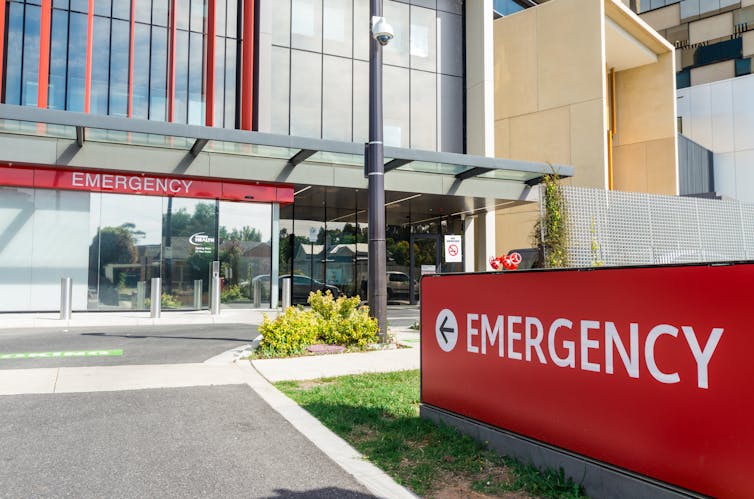
We’re also tracking emergency department presentations overall, to determine how much more common different types of injuries are becoming as a proportion of usual emergency department presentations. We call this measure “relative to emergency department caseload”.
So for example, in our most recent bulletin, we took the total emergency department presentations during May 2020. But because we’re looking for the proportion of usual emergency department presentations — that is, outside a pandemic — we excluded presentations directly or indirectly related to the pandemic from the total.
To calculate “relative to emergency department caseload”, we worked out the injuries as a proportion of this total.
Illness
Emergency presentations in Victoria were 24% lower in May 2020 than in May 2019 (118,793 versus 156,708 respectively). This decrease should be considered in the context of steady growth in emergency department presentations in Victoria in recent years. It’s difficult to deny the COVID-19 pandemic is deterring people from presenting to hospital.
Respiratory illness-related presentations (such as asthma or pneumonia) in particular saw a steep reduction. Some 4,748 people presented to Victorian emergency departments with respiratory issues in May — 63% fewer than in May last year, when there were 12,847 such presentations.
Even people with potentially life-threatening conditions were less likely to present to hospital. Heart attack presentations were down 15% compared with the same period one year prior (721 versus 613), and stroke presentations were down 19% (858 versus 693).
Injuries
The overall number of injury presentations to Victorian emergency departments was actually 26% lower in May 2020 than in May 2019 (26,991 versus 36,293).
But breaking this down by the place where the injury occurred shows a marked reduction in injuries that took place in sporting venues and schools, and an increase in injuries that occurred in the home and on farms.
Unintentional home injuries, including DIY injuries, increased from 10,105 to 12,265 (21%) from May 2019 to May 2020. Relative to emergency department caseload, this was a 56% increase. At both timepoints, falls were the most common cause of unintentional home injuries.
Self-harm injuries did not increase in May 2020 versus May 2019 in terms of the raw numbers (719 versus 773). But relative to emergency department caseload, self-harm injury presentations increased by 20%.
This can be taken with more recent data outside of our research which showed a 9.5% rise in the number of overall Victorian hospital admissions for self-harm in the past six weeks.
According to our data, assault in the home increased from 118 presentations in May 2019 to 175 in May 2020: a 48% increase in frequency and a 91% increase relative to emergency department caseload.
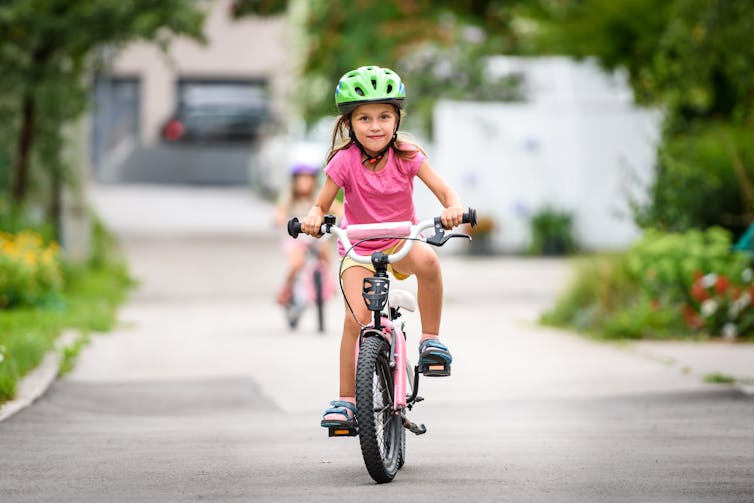
Finally, transport injuries overall were not much different in May 2020 compared to May 2019 (1,669 versus 1,766). This was, however, a 22% increase when considered relative to emergency department caseload. While motor vehicle injuries decreased by 30% (833 to 581), bicycle injuries increased 55% from 371 to 576.
For children under 15 years, the rate of transport-related injury presentations to emergency departments increased 78% from May 2019 to May 2020.
Staying safe at home
The bulletins we previously released for March and April, and the data we’re now collating for June, reflect similar trends in the rates and types of emergency department presentations, as compared to the same time points last year.
Our findings have a few different implications.
First, we should encourage people who are sick and need hospital care to present to hospital — not to stay home for fear of contracting COVID-19.
Second, alongside the messaging we’re receiving to “stay home” and “stay safe” from coronavirus, public health messaging should include advice on staying safe at home.
With reduced face-to-face contact with health practitioners, some injury prevention messaging, such as the information provided through child-maternal health services, general practitioners and nurses, should be made available through other channels. These could include social media, radio, television, and telephone consultations.
Improving awareness of cycling safety, including messaging around cycling road rules, would also be pertinent at this time.
Finally, trends in self-harm and assault in the home need to be closely monitored, particularly during stage 4 restrictions in Victoria.
The stricter lockdown conditions may result in further increases in violence in the home and compound the effects on mental health, and we need to provide support accordingly.
Janneke Berecki-Gisolf, Associate Professor, Accident Research Centre, Monash University
This article is republished from The Conversation under a Creative Commons license. Read the original article.







