


Sridhar Kota, University of Michigan and Glenn S. Daehn, The Ohio State University
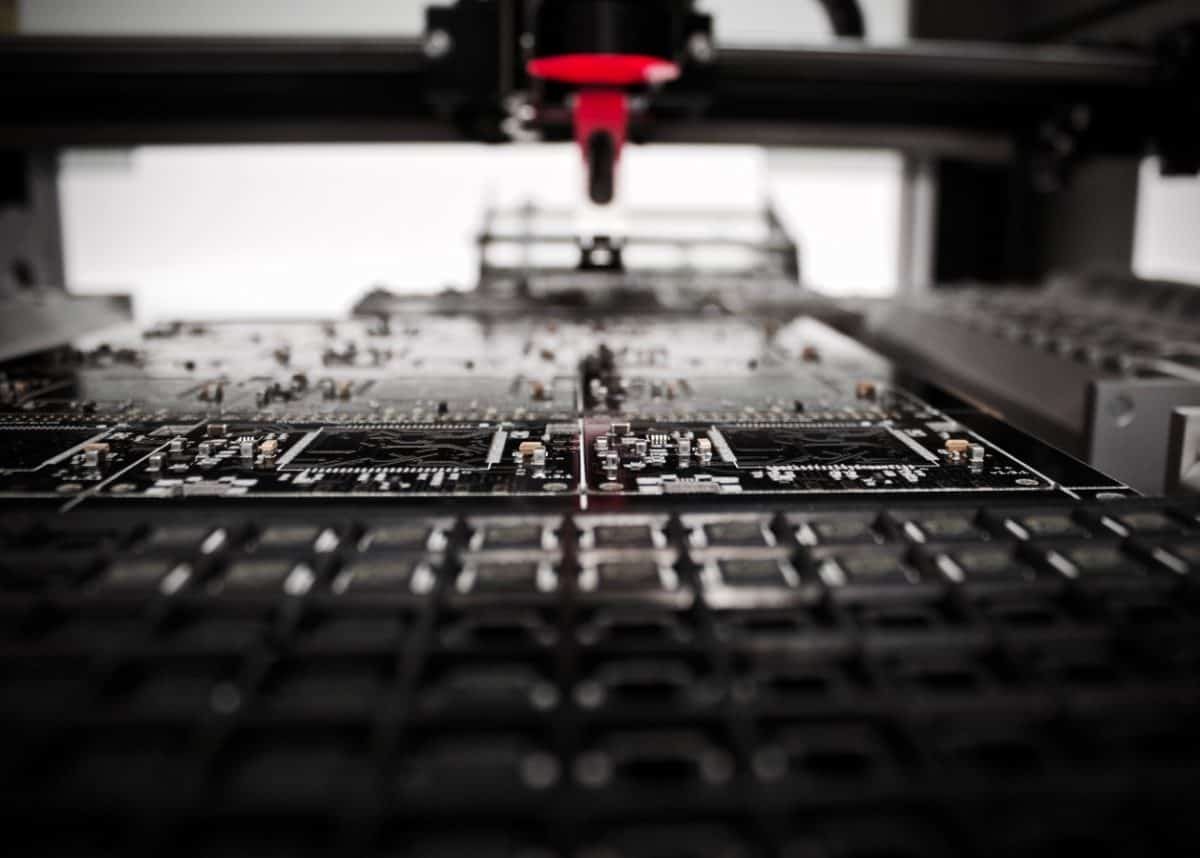
The COVID-19 pandemic has revealed glaring deficiencies in the U.S. manufacturing sector’s ability to provide necessary products – especially amidst a crisis. It’s been five months since the nation declared a national emergency, yet shortages of test kit components, pharmaceuticals, personal protective equipment and other critical medical supplies persist.
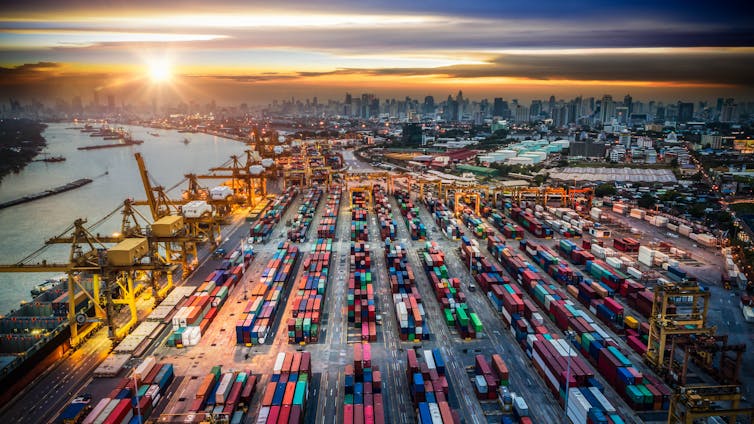
Globalization is at the heart of the problem. With heavy reliance on global supply chains and foreign producers, the pandemic has interrupted shipping of parts and materials to nearly 75% of U.S. companies.
Decades of “offshoring” domestic manufacturing to other countries have led the U.S. to the current crisis. It has seriously damaged the nation’s industrial base, increased income inequality and caused stagnation in U.S. living standards. How the U.S. responds will determine the long-term health and prosperity of the nation.
Manufacturing offshore
After World War II, U.S. policies promoted more liberal international trade, reducing tariffs and encouraging increasingly globalized manufacturing. The process accelerated during the 1980s, when the production of consumer electronics, vehicle parts, packaged semiconductors and other goods was transferred to Mexico, Taiwan, Malaysia and other low-wage countries. When China opened to foreign investment in 1978, its low-cost manufacturing proved irresistible to many American companies. From 2000 to 2019, U.S. direct investment in manufacturing in China jumped from US$7 billion to more than $54 billion.
The rising importance of shareholder profits in corporate decisions led companies to claim that the only way to remain competitive was by moving offshore to minimize production costs. In the U.S., investment shifted from manufacturing to marketing, branding, and research and development. With far fewer factories and factory jobs, the nation moved to a post-industrial “knowledge economy” driven by information technology, software, advanced communication and cutting-edge basic research.
In our work at the nonprofit MForesight, a technology forecasting project based at the University of Michigan, we address government policy and national manufacturing competitiveness. Our research has confirmed the detrimental effects of these trends on U.S. employment and resilience.


For example, the U.S. no longer has sufficient production capacity or the manufacturing know-how to provide essential goods amidst this current crisis – from pharmaceutical ingredients to fabrics for personal protective equipment – or to meet critical defense needs. Globalization has eliminated more than 50,000 U.S. factories over the past 20 years along with over 5 million manufacturing jobs.
That’s because a knowledge economy – unlike manufacturing – offers relatively few high-paying positions. New technologies invented in the U.S. are often manufactured abroad and then imported back, contributing to the current $850 billion trade deficit.
The larger costs
In our view, three widely embraced fallacies have caused U.S. policymakers to favor the knowledge economy over a production economy:
Fallacy 1: Research results and inventions are sufficient to create jobs and raise living standards.
The U.S. has built a world-leading research base, led by universities and national laboratories, which receives about $150 billion in federal funding each year. Under the current system, many important innovations conceived on American soil are then manufactured offshore, creating tens of millions of factory jobs in other countries – while hurting U.S. manufacturers. These products are then imported back: cellphones, flexible and flat panel displays, rechargeable lithium-ion batteries, solar cells, drones and more.
The economic benefits for American workers are minimal at best. Instead of high-wage factory positions, imports create jobs in warehousing, distribution and sales that pay too little to support adequate living standards.
A national commitment to domestic manufacturing from its R&D investments would generate high-paying jobs and produce valuable technology exports that would reduce the massive U.S. trade deficit.
Fallacy 2: Industrial policy is incompatible with American capitalism.
Across the globe, a range of industrial policies and government actions foster the development of specific industries, usually in support of strategic national goals. In the past, the United States has intervened to develop strong manufacturing in the aerospace, nuclear power, telecommunications and semiconductor industries, among others. Continued U.S. government support for military priorities is a key reason why aerospace has remained one of the few sectors with a trade surplus.
Since the Reagan administration, the U.S. has been reluctant to pursue industrial policies that have brought success to other manufacturing economies, including Germany, the Asian Tigers – Hong Kong, Singapore, South Korea and Taiwan – and China.
With a smarter industrial policy, the U.S. could become a world leader, for example, in the manufacture of clean energy products, power storage and electric cars.
Fallacy 3: What’s good for large corporations is good for the United States.
Generally, social interests and corporate interests don’t align – and haven’t for more than three decades.
U.S. multinationals are in business to make money, with cost-cutting as a go-to strategy. Moving factories to low-wage countries has become a default decision, despite negative impacts on the skilled workforce, suppliers and overall job numbers. It has devastated domestic manufacturing while boosting corporate profits and executive salaries. The cost has been high during this current pandemic: Supply shortages have cost some people their lives.
National response needed
The pandemic has revealed the urgent need for an effective national response that reestablishes the ability to manufacture everything from small components to complex machines in the U.S.
Policies favoring domestic production of essential products would create a large number of well-paid jobs for skilled, innovative workers that can provide resiliency in a crisis. Identification of and support for critical industries and technologies, financial incentives to build U.S. factories and strict “Buy American” requirements for government purchases are examples of possible strategies.
Manufacturing is critical to innovation and job creation. We have recommended how to increase prosperity and regain industrial leadership through manufacturing. Those recommendations include rebuilding domestic supply chains, supporting local production of innovations emerging from U.S. research, creating manufacturing investment funds, and growing domestic engineering and technical talent.
Some of these ideas that would aid U.S. manufacturing are gaining traction in Washington, with at least four bills, including the Endless Frontier Act and the American Manufacturing Leadership Act, introduced into the House and Senate.
Provisions would bolster domestic manufacturing and competitiveness with increased funding for advanced technology development. They would also provide technical training and apprenticeships to strengthen the workforce and help small and medium-sized manufacturers upgrade equipment.
[Deep knowledge, daily. Sign up for The Conversation’s newsletter.]
If the products created through taxpayer-funded research were manufactured in U.S. factories, both workers and the economy would benefit. Creation of a new federal agency focused on national manufacturing strategies and coordinated implementation would help maintain commitment to a strong manufacturing sector. A Cabinet-level voice and sufficient, sustained funding would ensure that the nation responds effectively to the industrial shortcomings revealed by the current pandemic.
With the right steps, the COVID-19 crisis could become a positive tipping point. It could create a stronger, wealthier nation that is better prepared to confront the next crisis, be it medical, military or a natural disaster.
Tom Mahoney, associate director at MForesight, contributed to this article.
Sridhar Kota, Professor of Mechanical Engineering, University of Michigan and Glenn S. Daehn, Fontana Professor of Materials Science and Engineering, The Ohio State University
This article is republished from The Conversation under a Creative Commons license. Read the original article.







