

• Advertise
  • About us
  • Terms and Conditions
  • Contact us
Friday, May 15, 2026
Australian Times News
  • News
    • Weather
    • Sport
    • Technology
    • Business & Finance
      • Currency Zone
    • Lotto Results
      • The Lott
  • Lifestyle
    • Entertainment
    • Horoscopes
    • Health & Wellness
    • Recipes
  • Travel
  • Expat Life
  • Move to Australia
No Result
View All Result
  • News
    • Weather
    • Sport
    • Technology
    • Business & Finance
      • Currency Zone
    • Lotto Results
      • The Lott
  • Lifestyle
    • Entertainment
    • Horoscopes
    • Health & Wellness
    • Recipes
  • Travel
  • Expat Life
  • Move to Australia
No Result
View All Result
Australian Times News
No Result
View All Result
Home News

The $4 trillion economic cost of not vaccinating the entire world

Rolling out a vaccine to stop the spread of a global pandemic doesn’t come cheap. Billions of dollars have been spent developing drugs and putting in place a program to get those drugs into people’s arms.

The Conversation by The Conversation
14-02-2021 06:23
in News
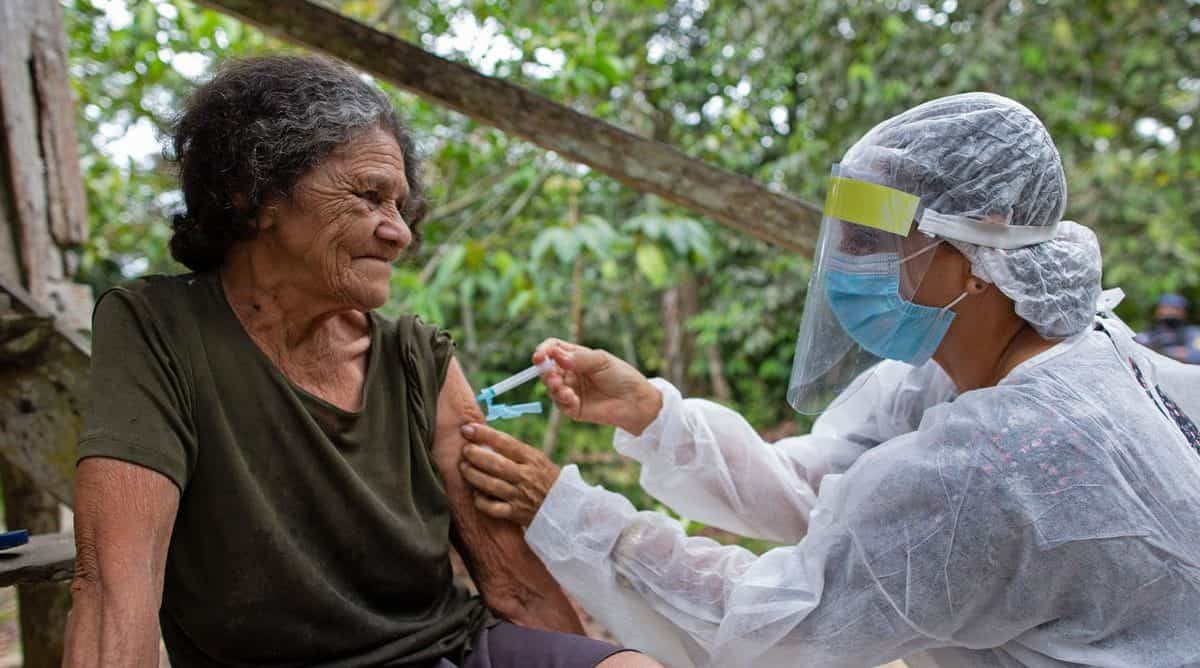
The success of Brazil’s vaccine program will have a ripple effect on countries to which it exports commodities such as steel. Michael Dantas/AFP via Getty Images

The success of Brazil’s vaccine program will have a ripple effect on countries to which it exports commodities such as steel. Michael Dantas/AFP via Getty Images

Sebnem Kalemli-Ozcan, University of Maryland
CC BY-ND

Rolling out a vaccine to stop the spread of a global pandemic doesn’t come cheap. Billions of dollars have been spent developing drugs and putting in place a program to get those drugs into people’s arms.

But amid an uneven distribution of vaccines – with poorer countries lagging far behind richer nations – another concern presents itself: the cost of not vaccinating everyone.

My colleagues and I sought to find out what the total hit to the global economy of uneven vaccination distribution might be.

To do so, we analyzed 35 industries – such as services and manufacturing – in 65 countries and examined how they were all linked economically in 2019, before the pandemic. For example, the construction sector in the U.S. relies on steel imported from Brazil, American auto manufacturers need glass and tires that come from countries in Asia, and so forth.

We then used data on COVID-19 infections for each country to demonstrate how the coronavirus crisis has disrupted global trade, curbing shipments of steel, glass and other exports to other countries. The more that a sector relies on people working in close proximity to produce goods, the more disruption there will be due to higher infections.

We then modeled how vaccinations could help to alleviate these economic costs, as a healthy and immune workforce is able to increase output.


AlsoRead...

Svitla Systems

Svitla Systems acquires Australia’s Kiandra IT to expand Global Engineering Footprint and Accelerate AI-Driven delivery

11 May 2026
How Clevero is helping Australian Service Businesses compete with Enterprises on a Fraction of the Budget

How Clevero is helping Australian Service Businesses compete with Enterprises on a Fraction of the Budget

28 April 2026

Shouldering the burden

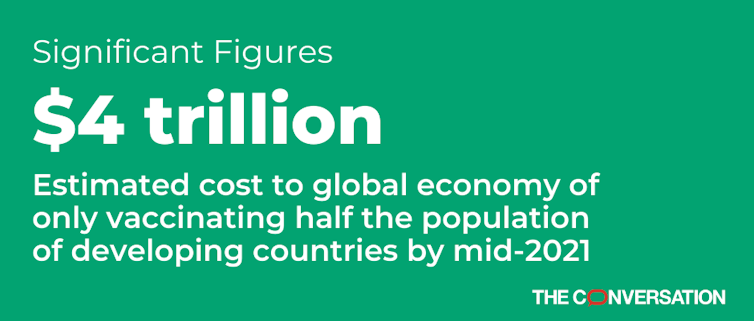
Our results showed that if wealthier nations are fully vaccinated by the middle of this year – a goal that many countries are striving for – yet developing countries manage to vaccinate only half of their populations, the global economic loss would amount to around US$4 trillion.

We estimated the global economic cost of developing countries not vaccinating any of their citizens to be around $9 trillion. Work is underway to increase the reach of vaccines to developing countries, but nonetheless, it is likely that poorer nations will still lag in total numbers vaccinated.

Whatever the toll is, the U.S., Canada, Europe and Japan would shoulder almost half the burden of continuing disruptions to global trade – even if they themselves managed to vaccinate the entirety of their own populations.

The findings come as the global community seeks ways to address the imbalance in national vaccinations. Results from our study, published as a working paper by the National Bureau of Economic Research and its European counterpart, the Center for Economic Policy Research, were presented at a recent World Health Organization briefing. The timing of the report also coincides with President Joe Biden’s announcement that the United States intends to join COVAX – an initiative aimed at vaccinating at least 20% of the population of every country by the end of this year.

But COVAX is currently billions of dollars short of being able to meet that goal.

No economy is an island

Our research underscores that it is in rich countries’ direct economic interest to ensure poor nations are fully vaccinated as well.

Widespread vaccinations in wealthier nations will certainly help domestic businesses like restaurants, gyms and other services. But, industries such as auto, construction and retail that depend on outside countries for materials, parts and supplies will continue to suffer if vaccines are not made available worldwide.

No economy is an island – full global economic recovery will come only when every economy recovers from the pandemic.

[Insight, in your inbox each day. You can get it with The Conversation’s email newsletter.]

Sebnem Kalemli-Ozcan, Professor of Economics, University of Maryland

This article is republished from The Conversation under a Creative Commons license. Read the original article.


Tags: SB001
DMCA.com Protection Status

SUBSCRIBE to our NEWSLETTER

[mc4wp_form id=”2384248″]

Don't Miss

Svitla Systems acquires Australia’s Kiandra IT to expand Global Engineering Footprint and Accelerate AI-Driven delivery

by Pauline Torongo
11 May 2026
Svitla Systems
Business & Finance

Acquisition marks Svitla’s entry into the Australian market and strengthens capabilities in low-code, Microsoft technologies, and enterprise software engineering.

Read moreDetails

Residential Healthcare Practices: Revolution or Evolution?

by Pauline Torongo
11 May 2026
Residential Healthcare Practices: Revolution or Evolution?
Lifestyle

President Bill Lutz’s "revolution" was born from his background in fine dining, which instilled a disciplined, customer-focused approach.

Read moreDetails

Medicana Health Group launches HPV vaccination campaign to support cervical cancer prevention

by Pauline Torongo
28 April 2026
Medicana Health Group launches HPV vaccination campaign to support cervical cancer prevention
Health & Wellness

The Türkiye-based healthcare group has introduced a new awareness campaign focused on HPV vaccination, regular check-ups and early detection, with...

Read moreDetails

How Clevero is helping Australian Service Businesses compete with Enterprises on a Fraction of the Budget

by Pauline Torongo
28 April 2026
How Clevero is helping Australian Service Businesses compete with Enterprises on a Fraction of the Budget
Business & Finance

By consolidating CRM, scheduling, workflow automation, invoicing, reporting, and client communications into a single platform, Clevero gives smaller operators the...

Read moreDetails

How CJAM Group is building 1,100 homes across Southeast Queensland

by Pauline Torongo
24 March 2026
How CJAM Group is building 1,100 homes across Southeast Queensland
Lifestyle

The CJAM Group founder is quietly building a 1,100+ home pipeline, with projects in Hervey Bay and Toowoomba, using a...

Read moreDetails

Design Without Compromise: Where Gutter Protection Meets Modern Architecture

by Fazila Olla-Logday
20 March 2026
Design Without Compromise: Where Gutter Protection Meets Modern Architecture
Business & Finance

Design without compromise by integrating gutter protection seamlessly into modern architecture. Discover how innovative gutter systems enhance your home’s aesthetics...

Read moreDetails

How WageSafe Secured Australia’s Most Reputable Retail Business Among Its Premium Clients

by Fazila Olla-Logday
12 March 2026
How WageSafe Secured Australia’s Most Reputable Retail Business Among Its Premium Clients
at

Learn how WageSafe helps businesses stay compliant with payroll and wage regulations through reliable monitoring, risk management, and expert support—protecting...

Read moreDetails
Load More

Copyright © Blue Sky Publications Ltd. All Rights Reserved.
australiantimes.co.uk is a division of Blue Sky Publications Ltd. Reproduction without permission prohibited. DMCA.com Protection Status

  • About us
  • Write for Us
  • Advertise
  • Contact us
  • T&Cs, Privacy and GDPR
No Result
View All Result
  • News
    • Weather
    • Sport
    • Technology
    • Business & Finance
      • Currency Zone
    • Lotto Results
      • The Lott
  • Lifestyle
    • Entertainment
    • Horoscopes
    • Health & Wellness
    • Recipes
  • Travel
  • Expat Life
  • Move to Australia

Copyright © Blue Sky Publications Ltd. All Rights Reserved.
australiantimes.co.uk is a division of Blue Sky Publications Ltd. Reproduction without permission prohibited. DMCA.com Protection Status

No Result
View All Result
  • News
    • Weather
    • Sport
    • Technology
    • Business & Finance
      • Currency Zone
    • Lotto Results
      • The Lott
  • Lifestyle
    • Entertainment
    • Horoscopes
    • Health & Wellness
    • Recipes
  • Travel
  • Expat Life
  • Move to Australia

Copyright © Blue Sky Publications Ltd. All Rights Reserved.
australiantimes.co.uk is a division of Blue Sky Publications Ltd. Reproduction without permission prohibited. DMCA.com Protection Status





