

• Advertise
  • About us
  • Terms and Conditions
  • Contact us
Wednesday, August 12, 2026
Australian Times News
  • News
    • Weather
    • Sport
    • Technology
    • Business & Finance
      • Currency Zone
    • Lotto Results
      • The Lott
  • Lifestyle
    • Entertainment
    • Horoscopes
    • Health & Wellness
    • Recipes
  • Travel
  • Expat Life
  • Move to Australia
No Result
View All Result
  • News
    • Weather
    • Sport
    • Technology
    • Business & Finance
      • Currency Zone
    • Lotto Results
      • The Lott
  • Lifestyle
    • Entertainment
    • Horoscopes
    • Health & Wellness
    • Recipes
  • Travel
  • Expat Life
  • Move to Australia
No Result
View All Result
Australian Times News
No Result
View All Result
Home News

South Australia will re-open its borders to some states, but not others. Is that constitutional?

Australians have taken a special interest in section 92 since mid-March.

The Conversation by The Conversation
18-06-2020 06:19
in News
South Australia will re-open its borders

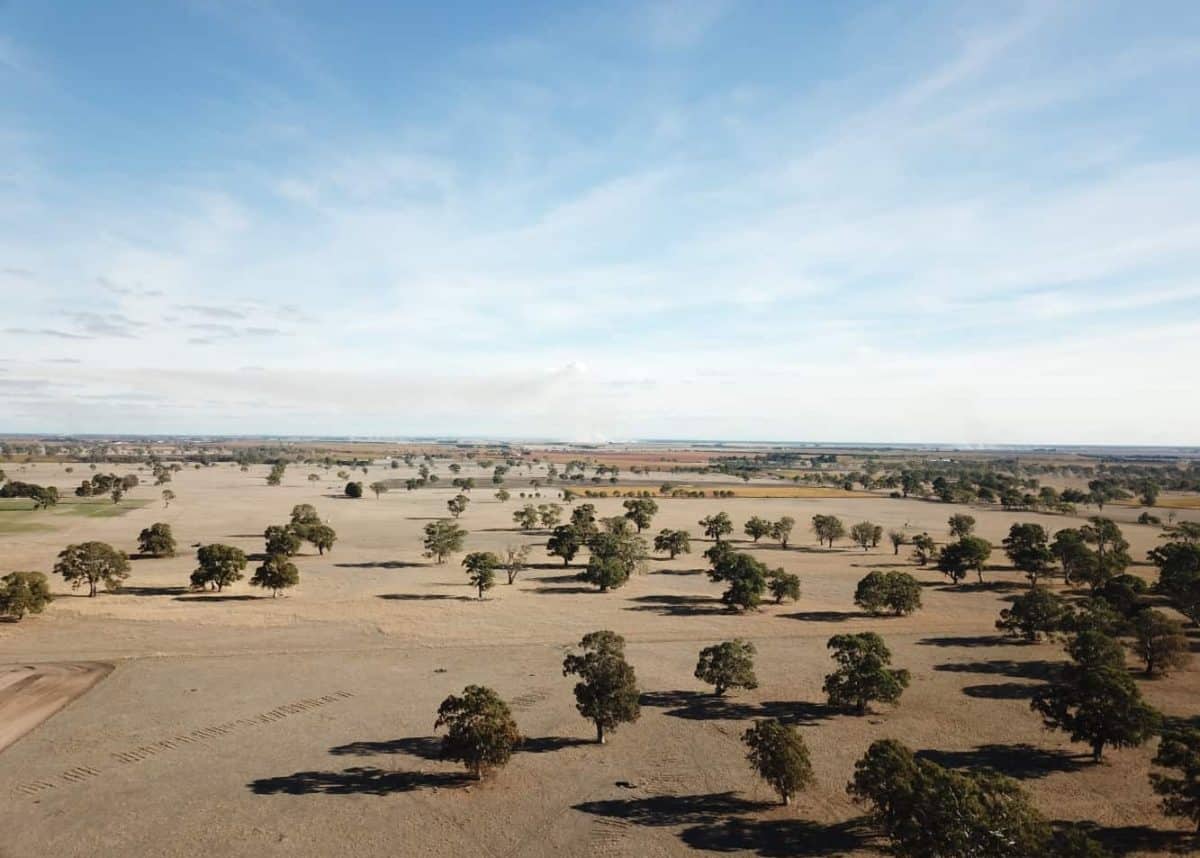
South Australia will re-open its borders Photo by Charles G on Unsplash

Benjamen Franklen Gussen, Swinburne University of Technology

In one relatively short section of the Australian Constitution, section 92, you will find this phrase:

[…] trade, commerce, and intercourse among the states […] shall be absolutely free.

You would think there is not much in it, but it turns out this section is one of the most litigated sections in the constitution.
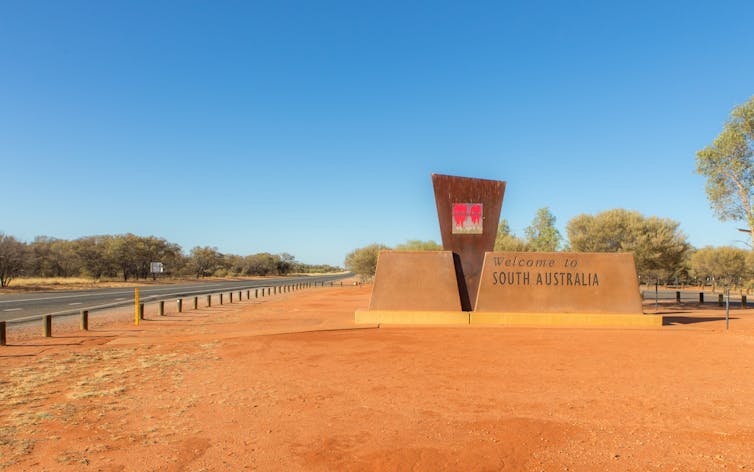
Shutterstock

Australians have taken a special interest in section 92 since mid-March. Debating the constitutionality of state border closures in response to COVID-19 seemed to be trending with everyone staying home to help flatten the curve.

Legal challenges on border closures are already underway in the High Court, with arguments of its constitutionality.

Now, this interest in section 92 is being rekindled with the partial re-opening of borders between South Australia, Western Australia, the Northern Territory and Tasmania.

With Australia being one country, it was hard enough to accept it is constitutional for states to close their borders, but now South Australia seems to be offering travellers from these states and the territory special treatment.


AlsoRead...

Managing Aussie Share Portfolios Abroad: Tips for Growth

Managing Aussie Share Portfolios Abroad: Tips for Growth

2 July 2026
The New Meaning of Luxury: Lessons from Entrepreneur Chloe Hardy

The New Meaning of Luxury: Lessons from Entrepreneur Chloe Hardy

2 July 2026

West Australian Premier Mark McGowan has more recently suggested the partial opening of borders may be unconstitutional. Is it?

The issue is not the partial opening of borders. It is the rationale for these actions.

When South Australia announced this partial re-opening, it also indicated it plans to open its borders to all remaining states by July 20. The issue then is whether South Australia’s discrimination against New South Wales, Victoria and Queensland can be justified by efforts to prevent a second wave of COVID-19 deaths.

Since 1988, the High Court has interpreted section 92 as prohibiting discrimination of a protectionist kind – that is to say, the section prevents states from passing legislation to restrict trade. In the 1988 case of Cole v Whitfield, the High Court, in a unanimous decision, upheld Tasmanian regulations prohibiting a person from taking, buying or selling crayfish of less than a prescribed size, whether or not taken in Tasmanian waters.

In the course of his interstate trade, David Whitfield brought crayfish from South Australia to Tasmania for the purpose of sale to mainland and overseas markets. The crayfish were less than the prescribed size under the Tasmanian regulations, though above the prescribed size under comparable regulations in South Australia. The court explained in the decision that the legislation was not protectionist in nature. It was intended to help protect Tasmanian crayfish rather than restrict trade. The court elaborated in the following terms:

[D]iscrimination commonly involves the notion of a departure from equality of treatment. It does not follow that every departure from equality of treatment imposes a burden or would infringe a constitutional guarantee of the freedom of interstate trade and commerce from discriminatory burdens […]

As was the case when all states decided to close their borders, the legal issue is whether the purpose of the closures is to restrict trade or to help protect the citizens of each state from becoming infected with COVID-19.

The orthodox view among Australian constitutional jurists is that section 92 does not allow for a balancing exercise between the competing interests of free trade and combating a pandemic. This might well be a question for the High Court to elaborate on when deciding the legal challenges brought against the Queensland government.

At a different analytical scale, the issue is not the interpretation of section 92, but rather the effect of crises on the interpretation of our constitution.

This interpretation is not impervious to pandemics or other crises. We see this in what are known as purposive powers, such as the defence power in section 51. In times of war, the core of this power will expand to equip the Commonwealth with the type of intervention necessary to keep Australia safe. There is no reason this rationale would not extend to pandemics.

Enter the principle of subsidiarity. Elsewhere, I have argued the Commonwealth Constitution is superior to the Canadian and US constitutions, because it is more efficient. It allows for a wider area of concurrent powers. Our federal model is more agile, in the spirit of true subsidiarity, with its rules of assistance, non-interference and helping states acquire more competencies over time.

It is this principle of subsidiarity that holds the key to understanding the constitutionality of border closures and partial re-opening in response to the coronavirus pandemic. The states are best positioned to judge what intervention will work best in their case.

In the time of crises, no one size fits all.

Benjamen Franklen Gussen, Lecturer in Law, Swinburne University of Technology

This article is republished from The Conversation under a Creative Commons license. Read the original article.


Tags: SB001
DMCA.com Protection Status

SUBSCRIBE to our NEWSLETTER

[mc4wp_form id=”2384248″]

Don't Miss

Why Smarter Fleet Management Is For All Modern Business Options

by Fazila Olla-Logday
29 July 2026
Smarter Fleet Management
Motoring

Operating a business that relies on vehicles is harder than ever.

Read moreDetails

Animal Communication Goes Beyond What Science Can Currently Measure: Zoologist and Spiritual teacher Artemis, the heart whisperer on what the textbooks don’t teach

by Australian Times
7 July 2026
Animal Communication Goes Beyond What Science Can Currently Measure
Lifestyle

Animal communication classes and formal training can be valuable, providing tools, structure, and guidance.

Read moreDetails

Managing Aussie Share Portfolios Abroad: Tips for Growth

by Fazila Olla-Logday
2 July 2026
Managing Aussie Share Portfolios Abroad: Tips for Growth
at

Unlock the secrets to optimizing your Aussie share portfolios abroad. Discover essential tips for growth and navigate the global market...

Read moreDetails

The New Meaning of Luxury: Lessons from Entrepreneur Chloe Hardy

by Pauline Torongo
2 July 2026
The New Meaning of Luxury: Lessons from Entrepreneur Chloe Hardy
Business & Finance

Chloe Hardy, the founder and CEO of Dupes & Co established an Australian-made beauty brand focused on affordability and product...

Read moreDetails

Excel Funding Group emerges as Specialist in SMSF Property Lending amid growing demand

by Pauline Torongo
26 June 2026
Excel Funding Group emerges as Specialist in SMSF Property Lending amid growing demand
Business & Finance

Excel Funding Group has hit a new milestone, tripling its SMSF loan settlement volumes compared to Q1 2025.

Read moreDetails

Svitla Systems acquires Australia’s Kiandra IT to expand Global Engineering Footprint and Accelerate AI-Driven delivery

by Pauline Torongo
11 May 2026
Svitla Systems
Business & Finance

Acquisition marks Svitla’s entry into the Australian market and strengthens capabilities in low-code, Microsoft technologies, and enterprise software engineering.

Read moreDetails

Residential Healthcare Practices: Revolution or Evolution?

by Pauline Torongo
11 May 2026
Residential Healthcare Practices: Revolution or Evolution?
Lifestyle

President Bill Lutz’s "revolution" was born from his background in fine dining, which instilled a disciplined, customer-focused approach.

Read moreDetails
Load More

Copyright © Blue Sky Publications Ltd. All Rights Reserved.
australiantimes.co.uk is a division of Blue Sky Publications Ltd. Reproduction without permission prohibited. DMCA.com Protection Status

  • About us
  • Write for Us
  • Advertise
  • Contact us
  • T&Cs, Privacy and GDPR
No Result
View All Result
  • News
    • Weather
    • Sport
    • Technology
    • Business & Finance
      • Currency Zone
    • Lotto Results
      • The Lott
  • Lifestyle
    • Entertainment
    • Horoscopes
    • Health & Wellness
    • Recipes
  • Travel
  • Expat Life
  • Move to Australia

Copyright © Blue Sky Publications Ltd. All Rights Reserved.
australiantimes.co.uk is a division of Blue Sky Publications Ltd. Reproduction without permission prohibited. DMCA.com Protection Status

No Result
View All Result
  • News
    • Weather
    • Sport
    • Technology
    • Business & Finance
      • Currency Zone
    • Lotto Results
      • The Lott
  • Lifestyle
    • Entertainment
    • Horoscopes
    • Health & Wellness
    • Recipes
  • Travel
  • Expat Life
  • Move to Australia

Copyright © Blue Sky Publications Ltd. All Rights Reserved.
australiantimes.co.uk is a division of Blue Sky Publications Ltd. Reproduction without permission prohibited. DMCA.com Protection Status





