

• Advertise
  • About us
  • Terms and Conditions
  • Contact us
Sunday, July 12, 2026
Australian Times News
  • News
    • Weather
    • Sport
    • Technology
    • Business & Finance
      • Currency Zone
    • Lotto Results
      • The Lott
  • Lifestyle
    • Entertainment
    • Horoscopes
    • Health & Wellness
    • Recipes
  • Travel
  • Expat Life
  • Move to Australia
No Result
View All Result
  • News
    • Weather
    • Sport
    • Technology
    • Business & Finance
      • Currency Zone
    • Lotto Results
      • The Lott
  • Lifestyle
    • Entertainment
    • Horoscopes
    • Health & Wellness
    • Recipes
  • Travel
  • Expat Life
  • Move to Australia
No Result
View All Result
Australian Times News
No Result
View All Result
Home News

Future cities: new challenges mean we need to reimagine the look of urban landscapes

Imagining future cities has long been a favourite activity for architects, artists and designers. Technology is often central in these schemes – it appears as a dynamic and seemingly unstoppable force, providing a neat solution to society’s problems.

The Conversation by The Conversation
18-12-2020 06:27
in News
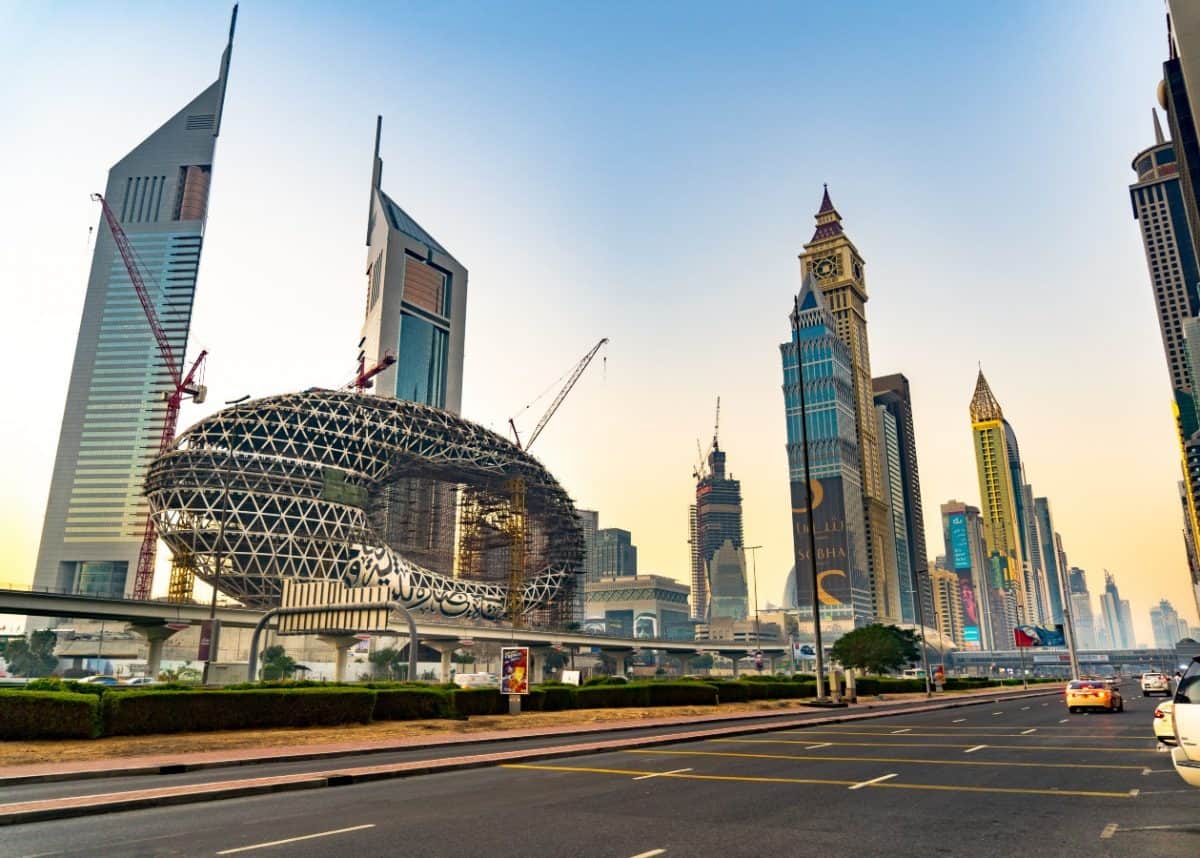
Environmental sustainability and the need to tackle social inequalities

Environmental sustainability and the need to tackle social inequalities Photo by Darcey Beau on Unsplash

Nick Dunn, Lancaster University and Paul Cureton, Lancaster University

Imagining future cities has long been a favourite activity for architects, artists and designers. Technology is often central in these schemes – it appears as a dynamic and seemingly unstoppable force, providing a neat solution to society’s problems.

But our recent research has suggested that we need to significantly rethink the way we imagine future cities, and move our focus from an overarching technological vision to other priorities, such as environmental sustainability and the need to tackle social inequalities.

We need to answer questions about what can be sustained and what cannot, where cities can be located and where they cannot, and how we might travel in and between them.

The coronavirus pandemic has further reinforced this need. It has profoundly disrupted what we thought we knew about cities. It has further sharpened existing inequalities and brought about major challenges for how we physically live and work together.

The future – yesterday

The architect and influential urban planner Eugène Hénard was arguably the first to publicly discuss “future cities” in Europe during his 1910 address to the Royal Institute of British Architects in London. His vision anticipated the technological advances of the future, such as aerial transportation. This approach, prioritising technology, was also evoked in cinema in Fritz Lang’s 1927 film Metropolis.
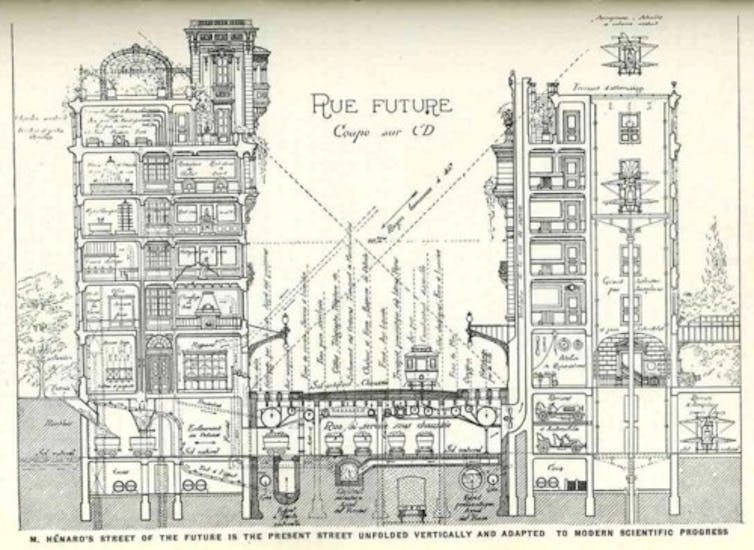
Line drawing of cross section of buildings and street
A vision of a future street by Eugène Hénard. Eugène Hénard (1849-1923), Public domain, via Wikimedia Commons

It was also mirrored by architects such as Le Corbusier in projects such as the 1924 Ville Radieuse (The Radiant City). In this work, Le Corbusier developed his concept of the city as a symmetrical, regulated, and highly centralised landscape.


AlsoRead...

Managing Aussie Share Portfolios Abroad: Tips for Growth

Managing Aussie Share Portfolios Abroad: Tips for Growth

2 July 2026
The New Meaning of Luxury: Lessons from Entrepreneur Chloe Hardy

The New Meaning of Luxury: Lessons from Entrepreneur Chloe Hardy

2 July 2026

Such an approach can be traced through many subsequent visions for cities, portrayed as the physical embodiment of technological prowess.

A new focus

But rather than simply focusing on technology to shape our future, we also need to look at it through social and global lenses. These alternative approaches are increasingly urgent. To provide a safe and sustainable world for present and future populations, we need to think beyond “solutionism”. This is the idea that every problem we have has a technological fix.

An identifiable shift in how future cities are being conceived, designed and delivered concerns the people involved in these processes. This ranges from localised projects to global initiatives. For example, the Every One Every Day project in Barking and Dagenham in London aims to make practical participation in neighbourhood projects inclusive and available to all residents. On a much wider scale, the New Urban Agenda global vision by the United Nations’ Habitat programme, meanwhile, calls for more inclusive and sustainable urbanisation and settlement planning.

We may want our future cities to prioritise environmental renewal. The Green Machine, a design for a future city by architect Stephane Malka, moves like a mobile oasis, replenishing desert rather than causing more environmental degradation. This future city collects water through air condensation and uses solar power to drive itself over arid landscapes.

These are ploughed and injected with a mixture of water, natural fertiliser and cereal seeds as it passes. Agricultural greenhouses along with livestock farms support the city’s inhabitants and supplement local populations. The project is scaleable and replicable in relation to the number of people needed to be accommodated.

Climate change brings with it the possibility of dramatic sea level rise. Post Carbon City-State, a project by architecture and urban design group Terreform, imagines a submerged New York. The project proposes that, rather than investing in mitigation efforts, the East and Hudson River are allowed to flood parts of Manhattan.

The new city is rebuilt in its surrounding rivers. Former streets become snaking arteries of liveable spaces, embedded with renewable energy resources, green vehicles, and productive nutrient zones. This replaces the current obsession with private car ownership towards more ecological forms of public transport.

Both these projects emphasise responses to the impacts of climate change over technological innovation for its own sake.

Alternatively, the cities of the future may prioritise equality. This is illustrated by spatial design agency 5th Studio’s Stour City, The Enabling State.

This is a future city for 60,000 inhabitants, envisioned along the River Stour and the Port of Harwich in East Anglia, England. Based around the urbanisation and intensification of existing rail and port infrastructure, it features initiatives such as waste to power generation in order to support a viable, low-impact city, with priorities including affordable housing for all.

Imagining these cities helps us understand how we want our future lives to look. But we must open up the opportunity to conceptualise these futures to a wider and more diverse set of people. By doing so, we will be better positioned to rethink the shifts required to safeguard our health, that of other species and the planet we share. This is the significance of visions for tomorrow’s world – and why we need to create new ones today.

Nick Dunn, Professor of Urban Design, Lancaster University and Paul Cureton, Senior Lecturer in Design (People, Places, Products), Lancaster University

This article is republished from The Conversation under a Creative Commons license. Read the original article.


Tags: SB001
DMCA.com Protection Status

SUBSCRIBE to our NEWSLETTER

[mc4wp_form id=”2384248″]

Don't Miss

Animal Communication Goes Beyond What Science Can Currently Measure: Zoologist and Spiritual teacher Artemis, the heart whisperer on what the textbooks don’t teach

by Australian Times
7 July 2026
Animal Communication Goes Beyond What Science Can Currently Measure
Lifestyle

Animal communication classes and formal training can be valuable, providing tools, structure, and guidance.

Read moreDetails

Managing Aussie Share Portfolios Abroad: Tips for Growth

by Fazila Olla-Logday
2 July 2026
Managing Aussie Share Portfolios Abroad: Tips for Growth
at

Unlock the secrets to optimizing your Aussie share portfolios abroad. Discover essential tips for growth and navigate the global market...

Read moreDetails

The New Meaning of Luxury: Lessons from Entrepreneur Chloe Hardy

by Pauline Torongo
2 July 2026
The New Meaning of Luxury: Lessons from Entrepreneur Chloe Hardy
Business & Finance

Chloe Hardy, the founder and CEO of Dupes & Co established an Australian-made beauty brand focused on affordability and product...

Read moreDetails

Excel Funding Group emerges as Specialist in SMSF Property Lending amid growing demand

by Pauline Torongo
26 June 2026
Excel Funding Group emerges as Specialist in SMSF Property Lending amid growing demand
Business & Finance

Excel Funding Group has hit a new milestone, tripling its SMSF loan settlement volumes compared to Q1 2025.

Read moreDetails

Svitla Systems acquires Australia’s Kiandra IT to expand Global Engineering Footprint and Accelerate AI-Driven delivery

by Pauline Torongo
11 May 2026
Svitla Systems
Business & Finance

Acquisition marks Svitla’s entry into the Australian market and strengthens capabilities in low-code, Microsoft technologies, and enterprise software engineering.

Read moreDetails

Residential Healthcare Practices: Revolution or Evolution?

by Pauline Torongo
11 May 2026
Residential Healthcare Practices: Revolution or Evolution?
Lifestyle

President Bill Lutz’s "revolution" was born from his background in fine dining, which instilled a disciplined, customer-focused approach.

Read moreDetails

Medicana Health Group launches HPV vaccination campaign to support cervical cancer prevention

by Pauline Torongo
28 April 2026
Medicana Health Group launches HPV vaccination campaign to support cervical cancer prevention
Health & Wellness

The Türkiye-based healthcare group has introduced a new awareness campaign focused on HPV vaccination, regular check-ups and early detection, with...

Read moreDetails
Load More

Copyright © Blue Sky Publications Ltd. All Rights Reserved.
australiantimes.co.uk is a division of Blue Sky Publications Ltd. Reproduction without permission prohibited. DMCA.com Protection Status

  • About us
  • Write for Us
  • Advertise
  • Contact us
  • T&Cs, Privacy and GDPR
No Result
View All Result
  • News
    • Weather
    • Sport
    • Technology
    • Business & Finance
      • Currency Zone
    • Lotto Results
      • The Lott
  • Lifestyle
    • Entertainment
    • Horoscopes
    • Health & Wellness
    • Recipes
  • Travel
  • Expat Life
  • Move to Australia

Copyright © Blue Sky Publications Ltd. All Rights Reserved.
australiantimes.co.uk is a division of Blue Sky Publications Ltd. Reproduction without permission prohibited. DMCA.com Protection Status

No Result
View All Result
  • News
    • Weather
    • Sport
    • Technology
    • Business & Finance
      • Currency Zone
    • Lotto Results
      • The Lott
  • Lifestyle
    • Entertainment
    • Horoscopes
    • Health & Wellness
    • Recipes
  • Travel
  • Expat Life
  • Move to Australia

Copyright © Blue Sky Publications Ltd. All Rights Reserved.
australiantimes.co.uk is a division of Blue Sky Publications Ltd. Reproduction without permission prohibited. DMCA.com Protection Status





