

• Advertise
  • About us
  • Terms and Conditions
  • Contact us
Wednesday, May 13, 2026
Australian Times News
  • News
    • Weather
    • Sport
    • Technology
    • Business & Finance
      • Currency Zone
    • Lotto Results
      • The Lott
  • Lifestyle
    • Entertainment
    • Horoscopes
    • Health & Wellness
    • Recipes
  • Travel
  • Expat Life
  • Move to Australia
No Result
View All Result
  • News
    • Weather
    • Sport
    • Technology
    • Business & Finance
      • Currency Zone
    • Lotto Results
      • The Lott
  • Lifestyle
    • Entertainment
    • Horoscopes
    • Health & Wellness
    • Recipes
  • Travel
  • Expat Life
  • Move to Australia
No Result
View All Result
Australian Times News
No Result
View All Result
Home News

Deep-sea mining may wipe out species we have only just discovered

Deep sea hydrothermal vents harbour some of the most extraordinary species on our planet. Lying at two to three kilometres below the surface, these extreme, insular ecosystems are powered, not by the sunlight-driven photosynthesis that we’re used to, but by energy from superheated mineral-rich seawater jetting from cracks in the seafloor.

The Conversation by The Conversation
13-12-2021 09:17
in News
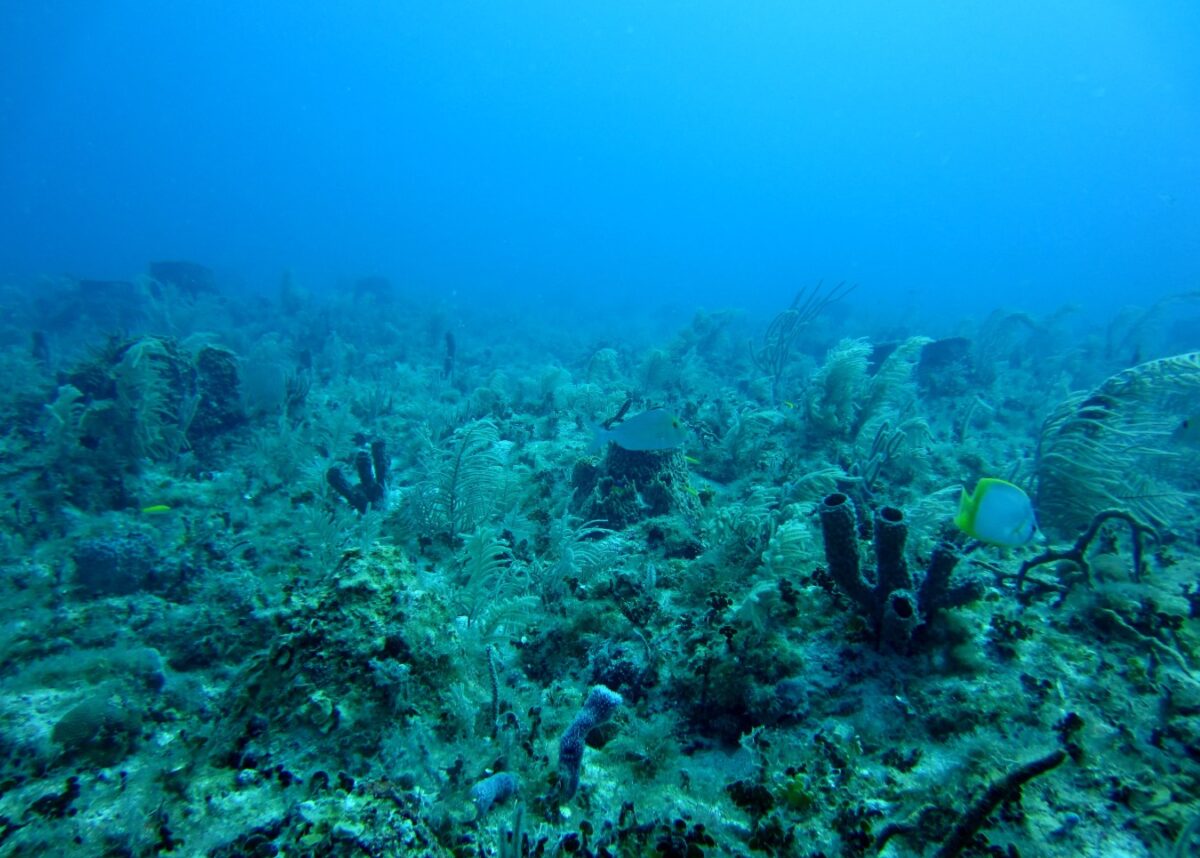
Photo by NOAA on Unsplash

Photo by NOAA on Unsplash

Elin Angharad Thomas, Queen’s University Belfast

Deep sea hydrothermal vents harbour some of the most extraordinary species on our planet. Lying at two to three kilometres below the surface, these extreme, insular ecosystems are powered, not by the sunlight-driven photosynthesis that we’re used to, but by energy from superheated mineral-rich seawater jetting from cracks in the seafloor. This supports thriving and unique animal communities with a density of life that rivals tropical rainforests or coral reefs. From giant red tubeworms to iron-armoured snails, these species were once considered to be untouchable by human activity, but that may not be the case for very long.

There is growing industrial interest in the deep sea. Most importantly, this includes mining for metals like copper, lead and zinc which form the towering hydrothermal vent structures. The International Seabed Authority, the UN body responsible for managing the seafloor beyond national jurisdictions, has already granted 31 exploratory deep sea mining contracts, seven of them at hydrothermal vents.

It is still unclear exactly how these huge mining machines will impact the deep seafloor. But there’s no reason to expect it will be any more eco-friendly than mining on land. At the very least, mining will destroy habitats and release toxic sediment plumes, so scientists agree it’s not good news for deep-sea creatures.
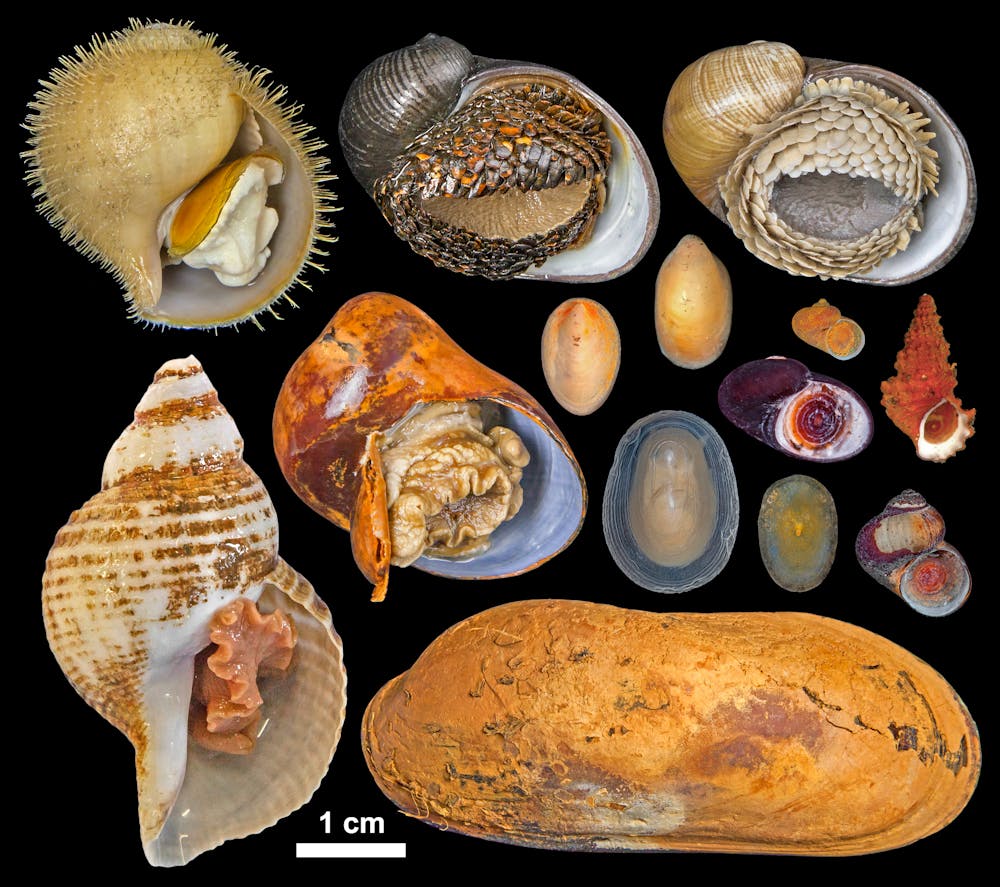
image of lots of different vent molluscs
Deep sea vent molluscs come in many different shapes and sizes. Chong Chen, Author provided

With these growing concerns, my colleagues and I saw a need for a simple but effective approach to help identify conservation priorities and clearly communicate the mining threat. The obvious choice was to collaborate with the world’s foremost conservation authority, the International Union for Conservation of Nature (IUCN), which publishes the Red List of Threatened Species. The IUCN Red List uses a series of universally renowned categories like “endangered” or “critically endangered” to raise awareness of threats and inform everyone of the extinction risk facing species.

We then applied the Red List criteria to all 184 vent-restricted mollusc species (snails, bivalves, and so on), one of the most dominant groups at hydrothermal vents. We found that almost two-thirds are threatened with extinction by deep-sea mining, with more than 20% listed as critically endangered. Our findings are now officially part of the updated Red List.

One species, the dragon snail Dracogyra subfusca, is only known from a single hydrothermal vent site around the size of two football fields in the Indian Ocean. This area of seafloor is under one of the exploration-phase mining contracts agreed by the International Seabed Authority and as a result the dragon snail, a species only discovered in 2017, is now considered critically endangered.


AlsoRead...

Svitla Systems

Svitla Systems acquires Australia’s Kiandra IT to expand Global Engineering Footprint and Accelerate AI-Driven delivery

11 May 2026
How Clevero is helping Australian Service Businesses compete with Enterprises on a Fraction of the Budget

How Clevero is helping Australian Service Businesses compete with Enterprises on a Fraction of the Budget

28 April 2026

Another group of my favourite vent molluscs are the spiky-shelled punk rock snails Alviniconcha. All six species are now listed as vulnerable or endangered because of the threat of mining.

a spiky snail on black background
Alviniconcha strummeri, a spiky deep-sea snail first described in 2014, is named after lead singer of The Clash, Joe Strummer. Anders Waren / Swedish Museum of Natural History

An ecosystem under threat

These molluscs are likely representative of an entire ecosystem under threat. Unsurprisingly, since mining is the single biggest reason these animals are listed as threatened, any other groups of vent species assessed under the same Red List criteria would face the same levels of extinction risk.

Hydrothermal vents aren’t even the only target of the deep-sea mining industry. Further afield, there are contracts to mine the potato-sized lumps of metal found scattered on the seafloor and the cobalt-rich crusts of underwater mountains. Both ecosystems are similarly home to a host of unique species that may take decades to millennia to recover from any human impacts.
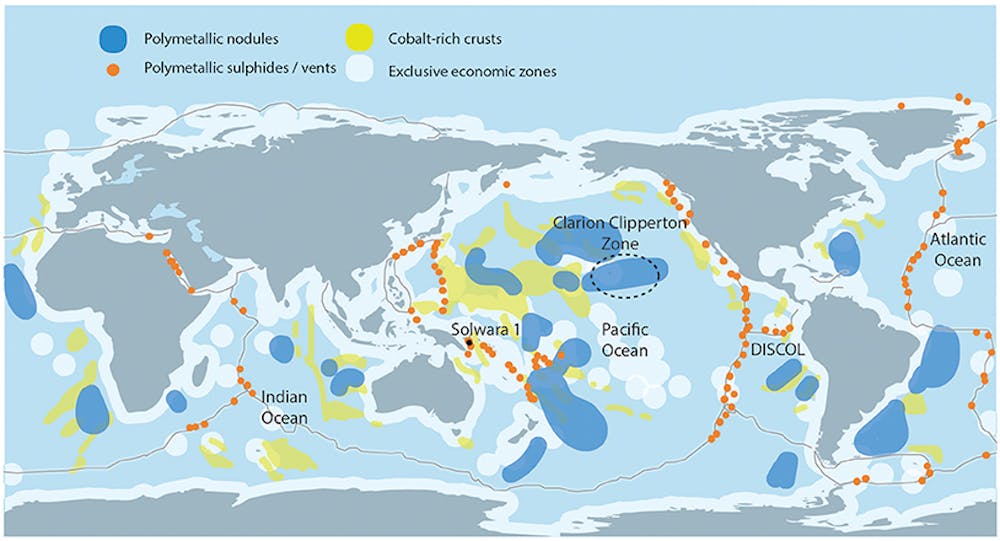
Annotated map of the world
Deep sea mineral deposits: polymetallic nodules – the potato-sized lumps – are in blue; cobalt crusts in yellow; vents in red. Miller et al (2018) / Frontiers in Marine Science

Why does this all matter? Deep-sea mining and its sustainability is a global issue – the deep seafloor is meant to be the “common heritage of mankind”, as defined by the UN’s Convention on the Law of the Sea, yet it’s easy to forget about the deep sea and its many wonders. In fact, you are likely reading this article on a phone or a laptop, possibly entirely unaware of the ongoing debate over whether to mine the deep to source the valuable metals needed to power these devices.

But the clear vulnerability of these habitats has already begun to dissuade people – just in the past few months, global corporations like Google and BMW have committed not to source materials from the seabed or to finance deep-sea mining. Delegates of the recent IUCN World Conservation Congress overwhelmingly voted in support of a moratorium on deep-sea mining.

There is an opportunity here not to make the same mistakes in the deep sea as were made on land. Ultimately, colleagues and I hope the vent Red List can provide a new platform to ensure the conservation of these unique deep-sea habitats. And if commercial-scale mining at hydrothermal vents is given the green light in the coming months, the extinction of some of the deep-sea’s most charismatic species is likely to be its legacy.

Elin Angharad Thomas, PhD Researcher, Deep-Sea Biology, Queen’s University Belfast

This article is republished from The Conversation under a Creative Commons license. Read the original article.


Tags: SB001
DMCA.com Protection Status

SUBSCRIBE to our NEWSLETTER

[mc4wp_form id=”2384248″]

Don't Miss

Svitla Systems acquires Australia’s Kiandra IT to expand Global Engineering Footprint and Accelerate AI-Driven delivery

by Pauline Torongo
11 May 2026
Svitla Systems
Business & Finance

Acquisition marks Svitla’s entry into the Australian market and strengthens capabilities in low-code, Microsoft technologies, and enterprise software engineering.

Read moreDetails

Residential Healthcare Practices: Revolution or Evolution?

by Pauline Torongo
11 May 2026
Residential Healthcare Practices: Revolution or Evolution?
Lifestyle

President Bill Lutz’s "revolution" was born from his background in fine dining, which instilled a disciplined, customer-focused approach.

Read moreDetails

Medicana Health Group launches HPV vaccination campaign to support cervical cancer prevention

by Pauline Torongo
28 April 2026
Medicana Health Group launches HPV vaccination campaign to support cervical cancer prevention
Health & Wellness

The Türkiye-based healthcare group has introduced a new awareness campaign focused on HPV vaccination, regular check-ups and early detection, with...

Read moreDetails

How Clevero is helping Australian Service Businesses compete with Enterprises on a Fraction of the Budget

by Pauline Torongo
28 April 2026
How Clevero is helping Australian Service Businesses compete with Enterprises on a Fraction of the Budget
Business & Finance

By consolidating CRM, scheduling, workflow automation, invoicing, reporting, and client communications into a single platform, Clevero gives smaller operators the...

Read moreDetails

How CJAM Group is building 1,100 homes across Southeast Queensland

by Pauline Torongo
24 March 2026
How CJAM Group is building 1,100 homes across Southeast Queensland
Lifestyle

The CJAM Group founder is quietly building a 1,100+ home pipeline, with projects in Hervey Bay and Toowoomba, using a...

Read moreDetails

Design Without Compromise: Where Gutter Protection Meets Modern Architecture

by Fazila Olla-Logday
20 March 2026
Design Without Compromise: Where Gutter Protection Meets Modern Architecture
Business & Finance

Design without compromise by integrating gutter protection seamlessly into modern architecture. Discover how innovative gutter systems enhance your home’s aesthetics...

Read moreDetails

How WageSafe Secured Australia’s Most Reputable Retail Business Among Its Premium Clients

by Fazila Olla-Logday
12 March 2026
How WageSafe Secured Australia’s Most Reputable Retail Business Among Its Premium Clients
at

Learn how WageSafe helps businesses stay compliant with payroll and wage regulations through reliable monitoring, risk management, and expert support—protecting...

Read moreDetails
Load More

Copyright © Blue Sky Publications Ltd. All Rights Reserved.
australiantimes.co.uk is a division of Blue Sky Publications Ltd. Reproduction without permission prohibited. DMCA.com Protection Status

  • About us
  • Write for Us
  • Advertise
  • Contact us
  • T&Cs, Privacy and GDPR
No Result
View All Result
  • News
    • Weather
    • Sport
    • Technology
    • Business & Finance
      • Currency Zone
    • Lotto Results
      • The Lott
  • Lifestyle
    • Entertainment
    • Horoscopes
    • Health & Wellness
    • Recipes
  • Travel
  • Expat Life
  • Move to Australia

Copyright © Blue Sky Publications Ltd. All Rights Reserved.
australiantimes.co.uk is a division of Blue Sky Publications Ltd. Reproduction without permission prohibited. DMCA.com Protection Status

No Result
View All Result
  • News
    • Weather
    • Sport
    • Technology
    • Business & Finance
      • Currency Zone
    • Lotto Results
      • The Lott
  • Lifestyle
    • Entertainment
    • Horoscopes
    • Health & Wellness
    • Recipes
  • Travel
  • Expat Life
  • Move to Australia

Copyright © Blue Sky Publications Ltd. All Rights Reserved.
australiantimes.co.uk is a division of Blue Sky Publications Ltd. Reproduction without permission prohibited. DMCA.com Protection Status





