


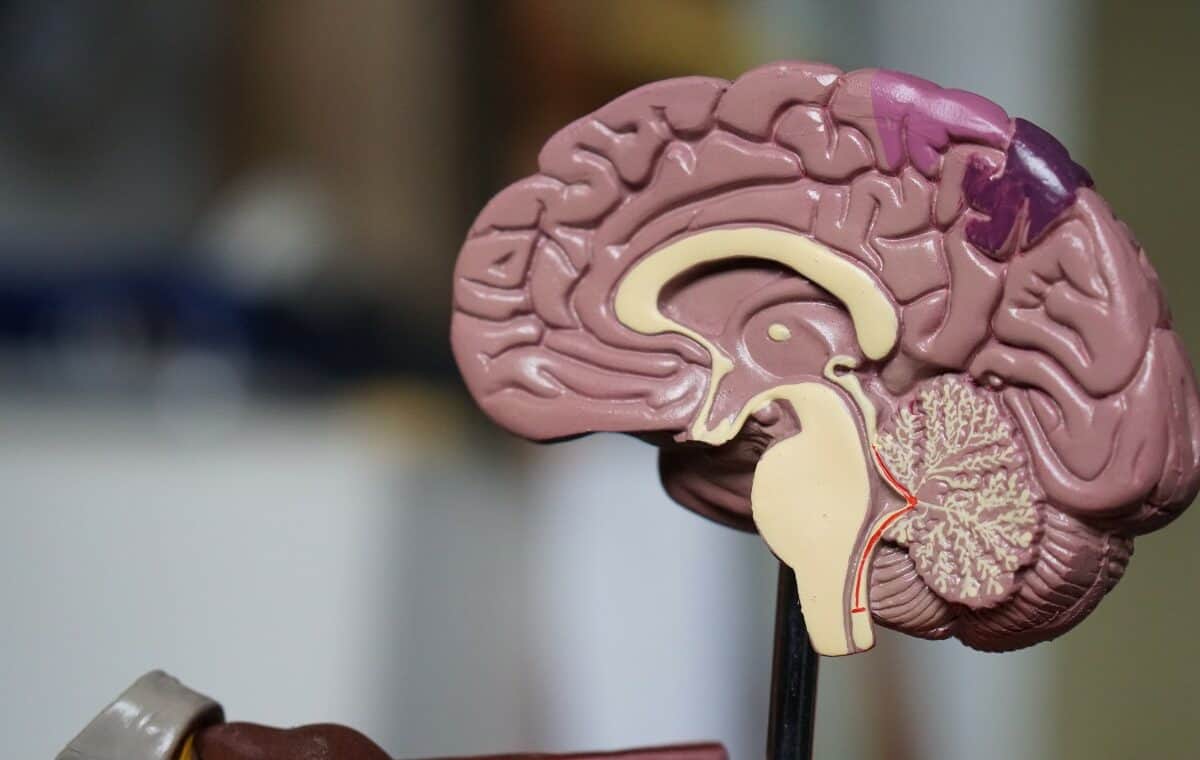
Early in the pandemic, it became clear that COVID-19 wasn’t just a disease of the lungs. The heart, kidneys and liver could also be affected. Many patients also suffered from neurological problems, including “brain fog”, loss of a sense of smell and taste, and stroke. Now, a new study from the University of Oxford suggests that COVID can lead to long-term loss of brain tissue. This is a worrying find, which comes against the backdrop of numerous reports of long COVID.
The study, which is yet to be peer reviewed, used data from the UK Biobank, which holds genetic data, detailed medical records and brain scans of more than 40,000 participants, predating the pandemic.
Of the 782 participants, the researchers selected 394 people (the “cases”) who had tested positive for COVID between March 2020 and April 2021. The remaining 388 participants were the “controls” (people who hadn’t had COVID). Cases were matched with controls on factors such as age, sex, ethnicity, blood pressure and body-mass index.
Most of the cases had moderate symptoms or no symptoms at all.
The researchers invited back both the cases and controls for a second brain scan, which allowed them to assess brain changes that had occurred since the original (pre-pandemic) scans were taken.
This kind of study design, with matched cases and controls, represents a gold standard in epidemiology. The study considered 2,360 distinct brain measurements. The measurement differences between the two brain scans were then correlated to the participants’ infection status.


Besides this exploratory analysis, the researchers also considered a more hypothesis-driven approach, limited to 297 brain measurements that are plausibly associated with COVID harm.
The two sets of analyses (exploratory and hypothesis-driven) identified four and eight measurements, respectively, which were statistically significantly associated with COVID. All traits that showed a reduction in brain tissue associated with a COVID infection were in regions of the brain devoted to the sense of smell.
The statistical analyses were professionally conducted and adequately controlled for the very large number of statistical tests performed. Yet, despite a few traits reaching statistical significance, all associations remained marginal and will need to be confirmed by future studies.
While even small losses in the volume of certain brain regions might seem alarming, subtle brain changes don’t necessarily imply disease, even in adulthood. The researchers interpret their findings as a direct harmful effect of COVID caused by the virus entering the brain via the nose. However, another explanation is that changes in olfactory regions of the brain (the parts that process odour) are a consequence of a loss of taste and smell, not the cause of it.
Indeed, most people with COVID experience a temporary loss of smell, which is an arguably annoying, but fairly benign symptom. Loss of smell is probably caused by infection of non-neuronal cells involved in smell, rather than direct injury to brain cells.
Also, widespread structural changes in the brain following the loss of sense of smell have been documented before SARS-CoV-2, the virus that causes COVID, infected the first human. There is even a common inflammatory condition, called chronic rhinosinusitis that causes changes in grey matter that are highly reminiscent of that reported in the Oxford study.
Fortunately, sense of smell is regained by most COVID patients after a few months, in which case alteration of the brain would be expected to be temporary.

Long COVID
Those results about COVID-induced brain changes add further concerns about the severity and extent of long COVID. Long-lasting symptoms have a clear biological basis. Similar post-infection symptoms have been described for other infectious diseases, such as the flu. Full recovery from severe disease, whatever its cause, often takes a long time. And some of the worst affected patients never fully recover.
What is less obvious is the extent to which mild or even symptomless COVID might be associated with persistent symptoms. Most research suggests COVID causes long-term symptoms, such as fatigue and depression, even in mild cases. Yet all studies, however well designed, cannot control for the fact that people who know they had COVID will be aware from the media coverage that they may be at risk of long-term symptoms.
Such placebo or nocebo effects can have a strong effect on people’s health and wellbeing. For example, people enrolled in the control arm of the Pfizer vaccine trial reported fatigue (33%) and headache (34%) despite not having been injected with the vaccine.
It is challenging for the media to raise awareness about possibly concerning scientific findings without engaging in unhelpful scaremongering. The public has the right to be informed about potential risks to their health, yet an excessive focus on long COVID, however well intended, can contribute to amplifying the problem as a self-fulfilling prophecy.
Minimising health risks can kill, often through poor lifestyle choices and delayed diagnoses. Conversely, magnification of health risks can also kill. The association of chronic stress and a higher risk of cardiovascular disease is well documented. There is even a recognised medical condition called broken-heart syndrome – a potentially deadly heart condition caused by emotional stress.
Francois Balloux, Chair Professor, Computational Biology, UCL
This article is republished from The Conversation under a Creative Commons license. Read the original article.







