• Advertise
  • About us
  • Terms and Conditions
  • Contact us
Friday, November 7, 2025
Australian Times News
  • News
    • Weather
    • Sport
    • Technology
    • Business & Finance
      • Currency Zone
    • Lotto Results
      • The Lott
  • Lifestyle
    • Entertainment
    • Horoscopes
    • Health & Wellness
    • Recipes
  • Travel
  • Expat Life
  • Move to Australia
No Result
View All Result
  • News
    • Weather
    • Sport
    • Technology
    • Business & Finance
      • Currency Zone
    • Lotto Results
      • The Lott
  • Lifestyle
    • Entertainment
    • Horoscopes
    • Health & Wellness
    • Recipes
  • Travel
  • Expat Life
  • Move to Australia
No Result
View All Result
Australian Times News
No Result
View All Result
Home News

Coronavirus weekly: where are countries finding the money to mitigate economic catastrophe?

The management of the COVID-19 pandemic has resulted in tough public policy measures around the globe, including lockdowns aimed at reducing human interaction to a minimum

The Conversation by The Conversation
14-05-2020 04:13
in News
Coronavirus weekly

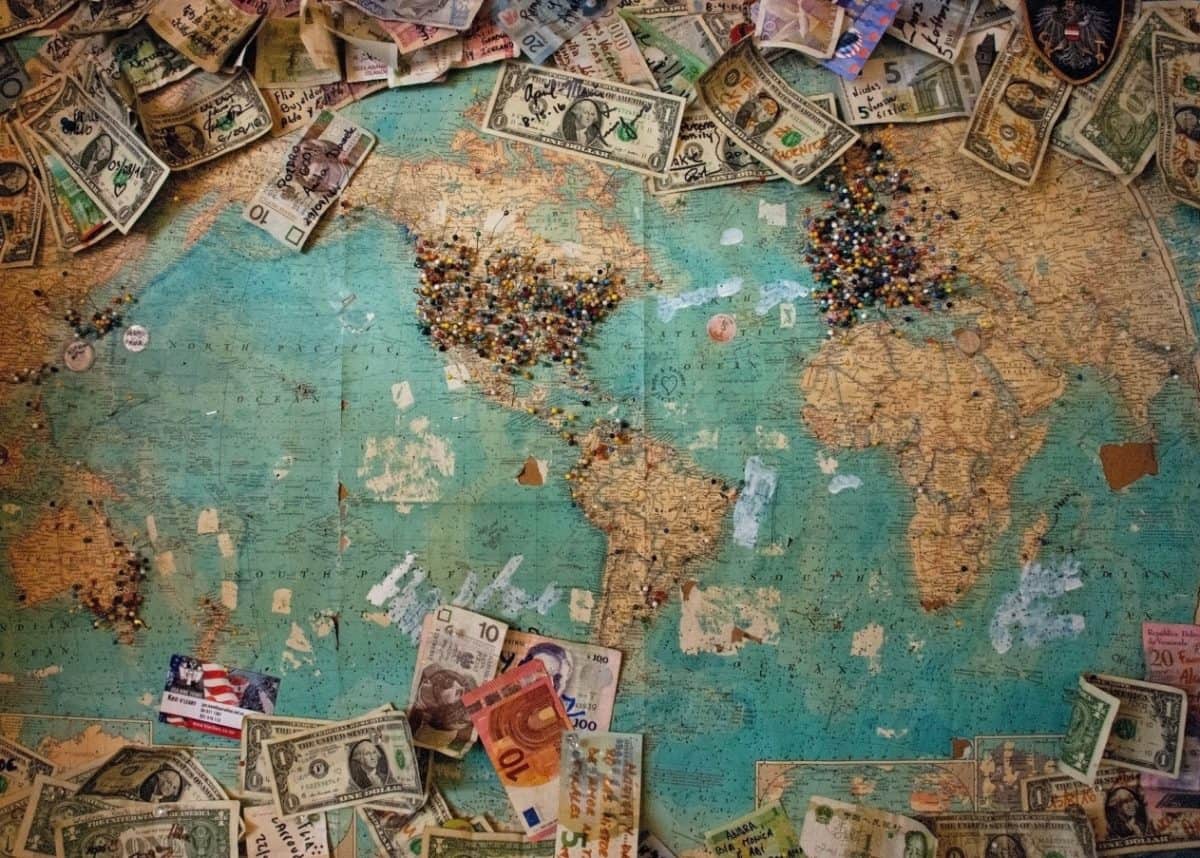
Coronavirus weekly Photo by Christine Roy on Unsplash

Jabulani Sikhakhane, The Conversation

These measures, which have put a stop to big chunks of economic activity, have come with devastating consequences, forcing business to lay off tens of millions of workers globally.

To mitigate the social and economic impacts, governments have had to dig deep into their finances that in some instances were already under strain. These are over and above the resources that governments need to pump into their health systems as they battle the pandemic. This additional expenditure comes at a time when the shutdown of economic activity has reduced tax collection, placing further strain on the public purse.

The Conversation has brought together analyses of these issues by its network of experts. In this round up we pulled together some of the articles from the week that was. They cover national budgets in the time of COVID-19, how remote working is worsening inequality, the pandemic’s after affects on inflation, rising unemployment, and the likelihood of a higher debt burden on future generations.


This is our weekly round-up of expert information about the coronavirus.
The Conversation, a not-for-profit group, works with a wide range of academics across its global network. Together we produce evidence-based analysis and insights. The articles are free to read – there is no paywall – and to republish. Keep up to date with the latest research by reading our free newsletter .


What various countries are doing

Governments have two options to finance additional expenditures: higher taxes and raising more debt.

  • Indonesia has decided to issue government bonds to finance a stimulus package to counter the impacts of COVID-19. Nurhastuty K. Wardhani explains that the long-term nature of the bond and its denomination in US dollars will most likely be a burden on future generations.
  • Argentina is seeking ways to tax its way out of the current economic crisis induced by COVID-19. Alejandro Milcíades Peña and Matt Barlow explain why this is risky for a country that already has very high tax rates.
  • New Zealand should unleash aggressive but well-targeted spending, says Ilan Noy. Without it, the burden of an L-shaped economic trajectory will be far greater on future generations than any debt governments might take on now to develop a vaccine or keep businesses afloat and people on payrolls. Norman Gemmell outlines what the country’s forthcoming budget should look like as the country prepares to come out of its COVID-19 lockdown.
  • A number of African countries face strained public finances, some already struggling to repay their debt. In response, there have been growing calls for debt relief. However, Rodrigo Olivares-Caminal argues that any proposed moratorium must involve lenders and investors to prevent unintended consequences that could be costly for Africa.
  • Canada is forecasting a twelve-fold increase in its budget deficit this financial year, driven by the sharp drop in forecasted tax collections and the government’s extraordinary spending measures to support the economy and manage the pandemic. However, as Patrck Lebland says, this may not result in higher taxes.
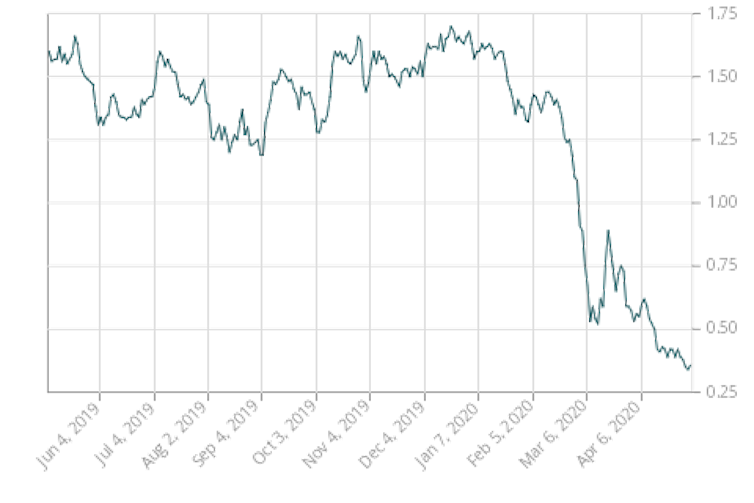
This graph shows the average yield of three- to five-year Government of Canada Marketable Bonds. Borrowing costs for the federal government have dropped since the start of the coronavirus pandemic. (Bank of Canada)
  • US unemployment shot up from 4.4% in March to 14.7% in April, but Jay L. Zagorsky says unemployment is not likely to reach 25%, the highest level reached during the 1933 depression. In his view, the crisis will be short-lived and the US economy will rebound when people resume their economic activities.
  • Australia‘s Reserve Bank has forecast overly optimistic economic growth and employment (one in 13 people in Australia will lose their jobs) for the next two years, according to Peter Martin. Drawing on what happened after the global financial crisis in 2008, he sees a recovery that looks more like a flat-bottomed boat.

Meanwhile, Alan Shipman cautions about the dangers of a further decline on consumer price inflation. When consumers sense that prices are going to continue falling, they put off expenditure on non-essential purchases, hoping to pick them up later at an even lower price. Such behaviour obviously leads to a decline in consumer spending, one of the major drivers of economic activity.


AlsoRead...

Welding Safety Gear in NZ: Helmets, Respirators, and Fume Control

Welding Safety Gear in NZ: Helmets, Respirators, and Fume Control

18 August 2025
Why the Greeff Brothers built Founders table as Australia's answer to Elite Business Communities that cost nothing

Why the Greeff Brothers built Founders table as Australia’s answer to Elite Business Communities that cost nothing

4 August 2025
What happens when capital stops flowing? (Kate Townsend/Unsplash)

Workplace and inequality

  • The office will change beyond the pandemic. Dave Cook outlines the five trends that will shape the workplace of the future.
  • Remote work can be a source of socioeconomic inequality, warn Ugo Lachapelle and Georges A. Tanguay. While the measure is aimed at slowing down the spread of the pandemic, the researchers analysed 2015 Canadian General Social Survey (GSS) data to show that the number of telecommuters increases with personal income. Jobs with a large share of low-income workers generally have few telecommuters and lose out on its benefits.
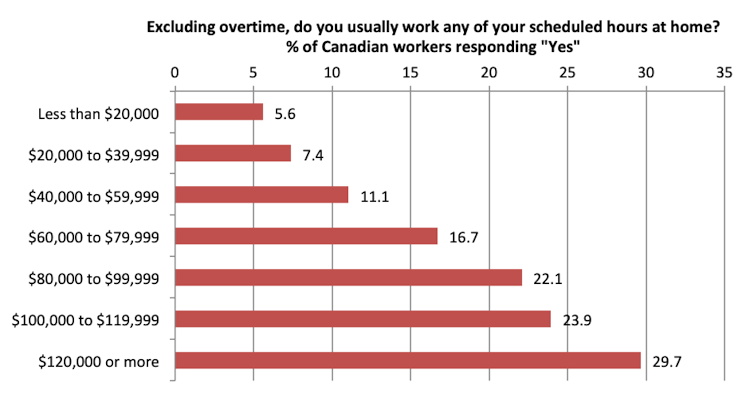
Source: 2015 Canadian General Social Survey (GSS), weighted to represent the Canadian workforce.

Sign up to The Conversation

Get the latest news and advice on COVID-19, direct from the experts in your inbox. Join hundreds of thousands who trust experts by subscribing to our newsletter.

Jabulani Sikhakhane, Deputy Editor and Business & Economy Editor, The Conversation

This article is republished from The Conversation under a Creative Commons license. Read the original article.


Tags: SB001
DMCA.com Protection Status

SUBSCRIBE to our NEWSLETTER

[mc4wp_form id=”2384248″]

Don't Miss

Where in Europe you should go for your next breakaway

by Fazila Olla-Logday
8 October 2025
Where in Europe you should go for your next breakaway
Travel

When it comes to travelling and going on holiday, you can’t really go wrong when booking a trip to Europe....

Read more

Why Fairness Matters in Today’s Online Gaming World

by Fazila Olla-Logday
17 September 2025
What Real Fairness in Online Gaming Looks Like
Gaming

Explore what makes gaming platforms trustworthy and fair. Learn what to look for and how fairness enhances your experience.

Read more

Dee Tozer reveals why criticism mutes lovingness in partnerships

by Pauline Torongo
12 September 2025
Dee Tozer reveals why criticism mutes lovingness in partnerships
Lifestyle

Criticism is often brushed off as “just being honest” or “trying to help.” Yet in practice, its impact on relationships...

Read more

Global Shifts: How Geopolitics and Economics Are Driving Private Jet Demand

by Fazila Olla-Logday
4 September 2025
How Geopolitics and Economics Are Driving Private Jet Demand
Travel

The rise in global wealth—particularly across emerging economies—is reshaping private jets from symbols of luxury into vital tools for business...

Read more

5 Things Australians Renting in the UK Need to Know About Possession Claims

by Fazila Olla-Logday
4 September 2025
5 Things Australians Renting in the UK Need to Know About Possession Claims
Expat Life

Facing a possession claim while renting in the UK? Here's what Australians need to know to protect their rights and...

Read more

How Charity Solicitors Help UK Organisations Stay Legally Compliant

by Fazila Olla-Logday
4 September 2025
How Charity Solicitors Help UK Organisations Stay Legally Compliant
Lifestyle

Charity solicitors help UK organisations stay legally compliant by advising on governance, regulatory duties, and Charity Commission requirements.

Read more

5 Ways a Power of Attorney Can Protect Your Wellbeing and Future

by Fazila Olla-Logday
4 September 2025
5 Ways a Power of Attorney Can Protect Your Wellbeing and Future
Expat Life

A Power of Attorney lets someone you trust make decisions if you're unable to. From managing money to making healthcare...

Read more
Load More

Copyright © Blue Sky Publications Ltd. All Rights Reserved.
australiantimes.co.uk is a division of Blue Sky Publications Ltd. Reproduction without permission prohibited. DMCA.com Protection Status

  • About us
  • Write for Us
  • Advertise
  • Contact us
  • T&Cs, Privacy and GDPR
No Result
View All Result
  • News
    • Weather
    • Sport
    • Technology
    • Business & Finance
      • Currency Zone
    • Lotto Results
      • The Lott
  • Lifestyle
    • Entertainment
    • Horoscopes
    • Health & Wellness
    • Recipes
  • Travel
  • Expat Life
  • Move to Australia

Copyright © Blue Sky Publications Ltd. All Rights Reserved.
australiantimes.co.uk is a division of Blue Sky Publications Ltd. Reproduction without permission prohibited. DMCA.com Protection Status