

Nicholas Johnson, University of Washington
The Conversation is running a series of dispatches from clinicians and researchers operating on the front lines of the coronavirus pandemic. You can find all of the stories here.
As an emergency medicine and critical care doctor at the University of Washington School of Medicine in Seattle, I’ve lost count of the number of COVID-19 surges since the U.S. pandemic began in Seattle in February 2020. But this one feels different. The patients are younger. They have fewer preexisting medical conditions. And at my hospital, over 95% of these hospitalized patients share one common feature: They’re unvaccinated.
While I’m grateful to see news of the FDA’s recent full approval of one of the COVID-19 mRNA vaccines, the science has been clear in my mind for quite some time. mRNA vaccines, first developed over nearly 50 years, are nothing short of a miracle of science designed for situations just like a respiratory virus pandemic. The vaccines are the most effective tool we have to prevent severe illness and hospitalization and protect our precious health care resources. Some of my colleagues just published a study showing exactly this.
Of course, every medical treatment has risks and potential side effects, but we’ve witnessed the world’s largest vaccine trial, with more than 200 million people in the U.S. receiving at least one dose. Doctors can confidently say that vaccine side effects are rare and generally mild, and rumors about vaccines altering DNA or causing infertility are completely unfounded, with no scientific basis.
But I also have sympathy for those who fell victim to disinformation. Too many times I’ve been asked by a family member of a dying patient with COVID-19 if it was too late for the vaccine. Too many times, I’ve had to say yes. The next question is often, “Is there anything else that can be done?” Too often, the answer is no.
Having this conversation over and over again, often over teleconferencing software or the phone, is exhausting and profoundly sad, especially knowing that, in the case of unvaccinated patients, it likely could have been prevented.

I realize that not everybody sees what I see every day. While stories about vaccine reactions abound, few hear about the realities of severe COVID-19 infection. However, when I close my eyes at night, I see the healthy 27-year-old man who died after four weeks hooked up to machines that tried to keep him alive, and the young family he left behind. I see the 41-year-old woman now weak and permanently disabled after a long hospital stay. I see the 53-year-old farmworker who now requires dialysis after developing renal failure, a common complication of severe COVID-19. And countless more.
I often hear claims of “99% survival” from COVID-19 with or without the vaccine, but in reality, the facts are much more staggering. Nearly 1 in 500 Americans has died from this disease, and for those who survive, the devastation is like nothing I’ve ever seen. Holes in lungs, muscle wasted, organs failing one by one – millions of people will suffer physical, psychological and financial consequences that will last months or years, a toll difficult to quantify.
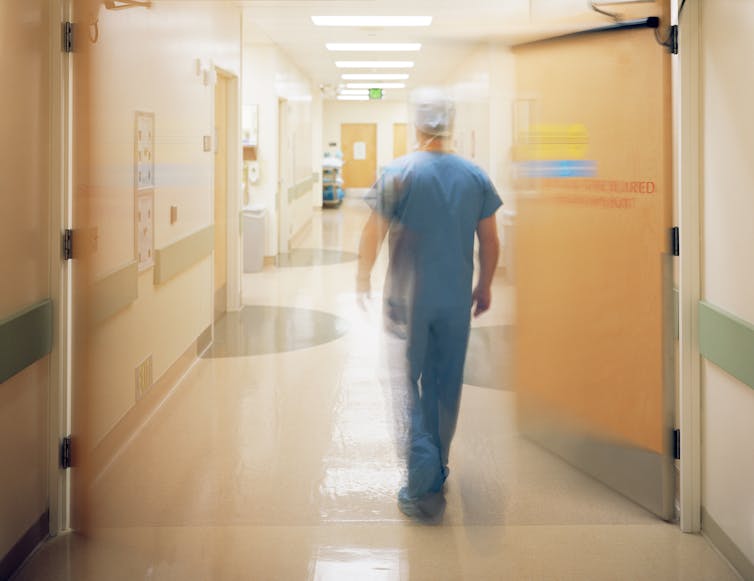
The impact on our health care system is also difficult to quantify. Staffing, even more than beds or ventilators, is critically low. In Washington state, Texas and across the country, experienced health care workers are leaving the profession in droves, exasperated by the continuous onslaught of sick COVID-19 patients and a demanding work environment. People – nurses, respiratory therapists, doctors, physical therapists, sanitation workers – do the work in hospitals; a hospital bed is worthless without staff to provide care.
Because of these staffing shortages, hospitals are closing, and the inequities and weaknesses in an already-stretched health care system are being exposed. Revered as “health care heroes” just a year ago, doctors are being heckled and even assaulted after speaking out about science at school board meetings.
I’m frustrated that more Americans have not chosen to get vaccinated, to wear masks, to take this pandemic seriously. I often wonder what 2021 would look like if they had. For example, we’ve worn masks in the hospital for years for procedures and to protect us from other respiratory viruses. We know that the SARS-CoV-2 virus can be spread by aerosols that remain suspended in the air, and that some masks can’t entirely block these droplets. But we also know that COVID-19 and most other respiratory viruses also spread from coughing and sneezing via larger respiratory droplets, which most masks do block. Masks are not perfect, but there is strong evidence that they reduce transmission.
With many hospitals at capacity, there have been questions in the media and elsewhere about whether hospitals or health care workers should prioritize the care of the vaccinated, or even refuse to care for unvaccinated individuals who develop severe COVID-19, but that’s not how we think. In medicine, especially in emergency and critical care medicine, we often care for people who make poor choices about their health. We counsel, we provide information, we hope and we press on, providing the exact same care regardless of choices or beliefs.
Although stretched thin and imperfect, we do our best for everyone who needs us. But many places have reached a point at which the demand for health care has outstripped the ability to provide it. And we need help.
[Like what you’ve read? Want more? Sign up for The Conversation’s daily newsletter.]
Nicholas Johnson, Associate Professor of Emergency Medicine, UW School of Medicine, University of Washington
This article is republished from The Conversation under a Creative Commons license. Read the original article.