

• Advertise
  • About us
  • Terms and Conditions
  • Contact us
Wednesday, May 13, 2026
Australian Times News
  • News
    • Weather
    • Sport
    • Technology
    • Business & Finance
      • Currency Zone
    • Lotto Results
      • The Lott
  • Lifestyle
    • Entertainment
    • Horoscopes
    • Health & Wellness
    • Recipes
  • Travel
  • Expat Life
  • Move to Australia
No Result
View All Result
  • News
    • Weather
    • Sport
    • Technology
    • Business & Finance
      • Currency Zone
    • Lotto Results
      • The Lott
  • Lifestyle
    • Entertainment
    • Horoscopes
    • Health & Wellness
    • Recipes
  • Travel
  • Expat Life
  • Move to Australia
No Result
View All Result
Australian Times News
No Result
View All Result
Home News

A win for transgender athletes and athletes with sex variations: the Olympics shifts away from testosterone tests and toward human rights

The International Olympic Committee (IOC) this week released a much anticipated policy document aimed at making the Olympics more inclusive for transgender athletes and athletes with sex variations.

The Conversation by The Conversation
21-11-2021 08:23
in News
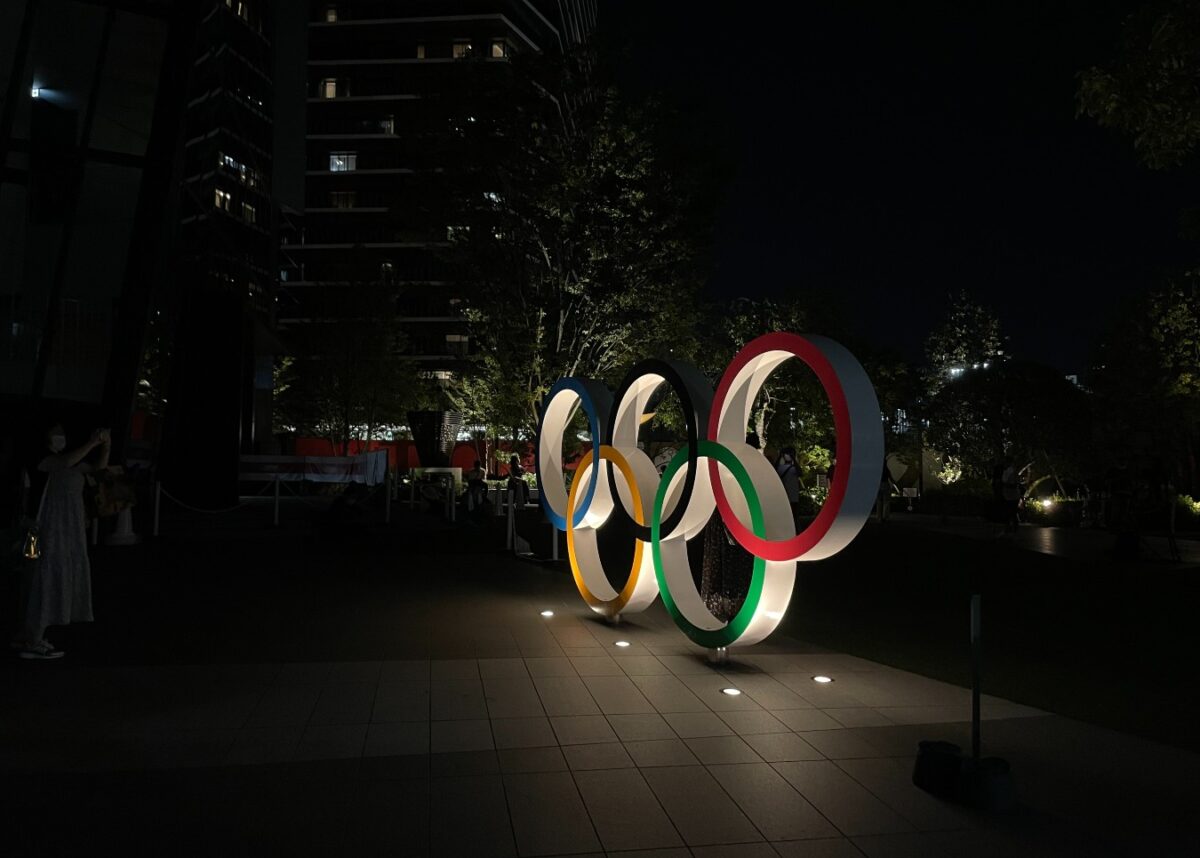
Photo by Shinnosuke Ando on Unsplash

Photo by Shinnosuke Ando on Unsplash

Ryan Storr, Swinburne University of Technology; Madeleine Pape, Université de Lausanne, and Sheree Bekker, University of Bath

The International Olympic Committee (IOC) this week released a much anticipated policy document aimed at making the Olympics more inclusive for transgender athletes and athletes with sex variations.

The new framework builds on more than two years of consultation with diverse athletes, advocates, and stakeholders.

The devil will be in the detail and implementation, of course. But this fresh approach, which places human rights at the centre, could herald a new era of gender-inclusive sports participation and governance.

Why this new framework – and why now?

One of the most prominent gender equity and human rights issues of recent years has been the inclusion of gender-minoritised people – those whose bodies and/or gender expression and identity do not neatly align with normative notions of the female/male binary.

This issue affects sport globally from grassroots to elite levels. Stakeholders have long called for change.

We work with sports organisations and athletes grappling with the question of inclusion in women’s sport.


AlsoRead...

Svitla Systems

Svitla Systems acquires Australia’s Kiandra IT to expand Global Engineering Footprint and Accelerate AI-Driven delivery

11 May 2026
How Clevero is helping Australian Service Businesses compete with Enterprises on a Fraction of the Budget

How Clevero is helping Australian Service Businesses compete with Enterprises on a Fraction of the Budget

28 April 2026

Our own research has highlighted that many sports organisations develop policies with little to no knowledge of the complexity of the issue – and often without engaging the athletes affected.

The new IOC framework follows a long and much-critiqued history of efforts to define the boundaries of the female athlete category, dating back to the “nude parades” of the 1960s.

In the past, the goal has been to find a “biological basis of womanhood” and relied on incomplete and controversial scientific evidence.

Today, however, there is wider recognition of the fact science alone cannot provide a straightforward answer to such as socially and biologically complex question.

An alternative approach, reflected in the IOC’s new framework, is to build policy around the concept of human rights.

What do the new guidelines say?

The new framework recognise human rights as a fundamental responsibility of sports governing bodies.

It explicitly takes the approach athletes shouldn’t be excluded solely on the basis of their transgender identity or sex variations. It aims to ensure everyone can practice sport safely and free from harassment, irrespective of their gender or sex-linked traits.

Importantly, the framework attempts to move sports governing bodies away from relying on testosterone as a one-size-fits-all measure of eligibility.

In its place, it emphasises ten key principles to guide the policy development process:

  • prevention of harm
  • non-discrimination
  • fairness
  • no presumption of advantage
  • evidence-based approaches to regulation
  • the primacy of health and bodily autonomy
  • a stakeholder-centered approach to rule development
  • the right to privacy
  • periodic review of eligibility regulations.

The relationship between testosterone and performance is so complex, sports governing bodies cannot realistically expect to rely on testosterone measures when defining eligibility.

There is just as much diversity among the bodies and performances of trans women and women with sex variations as we see among cisgender and normatively-bodied women athletes.

The IOC’s spokespeople were pragmatic: let’s take one step at a time, have faith in the ten principles, and see where they take us.

In this way, the new framework (and its underlying philosophy) moves us well beyond contentious testosterone thresholds introduced in 2015 and the 2003 Stockholm consensus, which required athletes to have affirmation surgeries and “anatomical changes”.

In fact, the IOC now recognises the “severe harm” and systemic discrimination caused by such eligibility criteria and policies.

This includes the disproportionate burdens and harms that have been wrought upon women of colour from Global South nations in sports like track and field.

The question now is: how will other sports governing bodies, most notably the International Federations (IFs) that govern each Olympic sport, be brought on side?

The IOC now calls for IFs to take

a principled approach to develop their criteria that are applicable to their sport.

An important and welcome move

This framework represents a step forward for gender-inclusive sport but there’s more work ahead. It doesn’t mention non-binary athletes at all, meaning it still frames elite sports participation within a strict gender binary.

It’s promising to see a shift away from a paradigm focused on particular scientific and medical approaches regulating exclusion of certain groups. The move toward a contemporary vision of gender-inclusive sport is promising.

This new approach is a positive move for gender equitable sport; both trans women and women with sex variations will be valuable allies in the fight to make sport safe and inclusive for all women.

Hopefully, it will help make grassroots a more welcome space for trans and gender diverse people. These groups report alarming levels of poor mental health and suicidal ideation and have a right to opportunities to improve wellbeing through sport.

Sport has a unique opportunity to advance progress and health outcomes for marginalised communities.

This move may offer hope to young people of diverse genders and sex that they too can strive to achieve greatness in a sport they love.

Independent researcher Payoshni Mitra contributed to this article.

Ryan Storr, Research fellow, Swinburne University of Technology; Madeleine Pape, Postdoctoral Researcher, Université de Lausanne, and Sheree Bekker, Assistant Professor, University of Bath

This article is republished from The Conversation under a Creative Commons license. Read the original article.


Tags: SB001
DMCA.com Protection Status

SUBSCRIBE to our NEWSLETTER

[mc4wp_form id=”2384248″]

Don't Miss

Svitla Systems acquires Australia’s Kiandra IT to expand Global Engineering Footprint and Accelerate AI-Driven delivery

by Pauline Torongo
11 May 2026
Svitla Systems
Business & Finance

Acquisition marks Svitla’s entry into the Australian market and strengthens capabilities in low-code, Microsoft technologies, and enterprise software engineering.

Read moreDetails

Residential Healthcare Practices: Revolution or Evolution?

by Pauline Torongo
11 May 2026
Residential Healthcare Practices: Revolution or Evolution?
Lifestyle

President Bill Lutz’s "revolution" was born from his background in fine dining, which instilled a disciplined, customer-focused approach.

Read moreDetails

Medicana Health Group launches HPV vaccination campaign to support cervical cancer prevention

by Pauline Torongo
28 April 2026
Medicana Health Group launches HPV vaccination campaign to support cervical cancer prevention
Health & Wellness

The Türkiye-based healthcare group has introduced a new awareness campaign focused on HPV vaccination, regular check-ups and early detection, with...

Read moreDetails

How Clevero is helping Australian Service Businesses compete with Enterprises on a Fraction of the Budget

by Pauline Torongo
28 April 2026
How Clevero is helping Australian Service Businesses compete with Enterprises on a Fraction of the Budget
Business & Finance

By consolidating CRM, scheduling, workflow automation, invoicing, reporting, and client communications into a single platform, Clevero gives smaller operators the...

Read moreDetails

How CJAM Group is building 1,100 homes across Southeast Queensland

by Pauline Torongo
24 March 2026
How CJAM Group is building 1,100 homes across Southeast Queensland
Lifestyle

The CJAM Group founder is quietly building a 1,100+ home pipeline, with projects in Hervey Bay and Toowoomba, using a...

Read moreDetails

Design Without Compromise: Where Gutter Protection Meets Modern Architecture

by Fazila Olla-Logday
20 March 2026
Design Without Compromise: Where Gutter Protection Meets Modern Architecture
Business & Finance

Design without compromise by integrating gutter protection seamlessly into modern architecture. Discover how innovative gutter systems enhance your home’s aesthetics...

Read moreDetails

How WageSafe Secured Australia’s Most Reputable Retail Business Among Its Premium Clients

by Fazila Olla-Logday
12 March 2026
How WageSafe Secured Australia’s Most Reputable Retail Business Among Its Premium Clients
at

Learn how WageSafe helps businesses stay compliant with payroll and wage regulations through reliable monitoring, risk management, and expert support—protecting...

Read moreDetails
Load More

Copyright © Blue Sky Publications Ltd. All Rights Reserved.
australiantimes.co.uk is a division of Blue Sky Publications Ltd. Reproduction without permission prohibited. DMCA.com Protection Status

  • About us
  • Write for Us
  • Advertise
  • Contact us
  • T&Cs, Privacy and GDPR
No Result
View All Result
  • News
    • Weather
    • Sport
    • Technology
    • Business & Finance
      • Currency Zone
    • Lotto Results
      • The Lott
  • Lifestyle
    • Entertainment
    • Horoscopes
    • Health & Wellness
    • Recipes
  • Travel
  • Expat Life
  • Move to Australia

Copyright © Blue Sky Publications Ltd. All Rights Reserved.
australiantimes.co.uk is a division of Blue Sky Publications Ltd. Reproduction without permission prohibited. DMCA.com Protection Status

No Result
View All Result
  • News
    • Weather
    • Sport
    • Technology
    • Business & Finance
      • Currency Zone
    • Lotto Results
      • The Lott
  • Lifestyle
    • Entertainment
    • Horoscopes
    • Health & Wellness
    • Recipes
  • Travel
  • Expat Life
  • Move to Australia

Copyright © Blue Sky Publications Ltd. All Rights Reserved.
australiantimes.co.uk is a division of Blue Sky Publications Ltd. Reproduction without permission prohibited. DMCA.com Protection Status





