

• Advertise
  • About us
  • Terms and Conditions
  • Contact us
Sunday, October 18, 2026
Australian Times News
  • News
    • Weather
    • Sport
    • Technology
    • Business & Finance
      • Currency Zone
    • Lotto Results
      • The Lott
  • Lifestyle
    • Entertainment
    • Horoscopes
    • Health & Wellness
    • Recipes
  • Travel
  • Expat Life
  • Move to Australia
No Result
View All Result
  • News
    • Weather
    • Sport
    • Technology
    • Business & Finance
      • Currency Zone
    • Lotto Results
      • The Lott
  • Lifestyle
    • Entertainment
    • Horoscopes
    • Health & Wellness
    • Recipes
  • Travel
  • Expat Life
  • Move to Australia
No Result
View All Result
Australian Times News
No Result
View All Result
Home Lifestyle

Heatwaves don’t just give you sunburn – they can harm your mental health too

Heatwaves undoubtedly bring a certain joy at the opportunity to be out in the sunshine. But as the planet heats and weather records tumble, increasingly normal bouts of baking heat aren’t all sun and games.

The Conversation by The Conversation
10-08-2020 01:37
in Lifestyle
Heatwaves don’t just give you sunburn

Heatwaves don’t just give you sunburn Photo by Moja Msanii on Unsplash

Harriet Ingle, Glasgow Caledonian University

Heatwaves undoubtedly bring a certain joy at the opportunity to be out in the sunshine. But as the planet heats and weather records tumble, increasingly normal bouts of baking heat aren’t all sun and games. Aside from the grief and guilt we may feel about the human causes behind increasingly frequent spells of hot weather, heatwaves can also harm our mental health in hidden but surprisingly severe ways.
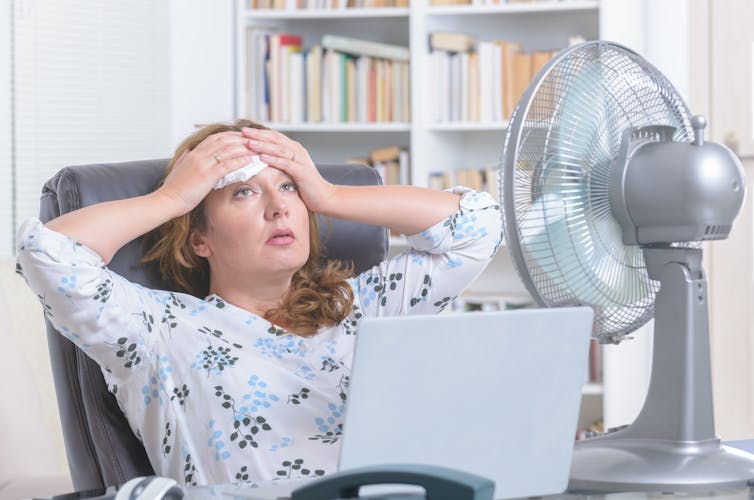
Monika Wisniewska/Shutterstock

Chief among them is their tendency to make our blood boil. Historic studies dating back to the early 19th century found that hotter regions tend to have higher violent crime rates than cooler regions, and this trend is still echoed today. Even within regions, violent behaviour is higher during hotter days, months, seasons and years. This link between heat and aggression holds even when controlling for other factors that affect violent crime rates, such as poverty, unemployment, age distribution and culture.

The mechanisms behind this link are extremely complex to interpret, as many factors are likely to play a part. One is that hotter temperatures increase the level of stress hormone cortisol in our blood. Similarly, there’s evidence that our bodies produce more adrenaline and testosterone when temperatures spike. These changes can lead to an increase in sexual appetite, but can also make aggressive and violent behaviour more likely.

Increases in temperature are also consistently associated with increased suicide rates. For example, one study from the UK found that above 18°C, each 1°C increase in temperature is associated with a 3.8% increase in the incidence of suicide, and a 5% increase in the incidence of more violent methods of suicide, which are much more likely to result in death. In fact, during the 1995 heatwave in the UK, suicide increased by a staggering 46.9%. Similar results have also been observed in other parts of the world.
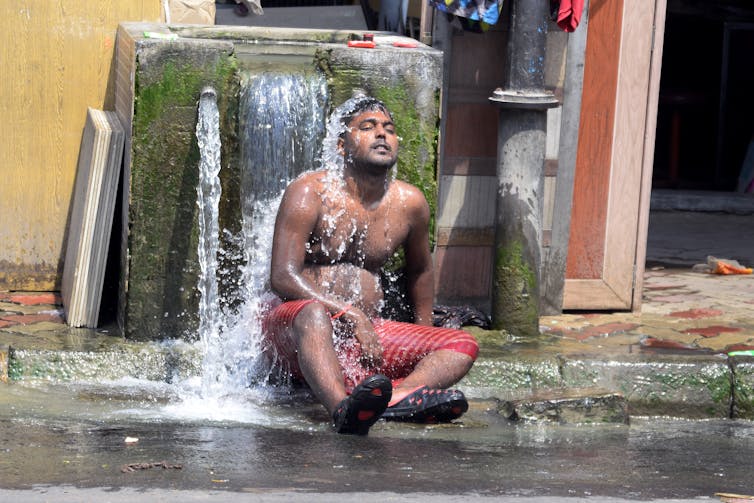
A shirtless man sits under a fountain to cool off.
The 2015 heatwave that struck India and Bangladesh killed more than 4000 people, and left thousands of farmers without a means to support themselves. Saikat Paul/Shutterstock

An increase in social behaviours such as alcohol consumption, as well as physiological changes and increases in impulsive and violent behaviour similar to those mentioned above, have all been suggested as contributing to this effect. However, these are all speculative explanations for what is a very complex behaviour whose causes are very difficult to ascertain.

Vulnerable populations at risk

The poorest and most marginalised are disproportionately more vulnerable to the harms caused by climate breakdown-related weather events – and heatwaves are no exception. Countries such as India and Pakistan have already suffered immense loss of life and livelihoods thanks to waves of more than 45℃ heat, and the emotional trauma of the aftermath lasts well beyond temperatures have cooled.


AlsoRead...

What Heidi Jane of Intuition Co. learned by living through what she teaches

From Empathy Burnout to Body-Led Recovery: What Heidi Jane of Intuition Co. learned by living through what she teaches

25 August 2026
Smarter Fleet Management

Why Smarter Fleet Management Is For All Modern Business Options

29 July 2026

Millions of people with pre-existing mental health conditions are also known to be at greater risk of harm during heatwaves than the general population. This is because many psychiatric medications inhibit temperature regulation and the ability to sweat, making dangerous heatstroke more likely. This is also the case for recreational drugs like cocaine and ecstasy, whose typical use during sweat-inducing rave activities can also lead to dangerously low sodium levels in the blood – a problem that can be exacerbated by drinking excessive volumes of water.

Similarly, those with dementia or other serious mental illnesses that limit their ability to self-care are also more at risk, as they may not adjust their behaviour sufficiently to protect themselves from the heat. For example, they may not notice if their clothing is inappropriate for the temperature, or forget to turn their home’s heating down. One study demonstrated that the risk of death for patients with severe and enduring mental illnesses such as psychosis, dementia, and substance misuse increases by as much as 5% with every 1°C increase above roughly 18°C.

We are only just starting to scratch the surface of the complex ways in which heatwaves – and other extreme climate events – affect mental health. For now, as future heatwaves envelop us, take time to make sure those most vulnerable to its effects are kept safe. As for yourself, make sure not only to keep your body cool, but your head too.

Harriet Ingle, Postdoctoral Researcher in Climate Psychology, Glasgow Caledonian University

This article is republished from The Conversation under a Creative Commons license. Read the original article.


Tags: SB001
DMCA.com Protection Status

SUBSCRIBE to our NEWSLETTER

[mc4wp_form id=”2384248″]

Don't Miss

How She Sells with Brooke helps thousands of women build new careers through high-ticket sales

by Pauline Torongo
6 October 2026
How She Sells with Brooke helps thousands of women build new careers through high-ticket sales
Business & Finance

More than 3,000 women have joined She Sells with Brooke Triplett to build careers in high-ticket sales. For many, the...

Read moreDetails

Qualities to look for in a Caribbean Luxury Cruise Experience

by Pauline Torongo
6 October 2026
Qualities to look for in a Caribbean Luxury Cruise Experience. Image: Supplied
Travel

Luxury Caribbean cruises are often associated with beaches, sunshine, and tropical ease, but they can be more than that with...

Read moreDetails

Mark Levin and Yael Eckstein: Celebrating 250 Years – The Bond Between America and Israel

by Pauline Torongo
30 September 2026
Mark Levin and Yael Eckstein: Celebrating 250 Years - The Bond Between America and Israel
News

As America marks 250 years since the Declaration of Independence, Yael Eckstein and Mark Levin explore the biblical values and...

Read moreDetails

How supporting Australia’s Care Workforce could strengthen care in the community

by Pauline Torongo
10 September 2026
How supporting Australia’s Care Workforce could strengthen care in the community
News

Australian care funding faces growing scrutiny after a 2025 ANAO report found NDIS losses from fraud, non-compliance, and payment errors...

Read moreDetails

The Future of Work Is Changing: What HR must champion next, according to Energy Collective Co

by Pauline Torongo
28 August 2026
What HR Must Champion Next, According to Energy Collective Co
Business & Finance

Energy Collective Co examines the root causes of performance by considering how work is designed, how leadership is enacted and...

Read moreDetails

From Empathy Burnout to Body-Led Recovery: What Heidi Jane of Intuition Co. learned by living through what she teaches

by Pauline Torongo
25 August 2026
What Heidi Jane of Intuition Co. learned by living through what she teaches
Lifestyle

Recognising emotional exhaustion is only the first step. While supportive habits such as rest, time in nature, hydration, and reduced...

Read moreDetails

Why Smarter Fleet Management Is For All Modern Business Options

by Fazila Olla-Logday
29 July 2026
Smarter Fleet Management
Motoring

Operating a business that relies on vehicles is harder than ever.

Read moreDetails
Load More

Copyright © Blue Sky Publications Ltd. All Rights Reserved.
australiantimes.co.uk is a division of Blue Sky Publications Ltd. Reproduction without permission prohibited. DMCA.com Protection Status

  • About us
  • Write for Us
  • Advertise
  • Contact us
  • T&Cs, Privacy and GDPR
No Result
View All Result
  • News
    • Weather
    • Sport
    • Technology
    • Business & Finance
      • Currency Zone
    • Lotto Results
      • The Lott
  • Lifestyle
    • Entertainment
    • Horoscopes
    • Health & Wellness
    • Recipes
  • Travel
  • Expat Life
  • Move to Australia

Copyright © Blue Sky Publications Ltd. All Rights Reserved.
australiantimes.co.uk is a division of Blue Sky Publications Ltd. Reproduction without permission prohibited. DMCA.com Protection Status