


Cristina Stewart, University of Oxford
To rein in the greenhouse gas emissions and other environmental impacts from livestock farming and to reduce diet-related diseases, people in the UK must eat 30% less meat by the end of the decade, according to a recent report commissioned by the government. Vegan and vegetarian diets might seem more popular than ever, but is the country on track to slash meat consumption by a third?
To find out, we analysed trends from the UK National Diet and Nutrition Survey. The data we looked at came from four-day food diaries completed by around 1,000 people in each survey year.
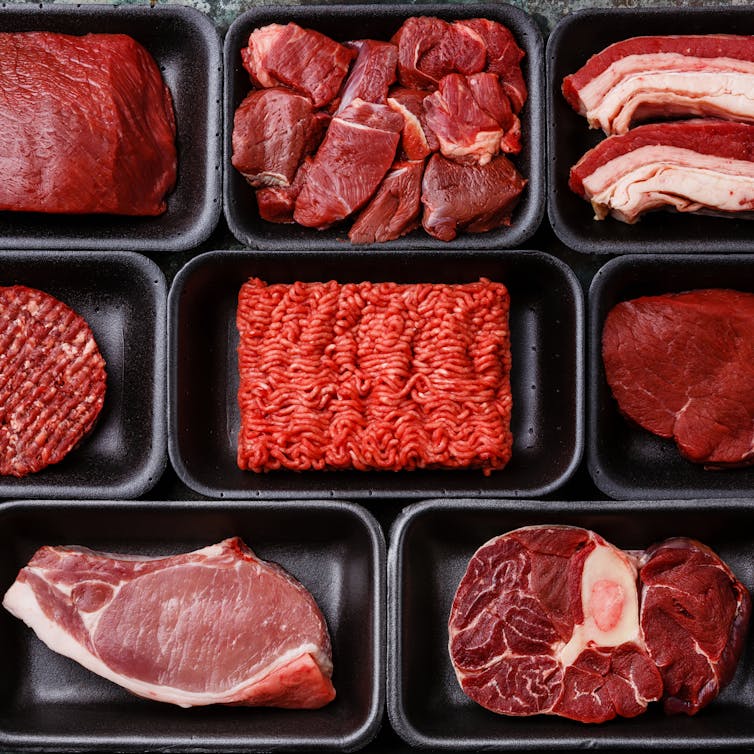
Between 2008 and 2019, the average amount of meat eaten each day per person in the UK fell from 103.7g to 86.3g – a total reduction of 17.4g a day, or just under 17%. This included a 13.7g drop in daily red meat consumption, a 7g reduction in processed meat, and a 3.2g increase in white meat.
So, to meet the 30% by 2030 target, our research suggests that the rate at which people in the UK are reducing their meat consumption has to nearly double in the next ten years. Here’s what else our analysis of UK diet trends revealed about the country’s evolving relationship with meat.
Trends in meat eating
The National Diet and Nutrition Survey is the only survey to capture nationally representative data on the food people are eating in the UK. This means that the mix of people surveyed resembles the general population with regards to demographics such as age, gender, ethnicity, income and region.
To accurately estimate how much meat the survey respondents were eating, we excluded all the other components of dishes containing meat. If a person wrote that they ate beef lasagne for dinner in their food diary, for instance, we only measured the quantity of beef and excluded all other ingredients.


And to understand how these changes in meat consumption might affect the environment, we compared them with information on the environmental impact of rearing a gram of meat (beef, pork, lamb and poultry) from a global database. We estimated the consequences for six different indicators of environmental impact, including greenhouse gas emissions and the amount of land used for livestock farming.
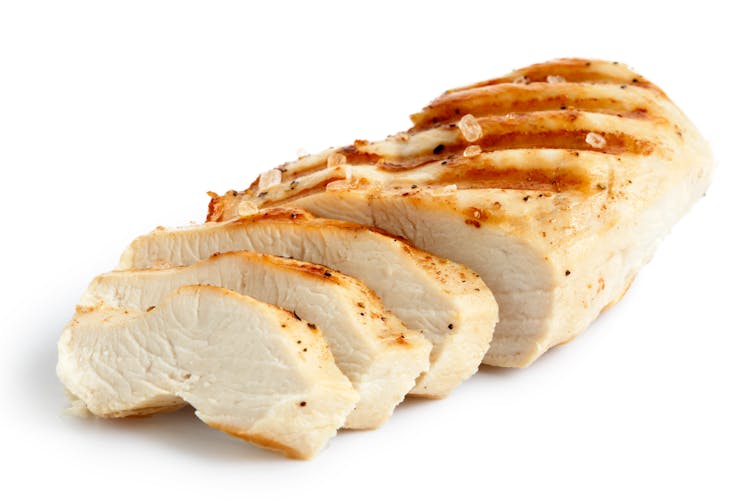
Each day, people in the UK now eat 5.7g less beef, 3.9g less lamb and 4.2g less sausage. But at the same time, people are eating more white meat, mostly chicken. This flight to white, as food scientists are calling it, reflects similar trends seen in other countries. It could be because health guidelines tend to emphasise the risks of eating too much red and processed meat, which is linked to colorectal cancer, while offering little evidence for health problems from eating poultry.
As far back as 2010, a committee of scientists which advises the government on nutrition recommended adults in the UK with high intakes of red and processed meat – over 90g a day – reduce their daily intake to a maximum of 70g. Our analysis suggests that in the most recent survey year (2018-19), 34% of respondents were exceeding this recommendation – 26% of women and 43% of men. But this is at least down from 53% in 2008-09.
The proportion of vegetarians and vegans in the UK is also increasing steadily, with 5% of respondents foregoing meat or all animal products in 2018-19, up from 2% in 2008-09.
White people and those born in the 1980s and 1990s ate the most meat, while the youngest (those born after 1999) and oldest (those born before 1960), and those with Asian heritage were eating the least. There was no difference in intake between genders or household income brackets.
We were particularly surprised to find that respondents born after 1999 (so-called Generation Z) were the only subgroup to be eating more meat over time – even though they’re still eating among the least overall. Though it’s important to note that respondents in this group were aged 19 years and younger and so their eating habits as children are more likely to reflect their household’s.
We estimated that the overall changes in meat intake equate to a 35% reduction in the amount of land and a 23% reduction in the amount of freshwater needed to rear livestock, as well as a 28% reduction in greenhouse gas emissions from agriculture overall.
Although this seems positive, this 17% reduction in meat intake still falls short of dietary targets for a healthy and sustainable food system. Understanding these trends within sub-groups of the UK population could help public health policymakers to tailor strategies, and help researchers and public health professionals to refine messaging to accelerate this reduction in meat consumption.
The environmental data used here are based on averages from global food production systems, so the estimates in relation to UK consumption are approximates. We were also unable to determine from the survey data whether respondents were buying British meat, which would have a lower environmental impact than meat that has been imported from elsewhere.
How to eat less meat
Though 39% of people in the UK are currently trying to reduce their meat intake, whether for health or environmental reasons, progress is slow. We recently developed a list of 26 daily strategies for reducing meat consumption, which we refined through focus groups with members of the public, for an online programme.
Here are six strategies which participants in the programme rated as the most effective for helping them to cut meat from their diets:
- Make at least one of your main meals vegetarian.
- Double the veg, halve the meat in your meals.
- Set a maximum number of animal products to eat today and stick to it.
- Try a new vegetarian recipe.
- Make your lunch and dinner vegetarian.
- Eat only plant-based snacks throughout the day.
Cristina Stewart, Health Behaviours Researcher, Nuffield Department of Primary Care Health Sciences, University of Oxford
This article is republished from The Conversation under a Creative Commons license. Read the original article.







