
• Advertise
  • About us
  • Terms and Conditions
  • Contact us
Wednesday, November 11, 2026
Australian Times News
  • News
    • Weather
    • Sport
    • Technology
    • Business & Finance
      • Currency Zone
    • Lotto Results
      • The Lott
  • Lifestyle
    • Entertainment
    • Horoscopes
    • Health & Wellness
    • Recipes
  • Travel
  • Expat Life
  • Move to Australia
No Result
View All Result
  • News
    • Weather
    • Sport
    • Technology
    • Business & Finance
      • Currency Zone
    • Lotto Results
      • The Lott
  • Lifestyle
    • Entertainment
    • Horoscopes
    • Health & Wellness
    • Recipes
  • Travel
  • Expat Life
  • Move to Australia
No Result
View All Result
Australian Times News
No Result
View All Result
Home News

Creating cosmic concrete from space dust and astronaut blood

With the cost of taking bricks to Mars making homes there more expensive than Sydney waterfront properties, scientists tell of a blood-curdling discovery.

Mike Simpson by Mike Simpson
13-09-2021 16:19
in News
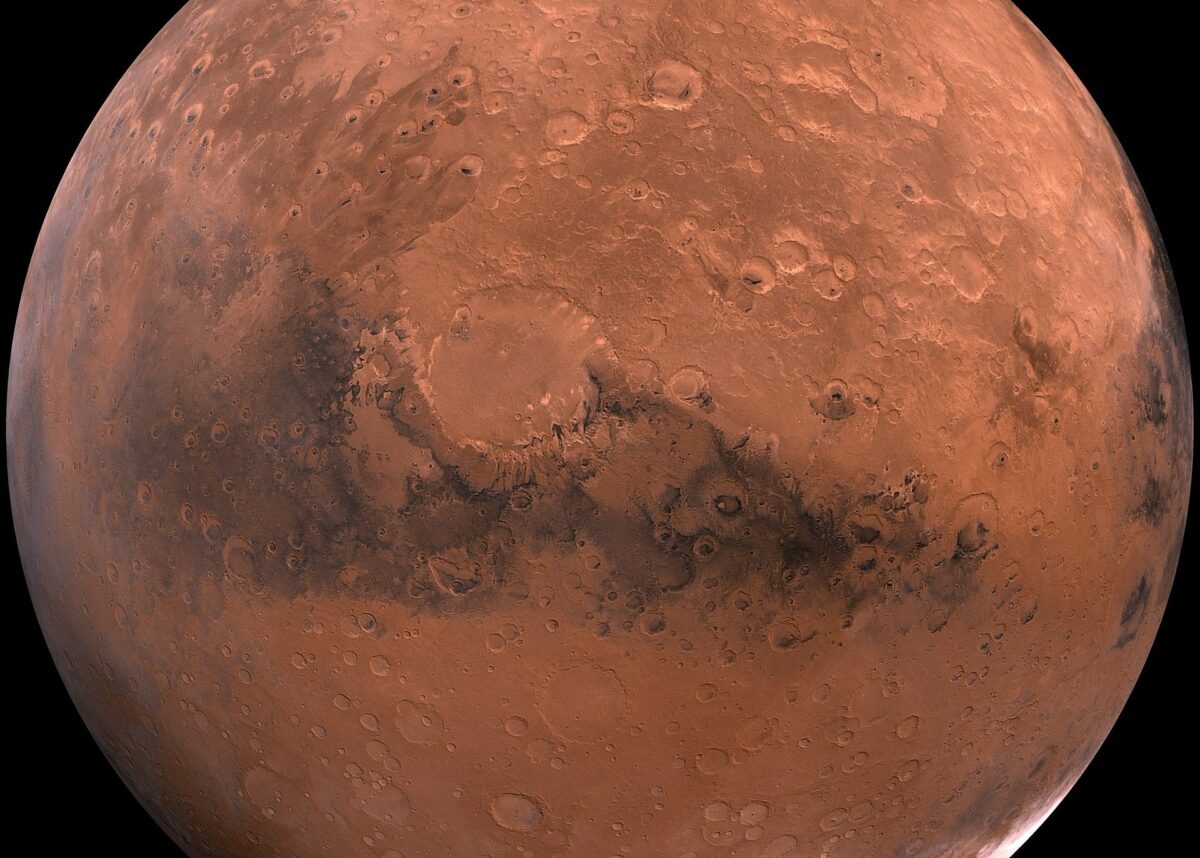
Image by WikiImages from Pixabay

Image by WikiImages from Pixabay

Transporting a single brick to Mars can cost around two million Aussie dollars – making the future construction of a Martian colony seem prohibitively expensive.

But scientists at The University of Manchester in the UK have now developed a way to potentially overcome this problem: by creating a concrete-like material made of extra-terrestrial dust along with the blood, sweat and tears of astronauts.

In their study – published on 13 September in Materials Today Bio – the researchers say they’ve discovered that a protein from human blood, combined with a compound from urine, sweat or tears, could glue together simulated moon or Mars soil.

This would produce a material stronger than ordinary concrete, perfectly suited for construction work in extra-terrestrial environments.

Astronauts must use on-site resources

The cost of transporting a single brick to Mars has been estimated at about US$2-million, meaning future Martian colonists cannot bring their building materials with them. Rather, they will have to utilise resources they can obtain on-site for construction and shelter.

This is known as in-situ resource utilisation (or ISRU) and typically focuses on the use of loose rock and Martian soil (known as regolith) and sparse water deposits. However, there is one overlooked resource that will, by definition, also be available on any crewed mission to the Red Planet: the crew themselves.

In their article, the UK-based scientists demonstrated that a common protein from blood plasma – human serum albumin – could act as a binder for simulated moon or Mars dust to produce a concrete-like material. The resulting novel material, termed AstroCrete, had compressive strengths as high as 25 MPa (Megapascals), about the same as the 20–32 MPa seen in ordinary concrete on Earth.


AlsoRead...

How She Sells with Brooke helps thousands of women build new careers through high-ticket sales

How She Sells with Brooke helps thousands of women build new careers through high-ticket sales

6 October 2026
Mark Levin and Yael Eckstein: Celebrating 250 Years - The Bond Between America and Israel

Mark Levin and Yael Eckstein: Celebrating 250 Years – The Bond Between America and Israel

30 September 2026

However, the scientists found that incorporating urea – which is a biological waste product that the body produces and excretes through urine, sweat and tears – could further increase the compressive strength by over 300%, with the best-performing material having a compressive strength of almost 40 MPa, substantially stronger than ordinary concrete.

The answer was inside us all along

Dr Aled Roberts from The University of Manchester, who worked on the project, said the new technique holds considerable advantages over many other proposed construction techniques on the moon and Mars.

“Scientists have been trying to develop viable technologies to produce concrete-like materials on the surface of Mars, but we never stopped to think that the answer might be inside us all along”, he said.

The team investigated the underlying bonding mechanism and found that the blood proteins ‘curdle’ to form an extended structure with interactions known as ‘beta sheets’ that tightly holds the material together.

“The concept is literally blood-curdling,” Dr Roberts explained, only slightly tongue-in-cheek.

Tags: MarsScientific researchSpaceUnited Kingdom
DMCA.com Protection Status

SUBSCRIBE to our NEWSLETTER

[mc4wp_form id=”2384248″]

Don't Miss

NRMA welcomes dogs at four NSW South Coast Holiday Parks

by Pauline Torongo
22 October 2026
NRMA welcomes dogs at four NSW South Coast Holiday Parks
Lifestyle

Pet-friendly stays and nearby beaches give families more coastal holiday options as Australian caravan and camping trips reach record levels.

Read moreDetails

How She Sells with Brooke helps thousands of women build new careers through high-ticket sales

by Pauline Torongo
6 October 2026
How She Sells with Brooke helps thousands of women build new careers through high-ticket sales
Business & Finance

More than 3,000 women have joined She Sells with Brooke Triplett to build careers in high-ticket sales. For many, the...

Read moreDetails

Qualities to look for in a Caribbean Luxury Cruise Experience

by Pauline Torongo
6 October 2026
Qualities to look for in a Caribbean Luxury Cruise Experience. Image: Supplied
Travel

Luxury Caribbean cruises are often associated with beaches, sunshine, and tropical ease, but they can be more than that with...

Read moreDetails

Mark Levin and Yael Eckstein: Celebrating 250 Years – The Bond Between America and Israel

by Pauline Torongo
30 September 2026
Mark Levin and Yael Eckstein: Celebrating 250 Years - The Bond Between America and Israel
News

As America marks 250 years since the Declaration of Independence, Yael Eckstein and Mark Levin explore the biblical values and...

Read moreDetails

How supporting Australia’s Care Workforce could strengthen care in the community

by Pauline Torongo
10 September 2026
How supporting Australia’s Care Workforce could strengthen care in the community
News

Australian care funding faces growing scrutiny after a 2025 ANAO report found NDIS losses from fraud, non-compliance, and payment errors...

Read moreDetails

The Future of Work Is Changing: What HR must champion next, according to Energy Collective Co

by Pauline Torongo
28 August 2026
What HR Must Champion Next, According to Energy Collective Co
Business & Finance

Energy Collective Co examines the root causes of performance by considering how work is designed, how leadership is enacted and...

Read moreDetails

From Empathy Burnout to Body-Led Recovery: What Heidi Jane of Intuition Co. learned by living through what she teaches

by Pauline Torongo
25 August 2026
What Heidi Jane of Intuition Co. learned by living through what she teaches
Lifestyle

Recognising emotional exhaustion is only the first step. While supportive habits such as rest, time in nature, hydration, and reduced...

Read moreDetails
Load More

Copyright © Blue Sky Publications Ltd. All Rights Reserved.
australiantimes.co.uk is a division of Blue Sky Publications Ltd. Reproduction without permission prohibited. DMCA.com Protection Status

  • About us
  • Write for Us
  • Advertise
  • Contact us
  • T&Cs, Privacy and GDPR
No Result
View All Result
  • News
    • Weather
    • Sport
    • Technology
    • Business & Finance
      • Currency Zone
    • Lotto Results
      • The Lott
  • Lifestyle
    • Entertainment
    • Horoscopes
    • Health & Wellness
    • Recipes
  • Travel
  • Expat Life
  • Move to Australia

Copyright © Blue Sky Publications Ltd. All Rights Reserved.
australiantimes.co.uk is a division of Blue Sky Publications Ltd. Reproduction without permission prohibited. DMCA.com Protection Status