

• Advertise
  • About us
  • Terms and Conditions
  • Contact us
Sunday, December 7, 2025
Australian Times News
  • News
    • Weather
    • Sport
    • Technology
    • Business & Finance
      • Currency Zone
    • Lotto Results
      • The Lott
  • Lifestyle
    • Entertainment
    • Horoscopes
    • Health & Wellness
    • Recipes
  • Travel
  • Expat Life
  • Move to Australia
No Result
View All Result
  • News
    • Weather
    • Sport
    • Technology
    • Business & Finance
      • Currency Zone
    • Lotto Results
      • The Lott
  • Lifestyle
    • Entertainment
    • Horoscopes
    • Health & Wellness
    • Recipes
  • Travel
  • Expat Life
  • Move to Australia
No Result
View All Result
Australian Times News
No Result
View All Result
Home News

Web’s inventor says news media bargaining code could break the internet. He’s right — but there’s a fix

The inventor of the World Wide Web, Tim Berners-Lee, has raised concerns that Australia’s proposed News Media and Digital Platforms Mandatory Bargaining Code could fundamentally break the internet as we know it.

The Conversation by The Conversation
21-01-2021 18:07
in News
Free linking between content

Free linking between content Photo by Markus Spiske on Unsplash

Tama Leaver, Curtin University

The inventor of the World Wide Web, Tim Berners-Lee, has raised concerns that Australia’s proposed News Media and Digital Platforms Mandatory Bargaining Code could fundamentally break the internet as we know it.

His concerns are valid. However, they could be addressed through minor changes to the proposed code.

How could the code break the web?

The news media bargaining code aims to level the playing field between media companies and online giants. It would do this by forcing Facebook and Google to pay Australian news businesses for content linked to, or featured, on their platforms.

In a submission to the Senate inquiry about the code, Berners-Lee wrote:

Specifically, I am concerned that the Code risks breaching a fundamental principle of the web by requiring payment for linking between certain content online. […] The ability to link freely — meaning without limitations regarding the content of the linked site and without monetary fees — is fundamental to how the web operates.

Currently, one of the most basic underlying principles of the web is there is no cost involved in creating a hypertext link (or simply a “link”) to any other page or object online.

When Berners-Lee first devised the World Wide Web in 1989, he effectively gave away the idea and associated software for free, to ensure nobody would or could charge for using its protocols.

AlsoRead...

Ryan: Building real freedom through e-commerce

Ryan: Building real freedom through e-commerce

27 November 2025
Design Australia Group: Redefining Drafting as the engine of housing growth

Design Australia Group: Redefining Drafting as the engine of housing growth

26 November 2025

He argues the news media bargaining code could set a legal precedent allowing someone to charge for linking, which would let the genie out of the bottle — and plenty more attempts to charge for linking to content would appear.

If the precedent were set that people could be charged for simply linking to content online, it’s possible the underlying principle of linking would be disrupted.

As a result, there would likely be many attempts by both legitimate companies and scammers to charge users for what is currently free.

While supporting the “right of publishers and content creators to be properly rewarded for their work”, Berners-Lee asks the code be amended to maintain the principle of allowing free linking between content.


Google and Facebook don’t just link to content

Part of the issue here is Google and Facebook don’t just collect a list of interesting links to news content. Rather the way they find, sort, curate and present news content adds value for their users.

They don’t just link to news content, they reframe it. It is often in that reframing that advertisements appear, and this is where these platforms make money.

For example, this link will take you to the original 1989 proposal for the World Wide Web. Right now, anyone can create such a link to any other page or object on the web, without having to pay anyone else.

But what Facebook and Google do in curating news content is fundamentally different. They create compelling previews, usually by offering the headline of a news article, sometimes the first few lines, and often the first image extracted.

For instance, here is a preview Google generates when someone searches for Tim Berners-Lee’s Web proposal:
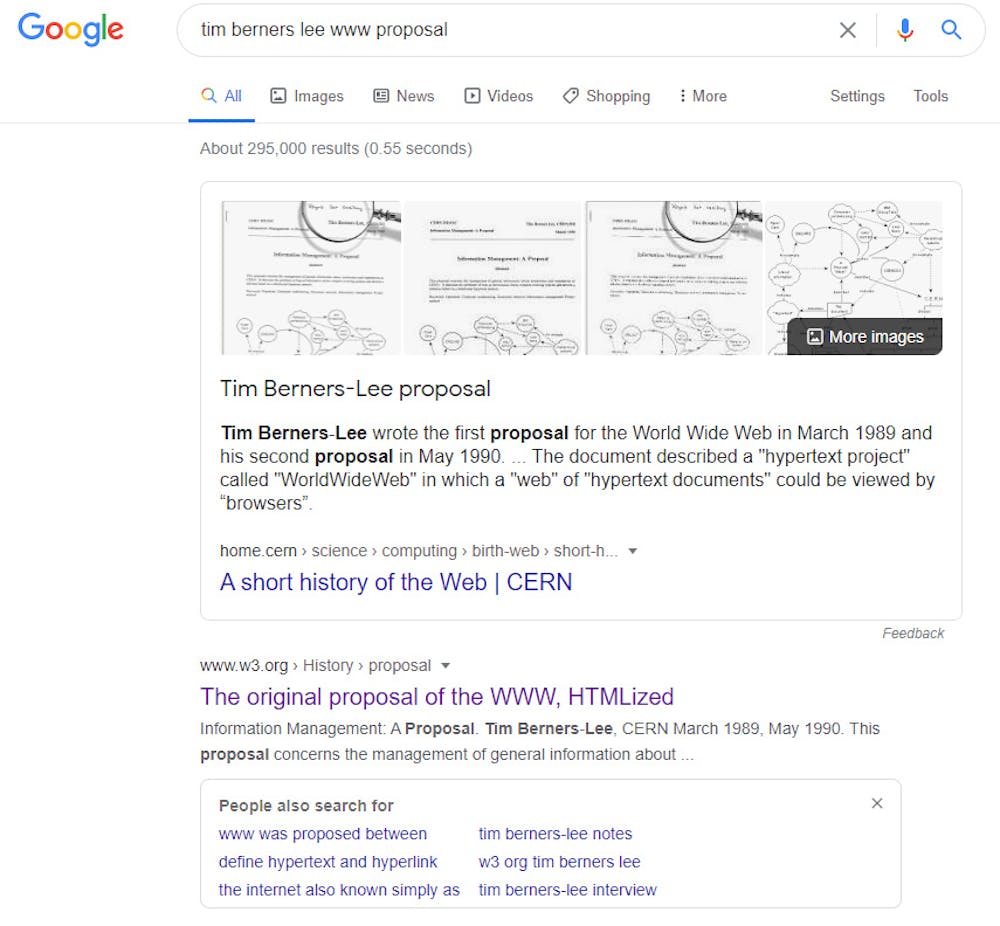
Results page for the Google Search 'tim berners lee www proposal'.
This is a screen capture of the results page for the Google Search: ‘tim berners lee www proposal’. Google

Evidently, what Google returns is more of a media-rich, detailed preview than a simple link. For Google’s users, this is a much more meaningful preview of the content and better enables them to decide whether they’ll click through to see more.

Another huge challenge for media businesses is that increasing numbers of users are taking headlines and previews at face value, without necessarily reading the article.

This can obviously decrease revenue for news providers, as well as perpetuate misinformation. Indeed, it’s one of the reasons Twitter began asking users to actually read content before retweeting it.

A fairly compelling argument, then, is that Google and Facebook add value for consumers via the reframing, curating and previewing of content — not just by linking to it.

Can the code be fixed?

Currently in the code, the section concerning how platforms are “Making content available” lists three ways content is shared:

  1. content is reproduced on the service
  2. content is linked to
  3. an extract or preview is made available.

Similar terms are used to detail how users might interact with content.
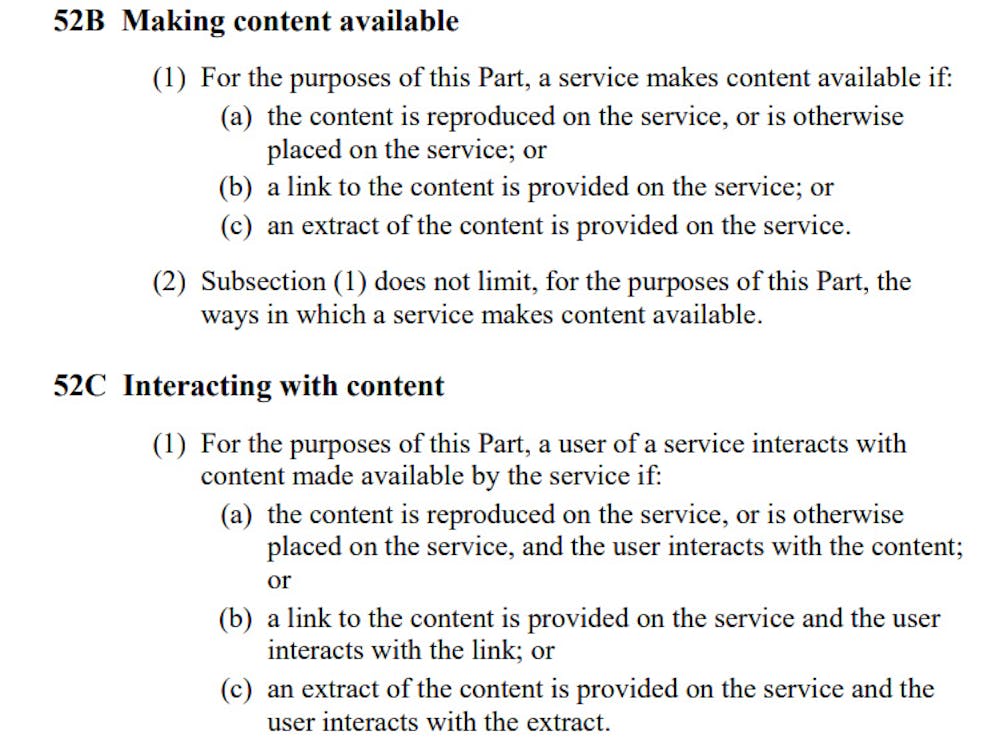
Extract showing the way 'Making content available' is defined in the Treasury Laws Amendment (News Media and Digital Platforms Mandatory Bargaining Code) Bill 2020
The News Media and Digital Platforms Mandatory Bargaining Code 2020 outlines three main ways by which platforms make news content available. Australian Government

If we accept most of the additional value platforms provide to their users is in curating and providing previews of content, then deleting the second element (which just specifies linking to content) would fix Berners-Lee’s concerns.

It would ensure the use of links alone can’t be monetised, as has always been true on the web. Platforms would still need to pay when they present users with extracts or previews of articles, but not when they only link to it.

Since basic links are not the bread and butter of big platforms, this change wouldn’t fundamentally alter the purpose or principle of creating a more level playing field for news businesses and platforms.


In its current form, the News Media and Digital Platforms Mandatory Bargaining Code could put the underlying principles of the world wide web in jeopardy. Tim Berners-Lee is right to raise this point.

But a relatively small tweak to the code would prevent this, It would allow us to focus more on where big platforms actually provide value for users, and where the clearest justification lies in asking them to pay for news content.


For transparency, it should be noted The Conversation has also made a submission to the Senate inquiry regarding the News Media and Digital Platforms Mandatory Bargaining Code.

Tama Leaver, Professor of Internet Studies, Curtin University

This article is republished from The Conversation under a Creative Commons license. Read the original article.

Tags: SB001
DMCA.com Protection Status

SUBSCRIBE to our NEWSLETTER

[mc4wp_form id=”2384248″]

Don't Miss

The evolution of Aesthetic Surgery through the lens of Dr Kourosh Tavakoli

by Pauline Torongo
4 December 2025
The evolution of Aesthetic Surgery through the lens of Dr. Kourosh Tavakoli
Health & Wellness

As global interest in Australian cosmetic surgery continues to grow, the combination of regulation, research and emerging digital tools is...

Read moreDetails

Ryan: Building real freedom through e-commerce

by Pauline Torongo
27 November 2025
Ryan: Building real freedom through e-commerce
Business & Finance

Ryan’s greatest achievement isn’t any single business or revenue milestone — it’s the ecosystem he’s built through the Change community.

Read moreDetails

Design Australia Group: Redefining Drafting as the engine of housing growth

by Pauline Torongo
26 November 2025
Design Australia Group: Redefining Drafting as the engine of housing growth
Business & Finance

Australia is under pressure to build homes faster, but design bottlenecks slow progress. Design Australia Group is fixing this by...

Read moreDetails

Louis Guy Detata builds Global Trading Empires through autonomous systems and disciplined leadership

by Pauline Torongo
25 November 2025
Louis Guy Detata builds Global Trading Empires through autonomous systems and disciplined leadership
Business & Finance

The path from investment banking to leading a global trading platform has taught Louis Detata that sustainable success requires more...

Read moreDetails

Burning Eucalyptus Wood: Tips, Advantages, Disadvantages & Alternatives

by Fazila Olla-Logday
20 November 2025
Image Supplied
Enviroment

Learn about burning eucalyptus wood for stoves and fireplaces. Discover benefits, drawbacks, harvesting tips, and better alternative firewood options for...

Read moreDetails

Everything Parents Need to Know About Baby Soft Play and Why It’s a Game Changer

by Fazila Olla-Logday
11 November 2025
Everything Parents Need to Know About Baby Soft Play
Health & Wellness

Baby soft play is a fun, safe, and educational way for little ones to explore and grow. Discover the benefits...

Read moreDetails

WOMAD Sets Up a New Camp in Wiltshire – Australian festival fans take note!

by Kris Griffiths
11 November 2025
Kumbia Boruka brought their reggae and dancehall flavour to the Taste the World Stage at WOMAD 2024 - Credit - Mike Massaro
Entertainment

With its 2026 edition moving to Neston Park in England, WOMAD offers Aussie music lovers a chance to reconnect with global...

Read moreDetails
Load More

Copyright © Blue Sky Publications Ltd. All Rights Reserved.
australiantimes.co.uk is a division of Blue Sky Publications Ltd. Reproduction without permission prohibited. DMCA.com Protection Status

  • About us
  • Write for Us
  • Advertise
  • Contact us
  • T&Cs, Privacy and GDPR
No Result
View All Result
  • News
    • Weather
    • Sport
    • Technology
    • Business & Finance
      • Currency Zone
    • Lotto Results
      • The Lott
  • Lifestyle
    • Entertainment
    • Horoscopes
    • Health & Wellness
    • Recipes
  • Travel
  • Expat Life
  • Move to Australia

Copyright © Blue Sky Publications Ltd. All Rights Reserved.
australiantimes.co.uk is a division of Blue Sky Publications Ltd. Reproduction without permission prohibited. DMCA.com Protection Status

No Result
View All Result
  • News
    • Weather
    • Sport
    • Technology
    • Business & Finance
      • Currency Zone
    • Lotto Results
      • The Lott
  • Lifestyle
    • Entertainment
    • Horoscopes
    • Health & Wellness
    • Recipes
  • Travel
  • Expat Life
  • Move to Australia

Copyright © Blue Sky Publications Ltd. All Rights Reserved.
australiantimes.co.uk is a division of Blue Sky Publications Ltd. Reproduction without permission prohibited. DMCA.com Protection Status





