
Nick Wilson, University of Otago and Michael Baker, University of Otago
The global COVID-19 pandemic is intensifying, with more infectious variants of the virus, and more rapid spread, especially in countries such as the US and UK. This deterioration has meant a higher number of infected returnees arriving at New Zealand’s MIQ facilities — with 31 new cases in a recent three-day period.
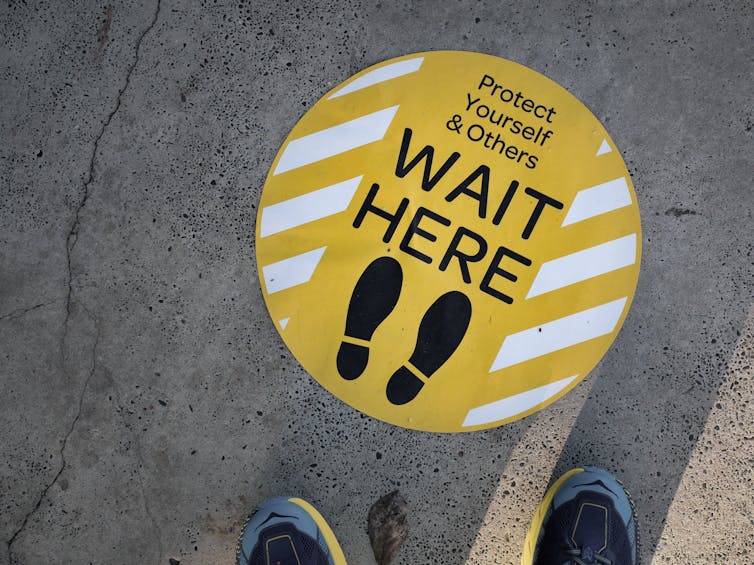
This situation is a particular concern given we know hotels used as managed isolation and quarantine (MIQ) facilities are not designed for infection control due to problems with shared spaces and ventilation.
Indeed, there have been eight border failures identified since early August, 2020, with seven probably associated with failures at MIQ facilities. There have also been many rule breaches in these facilities.
The Simpson and Roche review of the testing and surveillance regime also highlights multiple problems with the national response, although action is underway to address some of these deficiencies and extra funding is being allocated.
Nevertheless, nursing staff at MIQ facilities recently reported persisting concerns with staff shortages.
Recent COVID-19 outbreaks and near-misses in Australia remind us that community spread is a real possibility and could threaten the huge gains from New Zealand’s successful implementation of an elimination strategy.


Reduce numbers of infected arrivals
There are multiple ways New Zealand could greatly reduce the number of infected travellers arriving and entering MIQ facilities, particularly those with more infectious virus variants.
Systematic pre-travel testing requirements have been phased in by many countries and New Zealand has added a requirement for pre-travel PCR testing from January 15.
This process could be made more effective by using a combination of rapid antigen testing and a period of pre-travel quarantine prior to boarding flights (e.g. a five-day stay at an airport hotel combined with rapid antigen testing on arrival at the hotel and just before boarding the flight).

Antigen testing has several advantages over PCR testing and can provide reasonable diagnostic performance in a screening situation particularly with repeat testing.
The government should also consider a large reduction in travel numbers from high-incidence countries, as has just been implemented in Australia. New Zealand is now accepting higher inbound traveller numbers (about 11,000 per month) than are allowed into all of Australia (about 10,000 per month for a country with five times the population).
Given the seriousness of the current risk, the government could suspend flights from the UK, US, and South Africa immediately. This is what China has done for UK flights, and Japan has recently banned entry to non-resident foreigners from more than 150 countries.
Such a suspension could then potentially be extended to other countries with out-of-control pandemic spread — especially if pre-flight testing and pre-flight quarantine is not feasible in such countries.
These measures should substantially reduce numbers of infected people boarding flights, the risk of infections on flights to New Zealand (which is well documented), and ultimately the number of infected people arriving and the risks of outbreaks in the community.
The booking system that travellers are using to arrange a space in MIQ facilities as part of their travel planning could be used to help manage these precautions. In the medium term, pre-travel vaccination will become possible and should provide a further way of reducing the risk of importing infection.
Tighten processes at border facilities
Some strengthening of MIQ facility processes has recently occurred (e.g. by the NZ Defence Force) but the government could still consider the following:
- close MIQ facilities in Auckland (to protect such a key economic centre), or reserve Auckland-based MIQ facilities for relatively low-risk travellers (such as those from Australia)
- eliminate shared-space use in MIQ facilities, at least until the first test returns a negative result (exercising in rooms only, provision of nicotine patches for smokers)
- prosecute those who break MIQ rules. Despite many instances of rule-breaking within these facilities, no one has yet been prosecuted.
Fast-track vaccination of border workers
Waiting for a vaccine to arrive in March is too long in our view. The government could explore a fast-track process for vaccinating border control workers. This process would require expedited MedSafe approval and fast-tracked delivery of the vaccine into the country.
Given Australia plans to start vaccinating in February it might be possible to come to a joint arrangement with them. This intervention assumes that vaccination provides some protection against transmitting the infection to others, which is likely but not yet confirmed.
There is a range of other measures that can help New Zealand sustain its COVID-19 elimination status until such time as the population is protected by high vaccine coverage:
- learn about COVID-19 vaccination roll-out strategies from countries that seem to have done it well so far (e.g. Israel). Unfortunately, many European countries have had a slow start to their programmes
- upgrade the alert level system so it maximises risk reduction while minimising economic damage
- mandate that MIQ facility workers and returnees use digital technologies, such as the Bluetooth function on the NZ COVID Tracer app, to facilitate contact tracing in the event of a border failure. Returnees could be required to use such technologies for two weeks after leaving MIQ facilities
- consider using rapid antigen tests for community testing — which may help counteract the declining number of community tests which are currently far below optimal levels for early detection purposes.
In summary, the global COVID-19 pandemic situation is still deteriorating and may continue to do so for some months. New Zealand’s response needs to be urgently upgraded in the ways outlined here. Failure to adapt to evolving realities puts our successful elimination strategy at risk.
Nick Wilson, Professor of Public Health, University of Otago and Michael Baker, Professor of Public Health, University of Otago
This article is republished from The Conversation under a Creative Commons license. Read the original article.