

• Advertise
  • About us
  • Terms and Conditions
  • Contact us
Sunday, December 7, 2025
Australian Times News
  • News
    • Weather
    • Sport
    • Technology
    • Business & Finance
      • Currency Zone
    • Lotto Results
      • The Lott
  • Lifestyle
    • Entertainment
    • Horoscopes
    • Health & Wellness
    • Recipes
  • Travel
  • Expat Life
  • Move to Australia
No Result
View All Result
  • News
    • Weather
    • Sport
    • Technology
    • Business & Finance
      • Currency Zone
    • Lotto Results
      • The Lott
  • Lifestyle
    • Entertainment
    • Horoscopes
    • Health & Wellness
    • Recipes
  • Travel
  • Expat Life
  • Move to Australia
No Result
View All Result
Australian Times News
No Result
View All Result
Home News

The Caspian Sea is set to fall by 9 metres or more this century – an ecocide is imminent

The Caspian is actually a lake, the largest in the world, and it is experiencing a devastating decline in its water level that is about to accelerate. By the end of the century the Caspian Sea will be nine metres to 18 metres lower.

The Conversation by The Conversation
25-12-2020 22:27
in News
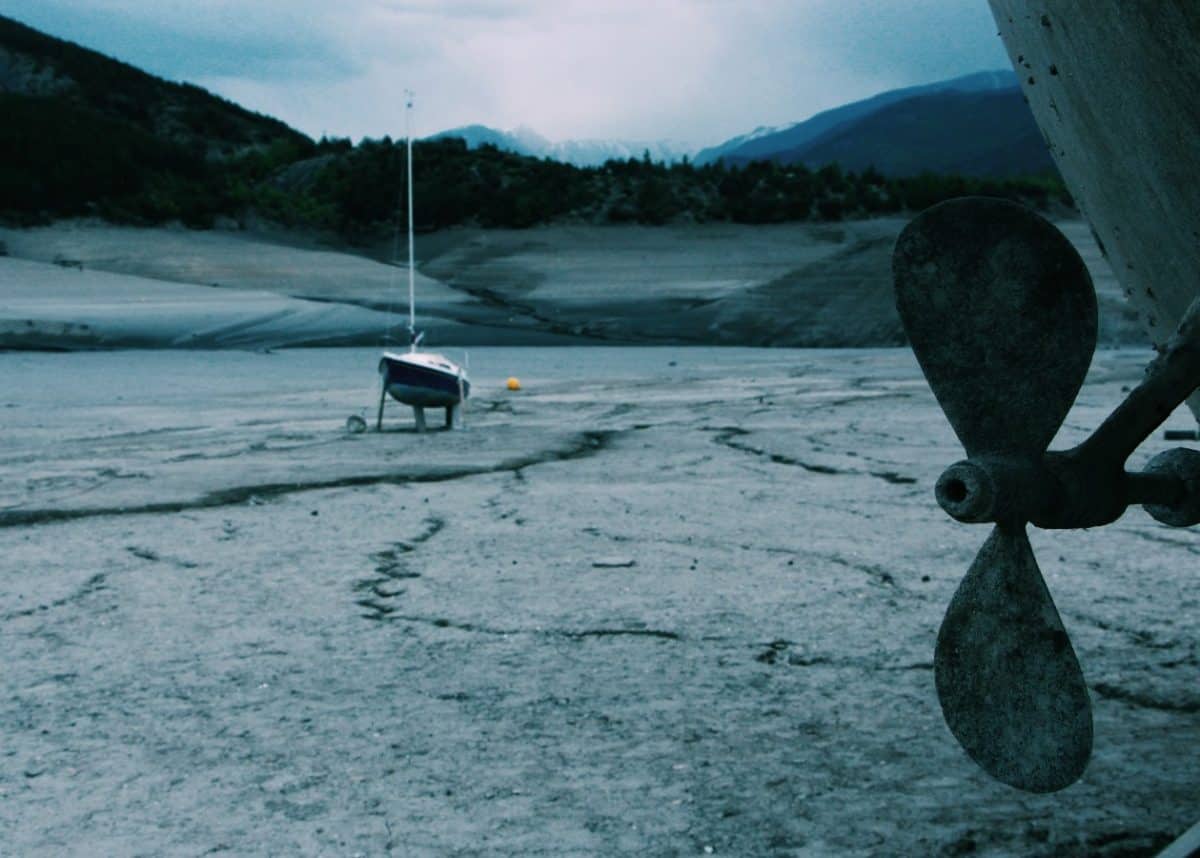
Caspian Sea water level

Caspian Sea water level Photo by Mael BALLAND on Unsplash

Frank Wesselingh, Utrecht University and Matteo Lattuada, University of Giessen

Imagine you are on the coast, looking out to sea. In front of you lies 100 metres of barren sand that looks like a beach at low tide with gentle waves beyond. And yet there are no tides.
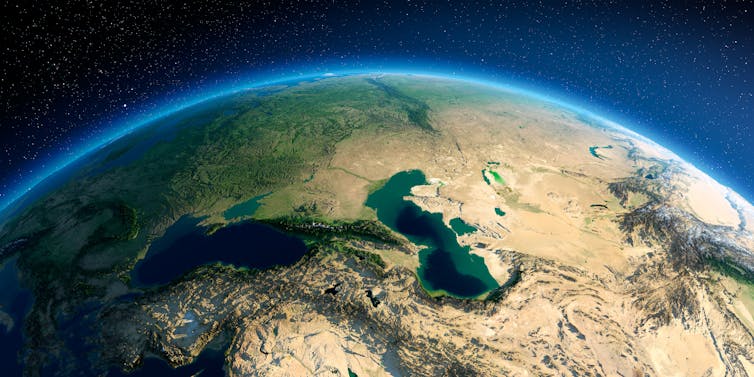
Anton Balazh / shutterstock

This is what we found when we visited the small harbour of Liman, on the Caspian Sea coast of Azerbaijan. The Caspian is actually a lake, the largest in the world, and it is experiencing a devastating decline in its water level that is about to accelerate. By the end of the century the Caspian Sea will be nine metres to 18 metres lower. That’s a depth considerably taller than most houses.

It means the lake will lose at least 25% of its former size, uncovering 93,000 sq km of dry land. If that new land were a country, it would be the size of Portugal.
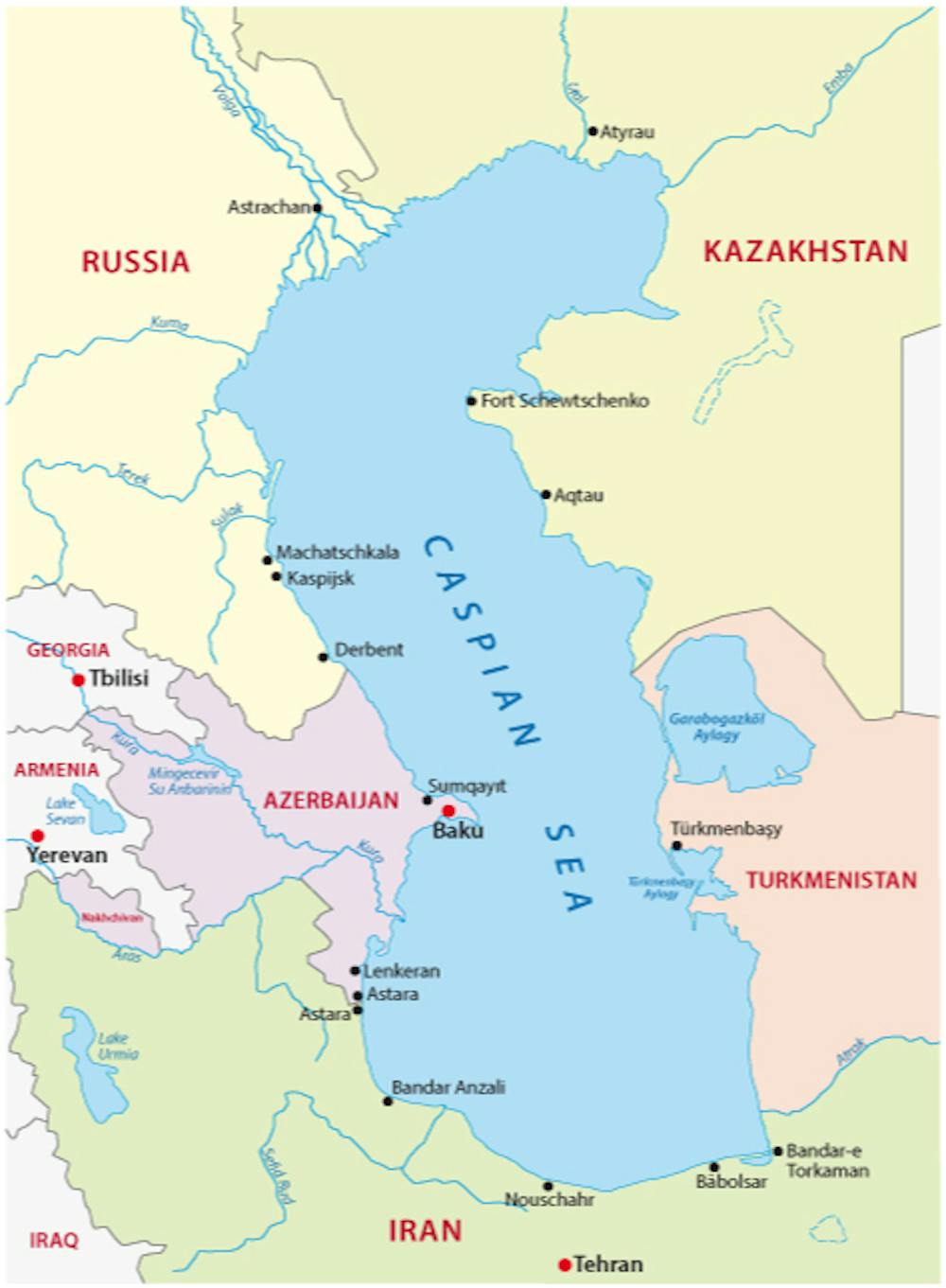
Map of the Caspian Sea.
The Caspian borders five countries and is about the size of Germany or Japan. Rainer Lesniewski / shutterstock

As we found in our new research, the crisis may well result in an ecocide as devastating as the one in the Aral Sea, a few hundred kilometres to the east. The Caspian’s surface is already dropping by 7cm every year, a trend likely to increase. In five years it might be about 40cm lower than today and in ten years almost one metre lower. Maritime countries worldwide are coming to terms with one metre or so of sea level rise by the end of the century. The Caspian Sea faces a drop of that size – except it will happen within a decade.

Climate change is the culprit. The Caspian Sea waters are isolated, its surface is already around 28 metres below global oceans. Its level is the product of how much water is flowing in from rivers, mostly the mighty Volga to the north, how much it rains, and how much evaporates away.

At the end of the century the Volga and other northern rivers will still be there. However, a projected temperature rise of about 3℃ to 4℃ in the region will drive evaporation through the roof.


AlsoRead...

Ryan: Building real freedom through e-commerce

Ryan: Building real freedom through e-commerce

27 November 2025
Design Australia Group: Redefining Drafting as the engine of housing growth

Design Australia Group: Redefining Drafting as the engine of housing growth

26 November 2025

Future misery despite past crises

The Caspian Sea has a history of violent rises and falls. In Derbent, on the Caucasus coast of Russia, submerged ancient city walls testify to how low the sea was in medieval times. Around 10,000 years ago the Caspian was about 100 metres lower. A few thousand years before that it was about 50 metres higher than today and even overspilled into the Black Sea.
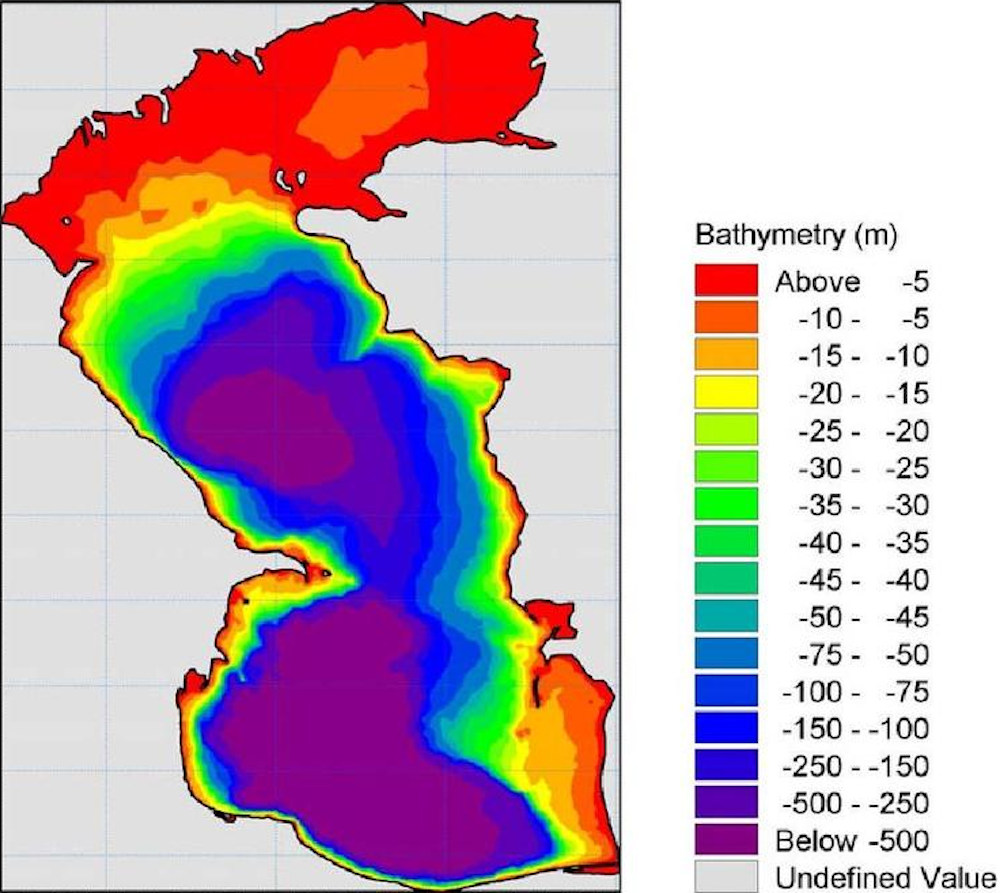
Map of Caspian Sea depth.
Depth map of the Caspian Sea: the areas in red and yellow may disappear entirely. Allahdadi et al (2004)

Yet people who lived beside the sea were able to overcome the swings. No human infrastructure was around to be destroyed and many animal species simply moved up and down with the sea levels, as they had done over the past 2 million years or so. But this time is different. The fall will affect the Caspian’s unique and already stressed animal and plant life, along with human societies along the coasts.

In some areas the coastline is about to retract hundreds of metres a year or more. Can you imagine building new piers and harbours that fast? By the time they are ready, the sea will have moved kilometres or tens of kilometres further away. Coastal promenades will soon be landlocked. The beaches of today will be the sand ridges stranded in barren plains of tomorrow.

The drop will also affect lowland rivers and deltas around the Caspian Sea. Once-fertile plains will become too dry for watermelon and rice farming to continue.

Unique Caspian life in peril

The town of Ramsar, on the Iranian coast, gave its name to a global wetland convention. But as the sea recedes, the town is becoming landlocked and the surrounding wetlands will be gone within decades.
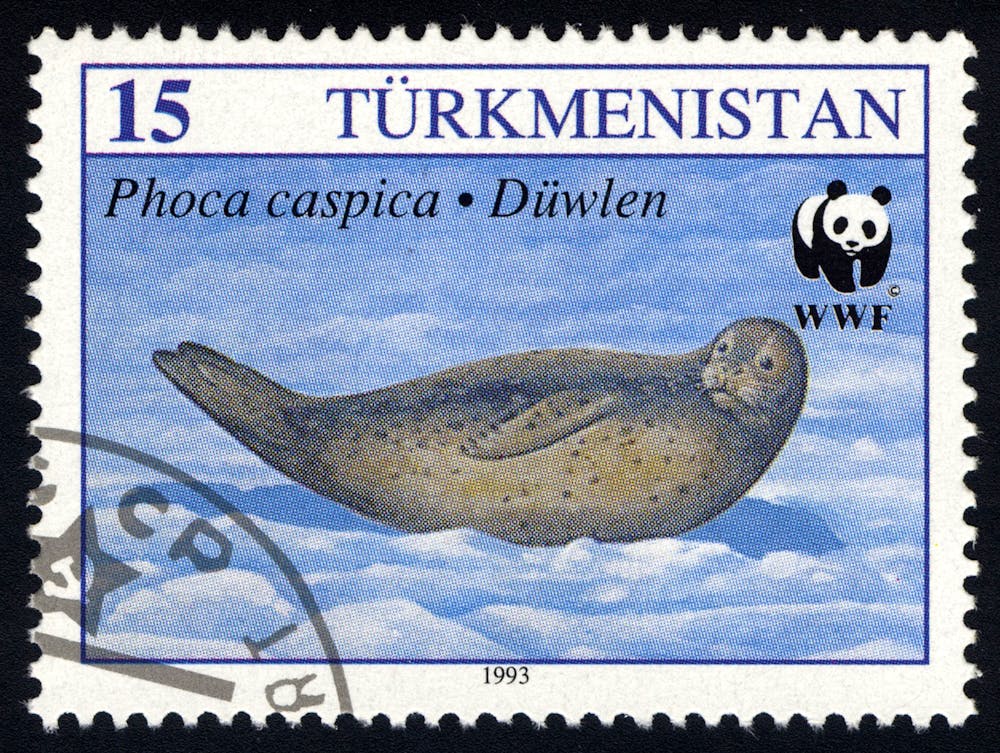
A Turkmenistan stamp featuring a seal
Officially listed as endangered, Caspian seal numbers have declined more than 90% over the past century. tristan tan / shutterstock

The shallower “shelves” of the northern and eastern Caspian are major food supplies for fish and birds, yet the entire northern and eastern shelves will transform in dry barren lands. This will devastate fish species, the Caspian seal and a richness of molluscs and crustaceans species unique to the sea. These Caspian inhabitants have already suffered badly in the past century from pollution, poaching and invasive species. About 99% of Caspian seal pups are raised on the winter ice of the north Caspian. Yet both the winter ice and indeed the whole north Caspian will disappear.

Remaining biodiversity hotspots in depths between 50 metres and 150 metres will be affected as rivers dump nutrients into the deeper central basins combined with rising temperatures. This will decrease oxygen levels and developing ecological dead zones could affect the remaining refuges of Caspian species. A genuine ecocide is around the corner.
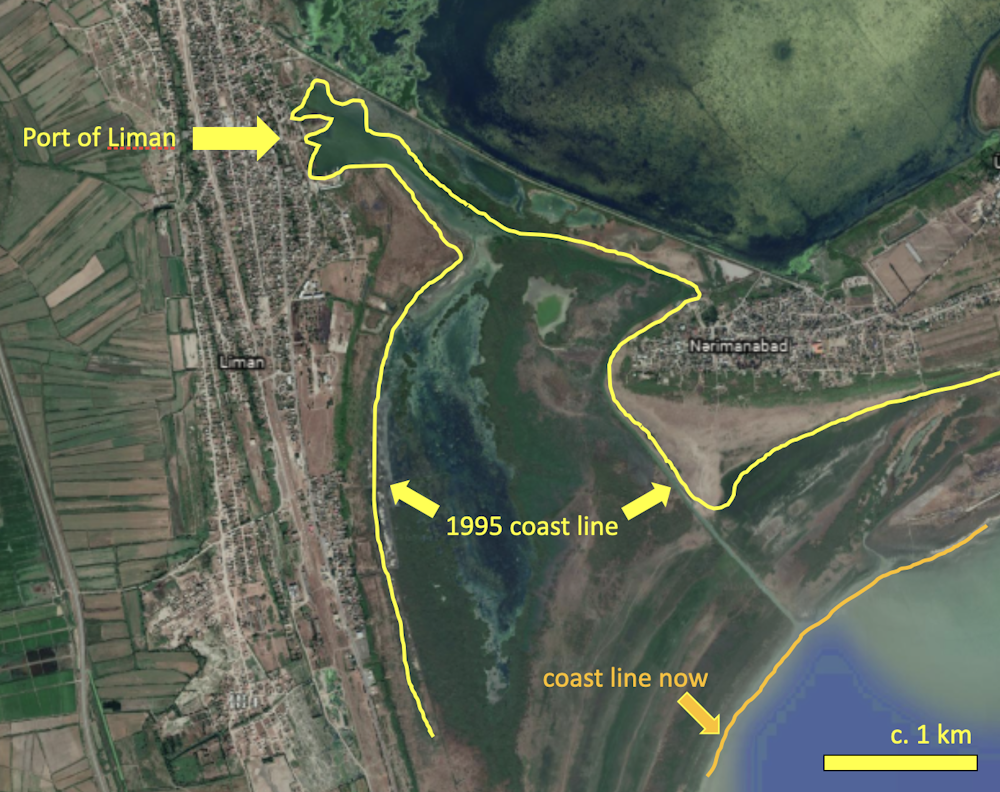
Map showing coastline in Liman, Azerbaijan, in 1995 and today.
The Caspian coastline is already receding. Frank Wesselingh / Google Earth, Author provided

The situation cries for action, but possibilities are limited. Rising global CO₂ levels, the main driver of climate conditions causing the Caspian crisis, can only be dealt with global agreements. In Soviet times, large scale water diversions from Siberian rivers were proposed to deal with the shrinking Aral Sea to the east. But such large works – in the case of the Caspian Sea, a canal from the Black Sea might be considered – come with huge ecological and geopolitical risks.

Yet action is necessary to safeguard the Caspian Sea’s unique plants and animals and the livelihood of the people who live around it. The stranded small harbour in Liman is further from the sea every year. If no action is taken, it will be left alone in more than one way.

Frank Wesselingh, Senior Researcher, Naturalis Biodiversity Center, Utrecht University and Matteo Lattuada, PhD Candidate, Department of Animal Ecology & Systematics, University of Giessen

This article is republished from The Conversation under a Creative Commons license. Read the original article.


Tags: SB001
DMCA.com Protection Status

SUBSCRIBE to our NEWSLETTER

[mc4wp_form id=”2384248″]

Don't Miss

The evolution of Aesthetic Surgery through the lens of Dr Kourosh Tavakoli

by Pauline Torongo
4 December 2025
The evolution of Aesthetic Surgery through the lens of Dr. Kourosh Tavakoli
Health & Wellness

As global interest in Australian cosmetic surgery continues to grow, the combination of regulation, research and emerging digital tools is...

Read moreDetails

Ryan: Building real freedom through e-commerce

by Pauline Torongo
27 November 2025
Ryan: Building real freedom through e-commerce
Business & Finance

Ryan’s greatest achievement isn’t any single business or revenue milestone — it’s the ecosystem he’s built through the Change community.

Read moreDetails

Design Australia Group: Redefining Drafting as the engine of housing growth

by Pauline Torongo
26 November 2025
Design Australia Group: Redefining Drafting as the engine of housing growth
Business & Finance

Australia is under pressure to build homes faster, but design bottlenecks slow progress. Design Australia Group is fixing this by...

Read moreDetails

Louis Guy Detata builds Global Trading Empires through autonomous systems and disciplined leadership

by Pauline Torongo
25 November 2025
Louis Guy Detata builds Global Trading Empires through autonomous systems and disciplined leadership
Business & Finance

The path from investment banking to leading a global trading platform has taught Louis Detata that sustainable success requires more...

Read moreDetails

Burning Eucalyptus Wood: Tips, Advantages, Disadvantages & Alternatives

by Fazila Olla-Logday
20 November 2025
Image Supplied
Enviroment

Learn about burning eucalyptus wood for stoves and fireplaces. Discover benefits, drawbacks, harvesting tips, and better alternative firewood options for...

Read moreDetails

Everything Parents Need to Know About Baby Soft Play and Why It’s a Game Changer

by Fazila Olla-Logday
11 November 2025
Everything Parents Need to Know About Baby Soft Play
Health & Wellness

Baby soft play is a fun, safe, and educational way for little ones to explore and grow. Discover the benefits...

Read moreDetails

WOMAD Sets Up a New Camp in Wiltshire – Australian festival fans take note!

by Kris Griffiths
11 November 2025
Kumbia Boruka brought their reggae and dancehall flavour to the Taste the World Stage at WOMAD 2024 - Credit - Mike Massaro
Entertainment

With its 2026 edition moving to Neston Park in England, WOMAD offers Aussie music lovers a chance to reconnect with global...

Read moreDetails
Load More

Copyright © Blue Sky Publications Ltd. All Rights Reserved.
australiantimes.co.uk is a division of Blue Sky Publications Ltd. Reproduction without permission prohibited. DMCA.com Protection Status

  • About us
  • Write for Us
  • Advertise
  • Contact us
  • T&Cs, Privacy and GDPR
No Result
View All Result
  • News
    • Weather
    • Sport
    • Technology
    • Business & Finance
      • Currency Zone
    • Lotto Results
      • The Lott
  • Lifestyle
    • Entertainment
    • Horoscopes
    • Health & Wellness
    • Recipes
  • Travel
  • Expat Life
  • Move to Australia

Copyright © Blue Sky Publications Ltd. All Rights Reserved.
australiantimes.co.uk is a division of Blue Sky Publications Ltd. Reproduction without permission prohibited. DMCA.com Protection Status

No Result
View All Result
  • News
    • Weather
    • Sport
    • Technology
    • Business & Finance
      • Currency Zone
    • Lotto Results
      • The Lott
  • Lifestyle
    • Entertainment
    • Horoscopes
    • Health & Wellness
    • Recipes
  • Travel
  • Expat Life
  • Move to Australia

Copyright © Blue Sky Publications Ltd. All Rights Reserved.
australiantimes.co.uk is a division of Blue Sky Publications Ltd. Reproduction without permission prohibited. DMCA.com Protection Status





