

• Advertise
  • About us
  • Terms and Conditions
  • Contact us
Tuesday, March 24, 2026
Australian Times News
  • News
    • Weather
    • Sport
    • Technology
    • Business & Finance
      • Currency Zone
    • Lotto Results
      • The Lott
  • Lifestyle
    • Entertainment
    • Horoscopes
    • Health & Wellness
    • Recipes
  • Travel
  • Expat Life
  • Move to Australia
No Result
View All Result
  • News
    • Weather
    • Sport
    • Technology
    • Business & Finance
      • Currency Zone
    • Lotto Results
      • The Lott
  • Lifestyle
    • Entertainment
    • Horoscopes
    • Health & Wellness
    • Recipes
  • Travel
  • Expat Life
  • Move to Australia
No Result
View All Result
Australian Times News
No Result
View All Result
Home News

Almost 90% of the world’s animal species will lose some habitat to agriculture by 2050

Scientists know that biodiversity is declining across much of the world although less universally and dramatically than we feared. We also know that things are likely to get worse in the future, with a combination of habitat loss, climate change and overexploitation set to drive species and habitats ever closer to extinction.
The Conversation by The Conversation
23-12-2020 06:07
in News
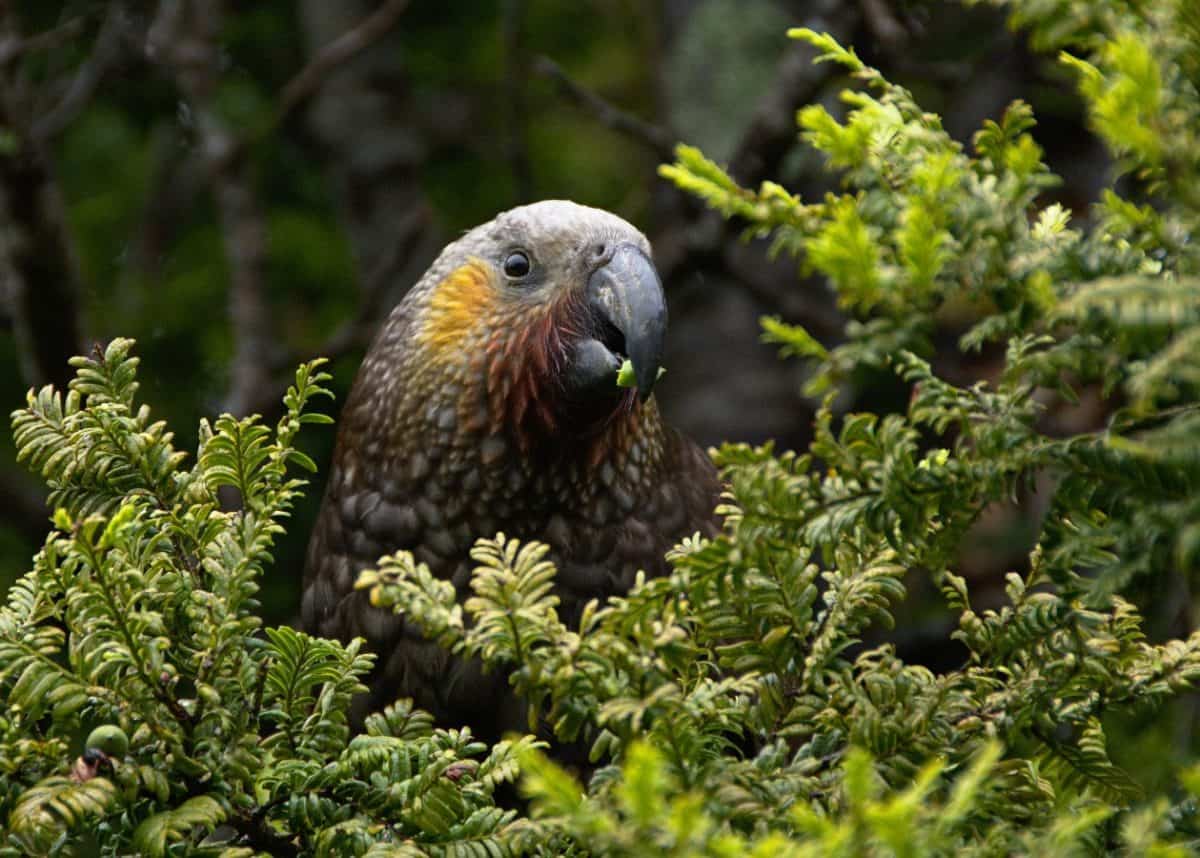
Biodiversity is declining across much of the world

Biodiversity is declining across much of the world Photo by Tomas Sobek on Unsplash

David Williams, University of Leeds and Michael Clark, University of Oxford

Scientists know that biodiversity is declining across much of the world although less universally and dramatically than we feared. We also know that things are likely to get worse in the future, with a combination of habitat loss, climate change and overexploitation set to drive species and habitats ever closer to extinction.

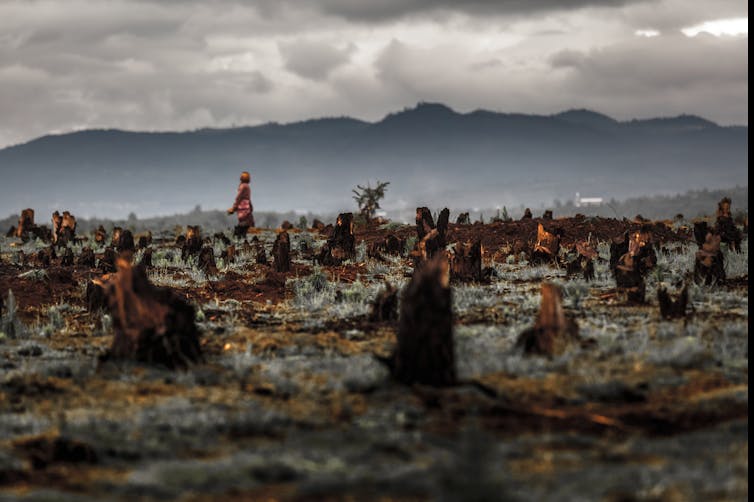
Madagascar is a hotspot for biodiversity – and deforestation. Dudarev Mikhail / shutterstock

What we don’t know, is what to do about this. Partly this is because conservation is woefully underfunded. But it’s also because the underlying causes of biodiversity declines are getting stronger and stronger every year. Climate change rightly gets a huge amount of coverage, but for biodiversity, the biggest threat actually comes from the destruction of natural habitats to make way for agriculture. And as global populations grow, and people become wealthier and consume more, that need for new agricultural land is just going to increase, resulting in at least 2 million sq km of new farmland by 2050, and maybe as much as 10 million.
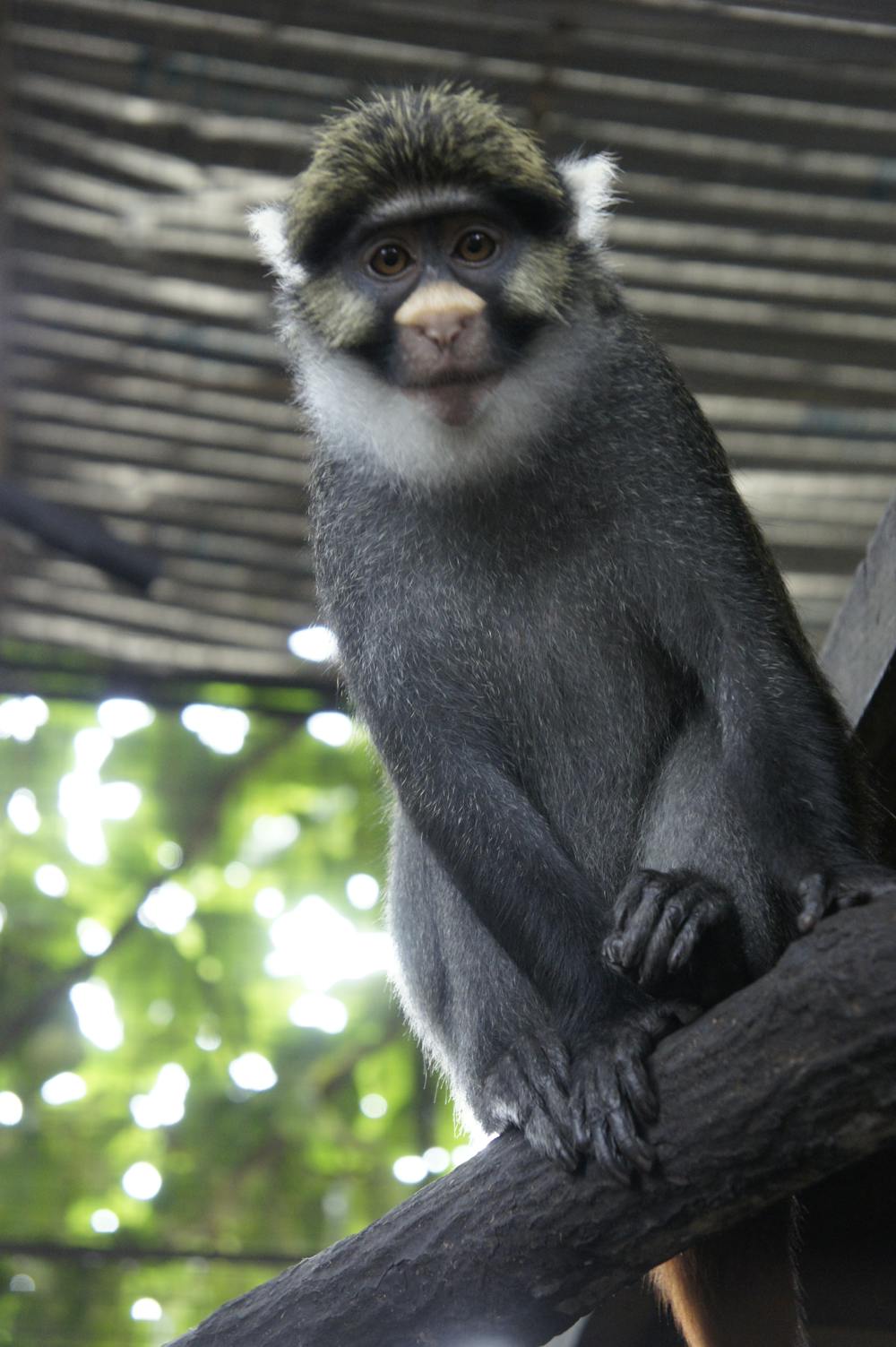
A black monkey with yellow highlights
Sclater’s guenon: this monkey in Nigeria could lose up to 99% of its remaining habitat to agriculture. LaetitiaC, CC BY-SA

Ensuring that this coming wave of agricultural expansion doesn’t lead to widespread biodiversity losses is going to require a big increase in “conventional” conservation approaches (protected areas and the like), but it is probably going to require something more too. These existing approaches are similar to performing heart surgery: very effective for the targeted species and habitats, but also not feasible for every species.

Instead, we need to tackle the underlying causes, or conservation is not going to be able to cope. What we set out to do in a study just published in Nature Sustainability is to work out exactly which landscapes and species are likely to be the most threatened by agriculture in the future, and which specific changes to the food system give us the best chance of safeguarding wild biodiversity in different parts of the world.

Biodiversity under business-as-usual

To do this, we developed a method to forecast where agricultural land is likely to expand at very fine spatial scales (1.5km x 1.5km). We then overlaid these forecasts with habitat maps for almost 20,000 species of amphibians, birds and mammals, and observations of whether each species can exist in agricultural land. This allowed us to calculate the proportion of habitat each species would lose from 2010 to 2050.

World map with lots of shading in Africa, some in South America.
Projected changes in total habitat (mean habitat loss in a cell multiplied by the number of species present) caused by agriculture expansion by 2050. Note the concentrations in East and West Africa. Williams & Clark et al 2020

Overall, we projected that almost 88% of species will lose habitat, with 1,280 losing over a quarter of their remaining habitat. By looking at the impact on individual species in this way, and at such a fine spatial scale, we were able to identify specific regions, and even species, that are likely to be in serious need of conservation support in the coming decades.


AlsoRead...

Design Without Compromise: Where Gutter Protection Meets Modern Architecture

Design Without Compromise: Where Gutter Protection Meets Modern Architecture

20 March 2026
The Rise of This Lead Generation Workshop Across Australia

The Rise of This Lead Generation Workshop Across Australia

13 February 2026

Losses are likely to be particularly bad in Sub-saharan Africa, especially in the Rift Valley and equatorial West Africa, but there will also be serious declines in Latin America – particularly in the Atlantic Rainforest – and South-East Asia.
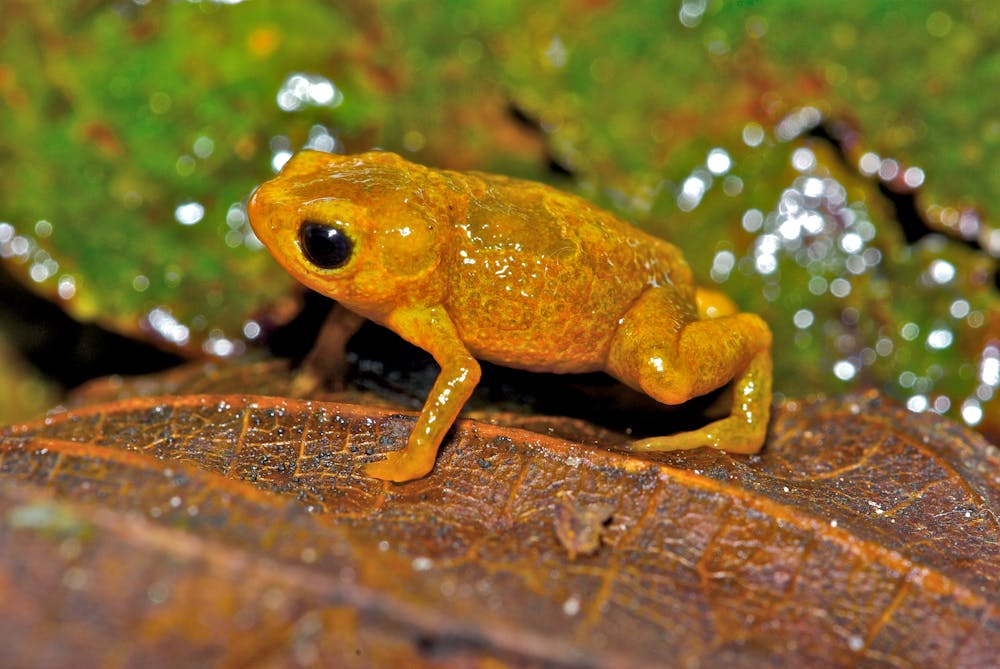
Tiny bright orange toad sits on leaf
The fingernail-sized pumpkin toadlet is only found in Brazil’s Atlantic rainforest, and could lose almost all its remaining habitat to agricultural expansion. Pedro Bernardo/Shutterstock

Importantly, many of the species projected to lose a lot of habitat are not currently threatened, and so conservationists may not be concerned about them. We think this kind of species and location-specific forecasting is going to be increasingly important if we are to proactively work to prevent biodiversity losses.

Proactive changes to help save biodiversity

OK, so far so bleak. Fortunately, there are some things we could do to alleviate this habitat loss, including: raise yields, eat healthier diets, reduce food waste, or even a take a global approach to land-use planning, which could direct food production away from the most at-risk regions. In our study, we found that a combination of all four actions could avoid the vast majority of habitat loss seen under business-as-usual. Doing so, however, will require concerted efforts from governments, companies, NGOs, and individual people.

Our approach allowed us to tease apart which approaches are likely to have the biggest impacts in different parts of the world. In Sub-Saharan Africa, for example, our results suggest increasing yields is one of the biggest single things you can do to save biodiversity. It means you can produce the food you need from much smaller areas, and so massively reduce habitat clearance.

A man in cowboy hat holds USA flag and stands in field.
Healthy yields; unhealthy diets. Jon Rehg/Shutterstock

In contrast, yield increases will do very little in North America, where yields are already close to their maximum. Shifting to healthier diets, however, could have a massive impact in North America, reducing demand for animal products, and therefore demand for new agricultural land. Again, this contrasts with Sub-Saharan Africa, where healthier diets may actually involve increased consumption of both calories and animal products, and therefore will not bring great biodiversity benefits.

Saving biodiversity while feeding 10 billion

Importantly, we only looked at the impact of agricultural expansion on biodiversity. Other threats facing wild nature include climate change, pollution, habitat destruction for other reasons, or overharvesting resources like fish or valuable tropical hardwoods. Still, biodiversity is likely to decline massively, and conventional conservation is unlikely to be able to cope.

Nonetheless, our research at least provides some hope. With swift, ambitious and coordinated action, we can indeed provide a healthy and secure diet for the world’s population without further major loss of habitats. Many of these actions should be priorities anyway, at every level from individual actions to international policy. Healthier diets to combat perhaps the greatest public health crisis in the world; wasting less food; increasing agricultural yields to improve food security; these are all hugely important goals in their own right.

David Williams, Lecturer in Sustainability and the Environment, University of Leeds and Michael Clark, Postdoctoral Researcher, Oxford Martin Programme on the Future of Food, University of Oxford

This article is republished from The Conversation under a Creative Commons license. Read the original article.


Tags: SB001
DMCA.com Protection Status

SUBSCRIBE to our NEWSLETTER

[mc4wp_form id=”2384248″]

Don't Miss

Design Without Compromise: Where Gutter Protection Meets Modern Architecture

by Fazila Olla-Logday
20 March 2026
Design Without Compromise: Where Gutter Protection Meets Modern Architecture
Business & Finance

Design without compromise by integrating gutter protection seamlessly into modern architecture. Discover how innovative gutter systems enhance your home’s aesthetics...

Read moreDetails

How WageSafe Secured Australia’s Most Reputable Retail Business Among Its Premium Clients

by Fazila Olla-Logday
12 March 2026
How WageSafe Secured Australia’s Most Reputable Retail Business Among Its Premium Clients
at

Learn how WageSafe helps businesses stay compliant with payroll and wage regulations through reliable monitoring, risk management, and expert support—protecting...

Read moreDetails

Zakeke AI Agent Studio Removes the E-Commerce Content Bottleneck With Outputs in Seconds

by Fazila Olla-Logday
3 March 2026
Zakeke AI Agent Studio Removes the E-Commerce Content Bottleneck With Outputs in Seconds
at

Zakeke AI Agent Studio removes the e-commerce content bottleneck by generating product content and visuals in seconds, enabling brands to...

Read moreDetails

Empire Traveller launches to give Small and Medium Businesses Enterprise-Level Travel rates

by Pauline Torongo
20 February 2026
Empire Traveller launches to give Small and Medium Businesses Enterprise-Level Travel rates
Travel

Empire Traveller suggests the travel sector may be entering a more inclusive phase — one where advantage is shaped less...

Read moreDetails

Is Feng Shui Master Xu Really A Modern Genius?

by Fazila Olla-Logday
19 February 2026
Is Feng Shui Master Xu Really A Modern Genius?
at

Is Feng Shui Master Xu truly a modern genius, or simply a master of timeless wisdom? Blending ancient Feng Shui...

Read moreDetails

The Rise of This Lead Generation Workshop Across Australia

by Pauline Torongo
13 February 2026
The Rise of This Lead Generation Workshop Across Australia
Business & Finance

“Where U?”, is a two-day in-person lead generation workshop that teaches Australian business owners how to build their own acquisition...

Read moreDetails

Lyca Mobile Australia’s Customer-First Overhaul Pays Off with Finder Award Win

by Fazila Olla-Logday
2 February 2026
Lyca Mobile Australia's Customer-First Overhaul Pays Off with Finder Award Win
Technology

Lyca Mobile Australia’s customer-first overhaul has earned a Finder Award, recognising its improved value, service, and stronger focus on Australian...

Read moreDetails
Load More

Copyright © Blue Sky Publications Ltd. All Rights Reserved.
australiantimes.co.uk is a division of Blue Sky Publications Ltd. Reproduction without permission prohibited. DMCA.com Protection Status

  • About us
  • Write for Us
  • Advertise
  • Contact us
  • T&Cs, Privacy and GDPR
No Result
View All Result
  • News
    • Weather
    • Sport
    • Technology
    • Business & Finance
      • Currency Zone
    • Lotto Results
      • The Lott
  • Lifestyle
    • Entertainment
    • Horoscopes
    • Health & Wellness
    • Recipes
  • Travel
  • Expat Life
  • Move to Australia

Copyright © Blue Sky Publications Ltd. All Rights Reserved.
australiantimes.co.uk is a division of Blue Sky Publications Ltd. Reproduction without permission prohibited. DMCA.com Protection Status

No Result
View All Result
  • News
    • Weather
    • Sport
    • Technology
    • Business & Finance
      • Currency Zone
    • Lotto Results
      • The Lott
  • Lifestyle
    • Entertainment
    • Horoscopes
    • Health & Wellness
    • Recipes
  • Travel
  • Expat Life
  • Move to Australia

Copyright © Blue Sky Publications Ltd. All Rights Reserved.
australiantimes.co.uk is a division of Blue Sky Publications Ltd. Reproduction without permission prohibited. DMCA.com Protection Status





