

• Advertise
  • About us
  • Terms and Conditions
  • Contact us
Sunday, December 7, 2025
Australian Times News
  • News
    • Weather
    • Sport
    • Technology
    • Business & Finance
      • Currency Zone
    • Lotto Results
      • The Lott
  • Lifestyle
    • Entertainment
    • Horoscopes
    • Health & Wellness
    • Recipes
  • Travel
  • Expat Life
  • Move to Australia
No Result
View All Result
  • News
    • Weather
    • Sport
    • Technology
    • Business & Finance
      • Currency Zone
    • Lotto Results
      • The Lott
  • Lifestyle
    • Entertainment
    • Horoscopes
    • Health & Wellness
    • Recipes
  • Travel
  • Expat Life
  • Move to Australia
No Result
View All Result
Australian Times News
No Result
View All Result
Home News

Arecibo telescope’s fall is indicative of global divide around funding science infrastructure

The National Science Foundation, which supported Arecibo, implemented a 15% budget cut that year across its Division of Astronomical Sciences. Arecibo was among the first facilities on the chopping block, despite its continued productivity.

The Conversation by The Conversation
12-12-2020 18:05
in News
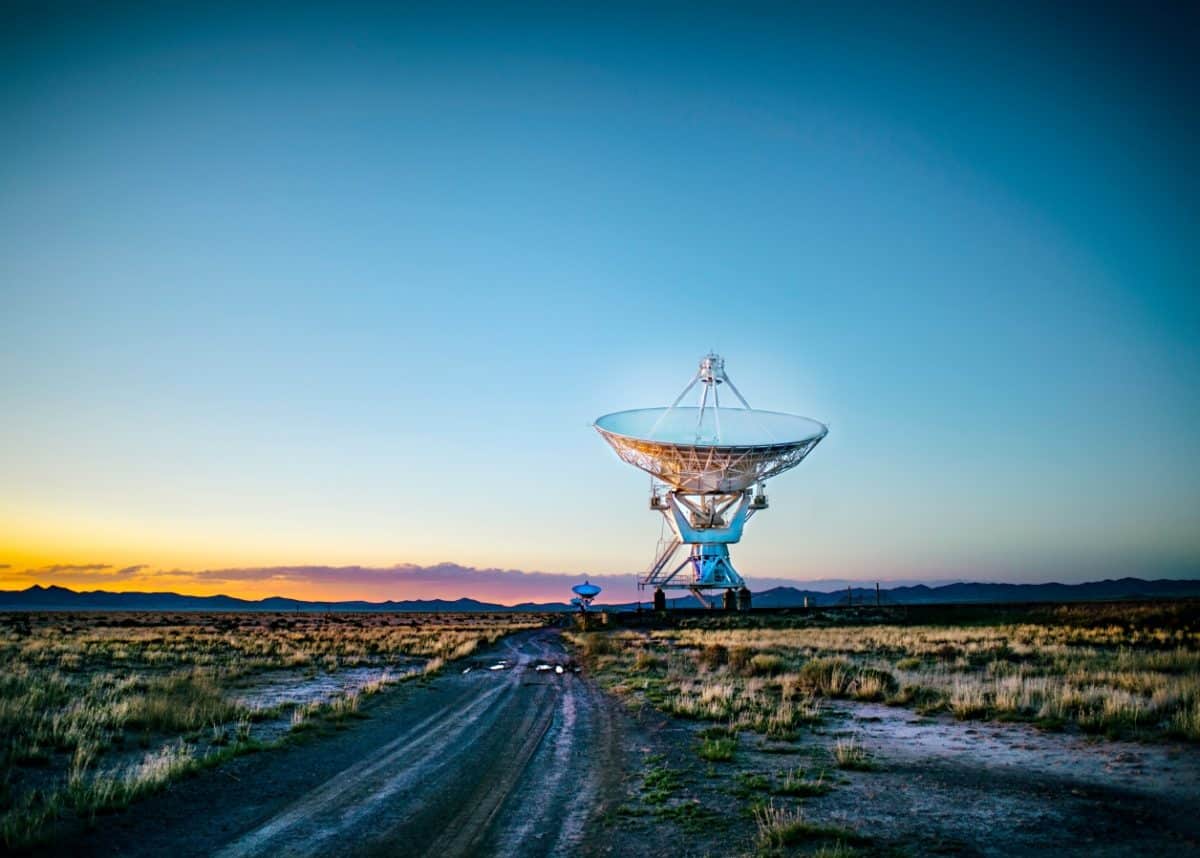
The Arecibo Observatory occupied a space of pride for Puerto Rican scientists

The Arecibo Observatory occupied a space of pride for Puerto Rican scientists Photo by Donald Giannatti on Unsplash

Raquel Velho, Rensselaer Polytechnic Institute

A mere two weeks after the National Science Foundation declared it would close the Arecibo single-dish radio telescope – once the largest in the world – the observatory took a dramatic dying breath and collapsed on Dec. 1, 2020.
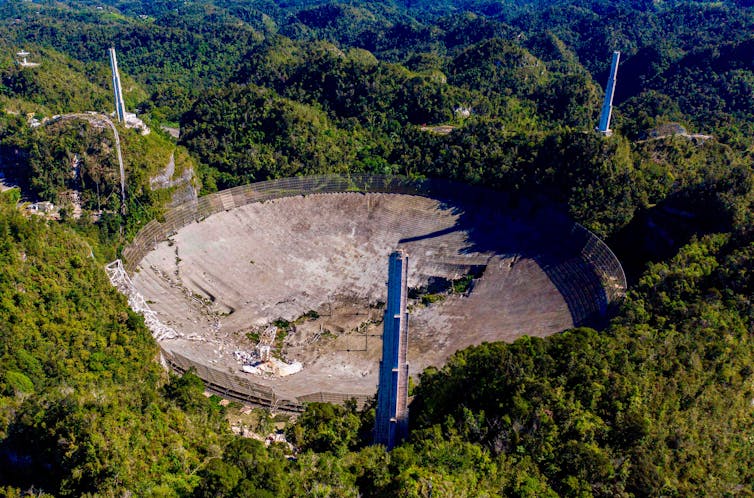
Once featured in movies, TV shows and video games, the Arecibo Observatory was the pride of Puerto Rico. RICARDO ARDUENGO / Contributor / AFP via Getty Images

While drone footage captured the moment in excruciating detail, in truth, the disintegration of the telescope in Arecibo, Puerto Rico began far before this cinematic end.

It is tempting to blame the demise of Arecibo on the physical damage it sustained earlier in 2020, when an auxiliary metal cable snapped – perhaps a delayed consequence of Tropical Storm Isaias or the earthquakes that shook Puerto Rico. But Arecibo’s downfall was, in reality, caused by years of financial struggles.

As someone who studies technology and infrastructure development, I see what happened at Arecibo as a classic example of the tension between facility maintenance and scientific progress.

From prominence to ruin

Completed in 1963, Arecibo collected data that led to one Nobel Prize and played a critical role in a second. In 1992, it was the first observatory to spot planets outside Earth’s solar system. In the past decades, it also played a large role in the search for extraterrestrial intelligence, including broadcasting the first terrestrial message to outer space.

But for all its achievements, U.S. commitment to Arecibo began to falter in 2006. The National Science Foundation, which supported Arecibo, implemented a 15% budget cut that year across its Division of Astronomical Sciences. Arecibo was among the first facilities on the chopping block, despite its continued productivity.


AlsoRead...

Ryan: Building real freedom through e-commerce

Ryan: Building real freedom through e-commerce

27 November 2025
Design Australia Group: Redefining Drafting as the engine of housing growth

Design Australia Group: Redefining Drafting as the engine of housing growth

26 November 2025

The previous year, the NSF had announced it was preparing to reallocate funds between existing facilities in order to initiate “new activities.” These initiatives included the funding and development of the Atacama Large Millimeter Array in Chile, starting in 2003.

The decision to cut Arecibo’s funding was met with resistance from the scientific community and beyond, including the then-governor of Puerto Rico, Aníbal Acevedo Vilá, who wrote to the NSF requesting reconsideration.

But in 2007 Arecibo’s budget was slashed from US$10.5 to $8 million. With a second major cut scheduled for four years later, the closure of the facility seemed imminent. Instead, the NSF tasked a new consortium to take over the management of Arecibo in 2011, changing it from a federally funded institution to one that could seek funds from other sources.

Optimism about this development soon gave way to pessimism. NSF continued to support Arecibo, with NASA pitching in a third of costs. However, the balancing act of a flat NSF budget and the promise of other new observatory projects once again threatened the observatory. In 2015, Robert Kerr, then facilities director of Arecibo, quit – allegedly over funding clashes. In 2018, the University of Central Florida took over management of Arecibo and helped it recover from damages sustained by Hurricane Maria.

But the end was coming. On November 19, 2020, the NSF finally announced the official end of operations at the telescope.

Pride of place

A community of astronomers and locals are actively mourning the ruins of Arecibo. Beyond its scientific success, Arecibo signified more.

#WhatAreciboMeansToMe, a hashtag on Twitter, has collected hundreds of stories from locals and tourists, astronomers and enthusiasts alike. Puerto Rican voices are loud here, many recounting childhood memories of hiking up the trail to the Ángel Ramos Visitors’ Center.

The Arecibo Observatory occupied a space of pride for Puerto Rican scientists and the local community. In many ways, it was a symbol of the island. Through this lens, to watch the Arecibo Observatory be allowed to collapse and become rubble is painful for many, especially when contrasted with defunct observatories in the continental United States, where a number are preserved as historical sites.

In Latin America, infrastructure projects are often tied to ideas about economic development – a potential answer to solve a country’s ills. In this context, to watch a prized facility literally crumble, as the United States retracted its financial involvement, seems like nothing less than abandonment.

It is interesting to note that controversy has often followed the construction of large astronomy facilities. From the Maunakea Observatories being built on land sacred to native Hawaiians to labor disputes in the building of the Atacama Large Millimeter Array in Chile, to the seizing of lands and racial tensions surrounding the Square Kilometer Array in the Karoo region of South Africa, a pattern emerges of Northern scientific institutions investing in regions with long colonial histories – and stirring up local concern and discontent.

In the case of Arecibo, these disputes flared at the end rather than at the beginning. But a similar lack of interest in how scientific research facilities fit the place they inhabit is clear. In my view, it is time to begin discussions beyond the scientific importance of research facilities. Planners must address their full life cycles and their impact on local communities.

Raquel Velho, Assistant Professor of Science and Technology Studies, Rensselaer Polytechnic Institute

This article is republished from The Conversation under a Creative Commons license. Read the original article.


Tags: SB001
DMCA.com Protection Status

SUBSCRIBE to our NEWSLETTER

[mc4wp_form id=”2384248″]

Don't Miss

The evolution of Aesthetic Surgery through the lens of Dr Kourosh Tavakoli

by Pauline Torongo
4 December 2025
The evolution of Aesthetic Surgery through the lens of Dr. Kourosh Tavakoli
Health & Wellness

As global interest in Australian cosmetic surgery continues to grow, the combination of regulation, research and emerging digital tools is...

Read moreDetails

Ryan: Building real freedom through e-commerce

by Pauline Torongo
27 November 2025
Ryan: Building real freedom through e-commerce
Business & Finance

Ryan’s greatest achievement isn’t any single business or revenue milestone — it’s the ecosystem he’s built through the Change community.

Read moreDetails

Design Australia Group: Redefining Drafting as the engine of housing growth

by Pauline Torongo
26 November 2025
Design Australia Group: Redefining Drafting as the engine of housing growth
Business & Finance

Australia is under pressure to build homes faster, but design bottlenecks slow progress. Design Australia Group is fixing this by...

Read moreDetails

Louis Guy Detata builds Global Trading Empires through autonomous systems and disciplined leadership

by Pauline Torongo
25 November 2025
Louis Guy Detata builds Global Trading Empires through autonomous systems and disciplined leadership
Business & Finance

The path from investment banking to leading a global trading platform has taught Louis Detata that sustainable success requires more...

Read moreDetails

Burning Eucalyptus Wood: Tips, Advantages, Disadvantages & Alternatives

by Fazila Olla-Logday
20 November 2025
Image Supplied
Enviroment

Learn about burning eucalyptus wood for stoves and fireplaces. Discover benefits, drawbacks, harvesting tips, and better alternative firewood options for...

Read moreDetails

Everything Parents Need to Know About Baby Soft Play and Why It’s a Game Changer

by Fazila Olla-Logday
11 November 2025
Everything Parents Need to Know About Baby Soft Play
Health & Wellness

Baby soft play is a fun, safe, and educational way for little ones to explore and grow. Discover the benefits...

Read moreDetails

WOMAD Sets Up a New Camp in Wiltshire – Australian festival fans take note!

by Kris Griffiths
11 November 2025
Kumbia Boruka brought their reggae and dancehall flavour to the Taste the World Stage at WOMAD 2024 - Credit - Mike Massaro
Entertainment

With its 2026 edition moving to Neston Park in England, WOMAD offers Aussie music lovers a chance to reconnect with global...

Read moreDetails
Load More

Copyright © Blue Sky Publications Ltd. All Rights Reserved.
australiantimes.co.uk is a division of Blue Sky Publications Ltd. Reproduction without permission prohibited. DMCA.com Protection Status

  • About us
  • Write for Us
  • Advertise
  • Contact us
  • T&Cs, Privacy and GDPR
No Result
View All Result
  • News
    • Weather
    • Sport
    • Technology
    • Business & Finance
      • Currency Zone
    • Lotto Results
      • The Lott
  • Lifestyle
    • Entertainment
    • Horoscopes
    • Health & Wellness
    • Recipes
  • Travel
  • Expat Life
  • Move to Australia

Copyright © Blue Sky Publications Ltd. All Rights Reserved.
australiantimes.co.uk is a division of Blue Sky Publications Ltd. Reproduction without permission prohibited. DMCA.com Protection Status

No Result
View All Result
  • News
    • Weather
    • Sport
    • Technology
    • Business & Finance
      • Currency Zone
    • Lotto Results
      • The Lott
  • Lifestyle
    • Entertainment
    • Horoscopes
    • Health & Wellness
    • Recipes
  • Travel
  • Expat Life
  • Move to Australia

Copyright © Blue Sky Publications Ltd. All Rights Reserved.
australiantimes.co.uk is a division of Blue Sky Publications Ltd. Reproduction without permission prohibited. DMCA.com Protection Status





