

• Advertise
  • About us
  • Terms and Conditions
  • Contact us
Saturday, December 6, 2025
Australian Times News
  • News
    • Weather
    • Sport
    • Technology
    • Business & Finance
      • Currency Zone
    • Lotto Results
      • The Lott
  • Lifestyle
    • Entertainment
    • Horoscopes
    • Health & Wellness
    • Recipes
  • Travel
  • Expat Life
  • Move to Australia
No Result
View All Result
  • News
    • Weather
    • Sport
    • Technology
    • Business & Finance
      • Currency Zone
    • Lotto Results
      • The Lott
  • Lifestyle
    • Entertainment
    • Horoscopes
    • Health & Wellness
    • Recipes
  • Travel
  • Expat Life
  • Move to Australia
No Result
View All Result
Australian Times News
No Result
View All Result
Home News

Ocean’s deep-sea ‘time machines’ throw light on last ice age

Corals that grew at the end of the ice age around 15,000 years ago are helping scientists to understand why the ice age ended so suddenly.

Mike Simpson by Mike Simpson
19-10-2020 07:00
in News
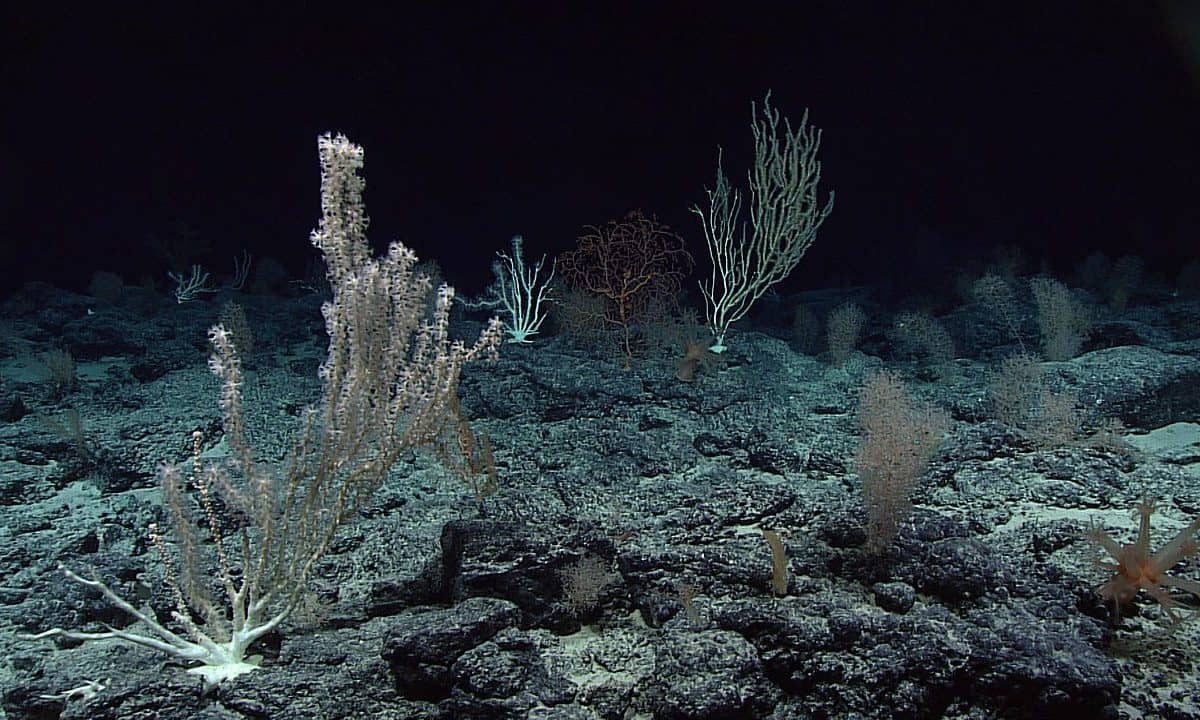
Deep-sea coral. Photo credit: Wikimedia Commons

Deep-sea coral. Photo credit: Wikimedia Commons

The fossilised remains of ancient deep-sea corals may act as time machines providing new insights into the effect the ocean has on rising CO2 levels, according to research carried out by the Universities of St Andrews in Scotland, Bristol in England and Nanjing in China.

Rising CO2 levels helped end the last ice age, but the cause of this CO2 rise has puzzled scientists for decades.

Using geochemical fingerprinting of fossil corals, an international team of scientists has found new evidence, published in Science Advances this week, that this CO2 rise was linked to extremely rapid changes in ocean circulation around Antarctica.

Coral that grew 15,000 years ago

The team collected fossil remains of deep-sea corals that lived thousands of metres beneath the waves. By studying the radioactive decay of the tiny amounts of uranium found in these skeletons, they identified corals that grew at the end of the ice age around 15,000 years ago.

Further geochemical fingerprinting of these specimens – including measurements of radiocarbon – allowed the team to reconstruct changes in ocean circulation and compare them to changes in global climate at an unprecedented time resolution.

Professor Laura Robinson of the University of Bristol, who led the research team, said: “The data show that deep ocean circulation can change surprisingly rapidly and that this can rapidly release CO2 to the atmosphere.”

Dr James Rae, of the School of Earth and Environmental Sciences at the University of St Andrews, added: “The corals act as a time machine, allowing us to see changes in ocean circulation that happened thousands of years ago.


AlsoRead...

Ryan: Building real freedom through e-commerce

Ryan: Building real freedom through e-commerce

27 November 2025
Design Australia Group: Redefining Drafting as the engine of housing growth

Design Australia Group: Redefining Drafting as the engine of housing growth

26 November 2025

Southern Ocean spewed carbon dioxide

“They show that the ocean round Antarctica can suddenly switch its circulation to deliver burps of CO2 to the atmosphere.”

Scientists have suspected that the Southern Ocean played an important role in ending the last ice age and the team’s findings add weight to this idea.

Dr Tao Li of Nanjing University, lead author of the new study, said: “There is no doubt that Southern Ocean processes must have played a critical role in these rapid climate shifts and the fossil corals provide the only possible way to examine Southern Ocean processes on these timescales.”

Release of geological carbon from sea

In another study published in Nature Geoscience this week, the same team ruled out recent speculation that the global increase in CO2 the end of the ice age may have been related to release of geological carbon from deep sea sediments.

Andrea Burke, of the School of Earth and Environmental Sciences at the University of St Andrews, said: “There have been some suggestions that reservoirs of carbon deep in marine mud might bubble up and add CO2 to the ocean and the atmosphere, but we found no evidence of this in our coral samples”.

Dr James Rae added: “Although the rise in CO2 at the end of the ice age was dramatic in geological terms, the recent rise in CO2 due to human activity is much bigger and faster. What the climate system will do in response is pretty scary.”


Tags: global warmingIce agenatureOceansscience
DMCA.com Protection Status

SUBSCRIBE to our NEWSLETTER

[mc4wp_form id=”2384248″]

Don't Miss

The evolution of Aesthetic Surgery through the lens of Dr Kourosh Tavakoli

by Pauline Torongo
4 December 2025
The evolution of Aesthetic Surgery through the lens of Dr. Kourosh Tavakoli
Health & Wellness

As global interest in Australian cosmetic surgery continues to grow, the combination of regulation, research and emerging digital tools is...

Read moreDetails

Ryan: Building real freedom through e-commerce

by Pauline Torongo
27 November 2025
Ryan: Building real freedom through e-commerce
Business & Finance

Ryan’s greatest achievement isn’t any single business or revenue milestone — it’s the ecosystem he’s built through the Change community.

Read moreDetails

Design Australia Group: Redefining Drafting as the engine of housing growth

by Pauline Torongo
26 November 2025
Design Australia Group: Redefining Drafting as the engine of housing growth
Business & Finance

Australia is under pressure to build homes faster, but design bottlenecks slow progress. Design Australia Group is fixing this by...

Read moreDetails

Louis Guy Detata builds Global Trading Empires through autonomous systems and disciplined leadership

by Pauline Torongo
25 November 2025
Louis Guy Detata builds Global Trading Empires through autonomous systems and disciplined leadership
Business & Finance

The path from investment banking to leading a global trading platform has taught Louis Detata that sustainable success requires more...

Read moreDetails

Burning Eucalyptus Wood: Tips, Advantages, Disadvantages & Alternatives

by Fazila Olla-Logday
20 November 2025
Image Supplied
Enviroment

Learn about burning eucalyptus wood for stoves and fireplaces. Discover benefits, drawbacks, harvesting tips, and better alternative firewood options for...

Read moreDetails

Everything Parents Need to Know About Baby Soft Play and Why It’s a Game Changer

by Fazila Olla-Logday
11 November 2025
Everything Parents Need to Know About Baby Soft Play
Health & Wellness

Baby soft play is a fun, safe, and educational way for little ones to explore and grow. Discover the benefits...

Read moreDetails

WOMAD Sets Up a New Camp in Wiltshire – Australian festival fans take note!

by Kris Griffiths
11 November 2025
Kumbia Boruka brought their reggae and dancehall flavour to the Taste the World Stage at WOMAD 2024 - Credit - Mike Massaro
Entertainment

With its 2026 edition moving to Neston Park in England, WOMAD offers Aussie music lovers a chance to reconnect with global...

Read moreDetails
Load More

Copyright © Blue Sky Publications Ltd. All Rights Reserved.
australiantimes.co.uk is a division of Blue Sky Publications Ltd. Reproduction without permission prohibited. DMCA.com Protection Status

  • About us
  • Write for Us
  • Advertise
  • Contact us
  • T&Cs, Privacy and GDPR
No Result
View All Result
  • News
    • Weather
    • Sport
    • Technology
    • Business & Finance
      • Currency Zone
    • Lotto Results
      • The Lott
  • Lifestyle
    • Entertainment
    • Horoscopes
    • Health & Wellness
    • Recipes
  • Travel
  • Expat Life
  • Move to Australia

Copyright © Blue Sky Publications Ltd. All Rights Reserved.
australiantimes.co.uk is a division of Blue Sky Publications Ltd. Reproduction without permission prohibited. DMCA.com Protection Status

No Result
View All Result
  • News
    • Weather
    • Sport
    • Technology
    • Business & Finance
      • Currency Zone
    • Lotto Results
      • The Lott
  • Lifestyle
    • Entertainment
    • Horoscopes
    • Health & Wellness
    • Recipes
  • Travel
  • Expat Life
  • Move to Australia

Copyright © Blue Sky Publications Ltd. All Rights Reserved.
australiantimes.co.uk is a division of Blue Sky Publications Ltd. Reproduction without permission prohibited. DMCA.com Protection Status





