


• Advertise
  • About us
  • Terms and Conditions
  • Contact us
Tuesday, November 24, 2026
Australian Times News
  • News
    • Weather
    • Sport
    • Technology
    • Business & Finance
      • Currency Zone
    • Lotto Results
      • The Lott
  • Lifestyle
    • Entertainment
    • Horoscopes
    • Health & Wellness
    • Recipes
  • Travel
  • Expat Life
  • Move to Australia
No Result
View All Result
  • News
    • Weather
    • Sport
    • Technology
    • Business & Finance
      • Currency Zone
    • Lotto Results
      • The Lott
  • Lifestyle
    • Entertainment
    • Horoscopes
    • Health & Wellness
    • Recipes
  • Travel
  • Expat Life
  • Move to Australia
No Result
View All Result
Australian Times News
No Result
View All Result
Home News

Are your devices spying on you? Australia’s very small step to make the Internet of Things safer

Security flaws in IoT devices are common. Hackers can exploit those vulnerabilities to take control of devices, steal or change data, and spy on us.

The Conversation by The Conversation
12-09-2020 09:17
in News
Making the Internet of Things safer

Making the Internet of Things safer Photo by Michael Geiger on Unsplash

Kayleen Manwaring, UNSW and Roger Clarke, UNSW

From internet-connected televisions, toys, fridges, ovens, security cameras, door locks, fitness trackers and lights, the so-called “Internet of Things” (IoT) promises to revolutionise our homes.

Shutterstock

But it also threatens to increase our vulnerability to malicious acts. Security flaws in IoT devices are common. Hackers can exploit those vulnerabilities to take control of devices, steal or change data, and spy on us.

In recognition of these risks, the Australian government has introduced a new code of practice to encourage manufacturers to make IoT devices more secure. The code provides guidance on secure passwords, the need for security patches, the protection and deletion of consumers’ personal data and the reporting of vulnerabilities, among other things.

The problem is the code is voluntary. Experiences elsewhere, such as the United Kingdom, suggest a voluntary code will be insufficient to deliver the protections consumers need.

Indeed it might even increase risks, by lulling consumers into a false sense of security about the safety of the devices they buy.

Many IoT devices are insecure

IoT devices designed for consumers are generally less secure than conventional computers.

AlsoRead...

How She Sells with Brooke helps thousands of women build new careers through high-ticket sales

How She Sells with Brooke helps thousands of women build new careers through high-ticket sales

6 October 2026
Mark Levin and Yael Eckstein: Celebrating 250 Years - The Bond Between America and Israel

Mark Levin and Yael Eckstein: Celebrating 250 Years – The Bond Between America and Israel

30 September 2026

In 2017 the Australian Communications Consumer Action Network commissioned researchers from the University of New South Wales to test the security of 20 household appliances capable of being connected and controlled via wi-fi.

These included a smart TV, portable speaker, voice assistant, printer, sleep monitor, digital photo frame, bathroom scales, light bulb, power switch, smoke alarm and Hello Barbie talking doll.
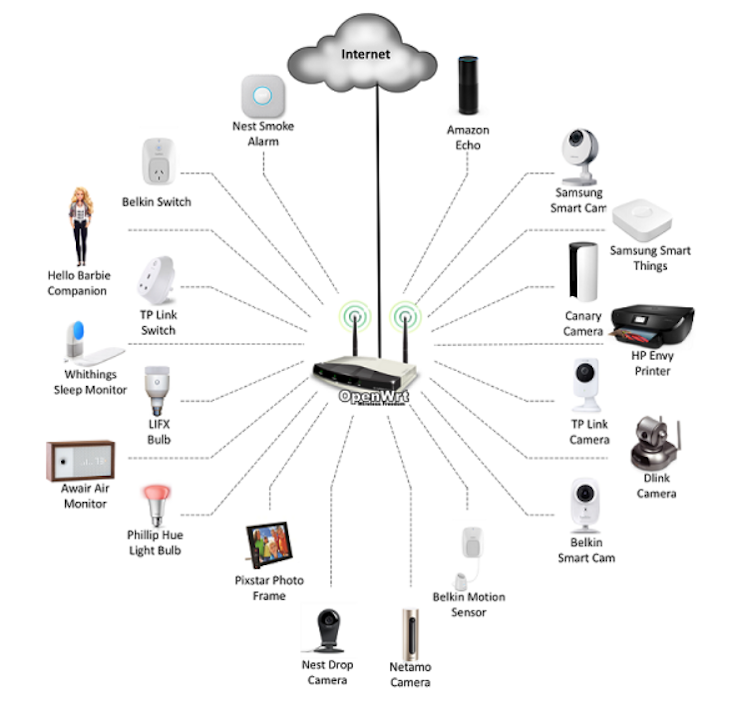
Devices tested by UNSW researchers for the Australian Communications Consumer Action Network. Inside Job: Security and privacy threats for smart-home IoT devices, 2017, CC BY-NC

While some devices (including the Barbie) were found to be relatively secure in terms of confidentiality, all had some form of security flaw. Many “allowed potentially serious safety and security breaches”.

What this could potentially mean is that someone could, for example, hack into a household’s wi-fi network and collect data from IoT devices. It might be as simple as knowing when lights are switched on to determine when a home can be burgled. Someone with more malicious intent could turn on your oven while shutting down smoke alarms and other sensors.

Risks to consumers, and society

Factors leading to poor security in IoT devices include manufacturers’ desires to minimise componentry and keep costs down. Many makers of consumer goods also have little experience with cyber-security issues.

Allied with the fact many consumers aren’t technologically savvy enough to appreciate the risks and protect themselves, this creates the prospect of IoT devices being exploited.

On a personal level, you could be spied on and harassed. Personal pictures or information could be exposed to the world, or used to extort you.

On a societal level, IoT devices can be hijacked and used collectively to shut down services and networks. Even compromising one device may enable connected infrastructure to be hacked. This is a rising concern as more people connect to workplace networks from home.
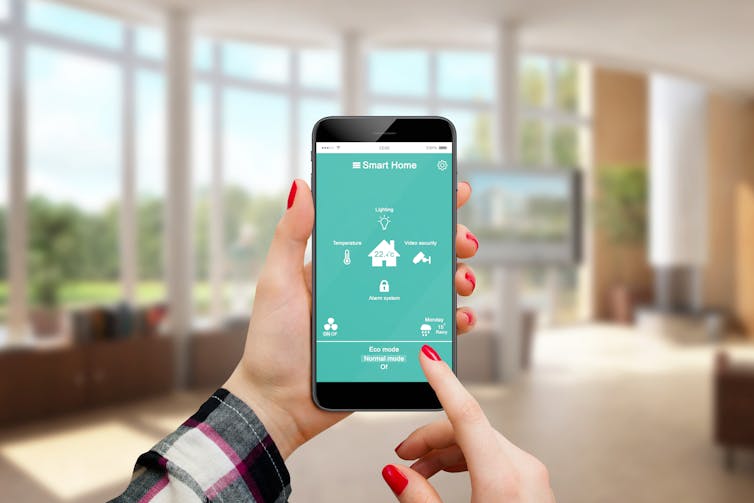
Woman using a smarthome app on her phone.
Many consumers don’t fully appreciate the security risks from IoT devices. Shutterstock

Voluntary codes of practice

In recognition of these threats, IoT security “good practice” guidelines have been proposed by standards bodies such as the US National Institute of Standards and Technology, the European Telecommunications Standards Institute and the Internet Engineering Task Force. But these guidelines are based on voluntary action by manufacturers.

The UK government has already concluded the voluntary code of conduct it established in 2018 isn’t working.

Britain’s Minister for Digital Infrastructure, Matt Warman, said in July:

Despite widespread adoption of the guidelines in the Code of Practice for Consumer Internet of Things Security, both in the UK and overseas, change has not been swift enough, with poor security still commonplace.

The UK is now moving to impose a mandatory code, with laws requiring manufacturers to deliver reasonable security features in any device that can connect to the internet.

A case for co-regulation

There is little reason to believe Australia’s voluntary code of practice will prove any more effective than in the UK.

A better option would have been a “co-regulatory” approach. Co-regulation mixes aspects of industry self-regulation with both government regulation and strong community input. It includes laws that create incentives for compliance (and disincentives against non-compliance) and regulatory oversight by an independent (and well-resourced) watchdog.

The Australia government has, at least, described its new code of practice as “a first step” to improving the security of IoT devices.

Let’s hope so. If the UK experience is anything to go by, its next steps will include dumping a voluntary code for something with a greater chance of delivering the safety and security consumers – and society – need.

Kayleen Manwaring, Senior Lecturer, School of Taxation & Business Law, UNSW and Roger Clarke, Visiting Professor, Comp Sci at the ANU, and Law, UNSW

This article is republished from The Conversation under a Creative Commons license. Read the original article.


Tags: SB001
DMCA.com Protection Status

SUBSCRIBE to our NEWSLETTER

[mc4wp_form id=”2384248″]

Don't Miss

NRMA welcomes dogs at four NSW South Coast Holiday Parks

by Pauline Torongo
22 October 2026
NRMA welcomes dogs at four NSW South Coast Holiday Parks
Lifestyle

Pet-friendly stays and nearby beaches give families more coastal holiday options as Australian caravan and camping trips reach record levels.

Read moreDetails

How She Sells with Brooke helps thousands of women build new careers through high-ticket sales

by Pauline Torongo
6 October 2026
How She Sells with Brooke helps thousands of women build new careers through high-ticket sales
Business & Finance

More than 3,000 women have joined She Sells with Brooke Triplett to build careers in high-ticket sales. For many, the...

Read moreDetails

Qualities to look for in a Caribbean Luxury Cruise Experience

by Pauline Torongo
6 October 2026
Qualities to look for in a Caribbean Luxury Cruise Experience. Image: Supplied
Travel

Luxury Caribbean cruises are often associated with beaches, sunshine, and tropical ease, but they can be more than that with...

Read moreDetails

Mark Levin and Yael Eckstein: Celebrating 250 Years – The Bond Between America and Israel

by Pauline Torongo
30 September 2026
Mark Levin and Yael Eckstein: Celebrating 250 Years - The Bond Between America and Israel
News

As America marks 250 years since the Declaration of Independence, Yael Eckstein and Mark Levin explore the biblical values and...

Read moreDetails

How supporting Australia’s Care Workforce could strengthen care in the community

by Pauline Torongo
10 September 2026
How supporting Australia’s Care Workforce could strengthen care in the community
News

Australian care funding faces growing scrutiny after a 2025 ANAO report found NDIS losses from fraud, non-compliance, and payment errors...

Read moreDetails

The Future of Work Is Changing: What HR must champion next, according to Energy Collective Co

by Pauline Torongo
28 August 2026
What HR Must Champion Next, According to Energy Collective Co
Business & Finance

Energy Collective Co examines the root causes of performance by considering how work is designed, how leadership is enacted and...

Read moreDetails

From Empathy Burnout to Body-Led Recovery: What Heidi Jane of Intuition Co. learned by living through what she teaches

by Pauline Torongo
25 August 2026
What Heidi Jane of Intuition Co. learned by living through what she teaches
Lifestyle

Recognising emotional exhaustion is only the first step. While supportive habits such as rest, time in nature, hydration, and reduced...

Read moreDetails
Load More

Copyright © Blue Sky Publications Ltd. All Rights Reserved.
australiantimes.co.uk is a division of Blue Sky Publications Ltd. Reproduction without permission prohibited. DMCA.com Protection Status

  • About us
  • Write for Us
  • Advertise
  • Contact us
  • T&Cs, Privacy and GDPR
No Result
View All Result
  • News
    • Weather
    • Sport
    • Technology
    • Business & Finance
      • Currency Zone
    • Lotto Results
      • The Lott
  • Lifestyle
    • Entertainment
    • Horoscopes
    • Health & Wellness
    • Recipes
  • Travel
  • Expat Life
  • Move to Australia

Copyright © Blue Sky Publications Ltd. All Rights Reserved.
australiantimes.co.uk is a division of Blue Sky Publications Ltd. Reproduction without permission prohibited. DMCA.com Protection Status