

• Advertise
  • About us
  • Terms and Conditions
  • Contact us
Saturday, December 6, 2025
Australian Times News
  • News
    • Weather
    • Sport
    • Technology
    • Business & Finance
      • Currency Zone
    • Lotto Results
      • The Lott
  • Lifestyle
    • Entertainment
    • Horoscopes
    • Health & Wellness
    • Recipes
  • Travel
  • Expat Life
  • Move to Australia
No Result
View All Result
  • News
    • Weather
    • Sport
    • Technology
    • Business & Finance
      • Currency Zone
    • Lotto Results
      • The Lott
  • Lifestyle
    • Entertainment
    • Horoscopes
    • Health & Wellness
    • Recipes
  • Travel
  • Expat Life
  • Move to Australia
No Result
View All Result
Australian Times News
No Result
View All Result
Home News

Whale of a time understanding whale communication

By analysing sound recordings of whales ‘talking’ and comparing it visual recordings of their behaviour, we may eventually understand them.

Mike Simpson by Mike Simpson
26-10-2020 03:00
in News

Whale-watching is a well-known pursuit in Australia for locals and visitors, thanks to our extensive coastline and large number of whales that can be seen off our coast.

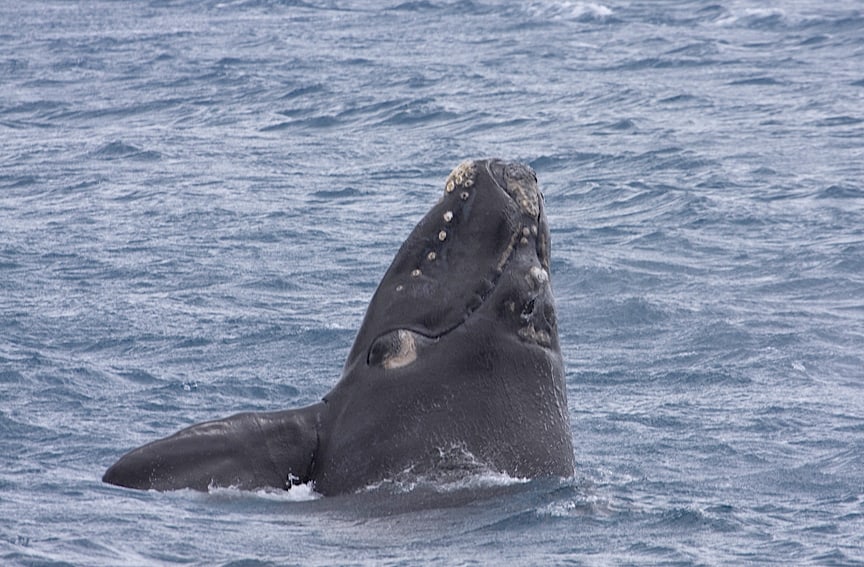
These range from humpback whales, which are the most common species seen, to southern right whales, minke whales and blue whales.

Different whale pods have ‘dialects’

Now a team of researchers at the Friedrich–Alexander University in Germany has released details of a ground-breaking new study that they believe will soon determine how killer whales communicate.

To understand this communication process between whales, they used deep learning to analyse a large number of audio recordings of the whales communicating and then compared these with the animals’ behaviour at the same time.

“The language of killer whales is particularly well-suited to analysis. They often communicate within the group, for example while hunting or with juveniles. They also interact with other killer whale pods. The language used by the various groups even varies slightly, similarly to our [human] dialects,” explained Professor Elmar Nöth, Chair of Computer Science 5 (Pattern Recognition) at the university.

Filtering out the extraneous sounds

First of all, the team isolated the clicks, whistles or pulsed calls typical of killer whales, by using deep learning and filtering out other sounds originating from, for example, ships or seals.

“We are now able to reliably identify the killer whale segments,’ said Nöth. “At the moment, the researchers are working to split the recordings automatically into sequences. These recurring sequences consist of several sounds. If the sequences show similarities and occur repeatedly in the same situations, we can presume that it is the same message.”


AlsoRead...

Ryan: Building real freedom through e-commerce

Ryan: Building real freedom through e-commerce

27 November 2025
Design Australia Group: Redefining Drafting as the engine of housing growth

Design Australia Group: Redefining Drafting as the engine of housing growth

26 November 2025

According to Nöth, the team once observed the interaction between two killer whale pods.

Researchers check their hypotheses

The juveniles moved away from the rest of the pod. “The calls we recorded may mean something like ‘Where are you?’ – “We’re over here”– “Come on, it’s time to go”’, explained Nöth.

But how can the researchers check their hypotheses?

“When analysing human language, you can usually enlist the help of someone who is bilingual. That is not the case with animals,” said Nöth.

Big volume of material to study

The team of researchers must therefore compare the sounds with the whales’ behaviour. The aim is to draw up a glossary of killer whale vocabulary. They are collaborating closely with biologists, continually discussing and comparing their findings.

The researchers say they have almost 20,000 hours of material available for them to study.

Moving into the next phase of the project, the researchers hope to make the software they use to analyse the killer whale sounds available to the public. As Nöth explains: “Our algorithm can also be used to study other animals and their languages.”


Tags: animal languagesHumpback whaleswhales
DMCA.com Protection Status

SUBSCRIBE to our NEWSLETTER

[mc4wp_form id=”2384248″]

Don't Miss

The evolution of Aesthetic Surgery through the lens of Dr Kourosh Tavakoli

by Pauline Torongo
4 December 2025
The evolution of Aesthetic Surgery through the lens of Dr. Kourosh Tavakoli
Health & Wellness

As global interest in Australian cosmetic surgery continues to grow, the combination of regulation, research and emerging digital tools is...

Read moreDetails

Ryan: Building real freedom through e-commerce

by Pauline Torongo
27 November 2025
Ryan: Building real freedom through e-commerce
Business & Finance

Ryan’s greatest achievement isn’t any single business or revenue milestone — it’s the ecosystem he’s built through the Change community.

Read moreDetails

Design Australia Group: Redefining Drafting as the engine of housing growth

by Pauline Torongo
26 November 2025
Design Australia Group: Redefining Drafting as the engine of housing growth
Business & Finance

Australia is under pressure to build homes faster, but design bottlenecks slow progress. Design Australia Group is fixing this by...

Read moreDetails

Louis Guy Detata builds Global Trading Empires through autonomous systems and disciplined leadership

by Pauline Torongo
25 November 2025
Louis Guy Detata builds Global Trading Empires through autonomous systems and disciplined leadership
Business & Finance

The path from investment banking to leading a global trading platform has taught Louis Detata that sustainable success requires more...

Read moreDetails

Burning Eucalyptus Wood: Tips, Advantages, Disadvantages & Alternatives

by Fazila Olla-Logday
20 November 2025
Image Supplied
Enviroment

Learn about burning eucalyptus wood for stoves and fireplaces. Discover benefits, drawbacks, harvesting tips, and better alternative firewood options for...

Read moreDetails

Everything Parents Need to Know About Baby Soft Play and Why It’s a Game Changer

by Fazila Olla-Logday
11 November 2025
Everything Parents Need to Know About Baby Soft Play
Health & Wellness

Baby soft play is a fun, safe, and educational way for little ones to explore and grow. Discover the benefits...

Read moreDetails

WOMAD Sets Up a New Camp in Wiltshire – Australian festival fans take note!

by Kris Griffiths
11 November 2025
Kumbia Boruka brought their reggae and dancehall flavour to the Taste the World Stage at WOMAD 2024 - Credit - Mike Massaro
Entertainment

With its 2026 edition moving to Neston Park in England, WOMAD offers Aussie music lovers a chance to reconnect with global...

Read moreDetails
Load More

Copyright © Blue Sky Publications Ltd. All Rights Reserved.
australiantimes.co.uk is a division of Blue Sky Publications Ltd. Reproduction without permission prohibited. DMCA.com Protection Status

  • About us
  • Write for Us
  • Advertise
  • Contact us
  • T&Cs, Privacy and GDPR
No Result
View All Result
  • News
    • Weather
    • Sport
    • Technology
    • Business & Finance
      • Currency Zone
    • Lotto Results
      • The Lott
  • Lifestyle
    • Entertainment
    • Horoscopes
    • Health & Wellness
    • Recipes
  • Travel
  • Expat Life
  • Move to Australia

Copyright © Blue Sky Publications Ltd. All Rights Reserved.
australiantimes.co.uk is a division of Blue Sky Publications Ltd. Reproduction without permission prohibited. DMCA.com Protection Status

No Result
View All Result
  • News
    • Weather
    • Sport
    • Technology
    • Business & Finance
      • Currency Zone
    • Lotto Results
      • The Lott
  • Lifestyle
    • Entertainment
    • Horoscopes
    • Health & Wellness
    • Recipes
  • Travel
  • Expat Life
  • Move to Australia

Copyright © Blue Sky Publications Ltd. All Rights Reserved.
australiantimes.co.uk is a division of Blue Sky Publications Ltd. Reproduction without permission prohibited. DMCA.com Protection Status





