

• Advertise
  • About us
  • Terms and Conditions
  • Contact us
Thursday, February 5, 2026
Australian Times News
  • News
    • Weather
    • Sport
    • Technology
    • Business & Finance
      • Currency Zone
    • Lotto Results
      • The Lott
  • Lifestyle
    • Entertainment
    • Horoscopes
    • Health & Wellness
    • Recipes
  • Travel
  • Expat Life
  • Move to Australia
No Result
View All Result
  • News
    • Weather
    • Sport
    • Technology
    • Business & Finance
      • Currency Zone
    • Lotto Results
      • The Lott
  • Lifestyle
    • Entertainment
    • Horoscopes
    • Health & Wellness
    • Recipes
  • Travel
  • Expat Life
  • Move to Australia
No Result
View All Result
Australian Times News
No Result
View All Result
Home News

US scientists create a sensor so small a moth can carry it

Tiny drones or insects can carry the high-tech sensor, which weighs less than a jellybean, into places too dangerous for human researchers.

Mike Simpson by Mike Simpson
10-10-2020 07:00
in News
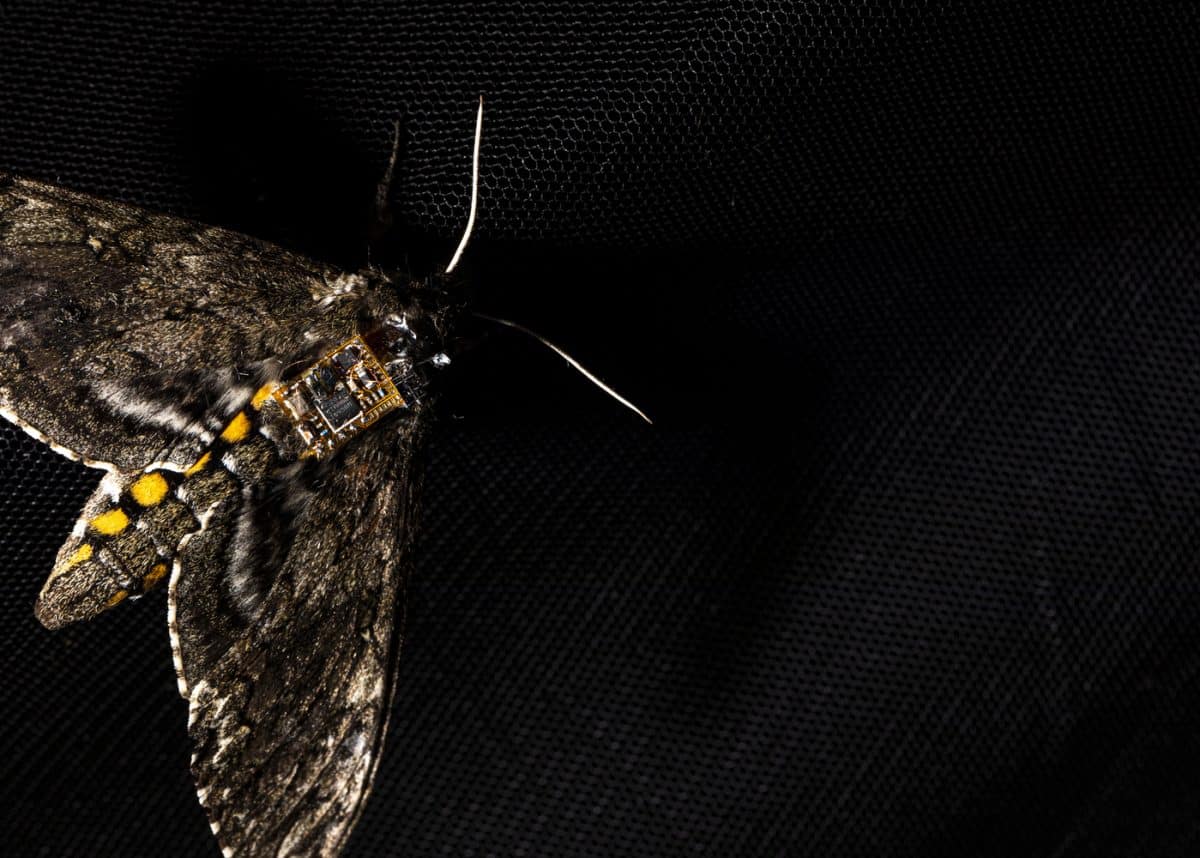
This sensor is so tiny it can be carried by a moth. Photo credit: Mark Stone/University of Washington

This sensor is so tiny it can be carried by a moth. Photo credit: Mark Stone/University of Washington

There are many places in this world that are hard for scientists to study, mainly because it’s too dangerous for people to get there.

Now researchers at the University of Washington in the US have created one potential solution: A sensor system weighing only 98 milligrams – about one-tenth the weight of a jellybean – that can ride aboard a small drone or an insect, such as a moth, until it gets to its destination.

Then, when a Bluetooth command is sent, the sensor is released from its perch and can fall up to 22 metres, which the about the height of a six-storey building, and land without breaking.


The sensor system shown here on top of a US penny coin. Photo credit: Iyer et al./MobiCom 2020

Inspired by military air drops

Once on the ground it collects data, such as temperature or humidity, for almost three years.

“We have seen examples of how the military drops food and essential supplies from helicopters in disaster zones,” said Shyam Gollakota, an Associate Professor at the University.

“We were inspired by this and asked the question: Can we use a similar method to map out conditions in regions that are too small or too dangerous for a person to go to?”

This is groundbreaking research

He added: “This is the first time anyone has shown that sensors can be released from tiny drones or insects such as moths, which can traverse through narrow spaces better than any [normal] drone and sustain much longer flights.”


AlsoRead...

Brandon Willington: The Marketing Entrepreneur turning heads across Australia

Brandon Willington: The Marketing Entrepreneur Turning Heads Across Australia

8 January 2026
How Turnkey Building Group Is Restoring Trust In An Industry Known For Customer Disappointment

How Turnkey Building Group Is Restoring Trust In An Industry Known For Customer Disappointment

17 December 2025

While industrial-sized drones use grippers to carry their payloads, in this case the sensor is held on the drone or insect using a magnetic pin surrounded by a thin coil of wire.

To release it, a researcher on the ground sends a wireless command that creates a current through the coil to generate a magnetic field. This makes the magnetic pin pop out of place and sends the sensor on its way to earth.

The sensor system can also be carried by a small drone. Photo credit: Mark Stone/University of Washington

Sensor will slowly fall to earth

This tiny piece of technology was designed with its battery, the heaviest part, in one corner. As the sensor falls it begins rotating around the battery, generating additional drag force and slowing its descent.

That, combined with the sensor’s low weight, keeps its maximum fall speed at a relatively low 18km/h and allows it to hit the ground safely.

The researcher team envision using this system to create a sensor network within any area that requires study. Among the next steps is to replace the battery with a solar cell.


Tags: dronesResearchsciencetechnologyUnited States
DMCA.com Protection Status

SUBSCRIBE to our NEWSLETTER

[mc4wp_form id=”2384248″]

Don't Miss

Lyca Mobile Australia’s Customer-First Overhaul Pays Off with Finder Award Win

by Fazila Olla-Logday
2 February 2026
Lyca Mobile Australia's Customer-First Overhaul Pays Off with Finder Award Win
Technology

Lyca Mobile Australia’s customer-first overhaul has earned a Finder Award, recognising its improved value, service, and stronger focus on Australian...

Read moreDetails

From Driveway to Dream Court: The Rise of High-Performance Hoops at Home in 2026

by Fazila Olla-Logday
20 January 2026
The Rise of High-Performance Hoops at Home in 2026
Sport

High-performance home basketball hoops are gaining momentum in 2026, as more homeowners invest in durable, professional-grade systems that combine advanced...

Read moreDetails

Brandon Willington: The Marketing Entrepreneur Turning Heads Across Australia

by Pauline Torongo
8 January 2026
Brandon Willington: The Marketing Entrepreneur turning heads across Australia
Business & Finance

Brandon Willington, founder of “Where U?” is changing the narrative for Australian businesses tired of inconsistent leads and empty promises.

Read moreDetails

How Turnkey Building Group Is Restoring Trust In An Industry Known For Customer Disappointment

by Fazila Olla-Logday
17 December 2025
How Turnkey Building Group Is Restoring Trust In An Industry Known For Customer Disappointment
Business & Finance

Turnkey Building Group is changing the narrative in an industry often associated with missed deadlines and broken promises. By prioritizing...

Read moreDetails

Risk Awareness for International Travellers – What Australians Should Know Before Entering Multi-State Regions

by Fazila Olla-Logday
10 December 2025
Schengen
Travel

This guide helps Australian travellers understand cross-border requirements, assess political and environmental risks, manage health and safety considerations, and prepare...

Read moreDetails

The evolution of Aesthetic Surgery through the lens of Dr Kourosh Tavakoli

by Pauline Torongo
4 December 2025
The evolution of Aesthetic Surgery through the lens of Dr. Kourosh Tavakoli
Health & Wellness

As global interest in Australian cosmetic surgery continues to grow, the combination of regulation, research and emerging digital tools is...

Read moreDetails

Ryan: Building real freedom through e-commerce

by Pauline Torongo
27 November 2025
Ryan: Building real freedom through e-commerce
Business & Finance

Ryan’s greatest achievement isn’t any single business or revenue milestone — it’s the ecosystem he’s built through the Change community.

Read moreDetails
Load More

Copyright © Blue Sky Publications Ltd. All Rights Reserved.
australiantimes.co.uk is a division of Blue Sky Publications Ltd. Reproduction without permission prohibited. DMCA.com Protection Status

  • About us
  • Write for Us
  • Advertise
  • Contact us
  • T&Cs, Privacy and GDPR
No Result
View All Result
  • News
    • Weather
    • Sport
    • Technology
    • Business & Finance
      • Currency Zone
    • Lotto Results
      • The Lott
  • Lifestyle
    • Entertainment
    • Horoscopes
    • Health & Wellness
    • Recipes
  • Travel
  • Expat Life
  • Move to Australia

Copyright © Blue Sky Publications Ltd. All Rights Reserved.
australiantimes.co.uk is a division of Blue Sky Publications Ltd. Reproduction without permission prohibited. DMCA.com Protection Status

No Result
View All Result
  • News
    • Weather
    • Sport
    • Technology
    • Business & Finance
      • Currency Zone
    • Lotto Results
      • The Lott
  • Lifestyle
    • Entertainment
    • Horoscopes
    • Health & Wellness
    • Recipes
  • Travel
  • Expat Life
  • Move to Australia

Copyright © Blue Sky Publications Ltd. All Rights Reserved.
australiantimes.co.uk is a division of Blue Sky Publications Ltd. Reproduction without permission prohibited. DMCA.com Protection Status





