

• Advertise
  • About us
  • Terms and Conditions
  • Contact us
Friday, December 5, 2025
Australian Times News
  • News
    • Weather
    • Sport
    • Technology
    • Business & Finance
      • Currency Zone
    • Lotto Results
      • The Lott
  • Lifestyle
    • Entertainment
    • Horoscopes
    • Health & Wellness
    • Recipes
  • Travel
  • Expat Life
  • Move to Australia
No Result
View All Result
  • News
    • Weather
    • Sport
    • Technology
    • Business & Finance
      • Currency Zone
    • Lotto Results
      • The Lott
  • Lifestyle
    • Entertainment
    • Horoscopes
    • Health & Wellness
    • Recipes
  • Travel
  • Expat Life
  • Move to Australia
No Result
View All Result
Australian Times News
No Result
View All Result
Home News

Scientists look to give Australia’s busy bees a helping hand

Wilbee the Bumble Bee is in trouble. Aussie researchers are trying to help by creating an early warning system for beekeepers.

Mike Simpson by Mike Simpson
11-08-2021 03:00
in News
Image by Thomas Völcker from Pixabay

Image by Thomas Völcker from Pixabay

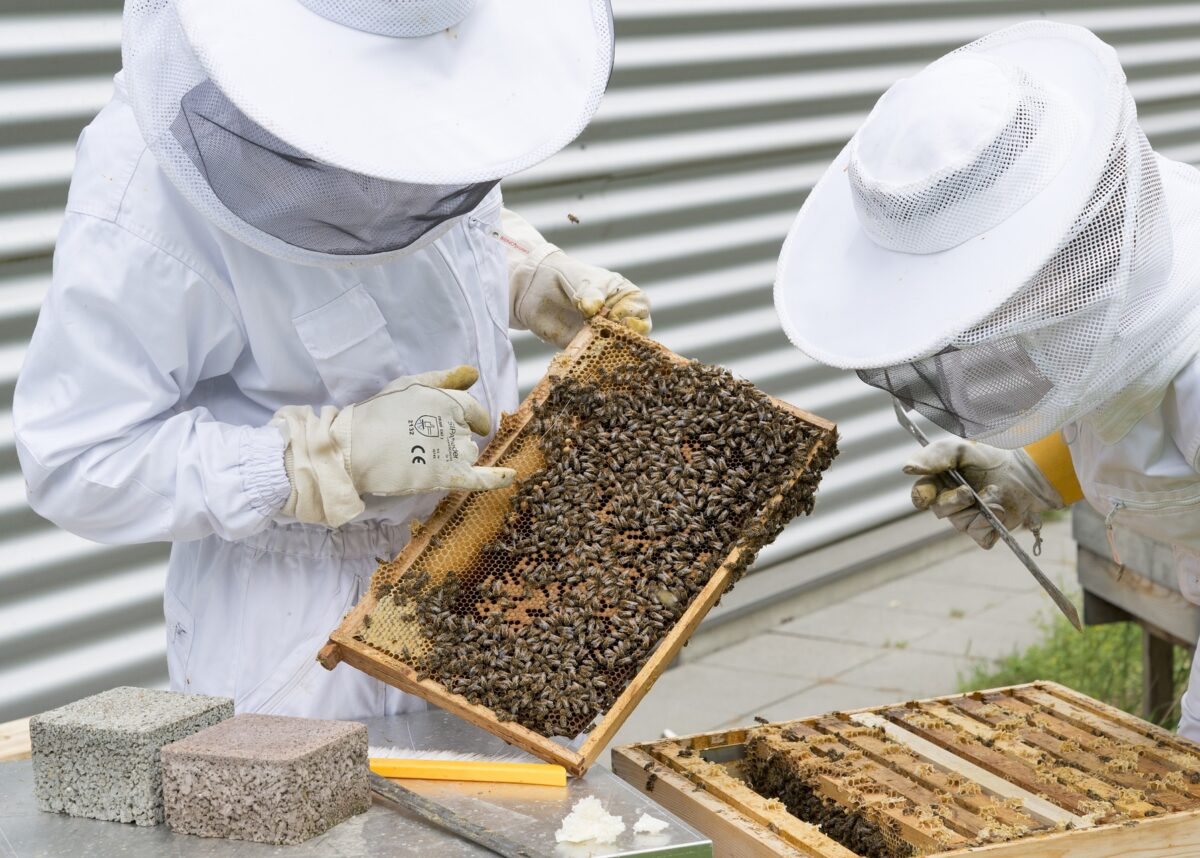
In a two-year pilot program, scientists from Macquarie University in Sydney are to test whether high-precision electronic sensors can monitor hive temperatures and alert beekeepers when precious bee colonies are in danger.

The new project aims to support Australia’s dwindling honeybee population with automated early-warning systems for when hives are at risk.

Philanthropic organisation, the Lord Mayor’s Charitable Foundation, has awarded a $300,000 grant for the research. It is hoped the sensors in the hives will be capable of alerting beekeepers to fluctuations in temperature which may indicate a decline in hive health.

Project lead, Professor Andrew Barron, said a robust early-warning signal that a hive is starting to struggle will give beekeepers the opportunity to intervene before it’s too late.

“The hope is that we’ll find an easy-to-measure signal that reliably tells us when a colony is in trouble at the earliest possible point, so we can direct beekeepers’ efforts to where they’ll make the greatest impact for the greatest benefit,” he explained.

Few indicators that a hive is at risk

Monitoring bee health is difficult as there are very few indicators that a hive is at risk until it’s too late to salvage. However, it is hoped that monitoring temperature through these inexpensive remote sensors could provide vital early red flags.

When a colony is healthy, bees maintain the hive temperature at 35°C – the ideal temperature for them and their larvae. But when colonies are struggling, temperature regulation – which bees manage through activities like fanning water droplets throughout the hive – becomes difficult.


AlsoRead...

Ryan: Building real freedom through e-commerce

Ryan: Building real freedom through e-commerce

27 November 2025
Design Australia Group: Redefining Drafting as the engine of housing growth

Design Australia Group: Redefining Drafting as the engine of housing growth

26 November 2025

Australia’s bees are already under stress. About a third of food crops depend on bee pollination, but there is a shortfall in the number of bees meeting demand. For example, 65 percent of all bees in NSW are used for almond pollination alone – meaning that supply is short for other major crops including canola, carrot, apple, cherries and berries.

AgriFutures Australia estimates bee pollination to be worth $4-6- billion to the economy at current levels, with that number expected to grow as demand continues to increase.

On top of this shortfall, factors such as pesticides, disease and climate change are impacting bee numbers.

NSW bushfires devastated many hives

For example, the 2019-20 bushfires in NSW had a devastating impact on the state’s 250,000 hives – 10,000 were incinerated while another 90,000 lost their bee population due to the common response of bees abandoning a hive if fire or smoke is approaching.

“Beekeepers are really good and skilful at intervening and strengthening colonies, and giving them what they need to be healthy,” said Professor Barron.

“What we’ve realised, though, is that when a honeybee colony is under a lot of stress, it can actually look like it’s doing okay until it’s pushed right to the edge of collapse.

“If we can identify when a hive is in trouble early enough, we’ve got more options to have a beekeeper intervene and rescue that colony.”

The project is set to begin in November and will run until October 2023.

Tags: Australian scientistsBeesenvironmentScientific research
DMCA.com Protection Status

SUBSCRIBE to our NEWSLETTER

[mc4wp_form id=”2384248″]

Don't Miss

The evolution of Aesthetic Surgery through the lens of Dr Kourosh Tavakoli

by Pauline Torongo
4 December 2025
The evolution of Aesthetic Surgery through the lens of Dr. Kourosh Tavakoli
Health & Wellness

As global interest in Australian cosmetic surgery continues to grow, the combination of regulation, research and emerging digital tools is...

Read moreDetails

Ryan: Building real freedom through e-commerce

by Pauline Torongo
27 November 2025
Ryan: Building real freedom through e-commerce
Business & Finance

Ryan’s greatest achievement isn’t any single business or revenue milestone — it’s the ecosystem he’s built through the Change community.

Read moreDetails

Design Australia Group: Redefining Drafting as the engine of housing growth

by Pauline Torongo
26 November 2025
Design Australia Group: Redefining Drafting as the engine of housing growth
Business & Finance

Australia is under pressure to build homes faster, but design bottlenecks slow progress. Design Australia Group is fixing this by...

Read moreDetails

Louis Guy Detata builds Global Trading Empires through autonomous systems and disciplined leadership

by Pauline Torongo
25 November 2025
Louis Guy Detata builds Global Trading Empires through autonomous systems and disciplined leadership
Business & Finance

The path from investment banking to leading a global trading platform has taught Louis Detata that sustainable success requires more...

Read moreDetails

Burning Eucalyptus Wood: Tips, Advantages, Disadvantages & Alternatives

by Fazila Olla-Logday
20 November 2025
Image Supplied
Enviroment

Learn about burning eucalyptus wood for stoves and fireplaces. Discover benefits, drawbacks, harvesting tips, and better alternative firewood options for...

Read moreDetails

Everything Parents Need to Know About Baby Soft Play and Why It’s a Game Changer

by Fazila Olla-Logday
11 November 2025
Everything Parents Need to Know About Baby Soft Play
Health & Wellness

Baby soft play is a fun, safe, and educational way for little ones to explore and grow. Discover the benefits...

Read moreDetails

WOMAD Sets Up a New Camp in Wiltshire – Australian festival fans take note!

by Kris Griffiths
11 November 2025
Kumbia Boruka brought their reggae and dancehall flavour to the Taste the World Stage at WOMAD 2024 - Credit - Mike Massaro
Entertainment

With its 2026 edition moving to Neston Park in England, WOMAD offers Aussie music lovers a chance to reconnect with global...

Read moreDetails
Load More

Copyright © Blue Sky Publications Ltd. All Rights Reserved.
australiantimes.co.uk is a division of Blue Sky Publications Ltd. Reproduction without permission prohibited. DMCA.com Protection Status

  • About us
  • Write for Us
  • Advertise
  • Contact us
  • T&Cs, Privacy and GDPR
No Result
View All Result
  • News
    • Weather
    • Sport
    • Technology
    • Business & Finance
      • Currency Zone
    • Lotto Results
      • The Lott
  • Lifestyle
    • Entertainment
    • Horoscopes
    • Health & Wellness
    • Recipes
  • Travel
  • Expat Life
  • Move to Australia

Copyright © Blue Sky Publications Ltd. All Rights Reserved.
australiantimes.co.uk is a division of Blue Sky Publications Ltd. Reproduction without permission prohibited. DMCA.com Protection Status

No Result
View All Result
  • News
    • Weather
    • Sport
    • Technology
    • Business & Finance
      • Currency Zone
    • Lotto Results
      • The Lott
  • Lifestyle
    • Entertainment
    • Horoscopes
    • Health & Wellness
    • Recipes
  • Travel
  • Expat Life
  • Move to Australia

Copyright © Blue Sky Publications Ltd. All Rights Reserved.
australiantimes.co.uk is a division of Blue Sky Publications Ltd. Reproduction without permission prohibited. DMCA.com Protection Status






