



Author: Thomas Hancocks, Lecturer/ Consultant in Applied Ethics, University of Leeds
As we head into the colder months, the increased threat of a second spike in the pandemic has forced the UK government to reintroduce new restrictive measures, including targeted local lockdowns, new rules (“of six”) and early pub closures. At the same time, compliance is fraying.
One of the deeper issues with the government restrictions, which has less often been discussed, is a moral one. It concerns the level of control we grant to the government over our individual healthcare decisions.
Understanding this dimension helps to explain why many people around the world are disobeying restrictions. Recent UK data indicates that of those who reported having COVID-19 symptoms in the last seven days, only 18.2% said they were following the self-isolation requirements. While there are a number of reasons for this growing reluctance to obey, the one I want to highlight here is the moral dimension.
The basic question is this: is it acceptable for the state to take control of our healthcare decisions in order to protect us?
There are two sides to the argument. The case against increased state control appeals to the value of individual autonomy over health choices. The case in favour appeals to the importance of paternalism and harm prevention. These values sit at opposite ends of a moral and legal spectrum. Our view on government restrictions is shaped by how we, as individuals, weigh up the relative importance of these two competing principles.
Autonomy and the right to choose risk
Jonathan Sumption, former Supreme Court justice, recently came down firmly on the pro-autonomy side of the issue. “What I’m advocating now,” he told the BBC, “is that the lockdown should become entirely voluntary. It is up to us, not the state, to decide what risks we are going to take with our own bodies.”


In ordinary circumstances, choices over our health are fundamentally ours to make. We choose whether to smoke or drink heavily, whether to exercise, whether to eat junk food, take drugs or use contraception. Governments provide education, advice and guidance on risks, and in some cases use taxes and nudges to attach incentives or disincentives to certain decisions. Yet, ultimately, the government grants us autonomy over these healthcare choices.
The coronavirus restrictions represent a significant transition away from this. Sanctions are now imposed if we choose not to wear a mask, meet too many people at the park, have a party at our house or stand too close to people.
In this respect, the coronavirus restrictions are fundamentally opposed to a contemporary system of law, ethics and policy around healthcare based on protecting autonomy and free choice. This system was birthed after the second world war, with the introduction of the Nuremburg Code. That code, which was a response to the horrors of the medical trials that took place under the Third Reich, placed informed consent as the central principle in medical treatment.
Paternalism and harm prevention
Of course, certain features of the coronavirus threat make it much more difficult to grant full autonomy over healthcare choices. Unlike other ubiquitous viruses, there are a number of unknowns around coronavirus. There is also a very low level of immunity.
The ethical argument that challenges autonomy and supports government restrictions has two aspects. The first is paternalism. In government policy terms, paternalism is when governments impose restrictions on our free action in order to protect us. Many paternalistic interventions are so embedded that we forget they exist. Examples include the legal requirement to wear seatbelts or to wear a helmet on a motorbike.
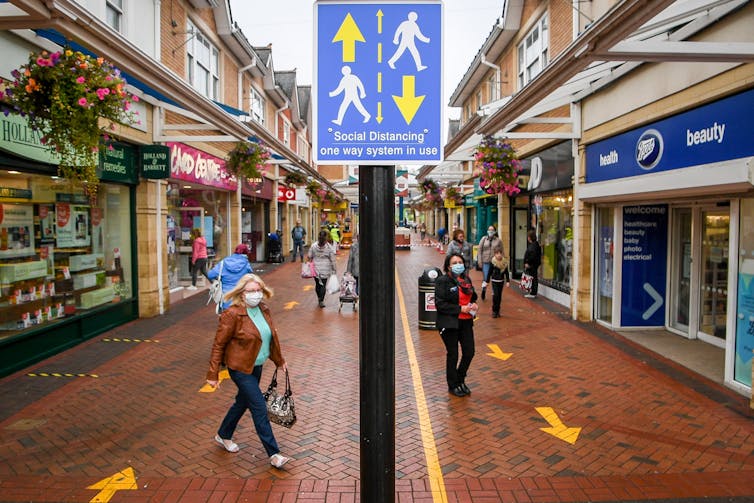
These are paternalistic policies – they bypass our free choice in order to serve our best interests. The same holds of many of the coronavirus restrictions, such as pub closures or bans on social gatherings.
The other aspect to the government intervention is the protection of others. Coronavirus is, of course, highly contagious, and poses a risk not only to us as individuals but to the wider community as well, particularly those who are vulnerable.
Yet, as we are seeing, bringing in too many paternalistic and community-protecting restrictions risks a backlash. Not everyone is subject to the same risks, so blanket paternalistic measures disproportionately affect the lives of those who really face little risk. It is well known, for example, that the young are at less risk than the old from COVID-19. This is particularly problematic if you factor in the further hidden risks posed to children by missing substantial parts of their education. Not to mention the risks to mental health and physical health that come from intense lockdown measures.
Our relationship with the state has shifted with the coronavirus restrictions. We now live in times where choices that were once entirely our own have been taken on by the government, with sanctions if we disobey. The right to make personal health decisions and decisions about risk, which has been central to our modern system of medical ethics, policy and law, has been curtailed.
For many, the threats posed by coronavirus justify this change. But if that right is curtailed for a prolonged period, there are problematic implications. It may, for example, signal a period of change to our system of civil liberties. We are already seeing this to an extent with the new legislation which increases police powers and limits rights to free movement and data control. We must be careful that these changes are temporary and not entrenched.
The government needs to strike the right balance between autonomy and harm prevention when deciding on coronavirus restrictions – to effectively combat the disease, but also to avoid the disobedience that naturally results when individual rights to autonomous choice are curtailed.







