

• Advertise
  • About us
  • Terms and Conditions
  • Contact us
Friday, December 5, 2025
Australian Times News
  • News
    • Weather
    • Sport
    • Technology
    • Business & Finance
      • Currency Zone
    • Lotto Results
      • The Lott
  • Lifestyle
    • Entertainment
    • Horoscopes
    • Health & Wellness
    • Recipes
  • Travel
  • Expat Life
  • Move to Australia
No Result
View All Result
  • News
    • Weather
    • Sport
    • Technology
    • Business & Finance
      • Currency Zone
    • Lotto Results
      • The Lott
  • Lifestyle
    • Entertainment
    • Horoscopes
    • Health & Wellness
    • Recipes
  • Travel
  • Expat Life
  • Move to Australia
No Result
View All Result
Australian Times News
No Result
View All Result
Home News

Current food production systems could mean more habitat loss

What we eat and how it is produced must change rapidly to prevent widespread biodiversity losses, UK-led scientists warn.

Mike Simpson by Mike Simpson
23-12-2020 03:00
in News
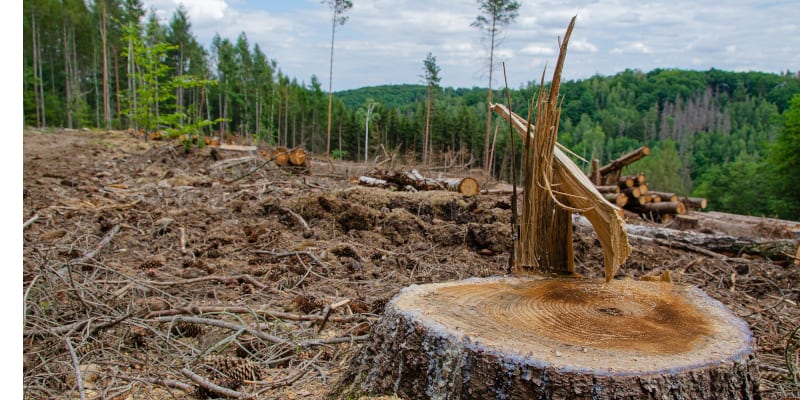
Picture credit: Katharina N from Pixabay

Picture credit: Katharina N from Pixabay

The global food system could drive rapid and widespread biodiversity loss if not changed, new research out of the United Kingdom has found.

Findings published in the journal Nature Sustainability show that the world’s food system will need to be transformed to prevent habitat loss across the globe.

The international research team, led by the University of Leeds and the University of Oxford, found that what we eat and how it is produced will need to change rapidly and dramatically to prevent widespread and severe biodiversity losses.

Thousands of species are at risk

Dr David Williams, from Leeds’ School of Earth and Environment, and the Sustainability Research Institute, is a lead author of the paper.

“We estimated how agricultural expansion to feed an increasingly wealthy global population is likely to affect about 20,000 species of mammals, birds, and amphibians,” Dr Williams said.

“Our research suggests that without big changes to food systems, millions of square kilometres of natural habitats could be lost by 2050.

“Nearly 1,300 species are likely to lose at least a quarter of their remaining habitat, and hundreds could lose at least half. This makes them far more likely to go extinct.”


AlsoRead...

Ryan: Building real freedom through e-commerce

Ryan: Building real freedom through e-commerce

27 November 2025
Design Australia Group: Redefining Drafting as the engine of housing growth

Design Australia Group: Redefining Drafting as the engine of housing growth

26 November 2025

Alter diets and production methods

According to Dr Williams, humans need to change what we eat and how it is produced if we are going to save wildlife on a global scale. We need to alter both our diets and food production methods.

The study estimated how food systems would affect biodiversity at a finer land scale than previous research (2.25 square km), making the results more relevant to conservation action by highlighting exactly which species and landscapes are likely to be threatened.

It did so by linking projections of how much agricultural land each country will need with a new model that estimates where agricultural expansion and abandonment are most likely to occur.

By looking at whether individual animal species can survive in farmland or not, the researchers could then estimate changes in habitat, finding that losses were particularly severe in sub-Saharan Africa and in parts of Central and South America.

Many species not on endangered list

Many of the species that are likely to be most affected are not listed as threatened with extinction, and so are unlikely to be currently targeted by conservationists.

Dr Michael Clark, from Oxford Martin School and Nuffield Department of Population Health, University of Oxford, is also a lead author on the paper.

 “As international biodiversity targets are set to be updated in 2021, these results highlight the importance of proactive efforts to safeguard biodiversity by reducing demand for agricultural land,” he said.

“Discussions on slowing and reversing biodiversity often focus on conventional conservation actions, such as establishing new protected areas or species-specific legislation for threatened species. These are absolutely needed, and have been effective at conserving biodiversity.”

But habitat losses can be prevented

Dr Clark said the research emphasises the importance of also reducing the ultimate stresses to biodiversity – such as agricultural expansion.

“The good news is that if we make ambitious changes to the food system, then we can prevent almost all these habitat losses.”

The study examined the potential impact of making these ambitious changes, modelling whether transitions to healthy diets, reductions in food loss and waste, increases in crop yields, and international land-use planning could reduce future biodiversity losses.

This approach enables policy makers and conservationist to identify which changes are likely to have the largest benefit in their country or region.

No one solution will fit all regions

For example, raising agricultural yields would likely bring huge benefits to biodiversity in Sub-Saharan Africa, but do very little in North America where yields are already high.

In contrast, shifting to healthier diets would have big benefits in North America, but is less likely to have a large benefit in regions where meat consumption is low and food insecurity is high.

Dr Clark added: “Importantly, we need to do all of these things. No one approach is sufficient on its own.

“But, with global coordination and rapid action, it should be possible to provide healthy diets for the global population in 2050 without major habitat losses.”


Tags: agricultureFood productionResearchScientific research
DMCA.com Protection Status

SUBSCRIBE to our NEWSLETTER

[mc4wp_form id=”2384248″]

Don't Miss

The evolution of Aesthetic Surgery through the lens of Dr Kourosh Tavakoli

by Pauline Torongo
4 December 2025
The evolution of Aesthetic Surgery through the lens of Dr. Kourosh Tavakoli
Health & Wellness

As global interest in Australian cosmetic surgery continues to grow, the combination of regulation, research and emerging digital tools is...

Read moreDetails

Ryan: Building real freedom through e-commerce

by Pauline Torongo
27 November 2025
Ryan: Building real freedom through e-commerce
Business & Finance

Ryan’s greatest achievement isn’t any single business or revenue milestone — it’s the ecosystem he’s built through the Change community.

Read moreDetails

Design Australia Group: Redefining Drafting as the engine of housing growth

by Pauline Torongo
26 November 2025
Design Australia Group: Redefining Drafting as the engine of housing growth
Business & Finance

Australia is under pressure to build homes faster, but design bottlenecks slow progress. Design Australia Group is fixing this by...

Read moreDetails

Louis Guy Detata builds Global Trading Empires through autonomous systems and disciplined leadership

by Pauline Torongo
25 November 2025
Louis Guy Detata builds Global Trading Empires through autonomous systems and disciplined leadership
Business & Finance

The path from investment banking to leading a global trading platform has taught Louis Detata that sustainable success requires more...

Read moreDetails

Burning Eucalyptus Wood: Tips, Advantages, Disadvantages & Alternatives

by Fazila Olla-Logday
20 November 2025
Image Supplied
Enviroment

Learn about burning eucalyptus wood for stoves and fireplaces. Discover benefits, drawbacks, harvesting tips, and better alternative firewood options for...

Read moreDetails

Everything Parents Need to Know About Baby Soft Play and Why It’s a Game Changer

by Fazila Olla-Logday
11 November 2025
Everything Parents Need to Know About Baby Soft Play
Health & Wellness

Baby soft play is a fun, safe, and educational way for little ones to explore and grow. Discover the benefits...

Read moreDetails

WOMAD Sets Up a New Camp in Wiltshire – Australian festival fans take note!

by Kris Griffiths
11 November 2025
Kumbia Boruka brought their reggae and dancehall flavour to the Taste the World Stage at WOMAD 2024 - Credit - Mike Massaro
Entertainment

With its 2026 edition moving to Neston Park in England, WOMAD offers Aussie music lovers a chance to reconnect with global...

Read moreDetails
Load More

Copyright © Blue Sky Publications Ltd. All Rights Reserved.
australiantimes.co.uk is a division of Blue Sky Publications Ltd. Reproduction without permission prohibited. DMCA.com Protection Status

  • About us
  • Write for Us
  • Advertise
  • Contact us
  • T&Cs, Privacy and GDPR
No Result
View All Result
  • News
    • Weather
    • Sport
    • Technology
    • Business & Finance
      • Currency Zone
    • Lotto Results
      • The Lott
  • Lifestyle
    • Entertainment
    • Horoscopes
    • Health & Wellness
    • Recipes
  • Travel
  • Expat Life
  • Move to Australia

Copyright © Blue Sky Publications Ltd. All Rights Reserved.
australiantimes.co.uk is a division of Blue Sky Publications Ltd. Reproduction without permission prohibited. DMCA.com Protection Status

No Result
View All Result
  • News
    • Weather
    • Sport
    • Technology
    • Business & Finance
      • Currency Zone
    • Lotto Results
      • The Lott
  • Lifestyle
    • Entertainment
    • Horoscopes
    • Health & Wellness
    • Recipes
  • Travel
  • Expat Life
  • Move to Australia

Copyright © Blue Sky Publications Ltd. All Rights Reserved.
australiantimes.co.uk is a division of Blue Sky Publications Ltd. Reproduction without permission prohibited. DMCA.com Protection Status





