Helen Stalford, University of Liverpool; Aoife Daly, University College Cork, and Kerry Barry, University of Liverpool
The UK has become the latest country to offer COVID-19 vaccines to all children aged 12 to 15, following many others including France, Germany, the US, Canada and Japan.
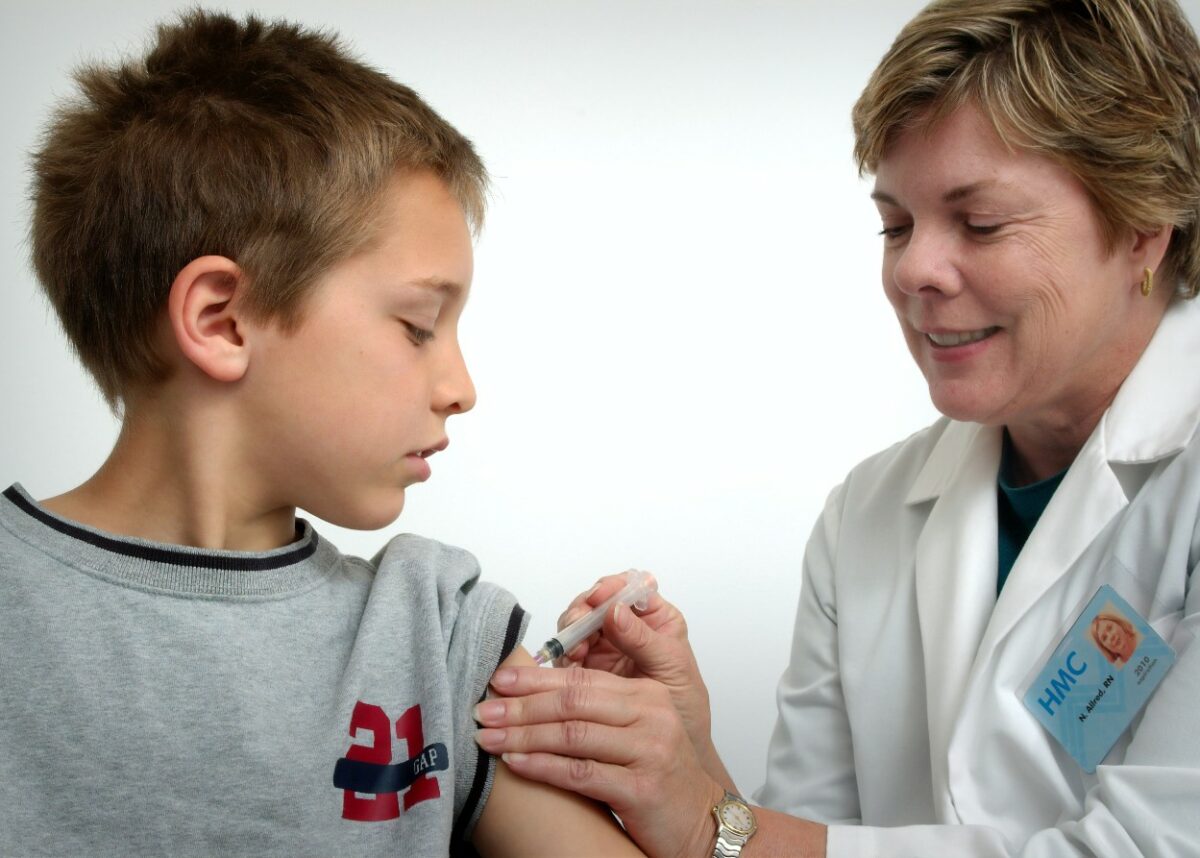
The UK government has said that parental consent will be sought for vaccinations, but that children can consent themselves (without parents) if deemed competent.
This has drawn heated debate. But the law on consent to medical treatment for under-16s is actually well established. Medical practitioners are authorised to assess a child’s competence to understand a treatment and consent to it, then to administer that treatment. This can take place even without the parents’ knowledge, provided that it is in the child’s best interests, and the children are what is known as “Gillick-competent”.
This refers to the 1985 Gillick legal case, which concerned a government circular sent to general practitioners clarifying that they were allowed to provide contraception to girls under 16 in certain circumstances (until then, it had been unclear whether they could).
A mother, who took exception to doctors having this power, took up a test case challenging it. In response, the highest court in the UK – then the House of Lords – clarified that children under 16 can consent on their own behalf to medical treatment where they are deemed to have, as the ruling put it, “sufficient understanding and intelligence” to do so.
This standard, which has been influential in common law countries around the world, was recently upheld in the Court of Appeal, which overturned a judgement preventing under-16s who were considering gender reassignment from consenting to the use of puberty-blocking drugs.


Assessing competence
Medical professionals receive training about how to ascertain whether someone has competence to consent. From a legal point of view, the Mental Capacity Act 2005 requires that, to be capable of making a decision, an individual must be able to understand information but also retain, use and weigh it, and communicate a decision. It is harder to pin down a definition of competence, but research shows that practitioners daily assess children’s competence to consent without issue.
However, professionals are sometimes hesitant to apply the Gillick approach for vaccinations. For example, existing NHS guidance already allows for the possibility for Gillick-competent children to give their own consent to HPV vaccination.
This is currently offered to boys and girls from school year 8 onwards, which is ages 12-13. Yet our research at the European Children’s Rights Unit, has shown that, in practice, nurses are reluctant to facilitate children giving their own consent for fear of complaints from parents.
Best interests
There is also evidence of the benefits of the Gillick approach. A strong body of research has found that, in many cases, upholding the wishes of children about their own medical treatment is part and parcel of acting in their best interests.
In cases relating to other vaccinations (for example, MMR) courts have overwhelmingly held that vaccinations are in children’s best interests. In a 2020 case the High Court indicated that once approved, courts would likely consider COVID vaccination to be in a child’s best interests.
Our experience with training nurses administering HPV vaccinations has shown that failure to uphold the Gillick approach has a serious impact both on the efficiency of their service and on the health of young people. Countless hours and valuable staff resources are spent chasing parents for consent, issuing new consent forms and information by post, or deferring vaccination to the following year.
The latest NICE data, reveals that thousands of teenage children remain unvaccinated and at heightened risk of HPV infection.
Children’s rights
UK courts have recoginsed that children’s rights and wishes must be considered when decisions are being made about them. This reflects legal obligations by which the UK has agreed to be bound, notably the UN Convention on the Rights of the Child. This enshrines a child’s right to have a say in all decisions that affect them (Article 12), to have decisions taken in their best interests (Article 3) and to the highest attainable standard of health (Article 24).
These obligations, along with the Gillick ruling, emphasise that children are not the property of their parents. Parental power exists to enable parents to guard and nurture children in exercising their rights until such time as they can exercise them for themselves.
It is also crucial to remember that adults and children are not so different when it comes to medical decision-making. Research shows that many adults do not understand the medical treatment they are agreeing to – they require information and support to understand medical matters.
Nurturing children’s competence to make decisions about their own health requires proper, child-focused education and information about the personal and public health benefits of vaccination and, of course, the potential risks.
The policy to support children’s ability to consent themselves to getting a COVID vaccination should focus less on trying to find a magic formula for assessing capacity, and more on how we, as adults, parents and practitioners can create the conditions for children to exercise an informed choice. This must start with developing and delivering appropriate, child-friendly information.
For too long, vaccinations have been one area in which children are viewed as the passive objects of interventions rather than as agents of their own bodies. Their capacity to be active contributors to public health protection must be upheld.
Helen Stalford, Professor of Law, University of Liverpool; Aoife Daly, Lecturer in Law, University College Cork, and Kerry Barry, Derby Fellow (Law), University of Liverpool
This article is republished from The Conversation under a Creative Commons license. Read the original article.