Medical Disclaimer:
This article is for informational purposes only and does not constitute medical advice. Readers should consult a qualified healthcare professional before making decisions related to medical or surgical procedures.
Australia’s cosmetic surgery sector has entered a new phase of visibility in recent years, driven by rising demand at home and an unexpected surge in medical tourism. According to data referenced by the Medical Board of Australia and AHPRA’s 2024–2025 regulatory reports, inquiries from international patients increased noticeably after new national guidelines tightened qualifications for practitioners. These rules created a safer environment for individuals seeking cosmetic procedures and positioned Australia as a destination where oversight, technique and patient protection stand at the forefront. Breast surgery, revision procedures and minimally invasive techniques have been among the most requested categories, especially among patients travelling from Southeast Asia, the Middle East and the United Kingdom.
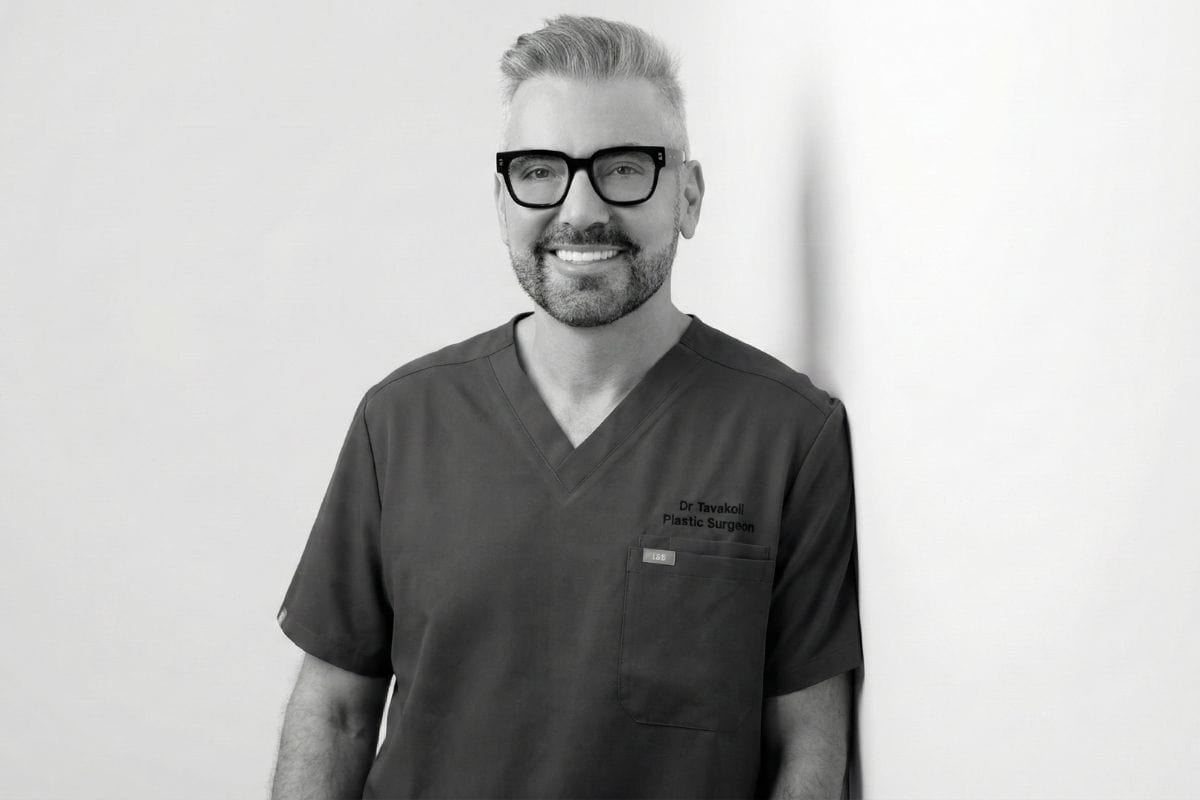
Within this context, Dr Kourosh Tavakoli continues to be a prominent voice in Sydney’s specialist landscape. The year 2025 marked an important milestone for his practice. He celebrated twenty-one years in the field, renovated his clinic with a more contemporary design, and participated in academic activity through twelve presentations and master classes in Dubai and Sydney. His research presence grew as well, with three papers accepted for publication in the Plastic and Reconstructive Surgery Journal. These publications covered inframammary fold management, the application of Tiloop mesh in revision surgery and a refined method for correcting inverted nipples using autologous adipofascial grafts.
These achievements reflect broader scientific momentum within the speciality. Globally, surgeons have reported strong movement toward more anatomically integrated results rather than pronounced augmentation. Dr Tavakoli notes that implant sizes have decreased as patients shift toward what many describe as the ballerina aesthetic. This style favours a lighter, more balanced shape that blends with natural body proportions. The trend has influenced how surgeons approach consultations, since the concept of a natural look is evolving and requires precise communication between patient and surgeon.
Alongside these aesthetic shifts, technology has become a central part of modern surgical planning. Artificial intelligence tools are gaining traction in clinics, and Dr Tavakoli has already integrated AI into his workflow. He uses digital systems during consultations, particularly in revision cases where there is a large amount of patient information, surgical history and visual documentation. These tools help him organise data more efficiently and deliver detailed explanations to patients. He explains that imaging software is improving but still lacks the consistency required for highly accurate surgical prediction. Even so, he believes AI-supported three-dimensional imaging will soon change the way surgeons plan procedures.
The area where new technology is generating the most interest is revision surgery. Here, AI can analyse variables that traditionally required deep manual assessment. Early machine learning models are being trained to study symmetry, implant characteristics and tissue behaviour. They can also assist in estimating appropriate implant sizes or predicting fat graft distribution. Dr Tavakoli emphasises that he still relies heavily on experience, intuition and introspective sizing, a method he adopted more than a decade ago. Still, he acknowledges that these new tools will eventually help surgeons reduce unnecessary reoperations and achieve more predictable outcomes.
Patient education is also entering a transformative phase. Many clinics in Australia are adding detailed digital imaging, three-dimensional scans and interactive simulations to their consultation process. Although these technologies continue to mature, they are helping patients form clearer expectations, ask better questions and gain a more realistic understanding of possible results. The shift reflects a broader cultural change. Patients today expect transparency regarding technique, recovery time, long-term maintenance and surgeon qualifications.


This rising expectation for clarity connects closely with Australia’s regulatory environment. In the past two years, AHPRA intensified its requirements for practitioners performing cosmetic procedures. The goal is to protect patients from misleading advertising, unregulated titles and an oversimplification of the risks involved. Dr Tavakoli explains that one of the biggest misconceptions in the market is the belief that cosmetic procedures carry minimal risk simply because they are popular. These are medical interventions that require specialised training, sterile facilities and informed consent. He supports stronger title protection and clearer disclosure of practitioner qualifications so that patients can make educated decisions.
Looking toward the next five years, the speciality appears to be moving toward a regenerative and preservation-focused philosophy. Techniques involving stem cell-rich fat grafting, bioactive scaffolds and new tissue engineering materials are becoming more refined. These methods aim to support long-term harmony rather than aggressive alteration. At the same time, AI-supported imaging and predictive modelling will give surgeons better tools for planning, measuring and anticipating outcomes. Dr. Tavakoli believes this will lead to less traumatic surgical approaches, shorter recoveries and increasingly individualised results that prioritise balance and longevity.
As global interest in Australian cosmetic surgery continues to grow, the combination of regulation, research and emerging digital tools is shaping a more informed era for patients. The direction is clear. The future of aesthetic surgery lies in precision, transparency, and a deeper understanding of the body’s natural structure, supported by technology but guided by human expertise.