• Advertise
  • About us
  • Terms and Conditions
  • Contact us
Saturday, September 26, 2026
Australian Times News
  • News
    • Weather
    • Sport
    • Technology
    • Business & Finance
      • Currency Zone
    • Lotto Results
      • The Lott
  • Lifestyle
    • Entertainment
    • Horoscopes
    • Health & Wellness
    • Recipes
  • Travel
  • Expat Life
  • Move to Australia
No Result
View All Result
  • News
    • Weather
    • Sport
    • Technology
    • Business & Finance
      • Currency Zone
    • Lotto Results
      • The Lott
  • Lifestyle
    • Entertainment
    • Horoscopes
    • Health & Wellness
    • Recipes
  • Travel
  • Expat Life
  • Move to Australia
No Result
View All Result
Australian Times News
No Result
View All Result
Home News

Mechanical forces in a beating heart affect its cells’ DNA, with implications for development and disease

Sometimes cells can forget what type of cell they are and stop functioning correctly. This commonly happens in cancer, in which mature cells lose aspects of their identity and become more susceptible to begin dividing uncontrollably.

The Conversation by The Conversation
23-12-2021 01:39
in News
Photo by Hush Naidoo Jade Photography on Unsplash

Photo by Hush Naidoo Jade Photography on Unsplash

Corey Neu, University of Colorado Boulder

Sometimes cells can forget what type of cell they are and stop functioning correctly. This commonly happens in cancer, in which mature cells lose aspects of their identity and become more susceptible to begin dividing uncontrollably.

Heart conditions like cardiomyopathy, a disease that makes it harder to pump blood, affect the shape and function of affected heart cells. These changes can also occur in the nucleus of the cell, which houses genetic material that tells a cell how to function.

Because certain changes to nuclear structure can be early warning signals for heart problems, monitoring for such changes could help clinicians diagnose and treat disease before it gets worse. Researchers know that certain changes in the physical forces exerted on heart cells, including from their own contraction, can lead the cells to lose their heart cell identity and function poorly. But exactly how these physical forces work to change heart cell identity was unclear.

In a new study my colleagues and I published in the journal Nature Biomedical Engineering, we found that mechanical forces can reorganize the genetic material inside the nucleus of heart cells and affect how they develop and function. Better understanding of how cells claim and maintain their identities may help advance treatments to repair heart damage from cardiovascular disease and create new prosthetic tissues.

Pushing cell development in another direction

Early in human development, the external pressures surrounding immature cells influence what type of cell they eventually become when they differentiate, or fully mature. These external forces also help maintain tissue health as people age.

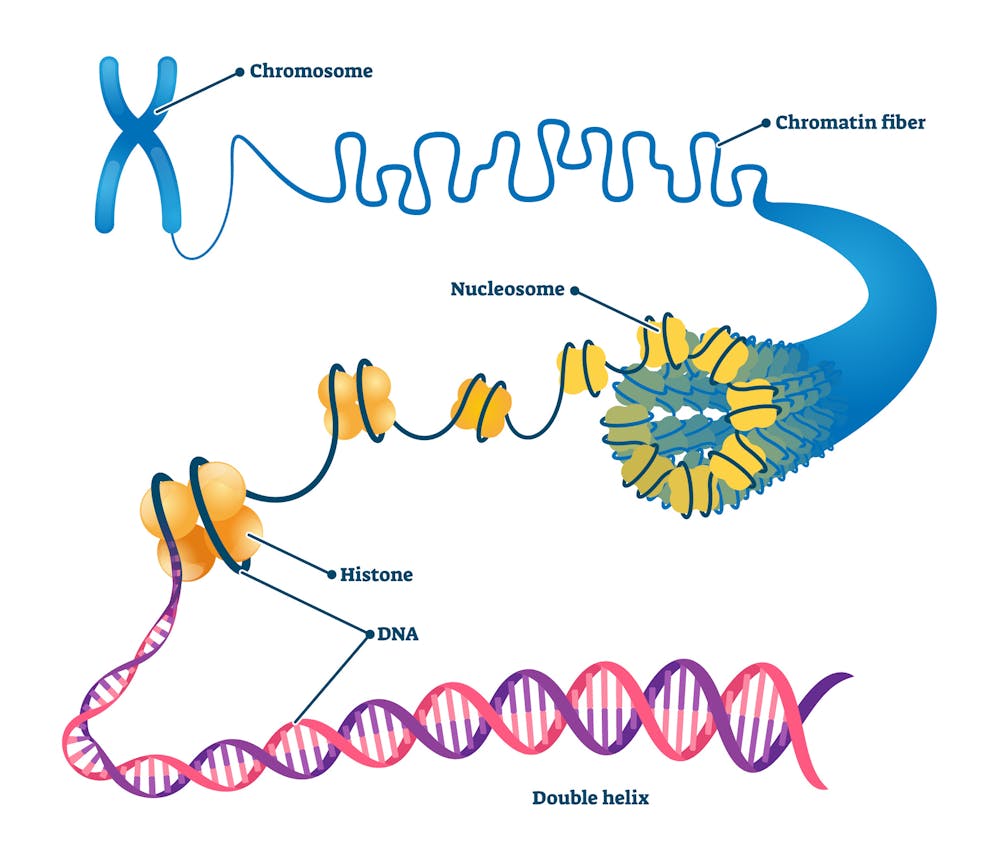
During differentiation, cells move around and restructure a mixture of proteins and DNA called chromatin that’s located in their nuclei. Cells use chromatin as a way to package and organize their genetic code. Knowing that external physical pressures can affect how cells mature, my research lab and I wanted to explore how mechanical forces can reorganize chromatin and what that might tell us about how heart cells develop and sometimes stop working.


AlsoRead...

How supporting Australia’s Care Workforce could strengthen care in the community

How supporting Australia’s Care Workforce could strengthen care in the community

10 September 2026
What HR Must Champion Next, According to Energy Collective Co

The Future of Work Is Changing: What HR must champion next, according to Energy Collective Co

28 August 2026
Diagram of chromosome unwinding to show chromatin, histones and DNA
Chromatin consists of DNA tightly coiled around proteins called histones. VectorMine/iStock via Getty Images Plus

To do this, we looked at adult heart cells as they contracted under a microscope to see how their nuclei change shape. We then compared these images with the nuclei of embryonic heart cells as they normally change during early development. We found that areas in the nucleus with high tension tended to organize chromatin into specific shapes known to influence cell behavior. When we changed the tension in those areas of the nucleus, we were able to prevent cells from developing into normal heart cells. This meant that tension may play a key role in guiding heart cells on how to develop.

We then examined how mechanical stress changed the chromatin structure of heart cells from patients with cardiovascular disease and mice with reduced heart performance. Compared with healthy cells, heart cells from both patients and mice lost their chromatin organization and identity as heart cells. This meant that mechanical tension could influence how well mature cells function and their likelihood of developing into cardiovascular disease.

Mechanical forces matter in medicine

While our study explores the role that chromatic reorganization plays in early development, additional research is needed to understand exactly what triggers cells to develop into specific cell types. Further insight into how the mechanical environment surrounding a cell affects how it matures will help researchers better understand the process of human development.

[Over 140,000 readers rely on The Conversation’s newsletters to understand the world. Sign up today.]

Understanding what triggers a collection of cells to transition to a fully functional organ may also help researchers learn how to mimic these developmental processes and create new prosthetic devices. For example, accounting for the mechanical forces that affect how well tissue grafts for failing hearts and muscles work may help biomedical engineers design even more effective artificial implants. It may also set the stage for more organ-on-chip models that can be used instead of animals to screen potential drugs.

Corey Neu, Professor of Mechanical and Biomedical Engineering, University of Colorado Boulder

This article is republished from The Conversation under a Creative Commons license. Read the original article.


Tags: SB001
DMCA.com Protection Status

SUBSCRIBE to our NEWSLETTER

[mc4wp_form id=”2384248″]

Don't Miss

How supporting Australia’s Care Workforce could strengthen care in the community

by Pauline Torongo
10 September 2026
How supporting Australia’s Care Workforce could strengthen care in the community
News

Australian care funding faces growing scrutiny after a 2025 ANAO report found NDIS losses from fraud, non-compliance, and payment errors...

Read moreDetails

The Future of Work Is Changing: What HR must champion next, according to Energy Collective Co

by Pauline Torongo
28 August 2026
What HR Must Champion Next, According to Energy Collective Co
Business & Finance

Energy Collective Co examines the root causes of performance by considering how work is designed, how leadership is enacted and...

Read moreDetails

From Empathy Burnout to Body-Led Recovery: What Heidi Jane of Intuition Co. learned by living through what she teaches

by Pauline Torongo
25 August 2026
What Heidi Jane of Intuition Co. learned by living through what she teaches
Lifestyle

Recognising emotional exhaustion is only the first step. While supportive habits such as rest, time in nature, hydration, and reduced...

Read moreDetails

Why Smarter Fleet Management Is For All Modern Business Options

by Fazila Olla-Logday
29 July 2026
Smarter Fleet Management
Motoring

Operating a business that relies on vehicles is harder than ever.

Read moreDetails

Animal Communication Goes Beyond What Science Can Currently Measure: Zoologist and Spiritual teacher Artemis, the heart whisperer on what the textbooks don’t teach

by Australian Times
7 July 2026
Animal Communication Goes Beyond What Science Can Currently Measure
Lifestyle

Animal communication classes and formal training can be valuable, providing tools, structure, and guidance.

Read moreDetails

Managing Aussie Share Portfolios Abroad: Tips for Growth

by Fazila Olla-Logday
2 July 2026
Managing Aussie Share Portfolios Abroad: Tips for Growth
at

Unlock the secrets to optimizing your Aussie share portfolios abroad. Discover essential tips for growth and navigate the global market...

Read moreDetails

The New Meaning of Luxury: Lessons from Entrepreneur Chloe Hardy

by Pauline Torongo
2 July 2026
The New Meaning of Luxury: Lessons from Entrepreneur Chloe Hardy
Business & Finance

Chloe Hardy, the founder and CEO of Dupes & Co established an Australian-made beauty brand focused on affordability and product...

Read moreDetails
Load More

Copyright © Blue Sky Publications Ltd. All Rights Reserved.
australiantimes.co.uk is a division of Blue Sky Publications Ltd. Reproduction without permission prohibited. DMCA.com Protection Status

  • About us
  • Write for Us
  • Advertise
  • Contact us
  • T&Cs, Privacy and GDPR
No Result
View All Result
  • News
    • Weather
    • Sport
    • Technology
    • Business & Finance
      • Currency Zone
    • Lotto Results
      • The Lott
  • Lifestyle
    • Entertainment
    • Horoscopes
    • Health & Wellness
    • Recipes
  • Travel
  • Expat Life
  • Move to Australia

Copyright © Blue Sky Publications Ltd. All Rights Reserved.
australiantimes.co.uk is a division of Blue Sky Publications Ltd. Reproduction without permission prohibited. DMCA.com Protection Status

No Result
View All Result
  • News
    • Weather
    • Sport
    • Technology
    • Business & Finance
      • Currency Zone
    • Lotto Results
      • The Lott
  • Lifestyle
    • Entertainment
    • Horoscopes
    • Health & Wellness
    • Recipes
  • Travel
  • Expat Life
  • Move to Australia

Copyright © Blue Sky Publications Ltd. All Rights Reserved.
australiantimes.co.uk is a division of Blue Sky Publications Ltd. Reproduction without permission prohibited. DMCA.com Protection Status