

• Advertise
  • About us
  • Terms and Conditions
  • Contact us
Saturday, December 6, 2025
Australian Times News
  • News
    • Weather
    • Sport
    • Technology
    • Business & Finance
      • Currency Zone
    • Lotto Results
      • The Lott
  • Lifestyle
    • Entertainment
    • Horoscopes
    • Health & Wellness
    • Recipes
  • Travel
  • Expat Life
  • Move to Australia
No Result
View All Result
  • News
    • Weather
    • Sport
    • Technology
    • Business & Finance
      • Currency Zone
    • Lotto Results
      • The Lott
  • Lifestyle
    • Entertainment
    • Horoscopes
    • Health & Wellness
    • Recipes
  • Travel
  • Expat Life
  • Move to Australia
No Result
View All Result
Australian Times News
No Result
View All Result
Home News

Back so soon, La Niña? Here’s why we’re copping two soggy summers in a row

Last month was Australia’s wettest November on record, and summer in Queensland and parts of New South Wales is also expected to be soggy for the second consecutive year. So why is our summer parade being rained on yet again?

The Conversation by The Conversation
15-12-2021 09:17
in News
Photo by simon peel on Unsplash

Photo by simon peel on Unsplash

Andréa S. Taschetto, UNSW and Agus Santoso, UNSW

Last month was Australia’s wettest November on record, and summer in Queensland and parts of New South Wales is also expected to be soggy for the second consecutive year. So why is our summer parade being rained on yet again?

Weather systems bring rain all the time. And from November to March, the monsoon occurs in northern Australia which adds to the wet conditions.

But this year, three climate phenomena also converged to drive the Big Wet over Australia’s eastern seaboard: a negative Indian Ocean Dipole, a positive Southern Annular Mode, and a La Niña.

So will this summer be the wettest and wildest on record for Australia’s southeast? It’s too early to say, but the prospect can’t be discounted.
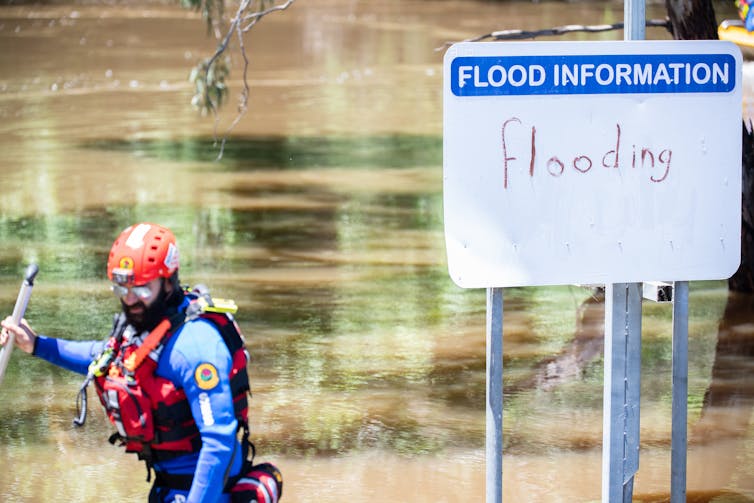
man in front of flood waters and flood warning sign
Three climate phenomena have converged to bring the current wet conditions. Stuart Walmsley/AAP

La Niña: the sequel

You’ve probably heard about the La Niña that’s emerged in the Pacific Ocean for the second year in a row. This event often brings overcast conditions, above-average rainfall and cooler temperatures.

A La Niña occurs when the central and eastern tropical Pacific Ocean become cooler than normal, due to an interaction between the atmosphere and the ocean.


AlsoRead...

Ryan: Building real freedom through e-commerce

Ryan: Building real freedom through e-commerce

27 November 2025
Design Australia Group: Redefining Drafting as the engine of housing growth

Design Australia Group: Redefining Drafting as the engine of housing growth

26 November 2025

During La Niña, atmospheric pressure increases in the east of the Pacific and lowers in the west. This pressure difference causes trade winds to strengthen. The Pacific waters north of Australia become warmer than normal, as the central and eastern Pacific cools.

The warm ocean around Australia increases moisture in the atmosphere and enhances the chance of rainfall for the northern and eastern parts of the country. It also increases the likelihood of tropical cyclones.
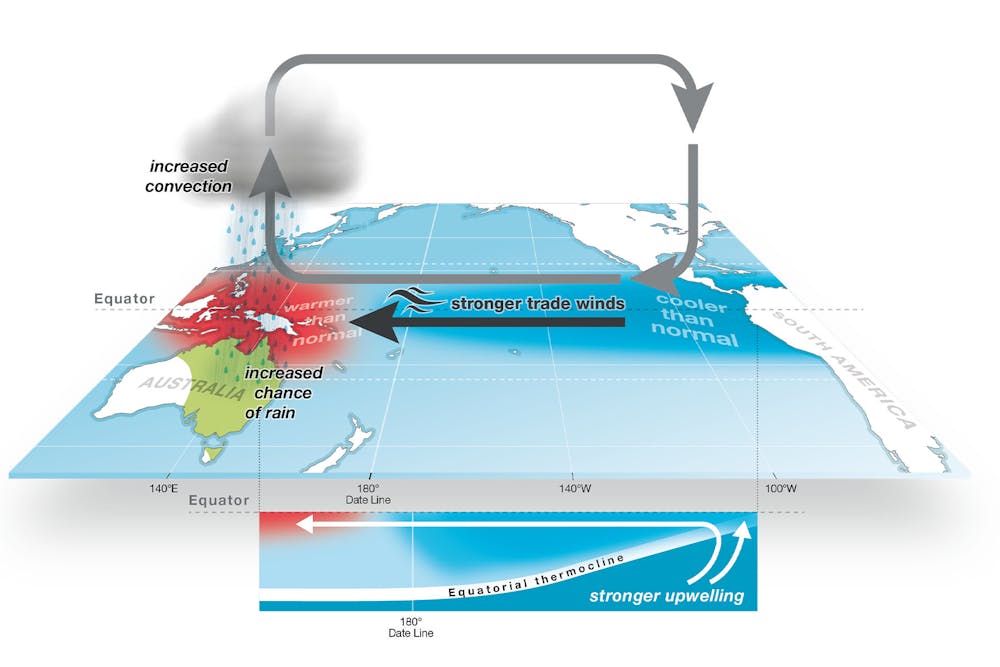
A schematic showing interactions between the atmosphere and ocean that produce a La Niña. Bureau of Meteorology.

La Niña and its opposite drying phenomenon, El Niño, are together known as the El Niño–Southern Oscillation (ENSO). When each occur, they generally develop during winter and spring, mature in early summer and finish by autumn.

We saw that autumn finish in March this year, when the tail end of the last La Niña brought extreme rain and floods to the NSW coast and other regions.

So why are we seeing it back so soon? It’s actually not uncommon for La Niña to occur in two consecutive years. In fact, since 1958, about half of La Niña events reoccurred the following year, as the below graph shows.
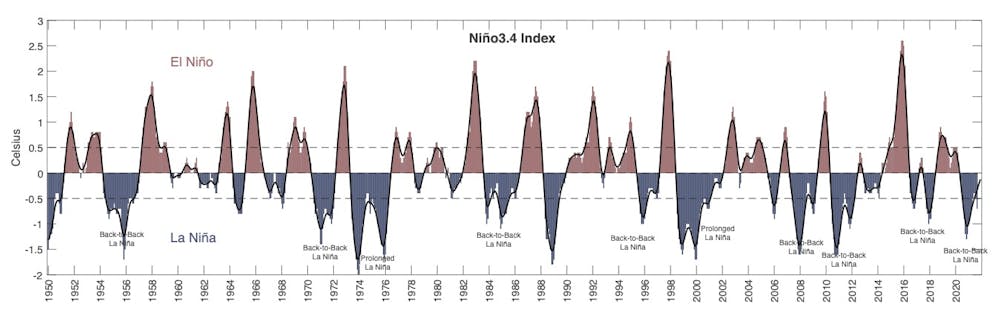
Graph showing La Niña events since 1950. Authors provided. Data at https://origin.cpc.ncep.noaa.gov/products/analysis_monitoring/ensostuff/ONI_v5.php

These repeat events are far more common for La Niña than El Niño. That’s because after an El Niño, strong air-sea interactions cause the equatorial waters of the Pacific to rapidly lose heat. These interactions are weaker during La Niña, meaning the Pacific sometimes retains cool water which enables a second La Niña to occur.

We saw this in the consecutive La Niña events of 2010-11 and 2011-12. The first of these was an extreme La Niña, bringing heavy rain and the devastating Brisbane floods.

La Niña is not acting alone

La Niña is not the only phenomenon driving the wet conditions. This year, after the wet autumn in NSW, an event known as a negative “Indian Ocean Dipole” (IOD) developed.

An active negative IOD tends to change wind patterns and rainfall conditions over Australia’s southeast during spring, setting the scene for more wet conditions in summer.

Adding to this, the Southern Annular Mode (SAM) has been in its positive phase for a few months. The SAM refers to the position of westerly winds in the mid-latitudes of the southern hemisphere.

When the SAM is in a positive phase, mid-latitude storms move poleward, away from Australia, as onshore winds to eastern Australia enhance. This increases moisture and rain to the continent’s southeast.
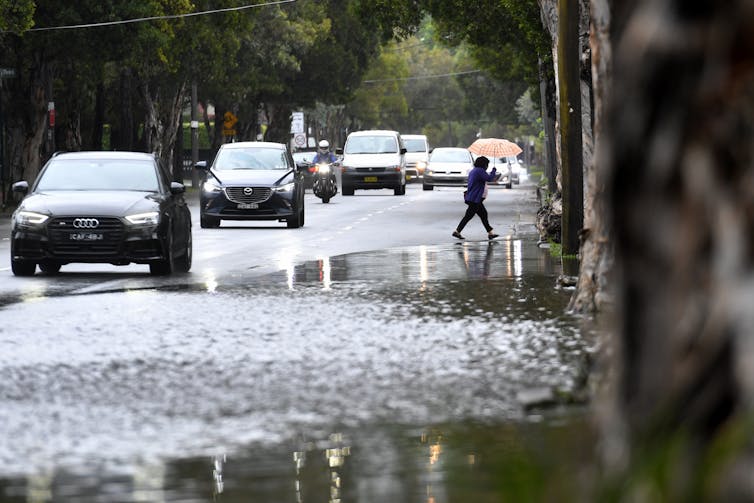
cars and pedestrian traverse wet road
The negative phase of an IOD typically brings wet weather from Western Australia to southeast Australia. Dean Lewis/AAP

What about next year?

The Bureau of Meteorology’s seasonal outlook shows an increased chance of rain this summer (January to March) over parts of Queensland and the NSW coast, but not much for the rest of Australia.

So while it’s unlikely to be the wettest ever summer in Australia overall, we can’t yet rule that out for the east coast. Safe to say, the climate conditions are ripe for extreme wet weather over the next few months.

But rest assured that a third consecutive La Niña, while possible next year, is unlikely. Since 1950, three consecutive La Niñas have occurred only twice: in 1973-75 and 1998-2000. These were preceded by extreme El Niño events, which tend to induce La Niña events.

And while the rain might disrupt your summer plans, it’s worth remembering that just three years ago southeast Australia was in the midst of severe drought. The successive La Niñas have brought water and soil moisture back to the Murray Darling Basin – and in that sense that’s a very good thing.

Andréa S. Taschetto, Associate Professor, UNSW and Agus Santoso, Senior Research Associate, UNSW

This article is republished from The Conversation under a Creative Commons license. Read the original article.


Tags: SB001
DMCA.com Protection Status

SUBSCRIBE to our NEWSLETTER

[mc4wp_form id=”2384248″]

Don't Miss

The evolution of Aesthetic Surgery through the lens of Dr Kourosh Tavakoli

by Pauline Torongo
4 December 2025
The evolution of Aesthetic Surgery through the lens of Dr. Kourosh Tavakoli
Health & Wellness

As global interest in Australian cosmetic surgery continues to grow, the combination of regulation, research and emerging digital tools is...

Read moreDetails

Ryan: Building real freedom through e-commerce

by Pauline Torongo
27 November 2025
Ryan: Building real freedom through e-commerce
Business & Finance

Ryan’s greatest achievement isn’t any single business or revenue milestone — it’s the ecosystem he’s built through the Change community.

Read moreDetails

Design Australia Group: Redefining Drafting as the engine of housing growth

by Pauline Torongo
26 November 2025
Design Australia Group: Redefining Drafting as the engine of housing growth
Business & Finance

Australia is under pressure to build homes faster, but design bottlenecks slow progress. Design Australia Group is fixing this by...

Read moreDetails

Louis Guy Detata builds Global Trading Empires through autonomous systems and disciplined leadership

by Pauline Torongo
25 November 2025
Louis Guy Detata builds Global Trading Empires through autonomous systems and disciplined leadership
Business & Finance

The path from investment banking to leading a global trading platform has taught Louis Detata that sustainable success requires more...

Read moreDetails

Burning Eucalyptus Wood: Tips, Advantages, Disadvantages & Alternatives

by Fazila Olla-Logday
20 November 2025
Image Supplied
Enviroment

Learn about burning eucalyptus wood for stoves and fireplaces. Discover benefits, drawbacks, harvesting tips, and better alternative firewood options for...

Read moreDetails

Everything Parents Need to Know About Baby Soft Play and Why It’s a Game Changer

by Fazila Olla-Logday
11 November 2025
Everything Parents Need to Know About Baby Soft Play
Health & Wellness

Baby soft play is a fun, safe, and educational way for little ones to explore and grow. Discover the benefits...

Read moreDetails

WOMAD Sets Up a New Camp in Wiltshire – Australian festival fans take note!

by Kris Griffiths
11 November 2025
Kumbia Boruka brought their reggae and dancehall flavour to the Taste the World Stage at WOMAD 2024 - Credit - Mike Massaro
Entertainment

With its 2026 edition moving to Neston Park in England, WOMAD offers Aussie music lovers a chance to reconnect with global...

Read moreDetails
Load More

Copyright © Blue Sky Publications Ltd. All Rights Reserved.
australiantimes.co.uk is a division of Blue Sky Publications Ltd. Reproduction without permission prohibited. DMCA.com Protection Status

  • About us
  • Write for Us
  • Advertise
  • Contact us
  • T&Cs, Privacy and GDPR
No Result
View All Result
  • News
    • Weather
    • Sport
    • Technology
    • Business & Finance
      • Currency Zone
    • Lotto Results
      • The Lott
  • Lifestyle
    • Entertainment
    • Horoscopes
    • Health & Wellness
    • Recipes
  • Travel
  • Expat Life
  • Move to Australia

Copyright © Blue Sky Publications Ltd. All Rights Reserved.
australiantimes.co.uk is a division of Blue Sky Publications Ltd. Reproduction without permission prohibited. DMCA.com Protection Status

No Result
View All Result
  • News
    • Weather
    • Sport
    • Technology
    • Business & Finance
      • Currency Zone
    • Lotto Results
      • The Lott
  • Lifestyle
    • Entertainment
    • Horoscopes
    • Health & Wellness
    • Recipes
  • Travel
  • Expat Life
  • Move to Australia

Copyright © Blue Sky Publications Ltd. All Rights Reserved.
australiantimes.co.uk is a division of Blue Sky Publications Ltd. Reproduction without permission prohibited. DMCA.com Protection Status





