Jennifer Juno, The Peter Doherty Institute for Infection and Immunity and Adam Wheatley, The University of Melbourne
The emergence of a new SARS-CoV-2 variant of concern, Omicron, has reignited global discussions of vaccine distribution, virus mutation, and immunity against new virus strains.
Some experts have suggested the emergence of a new strain could be a result of low levels of vaccine coverage in developing nations.
So how do new virus variants emerge? And what role does vaccination play? The relationship is still unclear but here’s what we know so far.
Viruses naturally change during reproduction
A virus is life at its most simple, and essentially contains two main elements: (1) a blueprint for reproduction (made of DNA or RNA), and (2) proteins that let the virus enter cells, take over, and start replicating.
While only a few SARS-CoV-2 viruses are needed to cause an infection, replication of the virus in the lungs is explosive. Millions of virus particles are eventually produced, and some of these viruses are then exhaled to infect another host.
Importantly, the process of duplicating the virus’ RNA is imperfect. Eventually, errors will accumulate in the growing pool of viruses, causing what we refer to as virus variants.


What is a SARS-CoV-2 variant virus and why are some of them concerning?
When viruses are transmitted from one person to another, some of the new variants will be better at entering cells or duplicating themselves than others.
In these cases, the “fitter” variants are more likely to take over and become the main virus that replicates within a population.
Over the course of the pandemic, this has occurred several times. The original SARS-CoV-2 virus that emerged from Wuhan in 2019 was later replaced by a variant called D614G, followed by the Alpha variant and now, the Delta variant.
Every time someone gets infected with SARS-CoV-2, there is a chance the virus could generate a more fit variant, which could then spread to others.
How are vaccines holding up as the virus changes?
Our current vaccines are still highly effective against SARS-CoV-2 variants, including the Delta strain. This is because the vaccines target the whole “spike” protein of the virus, which is a large protein with a relatively small number of changes across variants.
Concerningly, some SARS-CoV-2 variants (Beta, Gamma, Lambda and Mu) have been reported to “evade” immunity from vaccination. This means the immune system is unable to recognise the variant virus as well as the original strain, which reduces the effectiveness of vaccination.
However to date, the global impact of such “immune escape” strains has been limited. For instance, the Beta variant, which showed the highest amount of immune escape, was unable to out-compete Delta in the real world.
Are low vaccination rates a risk for generating new virus variants?
For now, any relationship between vaccine coverage and new SARS-CoV-2 variants is unclear.
There are two main factors that could lead to the development of new variants.
First, low vaccine coverage might increase the risk of new variants by allowing transmission within a community.
In this case, high viral replication and person-to-person transmission provides plenty of opportunity for the virus to mutate.

Alternatively, as vaccination rates rise, the only viruses that will be able to successfully infect people will be variants that at least partially escape the protection of vaccines.
This scenario might require continual global surveillance efforts and new vaccines to maintain long-term control of the virus, similar to the flu.
Either way, with COVID-19 almost certain to stick around, we should expect new strains will continue to be a challenge. We will need careful and active management to address this risk.
So where did Omicron come from?
The recent reports of a new variant of concern, Omicron, has raised global alarm bells.
Discovered by the impressive virus sequencing efforts of South African scientists, Omicron contains an incredible 32 changes in the spike protein alone. This includes mutations that can increase transmission and evade immunity.
So there is a risk that Omicron may spread rapidly and reduce (but not eliminate) the effectiveness of current vaccines.
With low overall vaccination coverage in southern Africa (albeit with higher population level immunity from infection), some have suggested global inequities in the supply of COVID vaccines may be responsible for the emergence of Omicron.
However, the extensive mutations in Omicron are also consistent with the virus changing over an extended time, as it replicated in a person with a compromised immune system.
Such highly mutated variants have been documented in the past but have generally not spread widely.
Global vaccine coverage benefits us all
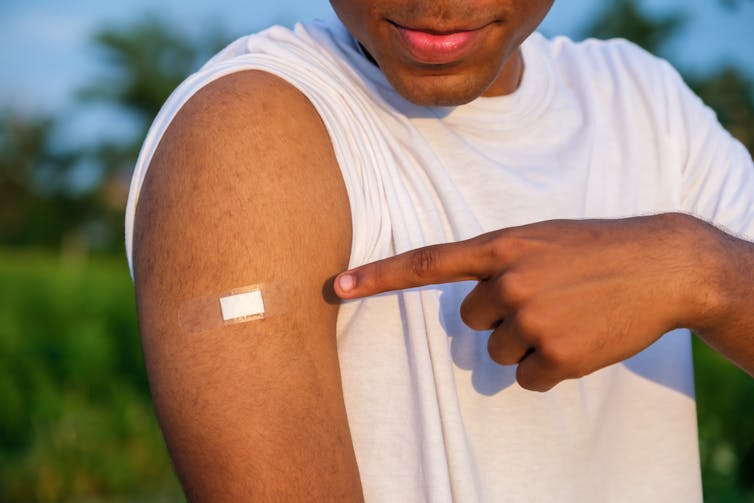
Expanding global vaccine coverage by increasing supplies, ensuring equitable distribution, and combating hesitancy and misinformation remains critical.
High global vaccine coverage will limit overall viral evolution, protect immunocompromised people and lessen chances highly mutated viruses can spread, all of which can directly or indirectly lower the risks of new variants emerging.
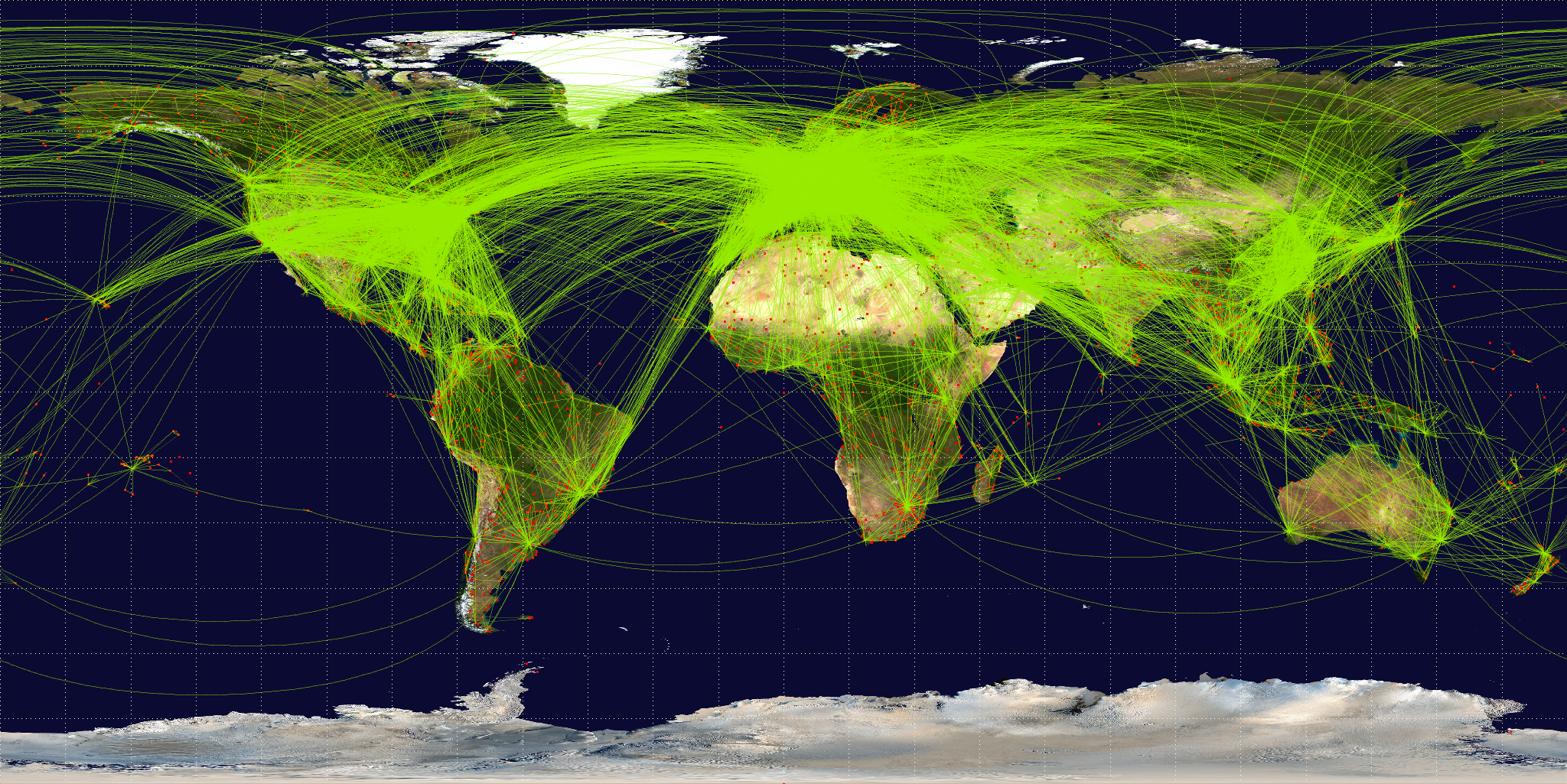
With the global community now highly interconnected, countries will struggle to keep their citizens safe in the face of pandemic threats without embracing a framework for greater international cooperation and coordination.
Jennifer Juno, Senior research fellow, The Peter Doherty Institute for Infection and Immunity and Adam Wheatley, Senior Research Fellow, Department of Microbiology and Immunology, The University of Melbourne
This article is republished from The Conversation under a Creative Commons license. Read the original article.