

• Advertise
  • About us
  • Terms and Conditions
  • Contact us
Saturday, December 6, 2025
Australian Times News
  • News
    • Weather
    • Sport
    • Technology
    • Business & Finance
      • Currency Zone
    • Lotto Results
      • The Lott
  • Lifestyle
    • Entertainment
    • Horoscopes
    • Health & Wellness
    • Recipes
  • Travel
  • Expat Life
  • Move to Australia
No Result
View All Result
  • News
    • Weather
    • Sport
    • Technology
    • Business & Finance
      • Currency Zone
    • Lotto Results
      • The Lott
  • Lifestyle
    • Entertainment
    • Horoscopes
    • Health & Wellness
    • Recipes
  • Travel
  • Expat Life
  • Move to Australia
No Result
View All Result
Australian Times News
No Result
View All Result
Home News

If we all choose the fastest mode of travel in a city, the whole city gets slower – and more congested

People in cities often choose how to travel based on how long it will take. In recent years, navigation apps such as Google Maps and CityMapper have enabled people to decide between various modes of transport by seeing which one most quickly gets them where they want to go.

The Conversation by The Conversation
26-11-2021 09:17
in News
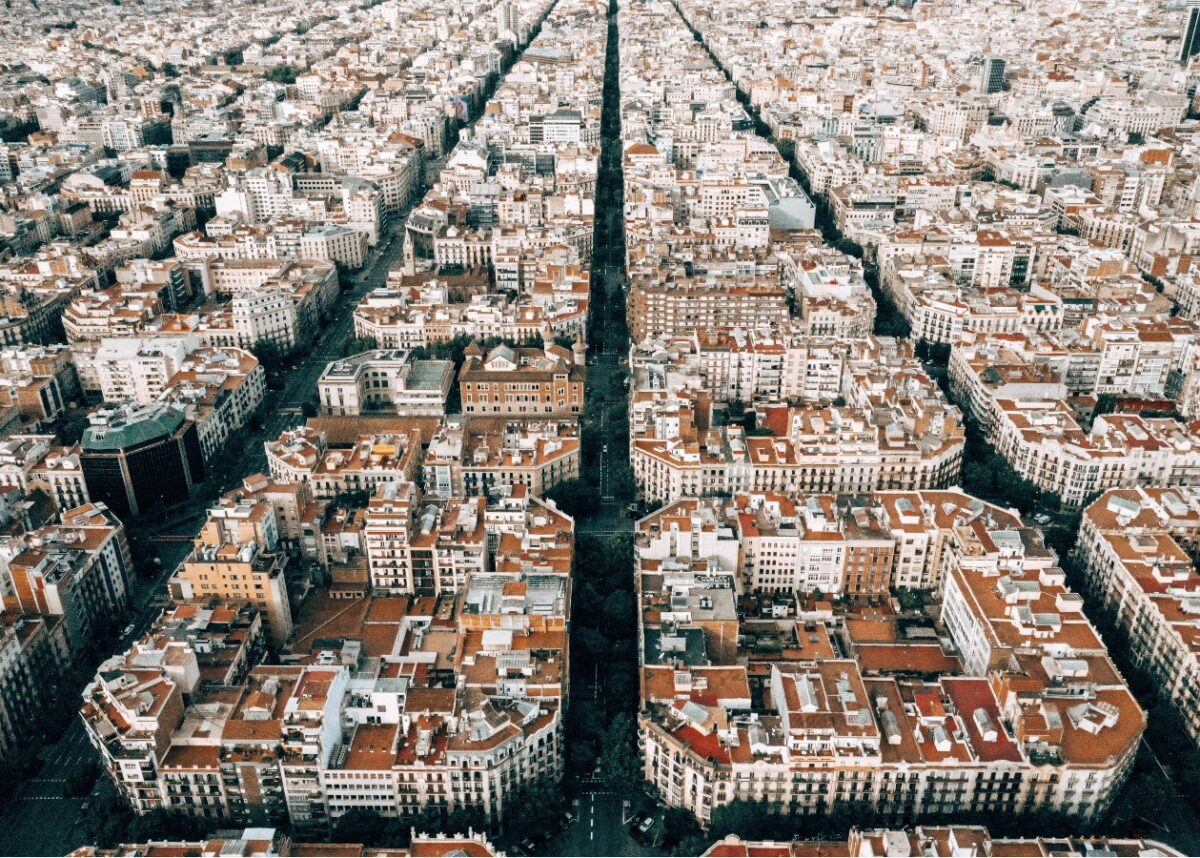
Photo by Kaspars Upmanis on Unsplash

Photo by Kaspars Upmanis on Unsplash

Rafael Prieto Curiel, UCL and Juan Pablo Orjuela, University of Oxford

People in cities often choose how to travel based on how long it will take. In recent years, navigation apps such as Google Maps and CityMapper have enabled people to decide between various modes of transport by seeing which one most quickly gets them where they want to go.

Cities of course have long dedicated a disproportionate amount of space to cars. Although in some parts of the global north – and in certain demographics – car use is declining, elsewhere it has, unsurprisingly, increased.

In a recent study, we modelled what would happen to average travelling times in a city if people were given only one other option – using the car or using another mode of transport – and if they acted only in their own interest (getting to their destination as fast as possible).

We wanted to see what would happen if everyone acted selfishly. How would that compare, we wondered, with a theoretical case in which people chose their mode to minimise travel times for society as a whole and not only for themselves.

City spaces

Using mathematical modelling, we found that if all travellers behave selfishly, and if we have a system that not only makes it relatively inexpensive to use a car, but also allows congestion to affect non-car users (cyclists, public transport users, pedestrians etc), collectively we all end up taking longer to get where we need to go – whether we’re driving a car or not.

City streets are often designed to make travelling by car faster and more efficient. And despite there being, for instance, an increasing amount of cycling infrastructure worldwide and higher satisfaction among people who commute by bike, it is still very common to see narrow, disconnected cycling lanes which result in congestion induced by private cars affecting cycling travel times too.


AlsoRead...

Ryan: Building real freedom through e-commerce

Ryan: Building real freedom through e-commerce

27 November 2025
Design Australia Group: Redefining Drafting as the engine of housing growth

Design Australia Group: Redefining Drafting as the engine of housing growth

26 November 2025

Mixed-use lanes – those that are used by both private cars and public buses, as opposed to dedicated bus lanes – have the same effect: car congestion affects bus users too. Without proper infrastructure, there are therefore no incentives to use public transport or active transport options, such as cycling and walking.

And even when there is a cycling path network or dedicated bus lanes, if these cross over or otherwise intermittently share space with the general road system, this also slows everybody down. It makes the system as a whole less efficient.

Similarly, free parking for private vehicles also results in longer travelling times for everyone – including non-car users – because they negate the benefits, for individuals, of not using a car if others still do.

We found that selfish behaviour with such inadequate infrastructure results naturally in more cars, more congestion, and longer travel times. If using a car remains the easier and quicker option (on an individual level), people will keep using cars and cities will remain congested. By trying individually to win, we all lose.

Competing priorities

One alternative is to design more collaborative transport networks in which we all accept some personal delay to achieve a distribution that is better for society. We could, for example, include not only personal cost in some of the apps we use, but societal costs also. What if Google Maps told you not only where congestion is in real-time and what would be the quickest transport mode to choose for you as an individual, but which transport mode would offer the best results for your neighbourhood, your family, your colleagues, or your city?

Research has shown how difficult it is, however, to shift commuter behaviour. It also highlights the public opposition there has been to alternative measures such as limiting maximum speeds in order to lower traffic injuries, despite such measures saving lives.

Given this, it could prove difficult to convince some car users to sacrifice personal efficiency for the greater good. But we could start by at least making these trade-offs explicit.
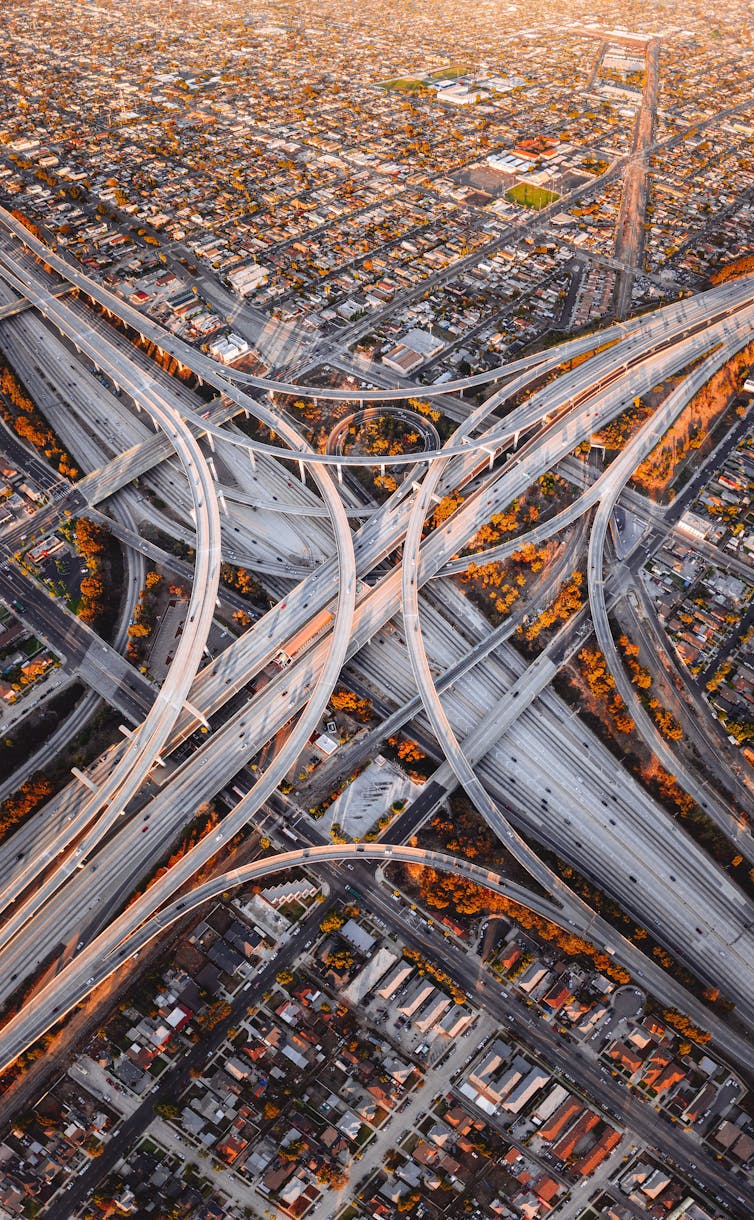
A giant spaghetti junction in Los Angeles.
Our cities are designed with car travel in mind. Denys Nevozhai | Unsplash, FAL

Motorised private transport has a wide variety of impacts that threaten a city’s sustainability, not least the wellbeing and health of its citizens. It contributes to air pollution and climate change through vehicle emissions and results in traffic injuries and nurtures sedentary lifestyles.

To encourage people to use more sustainable alternatives to car transport, cities need strong policies that steer people away from using their cars. So far, these have included low-traffic neighbourhoods and congestion charges that try to make car drivers pay for the congestion they are causing.

Elsewhere, systems have been implemented that attract people to transport modes, such as safe lanes for cycling, that typically have better environmental and social outcomes. These systems emphasise individualistic attitudes but target societal costs to those most responsible for them.

Ideally, we should create policies that help us act in the interest of our community. In the meantime, policies that push people away from their private cars could bring us closer to what would be optimal for the collective —- even if we are all acting in our own interests.

Rafael Prieto Curiel, Postdoctoral Research Fellow, the Bartlett Centre for Advanced Spatial Analysis, UCL and Juan Pablo Orjuela, Senior Research Associate and Executive Education Programme Director, University of Oxford

This article is republished from The Conversation under a Creative Commons license. Read the original article.


Tags: SB001
DMCA.com Protection Status

SUBSCRIBE to our NEWSLETTER

[mc4wp_form id=”2384248″]

Don't Miss

The evolution of Aesthetic Surgery through the lens of Dr Kourosh Tavakoli

by Pauline Torongo
4 December 2025
The evolution of Aesthetic Surgery through the lens of Dr. Kourosh Tavakoli
Health & Wellness

As global interest in Australian cosmetic surgery continues to grow, the combination of regulation, research and emerging digital tools is...

Read moreDetails

Ryan: Building real freedom through e-commerce

by Pauline Torongo
27 November 2025
Ryan: Building real freedom through e-commerce
Business & Finance

Ryan’s greatest achievement isn’t any single business or revenue milestone — it’s the ecosystem he’s built through the Change community.

Read moreDetails

Design Australia Group: Redefining Drafting as the engine of housing growth

by Pauline Torongo
26 November 2025
Design Australia Group: Redefining Drafting as the engine of housing growth
Business & Finance

Australia is under pressure to build homes faster, but design bottlenecks slow progress. Design Australia Group is fixing this by...

Read moreDetails

Louis Guy Detata builds Global Trading Empires through autonomous systems and disciplined leadership

by Pauline Torongo
25 November 2025
Louis Guy Detata builds Global Trading Empires through autonomous systems and disciplined leadership
Business & Finance

The path from investment banking to leading a global trading platform has taught Louis Detata that sustainable success requires more...

Read moreDetails

Burning Eucalyptus Wood: Tips, Advantages, Disadvantages & Alternatives

by Fazila Olla-Logday
20 November 2025
Image Supplied
Enviroment

Learn about burning eucalyptus wood for stoves and fireplaces. Discover benefits, drawbacks, harvesting tips, and better alternative firewood options for...

Read moreDetails

Everything Parents Need to Know About Baby Soft Play and Why It’s a Game Changer

by Fazila Olla-Logday
11 November 2025
Everything Parents Need to Know About Baby Soft Play
Health & Wellness

Baby soft play is a fun, safe, and educational way for little ones to explore and grow. Discover the benefits...

Read moreDetails

WOMAD Sets Up a New Camp in Wiltshire – Australian festival fans take note!

by Kris Griffiths
11 November 2025
Kumbia Boruka brought their reggae and dancehall flavour to the Taste the World Stage at WOMAD 2024 - Credit - Mike Massaro
Entertainment

With its 2026 edition moving to Neston Park in England, WOMAD offers Aussie music lovers a chance to reconnect with global...

Read moreDetails
Load More

Copyright © Blue Sky Publications Ltd. All Rights Reserved.
australiantimes.co.uk is a division of Blue Sky Publications Ltd. Reproduction without permission prohibited. DMCA.com Protection Status

  • About us
  • Write for Us
  • Advertise
  • Contact us
  • T&Cs, Privacy and GDPR
No Result
View All Result
  • News
    • Weather
    • Sport
    • Technology
    • Business & Finance
      • Currency Zone
    • Lotto Results
      • The Lott
  • Lifestyle
    • Entertainment
    • Horoscopes
    • Health & Wellness
    • Recipes
  • Travel
  • Expat Life
  • Move to Australia

Copyright © Blue Sky Publications Ltd. All Rights Reserved.
australiantimes.co.uk is a division of Blue Sky Publications Ltd. Reproduction without permission prohibited. DMCA.com Protection Status

No Result
View All Result
  • News
    • Weather
    • Sport
    • Technology
    • Business & Finance
      • Currency Zone
    • Lotto Results
      • The Lott
  • Lifestyle
    • Entertainment
    • Horoscopes
    • Health & Wellness
    • Recipes
  • Travel
  • Expat Life
  • Move to Australia

Copyright © Blue Sky Publications Ltd. All Rights Reserved.
australiantimes.co.uk is a division of Blue Sky Publications Ltd. Reproduction without permission prohibited. DMCA.com Protection Status





