John Quiggin, The University of Queensland
The response to Prime Minister Scott Morrison’s announcement of an electric vehicle policy has focused on its inconsistency with his derisive statements in 2019 that the technology would “end the weekend”.
What’s more important, however, is whether the policy is consistent with the government’s belated commitment to achieve net-zero greenhouse gas emissions by 2050. Examining the modelling behind the commitment allows us to assess this, and possibly helps explain the timing of Morrison’s rhetorical pivot.
Transport is covered only briefly in the modelling, which was released late on Friday, and the government does not set out technological goals. However, it is assumed by 2050, the proportion of electric vehicles will have risen to 90%, compared to around 1% at present.
2050 is a long way off, but motor vehicles are long-lived pieces of capital equipment. If we’re going to replace 90% of the existing fleet with electric vehicles, we must start now.
Simple arithmetic
The average age of Australian cars is about ten years, implying they last about 20 years on average. So, the shift to electrics will need to be well under way ten years from now – by about 2030.
To illustrate the speed of the adjustment needed, suppose electrics represent 50% of new car sales by 2030. This was the target proposed by then-Labor leader Bill Shorten at the 2019 election. Morrison rejected it the time, but now appears to have tacitly embraced something similar.


Given the 2030 starting point, and assuming a 20-year vehicle life, how fast would the share of electric vehicles need to grow to reach 90% of Australia’s fleet by 2050 – and how fast would the sale of conventional cars have to fall?
According to my calculations, the sale of traditional vehicles would have to cease completely by 2038 to reach the government’s target.
Roughly speaking, Australians buy 1 million new vehicles a year, with a total stock of 20 million.
If the share of traditional vehicle sales falls from 50% to zero between 2030 and 2038, that leaves about 2 million traditional vehicles, or 10% of the total fleet, remaining on the road by 2050 (with the rest being electric vehicles).
A challenging task
This estimate assumes the number of cars sold every year remains constant. But in fact, it has been increasing over time, which has a couple of effects.
First it means newer cars are over-represented, relative to the case of constant sales. That implies the expected lifetime of cars is actually longer than 20 years. And if the number of cars keeps growing, the task of decarbonising is even harder.
A policy of electrification should be accompanied by measures to encourage the use of public transport, cycling and walking, as well as remote work and other ways of reducing unnecessary travel.
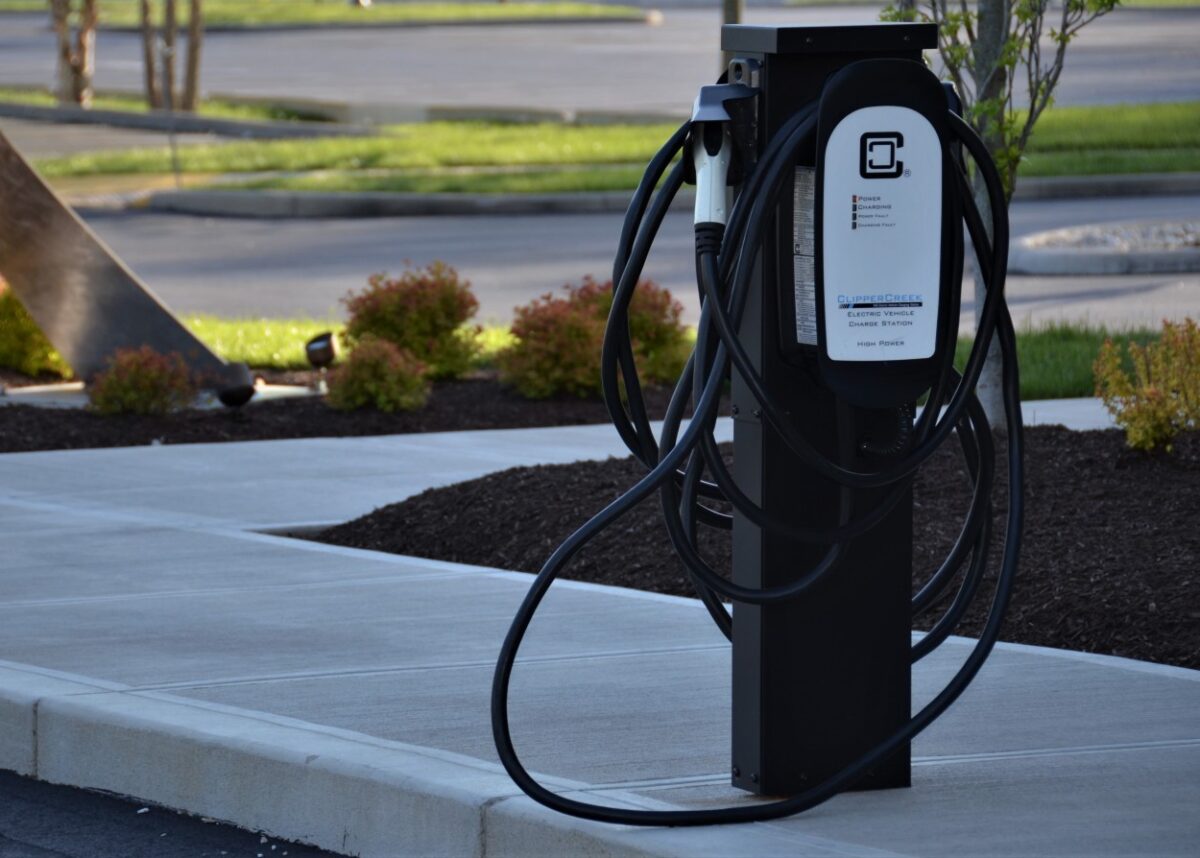
In view of the magnitude and urgency of the task, the Morrison government’s commitment to spend A$250 million on electric vehicle charging stations (about $10 for each person in Australia) is nowhere near sufficient.
To electrify Australia’s vehicle fleet in time, the government must either provide price incentives to consumers or mandate improvements in fuel efficiency across the vehicle fleet. Such government interventions appear anathema to Morrison’s new mantra of “can-do capitalism”. But something of the the kind will be necessary.
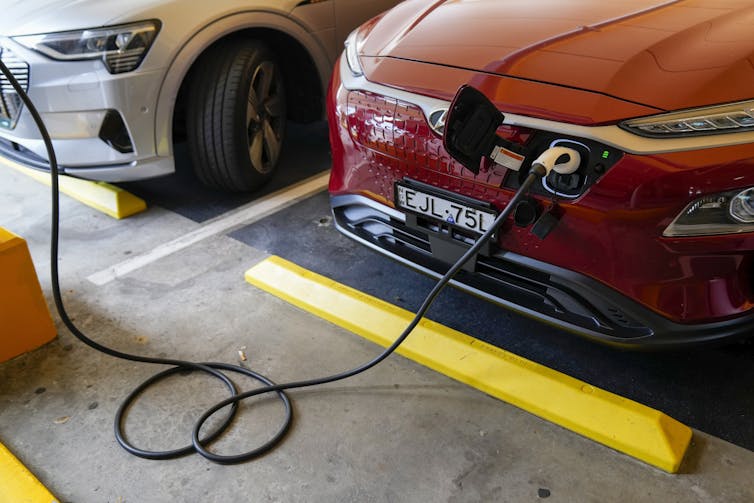
The simplest approach would be a combination of tax relief and subsidies. This would reduce the cost difference between electric and traditional vehicles, which one estimate puts at $20,000-$30,000. This is partly offset by fuel savings and the lower repair costs of electric vehicles.
A subsidy or tax exemption of $10,000, declining over time as the cost advantage of traditional vehicles diminished, would promote fairly rapid uptake of electric vehicles. The likely cost would be around $1 billion a year, or $20 billion over the transition.
Getting a handle on the numbers
To put these numbers in perspective, comparisons are useful.
The New South Wales government has just announced $100 million to cover the cost difference for electric vehicles bought by councils, taxi companies and other fleet operators. This, covering part of the fleet in one state, comes on top of $490 million announced in the state’s June budget.
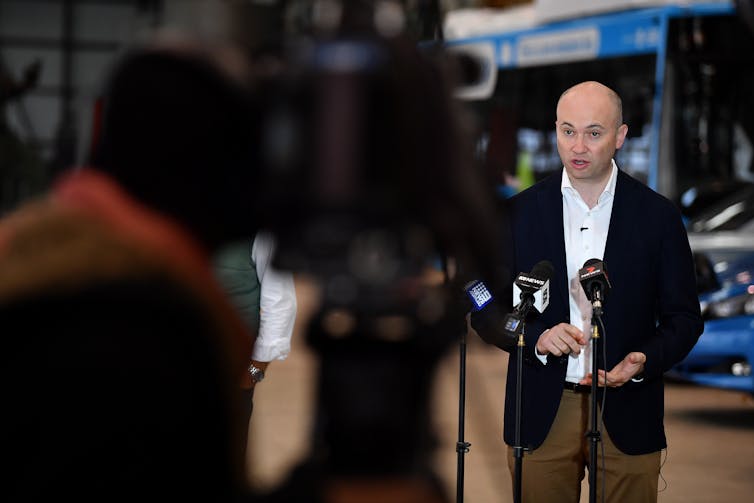
As NSW Treasurer Matt Kean pointed out, his Liberal-Nationals government is taking the electric vehicle transition much more seriously than its federal counterpart.
Alternatively, we could look at the inland rail scheme, a proposed 1,700km freight rail line between Melbourne and Brisbane. The National Party demanded the project be accelerated as part-payment for their acceptance of a 2050 net-zero target.
This likely white elephant is budgeted to cost $14.5 billion, an amount which will almost certainly blow out. It will reduce the use of fuel for trucks, but at an immense cost.
For the amount paid to placate one noisy lobby group, we could cover most of the cost of electrifying Australia’s road vehicle fleet.
Not there yet
There is an alternative, recommended by bodies including the federal government’s own Climate Change Authority. It would involve a fuel efficiency requirement for new car sales, which would work similarly to the Renewable Energy Target.
Vehicle importers could decide whether to meet the target by shifting to electrics or more fuel efficient traditional vehicles. Over time the target would fall to zero, requiring complete electrification. The cost would be spread across importers and car buyers.
A third approach would be to do nothing now, but pay owners of traditional vehicles to scrap them before the end of their working life.
This would involve something like the Cash for Clunkers scheme adopted in the United States under the Obama administration and briefly floated by the Gillard government in 2010. While enabling government to defer action, it would cost more in the long run.
The Morrison government’s commitment to a 2050 net-zero target is a welcome step, if long overdue. But as far as motor vehicles are concerned, the policies to get there are badly lagging the ambition.
John Quiggin, Professor, School of Economics, The University of Queensland
This article is republished from The Conversation under a Creative Commons license. Read the original article.