

• Advertise
  • About us
  • Terms and Conditions
  • Contact us
Wednesday, August 12, 2026
Australian Times News
  • News
    • Weather
    • Sport
    • Technology
    • Business & Finance
      • Currency Zone
    • Lotto Results
      • The Lott
  • Lifestyle
    • Entertainment
    • Horoscopes
    • Health & Wellness
    • Recipes
  • Travel
  • Expat Life
  • Move to Australia
No Result
View All Result
  • News
    • Weather
    • Sport
    • Technology
    • Business & Finance
      • Currency Zone
    • Lotto Results
      • The Lott
  • Lifestyle
    • Entertainment
    • Horoscopes
    • Health & Wellness
    • Recipes
  • Travel
  • Expat Life
  • Move to Australia
No Result
View All Result
Australian Times News
No Result
View All Result
Home News

LED face masks are popular on social media for glowing skin – but they could disrupt your sleep

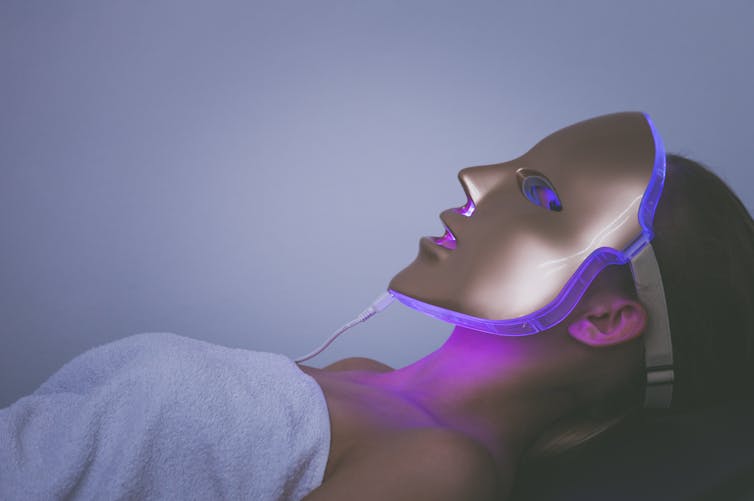
LED face masks are the latest device promoted on social media as a marriage of technology and beauty.

The Conversation by The Conversation
07-11-2021 16:32
in News
LED face masks are popular on social media for glowing skin – but they could disrupt your sleep


        Shutterstock


Dean J. Miller, CQUniversity Australia

LED face masks are the latest device promoted on social media as a marriage of technology and beauty. 

A range of celebrities have endorsed portable versions of the product that was previously offered in beauty salons. Actress Olivia Munn carries hers with her at all times. Julia Roberts, Victoria Beckham and Chrissy Tiegen are also reportedly fans. The trend has even achieved the social media holy grail – a Kardashian Instagram post. 

But regardless of whether they’ll help make your skin glow, our understanding of circadian rhythms suggests they have the potential to disrupt users’ sleep-wake cycles.


      Read more:
      6 ways to stop daylight saving derailing your child’s sleep


Daily rhythms

The human body has its own internal clock which, among other things, helps to control our sleep-wake patterns. This internal clock is influenced by several factors, the most potent being light exposure directly into the eyes. More specifically, short-wavelength “blue light” influences this system the most. 

Exposure to this type of light at night has been shown interrupt the production of melatonin – also known as “the sleep hormone”. Melatonin is produced by the pineal gland in the brain and released within 2 hours of your habitual bedtime – preparing the body for sleep. But bright blue light exposure may interrupt this process. 

There are a range of sources for blue light – including our beloved phones, electronic devices and also the room lighting in our homes. While it has become a common recommendation to avoid using electronic devices close to bedtime, in the context of blue light exposure, our phones and tablets do not seem to be bright enough to impact sleep. In fact, home lighting appears to have a greater influence – likely due to the transition to energy-efficient LED, “blue light” wavelength light.


Last year, Monash University researchers examined sleep and light exposure in 57 participants, finding that nearly half of them had LED lighting that suppressed melatonin by 50%. The study also found those with greater evening light exposure had increased wakefulness after bedtime. 

Insufficient sleep has been shown to increase the likelihood of poor health outcomes, including cardiovascular disease.
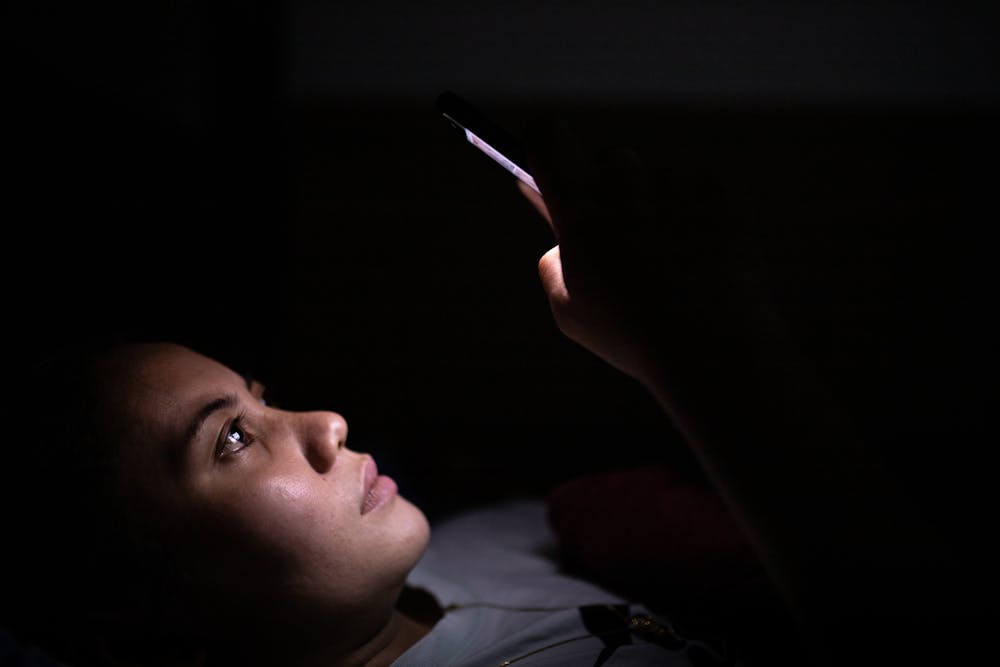


              Room LED lighting may be a bigger issue than phones and devices when it comes to sleep disruption.
              Shutterstock


      Read more:
      Poor sleep is really bad for your health. But we found exercise can offset some of these harms


How face masks compare to other LED sources

LED mask manufacturers say they are the “future of skin care”, with masks emitting light at different wavelengths to target particular skin-related outcomes. 

Several devices are FDA-approved in the United States, and claim to target acne with “blue light” modes –  the precise wavelength range that may impact melatonin production. 

To date, no experimental research studies have examined the impact of these devices, and their blue light settings, on sleep or the human body clock. But given the device’s proximity to users’ eyes and the intensity of LED light bulbs, it is reasonable to flag concerns about their possible impact on our body clock. 

Sean Cain, a leading scientist on the impact of light exposure on human health, coined an analogy to provide perspective to the sources of artificial light. The light we receive from electronic devices can be thought of as like a glass of water being poured over your head, while home LED lighting is more like a bucket of water. In keeping with this analogy, could LED masks be something on the scale of a bathtub or swimming pool? Further research could quantify their effect. 


      Read more:
      Snooze blues? How using your favourite song as an alarm can help you wake up more alert


You can still make like a Kardashian … in the daytime

These concerns, based on well-established circadian principles, do not rule out the use of these devices entirely. However, it is important for people who use them to avoid doing so at night – especially on the blue light settings. 

Ideally, use of the masks should be during daylight hours, to avoid potential sleep disturbances and/or shifts in the human body clock. Future research could clarify any negative outcomes associated with these devices and potentially prompt manufacturers to provide recommendations on the timing of their use.

Dean J. Miller, Research Officer, CQUniversity Australia

This article is republished from The Conversation under a Creative Commons license. Read the original article.


LED face masks are popular on social media for glowing skin – but they could disrupt your sleep

Shutterstock
Dean J. Miller, CQUniversity Australia

LED face masks are the latest device promoted on social media as a marriage of technology and beauty.

A range of celebrities have endorsed portable versions of the product that was previously offered in beauty salons. Actress Olivia Munn carries hers with her at all times. Julia Roberts, Victoria Beckham and Chrissy Tiegen are also reportedly fans. The trend has even achieved the social media holy grail – a Kardashian Instagram post.

But regardless of whether they’ll help make your skin glow, our understanding of circadian rhythms suggests they have the potential to disrupt users’ sleep-wake cycles.


Read more: 6 ways to stop daylight saving derailing your child’s sleep


Daily rhythms

The human body has its own internal clock which, among other things, helps to control our sleep-wake patterns. This internal clock is influenced by several factors, the most potent being light exposure directly into the eyes. More specifically, short-wavelength “blue light” influences this system the most.

Exposure to this type of light at night has been shown interrupt the production of melatonin – also known as “the sleep hormone”. Melatonin is produced by the pineal gland in the brain and released within 2 hours of your habitual bedtime – preparing the body for sleep. But bright blue light exposure may interrupt this process.

There are a range of sources for blue light – including our beloved phones, electronic devices and also the room lighting in our homes. While it has become a common recommendation to avoid using electronic devices close to bedtime, in the context of blue light exposure, our phones and tablets do not seem to be bright enough to impact sleep. In fact, home lighting appears to have a greater influence – likely due to the transition to energy-efficient LED, “blue light” wavelength light.

Last year, Monash University researchers examined sleep and light exposure in 57 participants, finding that nearly half of them had LED lighting that suppressed melatonin by 50%. The study also found those with greater evening light exposure had increased wakefulness after bedtime.

Insufficient sleep has been shown to increase the likelihood of poor health outcomes, including cardiovascular disease.

woman with phone in bed
Room LED lighting may be a bigger issue than phones and devices when it comes to sleep disruption. Shutterstock

Read more: Poor sleep is really bad for your health. But we found exercise can offset some of these harms


How face masks compare to other LED sources

LED mask manufacturers say they are the “future of skin care”, with masks emitting light at different wavelengths to target particular skin-related outcomes.

Several devices are FDA-approved in the United States, and claim to target acne with “blue light” modes – the precise wavelength range that may impact melatonin production.

To date, no experimental research studies have examined the impact of these devices, and their blue light settings, on sleep or the human body clock. But given the device’s proximity to users’ eyes and the intensity of LED light bulbs, it is reasonable to flag concerns about their possible impact on our body clock.

Sean Cain, a leading scientist on the impact of light exposure on human health, coined an analogy to provide perspective to the sources of artificial light. The light we receive from electronic devices can be thought of as like a glass of water being poured over your head, while home LED lighting is more like a bucket of water. In keeping with this analogy, could LED masks be something on the scale of a bathtub or swimming pool? Further research could quantify their effect.


Read more: Snooze blues? How using your favourite song as an alarm can help you wake up more alert


You can still make like a Kardashian … in the daytime

These concerns, based on well-established circadian principles, do not rule out the use of these devices entirely. However, it is important for people who use them to avoid doing so at night – especially on the blue light settings.

Ideally, use of the masks should be during daylight hours, to avoid potential sleep disturbances and/or shifts in the human body clock. Future research could clarify any negative outcomes associated with these devices and potentially prompt manufacturers to provide recommendations on the timing of their use.The Conversation

Dean J. Miller, Research Officer, CQUniversity Australia

This article is republished from The Conversation under a Creative Commons license. Read the original article.

Dean J. Miller, CQUniversity Australia

LED face masks are the latest device promoted on social media as a marriage of technology and beauty.

A range of celebrities have endorsed portable versions of the product that was previously offered in beauty salons. Actress Olivia Munn carries hers with her at all times. Julia Roberts, Victoria Beckham and Chrissy Tiegen are also reportedly fans. The trend has even achieved the social media holy grail – a Kardashian Instagram post.

But regardless of whether they’ll help make your skin glow, our understanding of circadian rhythms suggests they have the potential to disrupt users’ sleep-wake cycles.


Daily rhythms

The human body has its own internal clock which, among other things, helps to control our sleep-wake patterns. This internal clock is influenced by several factors, the most potent being light exposure directly into the eyes. More specifically, short-wavelength “blue light” influences this system the most.

Exposure to this type of light at night has been shown interrupt the production of melatonin – also known as “the sleep hormone”. Melatonin is produced by the pineal gland in the brain and released within 2 hours of your habitual bedtime – preparing the body for sleep. But bright blue light exposure may interrupt this process.

There are a range of sources for blue light – including our beloved phones, electronic devices and also the room lighting in our homes. While it has become a common recommendation to avoid using electronic devices close to bedtime, in the context of blue light exposure, our phones and tablets do not seem to be bright enough to impact sleep. In fact, home lighting appears to have a greater influence – likely due to the transition to energy-efficient LED, “blue light” wavelength light.

AlsoRead...

Managing Aussie Share Portfolios Abroad: Tips for Growth

Managing Aussie Share Portfolios Abroad: Tips for Growth

2 July 2026
The New Meaning of Luxury: Lessons from Entrepreneur Chloe Hardy

The New Meaning of Luxury: Lessons from Entrepreneur Chloe Hardy

2 July 2026

Last year, Monash University researchers examined sleep and light exposure in 57 participants, finding that nearly half of them had LED lighting that suppressed melatonin by 50%. The study also found those with greater evening light exposure had increased wakefulness after bedtime.

Insufficient sleep has been shown to increase the likelihood of poor health outcomes, including cardiovascular disease.

woman with phone in bed
Room LED lighting may be a bigger issue than phones and devices when it comes to sleep disruption. Shutterstock


How face masks compare to other LED sources

LED mask manufacturers say they are the “future of skin care”, with masks emitting light at different wavelengths to target particular skin-related outcomes.

Several devices are FDA-approved in the United States, and claim to target acne with “blue light” modes – the precise wavelength range that may impact melatonin production.

To date, no experimental research studies have examined the impact of these devices, and their blue light settings, on sleep or the human body clock. But given the device’s proximity to users’ eyes and the intensity of LED light bulbs, it is reasonable to flag concerns about their possible impact on our body clock.

Sean Cain, a leading scientist on the impact of light exposure on human health, coined an analogy to provide perspective to the sources of artificial light. The light we receive from electronic devices can be thought of as like a glass of water being poured over your head, while home LED lighting is more like a bucket of water. In keeping with this analogy, could LED masks be something on the scale of a bathtub or swimming pool? Further research could quantify their effect.


You can still make like a Kardashian … in the daytime

These concerns, based on well-established circadian principles, do not rule out the use of these devices entirely. However, it is important for people who use them to avoid doing so at night – especially on the blue light settings.

Ideally, use of the masks should be during daylight hours, to avoid potential sleep disturbances and/or shifts in the human body clock. Future research could clarify any negative outcomes associated with these devices and potentially prompt manufacturers to provide recommendations on the timing of their use.

Dean J. Miller, Research Officer, CQUniversity Australia

This article is republished from The Conversation under a Creative Commons license. Read the original article.

Tags: SB001
DMCA.com Protection Status

SUBSCRIBE to our NEWSLETTER

[mc4wp_form id=”2384248″]

Don't Miss

Why Smarter Fleet Management Is For All Modern Business Options

by Fazila Olla-Logday
29 July 2026
Smarter Fleet Management
Motoring

Operating a business that relies on vehicles is harder than ever.

Read moreDetails

Animal Communication Goes Beyond What Science Can Currently Measure: Zoologist and Spiritual teacher Artemis, the heart whisperer on what the textbooks don’t teach

by Australian Times
7 July 2026
Animal Communication Goes Beyond What Science Can Currently Measure
Lifestyle

Animal communication classes and formal training can be valuable, providing tools, structure, and guidance.

Read moreDetails

Managing Aussie Share Portfolios Abroad: Tips for Growth

by Fazila Olla-Logday
2 July 2026
Managing Aussie Share Portfolios Abroad: Tips for Growth
at

Unlock the secrets to optimizing your Aussie share portfolios abroad. Discover essential tips for growth and navigate the global market...

Read moreDetails

The New Meaning of Luxury: Lessons from Entrepreneur Chloe Hardy

by Pauline Torongo
2 July 2026
The New Meaning of Luxury: Lessons from Entrepreneur Chloe Hardy
Business & Finance

Chloe Hardy, the founder and CEO of Dupes & Co established an Australian-made beauty brand focused on affordability and product...

Read moreDetails

Excel Funding Group emerges as Specialist in SMSF Property Lending amid growing demand

by Pauline Torongo
26 June 2026
Excel Funding Group emerges as Specialist in SMSF Property Lending amid growing demand
Business & Finance

Excel Funding Group has hit a new milestone, tripling its SMSF loan settlement volumes compared to Q1 2025.

Read moreDetails

Svitla Systems acquires Australia’s Kiandra IT to expand Global Engineering Footprint and Accelerate AI-Driven delivery

by Pauline Torongo
11 May 2026
Svitla Systems
Business & Finance

Acquisition marks Svitla’s entry into the Australian market and strengthens capabilities in low-code, Microsoft technologies, and enterprise software engineering.

Read moreDetails

Residential Healthcare Practices: Revolution or Evolution?

by Pauline Torongo
11 May 2026
Residential Healthcare Practices: Revolution or Evolution?
Lifestyle

President Bill Lutz’s "revolution" was born from his background in fine dining, which instilled a disciplined, customer-focused approach.

Read moreDetails
Load More

Copyright © Blue Sky Publications Ltd. All Rights Reserved.
australiantimes.co.uk is a division of Blue Sky Publications Ltd. Reproduction without permission prohibited. DMCA.com Protection Status

  • About us
  • Write for Us
  • Advertise
  • Contact us
  • T&Cs, Privacy and GDPR
No Result
View All Result
  • News
    • Weather
    • Sport
    • Technology
    • Business & Finance
      • Currency Zone
    • Lotto Results
      • The Lott
  • Lifestyle
    • Entertainment
    • Horoscopes
    • Health & Wellness
    • Recipes
  • Travel
  • Expat Life
  • Move to Australia

Copyright © Blue Sky Publications Ltd. All Rights Reserved.
australiantimes.co.uk is a division of Blue Sky Publications Ltd. Reproduction without permission prohibited. DMCA.com Protection Status

No Result
View All Result
  • News
    • Weather
    • Sport
    • Technology
    • Business & Finance
      • Currency Zone
    • Lotto Results
      • The Lott
  • Lifestyle
    • Entertainment
    • Horoscopes
    • Health & Wellness
    • Recipes
  • Travel
  • Expat Life
  • Move to Australia

Copyright © Blue Sky Publications Ltd. All Rights Reserved.
australiantimes.co.uk is a division of Blue Sky Publications Ltd. Reproduction without permission prohibited. DMCA.com Protection Status



