


• Advertise
  • About us
  • Terms and Conditions
  • Contact us
Wednesday, February 4, 2026
Australian Times News
  • News
    • Weather
    • Sport
    • Technology
    • Business & Finance
      • Currency Zone
    • Lotto Results
      • The Lott
  • Lifestyle
    • Entertainment
    • Horoscopes
    • Health & Wellness
    • Recipes
  • Travel
  • Expat Life
  • Move to Australia
No Result
View All Result
  • News
    • Weather
    • Sport
    • Technology
    • Business & Finance
      • Currency Zone
    • Lotto Results
      • The Lott
  • Lifestyle
    • Entertainment
    • Horoscopes
    • Health & Wellness
    • Recipes
  • Travel
  • Expat Life
  • Move to Australia
No Result
View All Result
Australian Times News
No Result
View All Result
Home News

A dangerous parasite could be used to treat cancer – new research in mice

Immune checkpoint blockade therapy works by blocking the checkpoint proteins from binding with their partner proteins and sending the “off” signal. This means that the cancer cells will become “visible” to the T cells, which can then go about destroying the tumour.

The Conversation by The Conversation
06-11-2021 01:59
in News
Photo by Testalize.me on Unsplash

Photo by Testalize.me on Unsplash

Hany Elsheikha, University of Nottingham

A parasite commonly found in cats’ faeces might one day help treat cancer. My colleagues and I have discovered that the parasite that causes toxoplasmosis – a condition that can be harmful to pregnant women and those with a suppressed immune system – might be useful at destroying cancer tumours. At least, that’s what our study in mice suggests.

For many years now, researchers have been looking at how they can use the body’s immune system to treat cancer – known as immunotherapy. This is because, alongside protecting us from the harmful effects of bacteria and viruses, our immune system also rids the body of abnormal cells, such as cancer cells. But sometimes these cancerous cells and tumours can develop techniques for evading the body’s immune system, which means that the immune system won’t kill them, and they’ll be allowed to grow and replicate.

One type of immunotherapy is “immune checkpoint blockade therapy”. Our immune system contains a number of so-called “immune checkpoints” that prevent it from destroying healthy cells. But cancer cells can also avoid destruction by taking advantage of this on/off “switch”. The checkpoint can shut down immune cells called T cells and suppress the immune response. This is how some tumours are able to avoid being destroyed by the immune system.

Immune checkpoint blockade therapy works by blocking the checkpoint proteins from binding with their partner proteins and sending the “off” signal. This means that the cancer cells will become “visible” to the T cells, which can then go about destroying the tumour.

While immune checkpoint blockade therapy has shown promise in treating many types of cancer – including lung cancer and melanoma – this type of therapy, and many other immunotherapy treatments, don’t work very well on so-called “cold” tumours. These difficult to treat tumours are surrounded by cells that suppress the body’s immune response, which means immune cells won’t know how to attack it. Types of cancers where cold tumours are common include breast, ovary and prostate cancers.

But our latest research has discovered a method that could improve the treatment of these cold tumours – and it involves using the parasite that causes toxoplasmosis, a relatively common condition that people catch from the faeces of infected cats or infected meat. While it’s typically harmless and often only causes mild flu-like symptoms, it can be serious in pregnant women and those who have a compromised immune system.


AlsoRead...

Brandon Willington: The Marketing Entrepreneur turning heads across Australia

Brandon Willington: The Marketing Entrepreneur Turning Heads Across Australia

8 January 2026
How Turnkey Building Group Is Restoring Trust In An Industry Known For Customer Disappointment

How Turnkey Building Group Is Restoring Trust In An Industry Known For Customer Disappointment

17 December 2025

Toxoplasmosis is caused by the Toxoplasma gondii parasite. The reason we chose T. gondii is because it is very infectious and has been shown to infect many species of warm-blood animals – including humans. The pathogen is also very tough, secreting proteins that prevent the body’s immune system from acting – ultimately ensuring its own growth, replication and survival. We figured that all these attributes would allow T. gondii to trigger a strong immune response if administered directly into a tumour in the hope that would be enough for the immune system to kill the cancer.
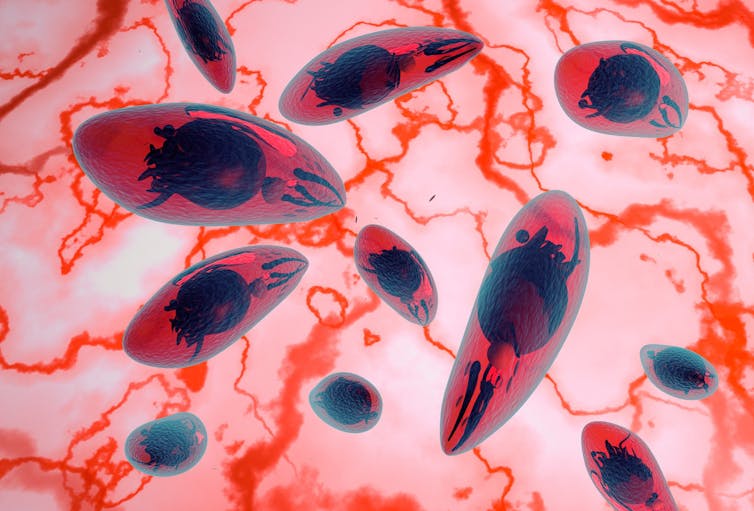
An illustration of __Toxoplasma gondii_ cells inside the body.
We created a genetically modified version of T. gondii in order to elicit an immune response in the body. fotovapl/ Shutterstock

Using the gene-editing technology Crispr, our team engineered a strain of Toxoplasma gondii that lacked the protein that causes disease. We then injected this mutant strain directly into melanoma tumours in mice. We later tested it on colon and lung cancer tumours as well.

We were able to show that injecting the live parasite directly into a cold tumour was able to trigger a strong immune response in mice. We were also able to show that even nearby tumours, which hadn’t been injected, had an increased immune response.

While previous studies have shown that Toxoplasma gondii can be used to treat tumours in mice, our study took this finding one step further. We showed that when this engineered parasite was used alongside immune checkpoint blockade therapy, tumour growth was significantly suppressed. The eight mice given dual therapy in the early stages of melanoma saw their tumours shrink significantly, whereas treatment with only immune checkpoint blockade therapy failed to cause any regression in the injected tumours in mice.

We also showed that the dual treatment was far more effective at not only shrinking tumours but also improving the survival rate of mice when compared with using immune checkpoint blockade therapy alone. All eight mice who only received immune checkpoint blockade therapy died within 39 days – while seven out of eight mice who received the dual treatment were still alive after 60 days. We also saw an increase in a number of different types of helpful immune cells – which ultimately improved the response of melanoma tumours in particular to treatments.

Our research joins a body of evidence that parasites – including the canine tapeworm Echinococcus granulosus – can work against different types of cancer. Bacteria, viruses and bacteriophages (viruses that attack bacteria), are also being trialled as potential cancer treatments.

It’s important to note that this study is only in mice, and it will take many years and many more studies before we know if this therapy works in humans. Nevertheless, it’s an exciting step in the right direction and adds to the growing evidence base that pathogens might be helpful tools in our fight against tough-to-treat cancers.

Hany Elsheikha, Associate Professor of Parasitology, University of Nottingham

This article is republished from The Conversation under a Creative Commons license. Read the original article.


Tags: SB001
DMCA.com Protection Status

SUBSCRIBE to our NEWSLETTER

[mc4wp_form id=”2384248″]

Don't Miss

Lyca Mobile Australia’s Customer-First Overhaul Pays Off with Finder Award Win

by Fazila Olla-Logday
2 February 2026
Lyca Mobile Australia's Customer-First Overhaul Pays Off with Finder Award Win
Technology

Lyca Mobile Australia’s customer-first overhaul has earned a Finder Award, recognising its improved value, service, and stronger focus on Australian...

Read moreDetails

From Driveway to Dream Court: The Rise of High-Performance Hoops at Home in 2026

by Fazila Olla-Logday
20 January 2026
The Rise of High-Performance Hoops at Home in 2026
Sport

High-performance home basketball hoops are gaining momentum in 2026, as more homeowners invest in durable, professional-grade systems that combine advanced...

Read moreDetails

Brandon Willington: The Marketing Entrepreneur Turning Heads Across Australia

by Pauline Torongo
8 January 2026
Brandon Willington: The Marketing Entrepreneur turning heads across Australia
Business & Finance

Brandon Willington, founder of “Where U?” is changing the narrative for Australian businesses tired of inconsistent leads and empty promises.

Read moreDetails

How Turnkey Building Group Is Restoring Trust In An Industry Known For Customer Disappointment

by Fazila Olla-Logday
17 December 2025
How Turnkey Building Group Is Restoring Trust In An Industry Known For Customer Disappointment
Business & Finance

Turnkey Building Group is changing the narrative in an industry often associated with missed deadlines and broken promises. By prioritizing...

Read moreDetails

Risk Awareness for International Travellers – What Australians Should Know Before Entering Multi-State Regions

by Fazila Olla-Logday
10 December 2025
Schengen
Travel

This guide helps Australian travellers understand cross-border requirements, assess political and environmental risks, manage health and safety considerations, and prepare...

Read moreDetails

The evolution of Aesthetic Surgery through the lens of Dr Kourosh Tavakoli

by Pauline Torongo
4 December 2025
The evolution of Aesthetic Surgery through the lens of Dr. Kourosh Tavakoli
Health & Wellness

As global interest in Australian cosmetic surgery continues to grow, the combination of regulation, research and emerging digital tools is...

Read moreDetails

Ryan: Building real freedom through e-commerce

by Pauline Torongo
27 November 2025
Ryan: Building real freedom through e-commerce
Business & Finance

Ryan’s greatest achievement isn’t any single business or revenue milestone — it’s the ecosystem he’s built through the Change community.

Read moreDetails
Load More

Copyright © Blue Sky Publications Ltd. All Rights Reserved.
australiantimes.co.uk is a division of Blue Sky Publications Ltd. Reproduction without permission prohibited. DMCA.com Protection Status

  • About us
  • Write for Us
  • Advertise
  • Contact us
  • T&Cs, Privacy and GDPR
No Result
View All Result
  • News
    • Weather
    • Sport
    • Technology
    • Business & Finance
      • Currency Zone
    • Lotto Results
      • The Lott
  • Lifestyle
    • Entertainment
    • Horoscopes
    • Health & Wellness
    • Recipes
  • Travel
  • Expat Life
  • Move to Australia

Copyright © Blue Sky Publications Ltd. All Rights Reserved.
australiantimes.co.uk is a division of Blue Sky Publications Ltd. Reproduction without permission prohibited. DMCA.com Protection Status

No Result
View All Result
  • News
    • Weather
    • Sport
    • Technology
    • Business & Finance
      • Currency Zone
    • Lotto Results
      • The Lott
  • Lifestyle
    • Entertainment
    • Horoscopes
    • Health & Wellness
    • Recipes
  • Travel
  • Expat Life
  • Move to Australia

Copyright © Blue Sky Publications Ltd. All Rights Reserved.
australiantimes.co.uk is a division of Blue Sky Publications Ltd. Reproduction without permission prohibited. DMCA.com Protection Status





