

• Advertise
  • About us
  • Terms and Conditions
  • Contact us
Saturday, December 6, 2025
Australian Times News
  • News
    • Weather
    • Sport
    • Technology
    • Business & Finance
      • Currency Zone
    • Lotto Results
      • The Lott
  • Lifestyle
    • Entertainment
    • Horoscopes
    • Health & Wellness
    • Recipes
  • Travel
  • Expat Life
  • Move to Australia
No Result
View All Result
  • News
    • Weather
    • Sport
    • Technology
    • Business & Finance
      • Currency Zone
    • Lotto Results
      • The Lott
  • Lifestyle
    • Entertainment
    • Horoscopes
    • Health & Wellness
    • Recipes
  • Travel
  • Expat Life
  • Move to Australia
No Result
View All Result
Australian Times News
No Result
View All Result
Home News

Parasitic wasps turn other insects into ‘zombies,’ saving millions of humans along the way

Wasps have a reputation for being jerks because of their perceived aggressiveness and ability to sting repeatedly. They’re often negatively compared with the honey production and agricultural pollination of bees.

The Conversation by The Conversation
02-11-2021 06:23
in News
Photo by Daniele Barison on Unsplash

Photo by Daniele Barison on Unsplash

Dylan Miller, Dalhousie University and Shelley Adamo, Dalhousie University

Wasps have a reputation for being jerks because of their perceived aggressiveness and ability to sting repeatedly. They’re often negatively compared with the honey production and agricultural pollination of bees.

If wasps are jerks, however, they are positively saintly compared to their parasitic brethren.

Parasitic wasps sting to inject their eggs into a host, often accompanied by venom and a virus. Their larvae grow and eventually emerge from the unwitting host — usually killing it. Then they becoming adults and fly off to continue the cycle.

Some wasps go further, controlling their host’s behaviour, effectively “zombifying” them to help the larva survive. After studying the behaviour of ichneumon wasps, which lay their eggs in moth larvae, naturalist Charles Darwin wrote that they were so evil that they were proof against the idea that God was directing evolution:

“I cannot persuade myself that a beneficent & omnipotent God would have designedly created the Ichneumonidæ with the express intention of their feeding within the living bodies of caterpillars.”

While no wasps are known to lay eggs in humans (although some flies do), they have inspired films like the Alien franchise and the recently released monster survival video game House of Ashes.

But whether inspiring horror or metaphysical questions, parasitic wasps also save millions of human lives.


AlsoRead...

Ryan: Building real freedom through e-commerce

Ryan: Building real freedom through e-commerce

27 November 2025
Design Australia Group: Redefining Drafting as the engine of housing growth

Design Australia Group: Redefining Drafting as the engine of housing growth

26 November 2025

Parasitic wasps to the rescue

In the 1970s, the cassava mealybug (Phenacoccus manihoti) entered Western and Central Africa as an invasive pest species from Brazil. It rapidly spread across cassava fields causing crop losses as high as 80 per cent. The cassava plant is a staple food crop because it is drought-resistant. The mealybug invasion threatened the food base of 200 million people.

The Swiss entomologist Hans Rudolf Herren, who was conducting research in the area, found a wasp parasitizing the mealybug (Epidinocarsis lopezi). The parasitic wasp posed little risk to sub-Saharan species.

After rearing the wasps and gathering funding, Herren bought planes and co-ordinated strategic airdrops and ground release of wasp cocoons to areas affected by the mealybug. From those locations, the wasp populations grew and spread on their own, reducing the mealybug population to manageable levels for years.

This effort saved an estimated 20 million lives, billions in crops and avoided the use of pesticides. Herren received the World Food Prize in 1995 for his efforts. https://www.youtube.com/embed/3E-r80C_6tE?wmode=transparent&start=0 David Attenborough describes the habits of parasitic wasps for BBC Earth.

Biocontrol heroes

Biocontrol is the use of one organism to combat a pest, and this was far from the only successful case of wasps as biocontrol. Wasps have successfully defended against many crop pests in Chinese agriculture.

The samurai wasp (Trissolcus japonicus) was being studied for potential use against the brown marmorated stinkbug, a threat to many crops across the continental United States. However, the wasp preempted this, moving into stinkbug territories on its own.

Wasps are even being deployed to prevent moths from damaging historical sites and their artifacts. Here in Canada, at least four wasp species have been released to control the emerald ash borer, a cause of deforestation across Canada.


Pros and cons

Biocontrol has several advantages over pesticides. Populations can grow and spread on their own, as demonstrated by the samurai wasps, whereas pesticides typically need humans to spread them. Organisms can maintain their presence over the long-term without human intervention, while pesticides often require repeat applications. Pests can also evolve to resist pesticides in as few as 20 generations. And as biocontrol uses another organism, they can evolve in response the pest’s defences.

Biocontrol is not free from issues. It often introduces a new invasive species to deal with an existing one. It can be difficult to predict the effects of a new species on an unprepared ecosystem.

For example, the cane toad was introduced in Australia to eat several insect pests there. Instead, the poisonous toad became a lethal meal for several native species, disrupting many other parts of the ecosystems there.
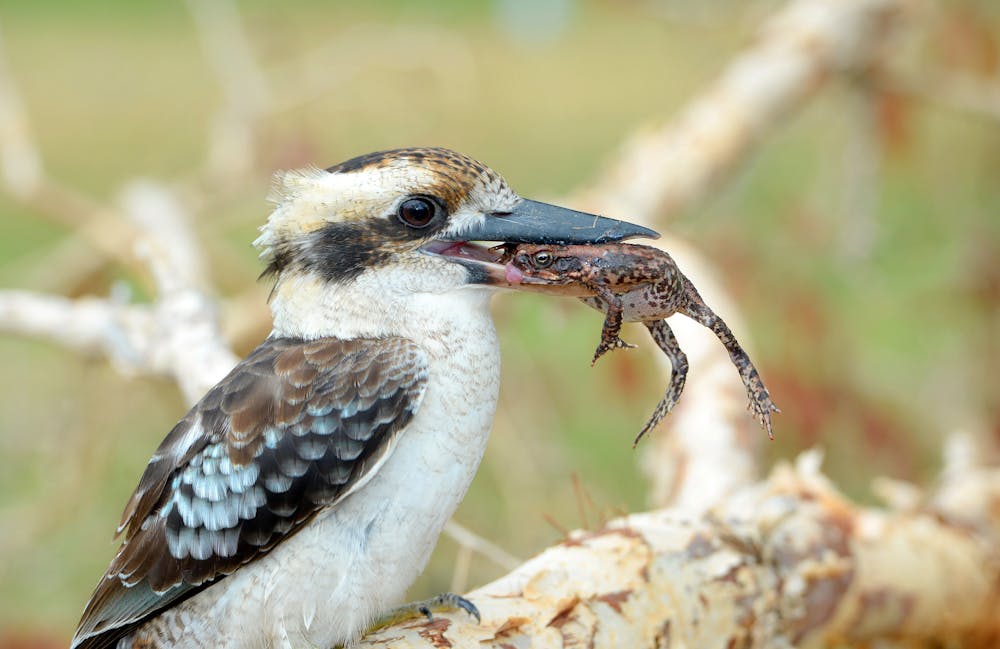
a kookaburra eating a cane toad
A laughing kookaburra eats a cane toad. Some kookaburras die from ingesting the poisonous toads. (Shutterstock)

Parasites may avoid some of these issues as, unlike predators, they are often limited to a single or very few host species, making them less likely to go off-target and affect species other than the intended one.

Given that most agricultural pests are insects and most pest insects are targeted by at least one parasitic wasp (there are an estimated 750,000 parasitic wasp species), this gives a legion of options to study for safe and effective pest management.

So next time you’re online and see wasps being unfairly maligned, consider the millions of humans across the world who are alive and able to feed themselves because of them. And maybe this upcoming Halloween, should you encounter the spirit of a certain 1800s English naturalist going on about the theological implications of parasitic wasps’ evil, tell him of the good they can do.

Dylan Miller, PhD student, Neuroscience, Dalhousie University and Shelley Adamo, Professor, Psychology and Neuroscience, Dalhousie University

This article is republished from The Conversation under a Creative Commons license. Read the original article.


Tags: SB001
DMCA.com Protection Status

SUBSCRIBE to our NEWSLETTER

[mc4wp_form id=”2384248″]

Don't Miss

The evolution of Aesthetic Surgery through the lens of Dr Kourosh Tavakoli

by Pauline Torongo
4 December 2025
The evolution of Aesthetic Surgery through the lens of Dr. Kourosh Tavakoli
Health & Wellness

As global interest in Australian cosmetic surgery continues to grow, the combination of regulation, research and emerging digital tools is...

Read moreDetails

Ryan: Building real freedom through e-commerce

by Pauline Torongo
27 November 2025
Ryan: Building real freedom through e-commerce
Business & Finance

Ryan’s greatest achievement isn’t any single business or revenue milestone — it’s the ecosystem he’s built through the Change community.

Read moreDetails

Design Australia Group: Redefining Drafting as the engine of housing growth

by Pauline Torongo
26 November 2025
Design Australia Group: Redefining Drafting as the engine of housing growth
Business & Finance

Australia is under pressure to build homes faster, but design bottlenecks slow progress. Design Australia Group is fixing this by...

Read moreDetails

Louis Guy Detata builds Global Trading Empires through autonomous systems and disciplined leadership

by Pauline Torongo
25 November 2025
Louis Guy Detata builds Global Trading Empires through autonomous systems and disciplined leadership
Business & Finance

The path from investment banking to leading a global trading platform has taught Louis Detata that sustainable success requires more...

Read moreDetails

Burning Eucalyptus Wood: Tips, Advantages, Disadvantages & Alternatives

by Fazila Olla-Logday
20 November 2025
Image Supplied
Enviroment

Learn about burning eucalyptus wood for stoves and fireplaces. Discover benefits, drawbacks, harvesting tips, and better alternative firewood options for...

Read moreDetails

Everything Parents Need to Know About Baby Soft Play and Why It’s a Game Changer

by Fazila Olla-Logday
11 November 2025
Everything Parents Need to Know About Baby Soft Play
Health & Wellness

Baby soft play is a fun, safe, and educational way for little ones to explore and grow. Discover the benefits...

Read moreDetails

WOMAD Sets Up a New Camp in Wiltshire – Australian festival fans take note!

by Kris Griffiths
11 November 2025
Kumbia Boruka brought their reggae and dancehall flavour to the Taste the World Stage at WOMAD 2024 - Credit - Mike Massaro
Entertainment

With its 2026 edition moving to Neston Park in England, WOMAD offers Aussie music lovers a chance to reconnect with global...

Read moreDetails
Load More

Copyright © Blue Sky Publications Ltd. All Rights Reserved.
australiantimes.co.uk is a division of Blue Sky Publications Ltd. Reproduction without permission prohibited. DMCA.com Protection Status

  • About us
  • Write for Us
  • Advertise
  • Contact us
  • T&Cs, Privacy and GDPR
No Result
View All Result
  • News
    • Weather
    • Sport
    • Technology
    • Business & Finance
      • Currency Zone
    • Lotto Results
      • The Lott
  • Lifestyle
    • Entertainment
    • Horoscopes
    • Health & Wellness
    • Recipes
  • Travel
  • Expat Life
  • Move to Australia

Copyright © Blue Sky Publications Ltd. All Rights Reserved.
australiantimes.co.uk is a division of Blue Sky Publications Ltd. Reproduction without permission prohibited. DMCA.com Protection Status

No Result
View All Result
  • News
    • Weather
    • Sport
    • Technology
    • Business & Finance
      • Currency Zone
    • Lotto Results
      • The Lott
  • Lifestyle
    • Entertainment
    • Horoscopes
    • Health & Wellness
    • Recipes
  • Travel
  • Expat Life
  • Move to Australia

Copyright © Blue Sky Publications Ltd. All Rights Reserved.
australiantimes.co.uk is a division of Blue Sky Publications Ltd. Reproduction without permission prohibited. DMCA.com Protection Status





